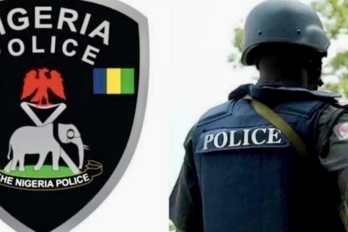
Fresh questions have erupted around the Lagos State Police Command after allegations surfaced that Divisional Police Officers under Area J Command are being pressured to contribute money towards Sallah expenses allegedly linked to the Commissioner of Police’s office.
The latest claims arrive only days after another controversy over an alleged ₦5,000 bio-data payment stirred anger within the ranks, deepening scrutiny of financial discipline inside one of Nigeria’s most sensitive security formations.
The allegations, which remain unverified, have placed Area J Command in the spotlight because of its strategic importance across Lagos’s fast-growing coastal belt.
Recent Lagos police listings place Area J around Elemoro, while other published contact directories associate its coverage with Ajah, Epe, Maroko, Akodo, Langbasa, Ogombo, Ilasan, Odo-Noforija and the Lekki Free Trade Zone.
In short, this is not a peripheral post. It is a command sitting on a corridor where population growth, land pressure, commercial expansion and elite residential interests all collide.
According to the reports in circulation, officers say they are being asked to make financial contributions ahead of the festive period, with the burden reportedly falling on DPOs who already operate under intense operational and welfare pressure.
That allegation, if confirmed, would raise uncomfortable questions about the boundary between official police administration and informal financial demands inside the force.
At this stage, however, the claims remain allegations and have not been independently verified in the material reviewed.
The controversy has gained added weight because it comes on the heels of a separate complaint published by SaharaReporters on 3 May 2026, in which officers alleged that the Lagos State Police Command was collecting ₦5,000 per officer for bio-data forms.
One source quoted in that report said,
“The Lagos State Police Command is collecting N5,000 per police officer for submitting bio data form, an administrative exercise.”
That allegation triggered a swift response from the command. In a statement reported by Newsmakers on 4 May 2026, the Lagos State Police Command denied authorising any such payment and said no directive had been issued at any level requiring officers to pay for bio-data documentation.
The statement also said Commissioner of Police Tijani Olaiwola Fatai had ordered a probe to verify whether any unauthorised collection had taken place and to identify anyone involved.
That response matters because Fatai is still relatively new in office. Channels Television reported that he assumed duty as the 42nd Commissioner of Police in Lagos on 26 March 2026, taking over from Olohundare Jimoh.
The report also noted that the command said his appointment reflected a track record of leadership and professionalism and that he pledged to deepen reforms, strengthen internal security and improve service delivery.
The timing means the present controversy is landing early in a tenure that may already be under pressure to prove credibility and control.
For Lagos residents, these allegations cut deeper than the usual internal police gossip. The force is entrusted with public order, anti-crime operations and the policing of one of Africa’s busiest urban economies.
Any suggestion that officers themselves are being subjected to unofficial levies risks eroding morale, inviting cynicism from the public and strengthening the long-running perception that some police systems operate on the margins of transparency.
Even if the latest claims prove exaggerated or false, the speed with which they have travelled through the command shows how fragile confidence has become.
The bigger issue is institutional accountability. If contributions for Sallah expenses or other administrative costs are being collected without proper approval, then the matter is not merely about one festive season. It would point to a deeper culture in which unofficial charges can be normalised, passed down through divisions and defended as routine practice.
If, on the other hand, the allegations are unfounded, then the command will need to do more than deny them. It will need to show the process, identify the source of the misinformation and publish enough of the findings to reassure officers and the public that the system is not being quietly abused.
For now, the Lagos State Police Command has put itself on record as rejecting the bio-data fee claim and ordering an investigation.
The fresh Area J allegation now places a second spotlight on internal financial practices, making this less a one-off complaint than a developing test of discipline, transparency and command authority.
Until the probe speaks, Lagos police will remain under a cloud of suspicion that could prove more damaging than the alleged levies themselves.
Follow us on our broadcast channels today!
- WhatsApp: https://whatsapp.com/channel/0029VawZ8TbDDmFT1a1Syg46
- Telegram: https://t.me/atlanticpostchannel
- Facebook: https://www.messenger.com/channel/atlanticpostng