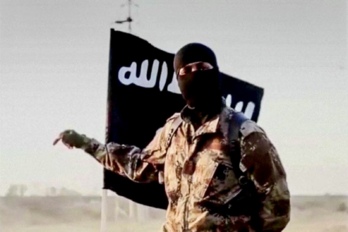
Bayo Onanuga has sought to shut down the growing scepticism trailing the reported killing of Abu-Bilal Al-Manuki, also known as Abu-Mainok or Abu-Bilal Al-Minuki, saying the latest joint Nigerian-American operation was built on months of surveillance, phone intercepts and layered intelligence, not battlefield guesswork.
In a piece circulated on the matter, he argued that the criticism was “premature” and insisted that this time the security agencies were operating with a much higher level of confidence than in earlier claims.
At the heart of Onanuga’s defence is a blunt assertion that the earlier controversy around Al-Manuki was a case of mistaken identity or misattribution.
He said security officials now believe the 2024 listing of the ISWAP figure among those allegedly killed around the Birnin Gwari forest axis in Kaduna State was wrong, stressing that the theatre was never part of the commander’s known operational sphere.
His central claim is that the latest strike was different because it was anchored on prolonged Intelligence, Surveillance and Reconnaissance activity, plus communications monitoring that reportedly began in December 2025.
That explanation is important because the same name has already surfaced before in official military reporting. In April 2024, Defence Headquarters said Abu Bilal Minuki, also known as Abubakar Mainok, was among terrorist commanders killed in northern Nigeria, adding that he operated along the Birnin Gwari forest axis and the Abuja Kaduna highway.
The present dispute therefore goes beyond a single militant’s fate. It raises a bigger question about the fog of war in counterinsurgency operations, where aliases, overlapping networks and rapid-fire battlefield assessments can produce claims that later need correction.
The latest operation, however, has been presented by both Washington and Abuja as a far more tightly controlled mission.
Reuters reported that U.S. President Donald Trump said brave American forces and the Nigerian Armed Forces executed a “meticulously planned” mission, while President Bola Tinubu described the strike as a “significant example of effective collaboration in the fight against terrorism”.
Tinubu said the target was killed along with several lieutenants in a strike on his compound in the Lake Chad Basin.
Reuters also reported that the Nigerian Army said the mission took place in Metele, Borno State, ran from about 12:01 a.m. to 4 a.m., and ended without casualties or loss of assets.
That detail is significant because it shows why the government is pushing the line that this was not an ordinary clearance operation but a precision action supported by foreign intelligence and local targeting.
For Tinubu’s camp, the message is political as much as military. A successful joint strike bolsters the administration’s counterterrorism narrative, strengthens its partnership with the United States and signals that Nigeria is willing to lean on external intelligence to hit high-value targets in the Lake Chad Basin.
Yet the story is not without caveats. The Associated Press reported that there are still questions over Al-Mainuki’s exact rank inside the Islamic State network, even though he was described by U.S. and Nigerian officials as a major figure in finance, organisation and weapons development.
AP also noted that some analysts think the “second in command globally” label may be overstated, and that there is no independent way to verify the claim. That nuance is important, because it means the debate is not only about whether a commander was killed, but also about how high he sat in the wider ISIS structure.
What Onanuga is really fighting, then, is not just disbelief over one military operation but a wider public distrust born of past errors, mixed messaging and insurgent misinformation.
He specifically invoked the history of false or premature death reports in counterterrorism, saying this time the authorities had applied multiple layers of verification before authorising the final strike.
In his framing, the right lesson from past mistakes is not blanket cynicism, but better intelligence, better confirmation and greater restraint before dismissing a claim that has now been endorsed by both Nigerian and U.S. leadership.
If the operation is sustained by evidence, it could represent one of the most consequential counterterrorism successes in the northeast in years.
Reuters reported that the U.S. and Nigerian governments have stepped up cooperation since late 2025, including drones and advisory support, while AP said the mission comes after a period of renewed security partnership between both countries.
Onanuga’s intervention is therefore also a bid to shape the public record early, before doubt hardens into accepted truth. In a conflict environment where perception travels faster than proof, that battle for credibility may matter almost as much as the strike itself.
Follow us on our broadcast channels today!
- WhatsApp: https://whatsapp.com/channel/0029VawZ8TbDDmFT1a1Syg46
- Telegram: https://t.me/atlanticpostchannel
- Facebook: https://www.messenger.com/channel/atlanticpostng