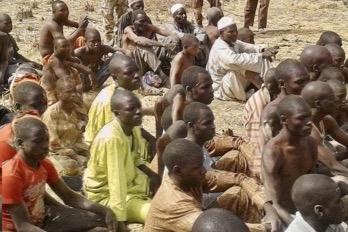
Borno State has once again chosen the most politically sensitive path in Nigeria’s counter-insurgency playbook: it has returned 720 repentant insurgents, 992 spouses and 2,050 children to society after what officials described as deradicalisation, rehabilitation and skills training under the much debated Borno Model.
The ceremony in Maiduguri was presented as a peacebuilding milestone, but it also exposes the central dilemma at the heart of Nigeria’s North East strategy: how far can a state go in forgiving former fighters before the politics of survival begins to outrun the demands of justice and security?
Brigadier General Abdullahi Ishaq (rtd), the governor’s security adviser and a member of the reintegration committee, framed the programme as a deliberate non-kinetic alternative to perpetual war.
He said the Borno Model had been a “success story since 5th July 2021” and that the state had agreed to “forgive and accept” those willing to “drop arms and embrace peace.”
He also claimed that more than 350,000 people had exited insurgent camps over time, though that figure remains a government claim rather than an independently verified count in the sources reviewed.
The state’s latest batch has now pushed the cumulative total of persons reintegrated under the programme to 9,680 across nine batches, according to the same officials. Borno’s own record, however, shows that the model is bigger than a one-day release.
The United Nations Office on Drugs and Crime says the state reported over 93,000 voluntary exits by January 2023 and describes the Borno Model as a state-led mechanism for managing mass surrender, reconciliation and reintegration, supported by a wider UNDP, IOM, UNICEF and UNODC project running from 2023 to 2025.
In other words, this is not a symbolic gesture. It is a long-running political experiment in converting insurgent defections into a social settlement.
Officials say the beneficiaries were not simply handed over to their communities. They were first profiled by the military, then moved into rehabilitation facilities at the Hajj Camp in Maiduguri, where they underwent vocational and religious instruction, hygiene awareness and anti-drug abuse education.
Vanguard reported that the programme included trades such as metalwork, carpentry, tailoring, bricklaying, solar installation, phone repairs, vulcanising and motorcycle maintenance, while women were trained in tailoring, soap making and knitting.
Community leaders and members of the Civilian Joint Task Force also took part in screening before reintegration approval. That detail matters, because it shows the state is trying to present reintegration not as blanket amnesty, but as a managed risk process.
Yet the unease around the policy is equally real. Research on former Boko Haram reintegration in Nigeria has found that trauma among host communities limits acceptance and fuels scepticism about whether returnees have genuinely changed.
The same study warns that the emphasis on rehabilitating former fighters can leave victims feeling overlooked, and that distrust can become a barrier to lasting peace. That is the uncomfortable truth sitting beneath the applause in Maiduguri: the challenge is not only whether the repentant have changed, but whether the wounded communities of Borno believe they have.
This is where the comparison with the United States’ strategy against ISIS becomes revealing. Washington’s current approach is structurally different from Borno’s. The Pentagon’s FY2026 Counter-ISIS Train and Equip Fund says the U.S. government “remains committed to the enduring defeat” of ISIS by “supporting vetted partner forces” and sustaining pressure on the group.
A Pentagon account from October 2024 said the coalition has moved from retaking territory to tracking ISIS’s “next moves and next victims”. That is a hard security model built on partner forces, surveillance, containment and persistent military pressure, not on broad local reintegration of surrendered fighters.
The American method also leans heavily on detention and prosecution. In February 2026, U.S. Central Command completed the transfer of more than 5,700 ISIS suspects from Syria to Iraqi custody, a move AP said was intended to help prevent an ISIS resurgence in Syria.
The State Department has separately argued that the most durable solution in northeast Syria is “repatriation, rehabilitation, reintegration, and, where appropriate, prosecution.” Even there, the emphasis is on controlled legal handling and partner-state custody, not on the kind of community release model Borno is using.
The broader coalition language is equally instructive. The Global Coalition to Defeat Daesh/ISIS says it is the “largest international coalition in history” and remains committed to defeating ISIS wherever it operates. That language tells its own story.
The U.S.-led system is designed to degrade, contain and prosecute a transnational extremist threat through allies and institutions. Borno’s model is designed to absorb a homegrown insurgency back into the local social fabric.
One is outwardly coercive and internationally networked. The other is inward-looking, locally negotiated and politically dependent on the state’s ability to sell mercy as security.
That distinction is important because the two approaches are not morally identical, even if both claim to reduce violence. Borno’s model is closer to demobilisation and community reconciliation. The U.S. ISIS approach is closer to battlefield attrition, partner-force support, detention management and prosecution.
The first asks communities to absorb the risk of reintegration now in the hope of future peace. The second tries to keep the risk behind bars, in camps, in custody and under constant military pressure. Neither is perfect. Both reflect a grim reality: modern counterterrorism is not won by force alone, but force without trust can still fail.
For Governor Babagana Zulum, the Borno Model remains a signature gamble in a state exhausted by over a decade of Boko Haram violence. For critics, it raises a harder question: whether the state is moving faster than the social consent required to make reintegration durable.
The answer may not come from a press conference in Maiduguri, but from the villages, wards and displaced communities where returnees must live beside people who buried relatives, lost homes and still carry the memory of terror. That is where the real verdict on the Borno Model will be delivered.
Follow us on our broadcast channels today!
- WhatsApp: https://whatsapp.com/channel/0029VawZ8TbDDmFT1a1Syg46
- Telegram: https://t.me/atlanticpostchannel
- Facebook: https://www.messenger.com/channel/atlanticpostng