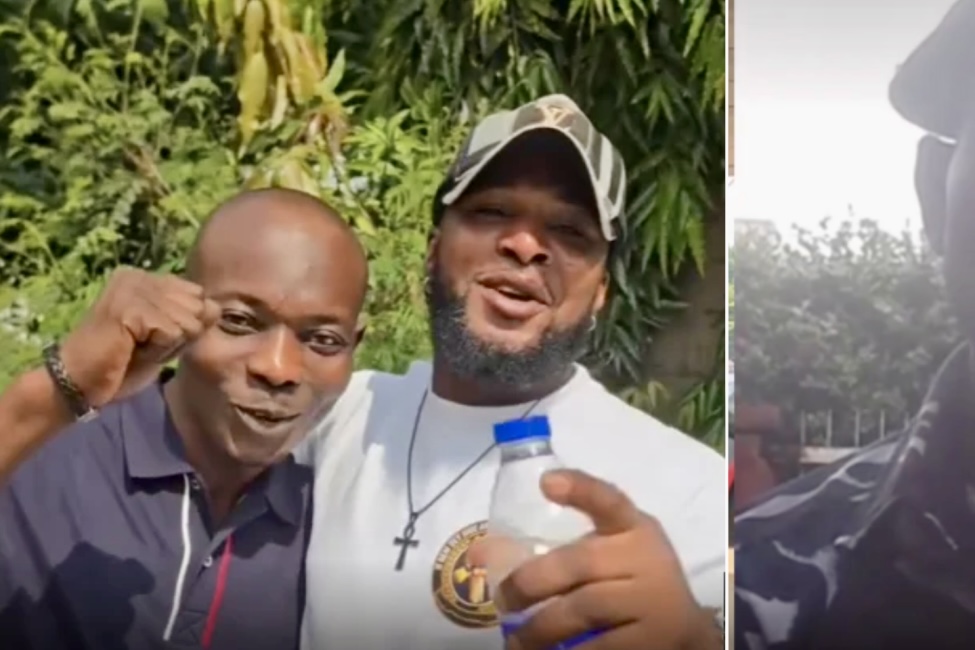
The Oyo State Police Command says it has dismantled what it suspects is a network involved in the possession and sale of human body parts, arresting 10 suspects in coordinated operations around Iseyin and Saki and recovering a disturbing collection of exhibits including a suspected human heart, human flesh, pieces of human skull and assorted charms.
The disclosure, contained in a statement issued in Ibadan on Saturday by the Command’s spokesperson, DSP Olayinka Ayanlade, places the arrests within a wider intelligence-led operation allegedly carried out after months of surveillance and intelligence gathering.
The development is potentially far more significant than a conventional possession case.
The police are now trying to establish whether the suspects merely possessed human remains for ritual purposes or whether investigators have stumbled into a broader supply chain involving the illegal acquisition, transportation and sale of human remains.
That distinction could determine whether the investigation ultimately exposes a network of grave exhumers, intermediaries, ritual practitioners and prospective buyers—or something even more sinister involving the killing of living victims.
For now, however, the police have not publicly established that any of the 10 suspects killed anyone.
That distinction is critical.
The exhibits are described by the police as suspected human parts, and forensic examination is still required to establish precisely what the recovered materials are and, potentially, where they came from.
What the police recovered
According to Ayanlade, operatives attached to the Command’s Monitoring Unit conducted searches after making the arrests at suspected criminal hideouts in the Iseyin and Saki areas.
The police spokesperson said:
“Following their arrest, operatives conducted searches of the suspects’ hideouts, during which several suspected human parts were recovered.
“The exhibits include one suspected human heart, human flesh, pieces of human skull and assorted charms.”
The recovered items have reportedly been secured and transferred for forensic analysis.
That procedure will be crucial.
A police seizure, however disturbing, is not by itself proof that the objects are human or that any particular suspect participated in murder. Laboratory examination could establish whether the biological material is human, while further forensic and investigative work could potentially determine whether individual remains are associated with known missing persons or deceased individuals.
The evidential chain will therefore matter enormously as the case progresses.
The questions now confronting investigators
The arrests may have removed 10 suspected participants from the alleged operation, but they leave a much more important question unanswered: where did the human remains come from?
According to the police, investigators are interrogating the suspects to establish their supply chains, procurement methods and intended buyers.
That element could prove the most revealing part of the investigation.
A body-parts market cannot operate simply because someone possesses human remains. There must ordinarily be a source, a method of acquisition, intermediaries and customers prepared to pay for the material.
The police say they are following precisely that trail.
They are also attempting to identify other members of the alleged syndicate who remain at large.
The emphasis on supply chains suggests investigators are looking beyond the immediate suspects to determine whether the arrested men were end-users, suppliers, brokers or links in a larger criminal enterprise.
That is an important investigative direction because previous cases in Oyo State have demonstrated that alleged human-parts offences can involve more than one layer of criminal activity.
Oyo has seen repeated human-parts cases
The latest arrests do not occur in isolation.
In March 2026, the Oyo State Police Command arrested three people in Ibadan over the alleged possession and sale of suspected human parts. Police said a motorcycle rider was intercepted in the Adekile area of Agugu and that a package containing flesh suspected to be human intestine was recovered. The rider allegedly told investigators that he obtained the material from an unidentified person around Oritaperin and sold it to two alleged buyers, who were subsequently arrested.
That case was transferred for further investigation, with the police saying the suspects would be charged after investigations were concluded.
Just days before that development, another case in March 2025 involved two suspects arrested in Ibadan after police allegedly found a female human torso and other dismembered remains, including severed limbs and dried bones, at a suspect’s residence.
The pattern continued into July 2026, when the Oyo Command arrested two suspects in Ijio, Iwajowa Local Government Area, over possession of an item suspected to be a human skull.
In that case, police said one suspect, Shittu Isah, allegedly confessed to exhuming the skull from a Muslim burial ground. Investigators subsequently arrested another suspect, while the recovered skull was preserved for forensic examination.
The July case is particularly instructive because the police did not simply treat the recovered object as conclusively human. The Command said it had been preserved for forensic examination “to determine its nature”, while investigators sought to establish the motive and identify other people connected to the case.
That same forensic caution should apply to the latest operation.
The graveyard-to-market question
One of the most disturbing possibilities investigators must examine is whether some of the alleged trade is being sustained through the illegal exhumation of corpses.
Previous Oyo investigations have uncovered allegations that human remains were removed from burial grounds before being sold for ritual purposes. In the July 2026 Ijio case, for example, police said a suspect admitted exhuming a suspected skull from a Muslim burial ground.
In another Oyo case reported in 2025, police arrested two suspects after allegedly recovering dismembered human remains, while investigators were told that one suspect admitted exhuming a corpse and supplying remains for ritual purposes.
The latest investigation could therefore provide an opportunity to establish whether separate incidents are connected by common suppliers, buyers, locations or methods.
That is why the police reference to “supply chains” is potentially more important than the headline number of arrests.
The buyers may be more important than the sellers
The police have said their investigators are attempting to determine the intended buyers of the recovered organs.
That is the investigative doorway into the demand side of the alleged trade.
Human-parts trafficking cannot be sustained without demand.
Finding those who allegedly purchase the materials could help investigators establish why the parts were sought, whether they were intended for ritual purposes, whether particular practitioners or intermediaries repeatedly use the same suppliers and whether other people financed or commissioned the acquisition.
It could also help investigators determine whether the suspects were operating independently or as part of an organised commercial network.
The distinction matters.
An isolated case involving unlawful possession is one thing. A coordinated chain involving suppliers, transporters, brokers and buyers would point towards organised criminality requiring a substantially broader investigation.
A regional security concern
The case also highlights a difficult reality facing law-enforcement agencies in the South-West: criminal networks rarely respect administrative boundaries.
Oyo borders several states and contains major road corridors linking communities across the region. The police have already recorded cases in which suspected human parts were allegedly transported along roads connecting different parts of the South-West.
In September 2025, for example, the Oyo Command reported intercepting a passenger vehicle along the Ogbomoso–Iseyin Road after officers allegedly discovered a quantity of human flesh in a travel bag.
The recurrence of such cases means investigators should not treat each arrest as an isolated criminal episode.
A credible investigation would examine telephone contacts, financial transactions, transportation routes, cemetery locations, accommodation records, recurring buyers, digital communications and links between suspects arrested in different operations.
Those investigative threads could reveal whether a genuine network exists.
Intelligence-led policing under scrutiny
The operation is also another test of the intelligence-led policing strategy being pursued by the current Oyo Police leadership.
CP Abimbola Ayodeji Olugbenga, who assumed office as the state’s 49th Commissioner of Police in March 2026, has repeatedly emphasised intelligence, professional policing and public cooperation.
The Command’s recent operations have included intelligence-driven arrests involving kidnapping, armed robbery, illegal firearms and other serious offences. In June, police operations conducted with other security stakeholders led to the rescue of two abducted children and the arrest of suspected kidnappers.
Against that background, the human-parts operation is significant because it reportedly arose from months of covert intelligence gathering rather than a random discovery during a routine patrol.
But intelligence-led arrest is only the first stage.
The real measure will be whether investigators can convert the intelligence into admissible evidence capable of establishing who supplied the remains, who bought them, how the trade operated and whether any violent crimes were committed to sustain it.
Commissioner promises crackdown
Following the operation, Olugbenga commended the Monitoring Unit for what he described as its intelligence-led approach and professional execution.
He assured residents that the Command remained determined to dismantle criminal networks involved in ritual-related offences and protect human life.
His position reflects a recurring challenge in cases involving alleged ritual crimes: public outrage is immediate, but successful prosecution depends upon painstaking evidence gathering.
The police must therefore preserve every exhibit, document the circumstances in which each item was recovered, establish an unbroken chain of custody and obtain forensic results capable of surviving scrutiny in court.
What happens next
The forensic examination is now one of the central pillars of the investigation.
The authorities must establish whether the recovered heart, flesh and skull fragments are human. If confirmed, investigators then face the harder questions: whose remains are they, where were they obtained, when were they acquired and by whom?
The answers could potentially connect the case to missing-person reports, unlawful cemetery exhumations or previously unresolved deaths.
Investigators will also need to determine whether the charms found at the locations have any evidential relationship to the suspected human remains or merely reflect the presence of traditional or ritual paraphernalia.
The police will also be under pressure to identify the alleged buyers.
That could move the investigation from possession into the architecture of the alleged trade.
And there is a still more troubling question.
Were the recovered parts taken from people who had already died, or did anyone become a victim because a buyer wanted a particular human organ?
At present, the police have not publicly established that the arrested suspects killed anyone. Atlantic Post has found no publicly released forensic finding, at the time of publication, confirming the identity or origin of the recovered materials from this latest operation.
That caution should not diminish the seriousness of the allegations. It should strengthen the investigation.
The bigger warning for Oyo
The repeated appearance of alleged human-parts cases in Oyo over the past two years suggests that law enforcement faces a continuing threat that cannot be defeated through arrests alone.
Cases reported in 2025 and 2026 have involved alleged possession, sale, transportation and exhumation of suspected human remains.
The latest arrests therefore provide an opportunity for the police to go beyond another parade of suspects.
What Oyo residents need is the dismantling of the market itself.
That means pursuing the financiers, suppliers, transporters, brokers and alleged customers—not simply the people found holding the exhibits.
Because if 10 suspects can be arrested today and another group appears tomorrow with fresh human remains, then the problem has not been solved.
The supply chain has merely shifted.
For now, the 10 suspects remain suspected offenders, not convicted criminals, and the allegations against them must ultimately be tested through due process.
But the police operation has placed a disturbing question squarely before Oyo State:
Who is buying human parts—and how many people are working behind the scenes to keep the market alive?
That is the question the ongoing investigation must answer.
Follow us on our broadcast channels today!
- WhatsApp: https://whatsapp.com/channel/0029VawZ8TbDDmFT1a1Syg46
- Telegram: https://t.me/atlanticpostchannel
- Facebook: https://www.messenger.com/channel/atlanticpostng