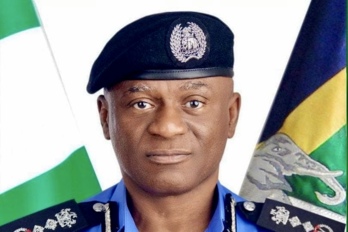
The Nigeria Police Force has been rocked by a fresh internal petition from officers at the Force Criminal Investigation Department (FCID) Annex, Alagbon, Lagos, who have asked the Inspector-General of Police (IGP), Olatunji Disu, to probe the alleged prolonged absence of an Assistant Commissioner of Police, Ngozi Braide, from her duty post.
The matter lands at a time when the police hierarchy is under renewed scrutiny over discipline, supervision and command accountability, with the Force’s own official records describing FCID as the highest investigating arm of the Nigeria Police Force.
The petitioners, who signed the document as “Concerned Officers” of the FCID Annex, said the complaint was not raised to settle scores, but to protect discipline and operational efficiency.
They wrote: “We, the undersigned concerned officers serving at the Force Criminal Investigation Department (FCID) Annex, Alagbon, Lagos, respectfully write this petition to bring to your attention an issue which, in our humble view, has adversely affected discipline, effective supervision, and operational efficiency within the Force CID Annex Alagbon, Lagos.”
They alleged that ACP Braide had been absent from her station for about three months, and further claimed she may have travelled outside Nigeria without the required official approval. These remain allegations, not findings.
The officers’ account is blunt in its tone and, if true, would point to a serious breach of internal discipline. “It is our respectful observation that ACP Ngozi Braide, who is assigned to perform supervisory duties at FCID Annex, has allegedly been consistently absent from her duty post for a period of three months,” the petition stated. “We further understand that she is alleged to have travelled outside the Federal Republic of Nigeria without the requisite official approval or authorization from the appropriate police authorities.”
What makes the petition especially striking is not merely the allegation itself, but the implication that such an absence was allowed to linger without visible corrective action. The petitioners said the burden of a missing supervising officer falls directly on the officers left behind. “The continued absence of a supervising officer from her duty station places an unnecessary burden on subordinate officers who remain at work daily to discharge the constitutional and statutory responsibilities of the Force,” they wrote.
They also complained that supervisory authorities at FCID Alagbon had not moved decisively enough. “It is equally disturbing that despite the alleged persistent nature of this situation, no visible corrective action appears to have been taken by the supervisory authority (AIG Force CID Alagbon),” the petition said. The officers argued that inaction of that sort damages morale and creates the impression that senior officers may be treated differently from their junior colleagues.
That point goes to the heart of the report. In a police system that depends on chain of command, attendance, and visible leadership, unexplained absence by a supervising officer is not a trivial administrative issue. It goes directly to trust, discipline and the authority of the institution itself.
The officers said as much: “This perceived inaction has created the unfortunate impression that certain officers may be above the disciplinary standards applicable to other members of the Force.” They added that “no officer, irrespective of rank or appointment, should be seen to enjoy immunity from these standards.”
The petition also invoked the legal and procedural framework expected to govern police conduct. The officers asked the IGP to order an independent investigation, examine attendance records, movement registers, leave records and other official documents, and determine whether any misconduct had occurred. They urged that if wrongdoing was established, the relevant disciplinary steps should follow “in accordance with the Nigeria Police Act, 2020, the Nigeria Police Regulations, and the Public Service Rules, 2021.”
That request is not out of place. The Nigeria Police Act, 2020, is expressly framed around the organisation, discipline, powers and duties of the police, while a later PLAC summary notes that the law also introduced a specific part on police public complaints and discipline. In other words, the petitioners are leaning on a legal framework that is already supposed to exist for exactly this kind of internal allegation and accountability test.
Still, the story is incomplete without caution. The petition contains allegations that have not been independently proven in the material available for this report.
Braide herself has not, from the sources reviewed, been shown to have publicly responded. Neither has the petition been shown to have been formally validated by police authorities. For now, the issue sits in the uneasy space between internal complaint and public accusation.
That is precisely why the matter matters. If the claims are true, the Force must show that rank does not confer immunity and that supervisory absence will not be tolerated. If the claims are false or overstated, then a transparent inquiry should clear the air and restore confidence. Either way, silence is the worst possible outcome for an institution already battling public suspicion over discipline and internal accountability.
The petitioners ended on a note that reads as both plea and warning: “Sir, this petition is written solely in the interest of preserving discipline, fairness, accountability, and the enviable reputation of the Nigeria Police Force,” they said. “We trust in your commitment to justice, transparency, and institutional discipline, and respectfully urge your prompt intervention.”
For now, that is the central question: will the police investigate swiftly and openly, or will this latest internal storm join the long list of unresolved discipline controversies that erode confidence in the Force from within?
Follow us on our broadcast channels today!
- WhatsApp: https://whatsapp.com/channel/0029VawZ8TbDDmFT1a1Syg46
- Telegram: https://t.me/atlanticpostchannel
- Facebook: https://www.messenger.com/channel/atlanticpostng