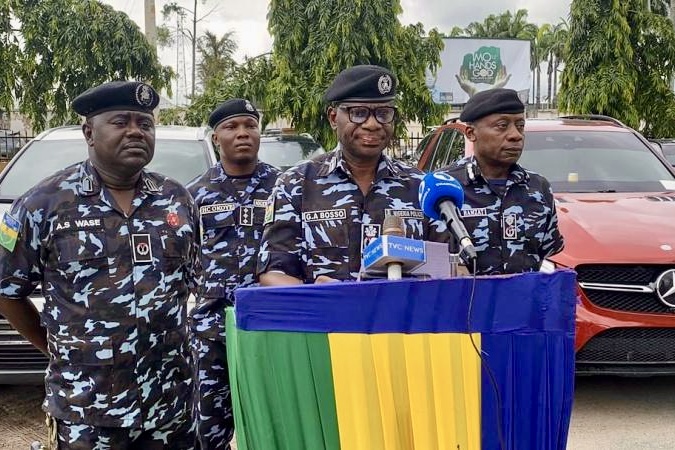
ABUJA, Nigeria — Only days after President Bola Ahmed Tinubu approved a broad military pay increase that has increased public scrutiny of how Nigeria values the people it sends into danger, the Federal Government has decided to move forward with a thorough review of the Nigeria Police Force’s salary structure, allowances, insurance, pension-related benefits, and broader welfare package.
Although the police evaluation is commendable, it is currently being evaluated in light of the state’s more overt endorsement of uniformed officers.
According to the Ministry of Police Affairs, the review was the outcome of a Ministerial/Stakeholders Committee meeting held in Abuja on Tuesday, 4 August 2026. The committee said it is examining regular and non-regular allowances, outstanding pension arrears, death benefits, Group Life Insurance liabilities, Group Personal Accident claims and other welfare obligations.
It also identified inadequate accommodation as a major welfare problem and called for a more realistic housing support framework. Those details matter because they show the government is no longer pretending that police welfare is limited to a salary line; it is now admitting the crisis is structural.
That admission is long overdue. In the same week, the State House announced salary increases of between 30 and 80 per cent for the armed forces, effective from 1 September 2026, with the biggest uplift going to the lower ranks.
President Tinubu said: “The men and women who help to keep us safe in our homes must be supported and appreciated in the course of their duties to our nation.”
He also pledged continued prioritisation of troop welfare and modernisation of the armed forces. The message is clear: welfare is now being treated as a component of security policy, not as an afterthought.
That is precisely why the police must not be left behind. The Nigeria Police Force is the first port of call for kidnappings, bandit spillovers, cult clashes, highway robbery, communal violence, election security and urban public-safety crises.
When the army receives a headline salary correction, while police officers continue to wait for a similarly decisive adjustment, the state sends a troubling signal about where it believes the real burden of internal security lies. The reality, however, is that the police absorb much of the country’s daily insecurity before the military is even called in.
The urgency is strengthened by the economic backdrop. Nigeria’s headline inflation rate stood at 15.91 per cent in June 2026, according to the National Bureau of Statistics, meaning fixed incomes remain under pressure even after recent moderation. For police officers, especially those in the junior ranks, that translates into eroding real wages, transport strain, family pressure and a greater temptation to seek unofficial income just to survive.
The committee’s insistence that allowances should reflect “prevailing economic realities” is therefore not bureaucratic language; it is an acknowledgement that the cost of policing has outpaced the value assigned to police labour.
The internal security system is also being stretched in plain sight. Reuters reported late last year that President Tinubu declared a nationwide security emergency and ordered mass recruitment and redeployment within the police and army.
The same report noted that police have been burdened with VIP protection duties, with a Nigerian think tank saying at least 100,000 officers (more than a quarter of the force) were assigned to protecting politicians and other VIPs.
Reuters also reported that a low-ranking officer’s monthly net pay was about ₦80,000, a figure that underlines just how thin the line has become between duty and deprivation.
That context gives the police welfare review a sharper edge. The committee is not merely checking boxes; it is trying to untangle a system in which housing is inadequate, pensions are delayed, insurance liabilities remain unresolved and overlapping allowances create administrative waste.
Its call to harmonise existing allowances, eliminate duplication and retain only those recognised under the Public Service Rules suggests the Federal Government knows the current structure is neither efficient nor fair.
The question now is whether the eventual recommendations will be bold enough to restore dignity, or so cautious that they merely postpone the crisis.
There is also a broader reform logic here. President Tinubu has already urged a rethink of Nigeria’s centralised policing model and has backed moves towards state policing. Reuters reported in November 2025 that he pressed parliament to review laws allowing states to establish police forces, while also ordering more recruitment and the redeployment of officers from VIP work to core public protection duties.
A serious salary and welfare correction for the Nigeria Police Force would therefore not stand alone; it would form part of the larger attempt to rebuild the internal security architecture from the bottom up.
This is why the present review should not be sold to the public as a technical exercise. It is a national security intervention.
If the Federal Government can find the political will to lift military pay so sharply, then it can no longer postpone a similarly meaningful adjustment for police personnel who work longer, face direct public contact daily and often carry the first and most dangerous burden of Nigeria’s insecurity.
The committee has opened the door; the presidency must now prove that police welfare is not a talking point but a governing principle.
Follow us on our broadcast channels today!
- WhatsApp: https://whatsapp.com/channel/0029VawZ8TbDDmFT1a1Syg46
- Telegram: https://t.me/atlanticpostchannel
- Facebook: https://www.messenger.com/channel/atlanticpostng