The confrontation that unfolded at the Nigerian Bar Association’s 66th Annual General Conference in Port Harcourt has moved beyond a heated exchange between a social-media activist and security officials. It has opened a far more consequential question for Nigeria: what happens to national security, public confidence and economic activity when serious allegations are made against security institutions without publicly verifiable evidence?
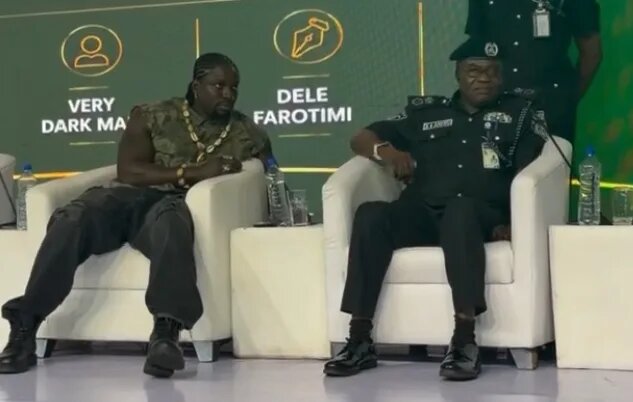
At the centre of the controversy is social commentator Martins Vincent Otse, popularly known as VeryDarkMan (VDM), who appeared as a panellist at the NBA conference on Tuesday, 25 August, during a session on Nigeria’s security crisis. The NBA’s 2026 conference, themed “Beyond Limits”, is running from 21 to 28 August in Port Harcourt.
VDM used the platform to challenge the country’s security architecture, arguing that Nigeria’s kidnapping crisis was not simply the work of unidentified criminals. Among his most explosive claims was an allegation that some police personnel operating checkpoints on major highways gather information about travellers and pass intelligence to kidnappers who subsequently target motorists considered capable of paying ransom.
He also made broader allegations against military, police, immigration and customs personnel, questioned the political economy of insecurity and called for greater civilian access to firearms.
The claims have not been substantiated publicly.
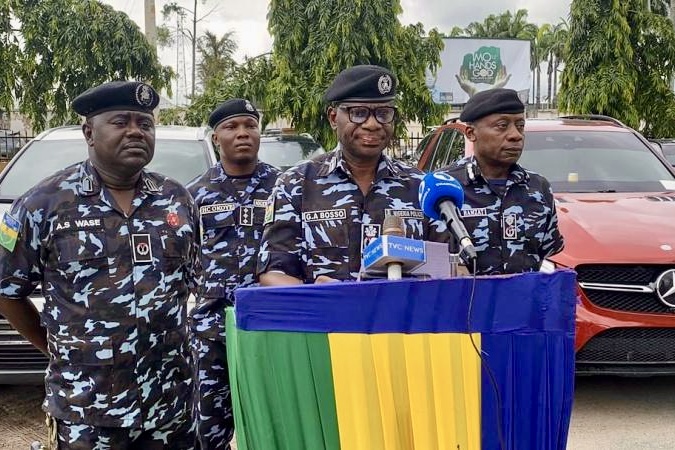
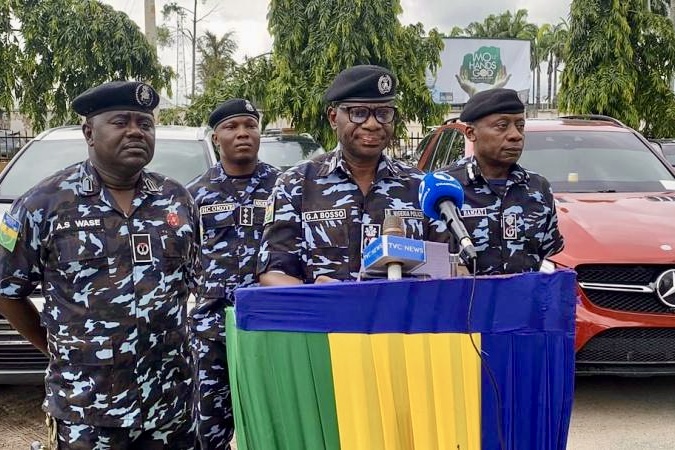
The Nigeria Police Force has now responded forcefully, rejecting the checkpoint allegation as unsubstantiated and demanding evidence. In a statement dated 27 August and signed by Force Public Relations Officer, CSP Ani Iniedu, the Force said allegations of such gravity require corresponding evidence and warned that unverified claims can damage public confidence and national security.
That response places the controversy at a critical intersection between free expression and institutional accountability on one side, and evidentiary standards, operational security and economic confidence on the other.
What VeryDarkMan alleged at the NBA conference
VDM told the gathering that security agencies know more about violent criminal networks than they publicly acknowledge.
“You people know where these people are. You people know these ‘unknown gunmen’. But nothing is happening,” he said during the panel.
He went further, declaring: “There are no unknown gunmen anywhere,” before alleging that military, police, immigration and customs personnel formed part of the network responsible for insecurity.
His most sensitive allegation, however, concerned highway checkpoints.
According to reports of his remarks, VDM described a scenario in which motorists are stopped, vehicles checked and information about passengers gathered, after which corrupt officers allegedly identify travellers who appear financially capable of paying ransom and pass information to criminal networks.
That is an extraordinarily serious allegation.
It is fundamentally different from claiming that a checkpoint is badly managed, poorly supervised or vulnerable to corruption. It alleges a direct intelligence pipeline between personnel assigned to protect travellers and organised criminal groups seeking to abduct them.
As of publication, there is no publicly established evidence showing that the Nigeria Police Force operates such a system nationally, or that checkpoint officers routinely transmit passenger information to kidnappers. The police have specifically described the allegation as unsubstantiated and invited VDM to produce the evidence behind it.
That is an important distinction.
An allegation can be important enough to investigate without being established enough to report as fact.
Police response: “Allegations of this gravity” require evidence
The Nigeria Police Force’s response was unusually direct.
The Force said it “firmly rejects these allegations as unsubstantiated and unfairly damaging” to an institution responsible for protecting millions of Nigerians.
It stressed that officers deployed to checkpoints are there to prevent crime, detect criminal activity and protect citizens, while acknowledging that any officer found to have compromised his duty should face disciplinary and legal consequences.
Most significantly, the Force invited VDM to submit evidence showing that police personnel identify wealthy travellers and subsequently transmit intelligence to kidnappers for the purpose of facilitating abductions.
That demand turns the controversy from a social-media confrontation into an evidentiary question.
The police position is not that misconduct is impossible. Indeed, its statement expressly leaves room for investigation and punishment where wrongdoing is established. Its objection is to treating an institution-wide allegation as established fact before evidence has been presented.
There is an important legal and institutional distinction here.
Nigeria’s Police Act 2020 expressly establishes complaint mechanisms for allegations of police misconduct. The Police Complaints Response Unit is empowered to receive complaints from members of the public, including allegations involving criminal conduct, professional misconduct, serious injury, death and human-rights violations.
The Force has also continued to publicise complaint and accountability mechanisms, while the Ministry of Police Affairs operates a Police Public Complaints Committee for independent review of complaints involving police abuse and misconduct.
That means the central issue is not whether Nigerians should be permitted to question the police.
They should.
The harder question is whether allegations capable of damaging an entire security institution should be made without immediately placing supporting evidence before an investigative authority capable of testing it.
But dismissing the allegation is not enough either
There is another side to this story, and it would be intellectually dishonest to ignore it.
The police cannot protect institutional credibility simply by saying an allegation is unsubstantiated. The appropriate response to a serious claim is not merely denial; it is verification, investigation and measurable accountability.
Nigeria’s insecurity crisis is not imaginary, and the underlying distrust that gives allegations of official complicity political oxygen has not appeared from nowhere.
A recent SBM Intelligence assessment reported that 7,825 people were kidnapped between July 2025 and June 2026, a 66 per cent increase on the previous year. At least 1,142 people were killed, while confirmed ransom payments exceeded ₦7.78 billion, approximately US$5.79 million at the reported conversion. SBM said its figures were conservative because many ransom payments are never publicly disclosed.
This is the uncomfortable context in which VDM’s allegations landed.
The public is being asked to trust security checkpoints at exactly the time when kidnapping remains an economically significant criminal enterprise.
That makes the question of who has access to traveller information, how that information is handled, and whether individual officers can leak intelligence a legitimate national-security issue even though VDM’s specific allegations remain unproven.
The checkpoint question is bigger than VDM
There is a crucial possibility that deserves investigation without accepting VDM’s allegation as fact: criminals do not necessarily need corrupt officers to exploit checkpoints.
Police Commissioner Silas Aremu, who participated in the Port Harcourt discussion, reportedly acknowledged that checkpoints can be abused by “bad elements” within the Force, while rejecting the assertion that officers routinely check travellers and pass their information to criminals. He instead argued that criminal groups can monitor checkpoint activity and exploit what they observe.
That distinction deserves much more attention.
A criminal gang positioned near a major road does not have to receive a secret telephone call from a police officer to learn that a convoy, businessman, politician, expatriate or affluent-looking motorist has passed.
Criminals can conduct surveillance.
They can monitor traffic patterns.
They can track familiar vehicles.
They can use informants in communities along routes.
They can obtain information from mobile devices, social media, commercial contacts and criminal intermediaries.
They can also exploit weak operational security among security personnel themselves.
Therefore, the national-security problem is broader than the accusation: how much information is exposed at checkpoints, who records it, how long it is retained, who can access it, and whether digital and physical controls are strong enough to prevent leakage?
Those are questions capable of being answered through audit, intelligence-led investigation and controlled testing.
The real danger: a collapse in trust
The most serious consequence of VDM’s allegation may not be whether it is true or false.
It may be what happens if Nigerians increasingly believe it.
A traveller who believes a checkpoint is a potential source of intelligence for kidnappers may become less willing to cooperate with officers.
A commercial driver who suspects that stopping at a checkpoint can expose him to criminal surveillance may alter routes or avoid journeys.
A businessman travelling between states may reduce physical movement.
A company may increase the security cost of transporting employees and merchandise.
A family may abandon road travel altogether where alternatives are available.
In other words, a credibility crisis inside the security system can become an economic crisis outside it.
The Nigerian Economic Summit Group’s July 2026 Business Confidence Monitor reported that businesses continued to face insecurity alongside limited financing, inadequate power and infrastructure bottlenecks. The report said these constraints kept operating costs elevated and constrained new investment despite stronger overall business activity.
The implication, which is straightforward, is that insecurity is already entering the balance sheets of Nigerian companies.
Companies pay for escorts.
They pay for private security.
They spend more on route planning, insurance, contingency logistics and employee protection.
Vehicles and cargo may have to travel during restricted hours or along longer routes.
Delivery schedules become less predictable.
Workers may refuse postings in high-risk locations.
All of these costs ultimately feed into the price of goods and services.
Why the controversy matters to investors
There is also an investor-confidence dimension.
The International Monetary Fund’s 2026 Article IV assessment of Nigeria explicitly identified domestic security as a risk to people and economic activity, noting that insecurity affects investment, agriculture and oil production. It warned that deterioration in domestic security could reduce oil output, weaken fiscal and export revenues and aggravate poverty and food insecurity.
That gives the VDM controversy a significance far beyond social-media drama.
International investors do not merely study Nigeria’s tax regime, exchange rate, interest rates or energy supply.
They also ask a more basic question:
Can people and goods move safely?
If the answer becomes uncertain, the cost of capital and insurance rises, risk assessments worsen and investment decisions become more conservative.
The irony is that an allegation intended to expose possible security failures can itself deepen the perception of insecurity if it spreads without evidence.
That does not mean allegations should be suppressed.
It means responsible institutions and public commentators have a shared obligation to distinguish between what is known, what is suspected and what remains unproven.
VDM’s broader claims raise a second accountability problem
VDM did not limit his criticism to checkpoint conduct.
He also alleged that politics was at the root of insecurity and suggested that government and security personnel could benefit from the prolonged crisis.
He said: “The root of insecurity is politics,” and alleged that “the government”, “the police” and “the military” benefit from the situation.
He separately argued that the country’s security agencies are too small relative to the population and called for greater access to firearms for citizens.
“They need to make provisions for citizens to protect themselves. Make it easy for us to get guns because right now they are understaffed,” he said.
These statements deserve careful separation.
There is a legitimate policy debate about police numbers, welfare, intelligence capacity, community policing and state capability.
There is also a legitimate public-interest demand for transparency over security expenditure.
But the assertion that public institutions or their personnel deliberately benefit from the continuation of insecurity is a far more serious proposition. It requires documentary, financial or investigative evidence.
An increase in security spending does not, by itself, establish that those receiving salaries or allowances have an incentive to perpetuate terrorism or kidnapping.
That is the evidentiary gap the current controversy has exposed.
The business cost of an unproven narrative
There is another danger that business leaders should not dismiss.
Nigeria’s economy is highly dependent on the movement of people, food, fuel, raw materials and finished goods by road.
When fear rises, the private sector pays first.
Haulage operators face route risk.
Farmers struggle to reach markets.
Manufacturers face delivery disruptions.
Retailers absorb higher distribution costs.
Employers pay more for staff security.
Professional services firms reconsider travel.
Tourism and hospitality suffer from reputational damage.
And consumers eventually absorb the additional cost.
The World Bank has similarly identified insecurity, transport and logistics constraints as barriers to domestic market integration and productivity in Nigeria.
This is why the VDM controversy cannot be treated simply as celebrity politics or an online quarrel.
Whether the allegation is eventually proved, disproved or narrowed to isolated cases, the credibility of Nigeria’s security system has an economic value.
When that credibility falls, the private sector pays to replace it.
What should happen next?
The answer should not be a shouting match between VDM and the police.
It should be an investigation.
First, VDM should provide the evidence he says supports his allegation. That should include dates, routes, identities where lawfully available, communications records, victim testimony or any documentary or digital material capable of independent verification.
Second, the police should establish an investigative team insulated from any officers who may be implicated by the evidence, if such evidence is produced.
Third, checkpoint procedures should be independently audited. Who records vehicle details? Are passenger identities collected? What information is entered into databases? Who can access it? Are officers rotated? Are unexplained communications or contacts with known criminal networks monitored?
Fourth, security agencies should strengthen counter-intelligence at major checkpoints. The objective should not simply be to catch kidnappers after an attack but to ensure that security personnel cannot become an intelligence vulnerability.
Fifth, government should publish meaningful information on security expenditure, procurement, operational performance and accountability while protecting information whose disclosure could compromise active operations.
And finally, the public should be encouraged to report genuine misconduct through formal channels while journalists and commentators distinguish allegations from proven facts.
The national-security test
The VDM controversy ultimately poses a difficult test for Nigeria.
A democracy needs citizens who can challenge powerful institutions.
A functioning security system needs public trust.
An accountable government must investigate credible accusations.
But a nation fighting organised kidnapping cannot afford to have unverified claims become accepted intelligence, nor can it afford to dismiss every allegation simply because it is politically uncomfortable.
The police are right that an institution should not be condemned on the basis of an unproven blanket allegation.
VDM and other critics are also within their rights to demand answers about failures that ordinary Nigerians experience every day.
The answer lies between those two positions: evidence, investigation and accountability.
That is especially important now.
The kidnapping economy is expanding, with SBM recording thousands of victims and billions of naira in confirmed ransom payments.
Businesses are already listing insecurity among the constraints raising operating costs and suppressing investment.
And international economic institutions continue to identify domestic security as a material threat to investment, agriculture, oil output and fiscal stability.
Nigeria therefore cannot afford either complacency or reckless accusation.
If VeryDarkMan has evidence that police checkpoints are being used as intelligence gateways for kidnappers, that evidence should now be placed before investigators. If the evidence does not exist, the allegation should not be allowed to harden into national “fact”.
Either way, the country needs the same thing: a security architecture strong enough to protect travellers, trusted enough to earn public cooperation and transparent enough to withstand scrutiny.
Because when Nigerians stop trusting the men at the checkpoint, the damage does not end at the roadside.
It reaches the boardroom, the farm, the factory, the market and the national economy.
Follow us on our broadcast channels today!
- WhatsApp: https://whatsapp.com/channel/0029VawZ8TbDDmFT1a1Syg46
- Telegram: https://t.me/atlanticpostchannel
- Facebook: https://www.messenger.com/channel/atlanticpostng