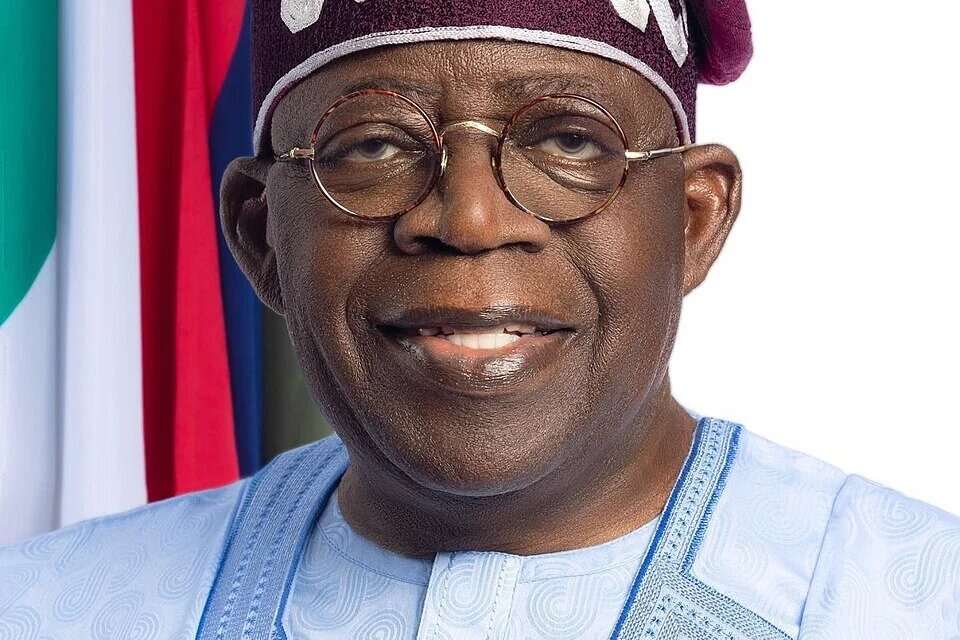
On the first day of 2026 President Bola Ahmed Tinubu addressed the nation with a message heavy on numbers, optimism, and reform. The speech highlights an economy on the mend. It mentions higher GDP growth and falling inflation. The speech also notes swollen foreign reserves, surging foreign direct investment, and a stock market that outperformed its peers.
It promises an acceleration of the Renewed Hope Ward Development Programme. This initiative aims to push 10 million Nigerians into work. Additionally, it includes a tax harmonisation drive to build a sustainable fiscal base.
It commits to deeper international security cooperation. It also reiterates plans for decentralised policing. Regulated forest guards will handle banditry and terror threats.
Those claims merit more than the ceremonial applause they received. For business leaders investors and millions of workers the fine print matters. This feature examines the numbers the policies and the political risks.
It combines recent macroeconomic data and market performance with on the ground realities in states and wards. It explores the likely impact on jobs, the tech sector, and capital formation.
The question at the heart of this investigation is simple. Are these promises the scaffolding of a durable recovery or a political sales pitch that carries new risks for ordinary Nigerians and for private enterprise
The arithmetic of optimism
President Tinubu told Nigerians that 2025 closed on a strong note. He mentioned that annualised GDP growth was expected to exceed 4 per cent. He said inflation had declined and reached below 15 per cent.
He pointed to foreign reserves of $45.4 billion on December 29 2025 as a buffer for the naira. He claimed FDI had surged to $720 million in Q3 2025. He also celebrated a stock market return that he put in the region of 48 per cent.
The broad macro narrative is supported by official and market data. Nigeria’s quarterly growth readings through 2025 show that the economy will expand at roughly four per cent in mid 2025. Growth will continue at this rate in late 2025, according to national accounts and independent forecasters.
External reserves have clearly been rebuilt since the currency unification. Reforms of the past two years have contributed to this. Official figures quoted by the presidency show a reserve stock in the mid forties of billions of dollars. This is as of late December 2025.
Foreign direct investment flows recorded a sharp rebound in the third quarter. This information comes from figures reported by the Central Bank and national press outlets.
Meanwhile the Nigerian Exchange enjoyed its best year in well over a decade. Market capitalisation and index returns surged across the year.
Numbers alone do not make durable prosperity. The crucial tests are distribution sustainability and the political economy of reform. A 4 per cent growth rate is welcome, but the structure of that growth matters.
Is it broad based or concentrated in extractives and a narrow formal sector. The risk is that headline growth coexists with high unemployment. Job creation is restricted and living costs worsen for low and middle income households.
Tinubu’s own speech showed awareness of that risk. It promised the Renewed Hope Ward Development Programme and emphasized social investments. The policy reflex is correct but the implementation burden is immense.
Tax reform and the price of the reset
The president framed the new tax laws as a once in a generation fiscal reset. It is designed to harmonise taxation, reduce distortions, and create fiscal space for infrastructure and human capital.
The laws are scheduled to commence on 1 January 2026. This deadline has been contested in courts. It has also been cried out against by labour groups and some state actors.
Key provisions in the 2025 legislative package aim to simplify tax codes. They expand the bases of taxable income. They also adjust revenue sharing.
Proponents argue the reform addresses a chronic low tax to GDP ratio and is necessary to reduce unsustainable borrowing.
Critics counter that the timing and certain design features trigger a consumer price shock. These also impose asymmetric burdens on small businesses and lower income households.
Two policy flashpoints deserve scrutiny.
First the harmonisation agenda. Tinubu praised states that have domesticated harmonised tax laws reducing multiple taxation. That domesticating process is uneven. Some states have moved fast to adopt uniform laws and to reassure investors.
Others, particularly in low revenue or politically sensitive regions, have been resistant. They perceive a centralisation of tax powers. There is also worry that allocations will shift against them. The distributional politics of who wins and who loses from a new revenue formula be destabilising.
Reports show that at least a handful of states had domesticated the harmonised laws. They did so in the days around the law’s commencement. Meanwhile, others remained publicly sceptical.
Second the burden on business and households. Certain elements of the reform package previously proposed raised strong objections during parliamentary debate. This included higher VAT proposals and a formal fiat to a fuel surcharge mechanism. Objections were also strong among governors and labour.
While lawmakers made concessions at stages some controversial instruments stay on the books or be introduced as regulations.
Exemptions for essential goods exist. Nonetheless, the practical impact on liquidity, working capital, and consumptive demand could be significant. This is especially true for micro firms and startups in the tech and creative economies. These companies rely on thin margins.
The timing is also awkward. The economy is benefiting from market reflation in equities and stronger reserves. Still, nominal incomes for many stay compressed. This is due to the wrenching subsidy removal and currency changes of 2023.
For the government the political calculation is clear. A broader and more efficient tax base reduces dependence on oil and borrowing. For businesses especially SMEs and early stage tech companies the immediate challenge is cash flow and compliance complexity.
Where jobs are meant to come from
Tinubu’s centrepiece social pledge is the Renewed Hope Ward Development Programme. The target is to place at least 10 million Nigerians into productive activity. This will be achieved by empowering 1,000 people in each of the country’s 8,809 wards.
The programme rests on the logic that ward level economic mapping can stimulate local microeconomies. Targeted micro interventions in agriculture, trade processing, and mining also contribute.
In theory the approach addresses the chronic mismatch between national policy pronouncements and ward level realities. Economic mapping can reveal local comparative advantages and direct support can be tailored to bread and butter sectors.
In practice the model faces major operational challenges. Mapping 8 809 wards and delivering credible capacity building credit and market access at scale requires administrative data management. It also requires robust monitoring. Above all, recurrent financing must be sustained beyond an electoral cycle.
The federal budget is already strained by debt servicing and capital commitments. It will need new dedicated revenue streams to maintain such a programme at the promised scale.
The stated fiscal anchor for this is the revenue yield from tax harmonisation and the broader fiscal reset. That makes the success of the Renewed Hope Programme contingent on a smooth tax transition and on states cooperation.
There is a second risk. Large scale ward targeting requires local institutional capacity and a degree of insulation from patronage. Nigeria’s political economy is intensely local.
If choice criteria and funds oversight are weak, the programme becomes a conduit for clientelist distribution. It will fail to serve as a high impact jobs engine. Transparent procurement credible community participation and external audits will be necessary to avoid this familiar trap.
The investment story and the gap between headline flows and patient capital
Foreign direct investment rebounded in Q3 2025 to levels not seen earlier that year. Inflows were reported at $720 million. This was according to Central Bank releases and press reporting. The stock market surge underlain by macro stabilisation expectations delivered handsome returns to investors and boosted market capitalisation.
These signals are important. They show investor appetite and a return of confidence among some classes of global and domestic capital.
But the distinguishing feature between portfolio inflows and transformational investment is durability and quality. Portfolio inflows chase yield and can reverse quickly if sentiment sours.
FDI on the other hand must anchor in real projects produce employment and transfer technology. Reported FDI flows in a quarter while welcome need to be analysed by sector. The 2025 rebound showed concentration around oil gas and extractive adjacent investments and select financial services.
The job rich sectors that anchor inclusive growth — manufacturing, logistics, and technology scale-ups — need longer lead times. They also need predictable policy and infrastructure. That last leg remains the constraint.
Investors will watch two things very closely in 2026. One is predictability in tax policy and litigation risk arising from ambiguities in the new laws. The courts and political interference in statutory proclamations have already surfaced as flashpoints.
The second is security. No amount of fiscal reform can substitute for basic safety of assets and personnel. The announcement of US supported strikes against ISIS affiliates in northwest Nigeria in late December 2025 highlighted improved intelligence sharing. It also drew attention to the delicate issue of foreign military involvement on domestic soil.
International partners bring capability but also reputational and diplomatic costs that can complicate investor calculus.
Security cooperation, sovereignty and human rights risks
Tinubu’s speech mentioned decisive actions against terrorist targets in the northwest on December 24. He promised deeper cooperation with international partners, including the United States.
In the days that followed, both Nigerian authorities and US officials publicly acknowledged the strikes. These strikes targeted Islamic State-linked groups in the northwest. The Pentagon released material and the US president commented publicly on the actions.
These operations matter for two reasons. Nigeria’s partners now view the security problem as worthy of kinetic support. This indicates that Nigeria is inviting or at least permitting active foreign military involvement.
Operational cooperation can reduce immediate threats to lives and infrastructure but it creates governance dilemmas.
First, there are legal and sovereignty questions. Under what precise authorities were foreign forces invited or allowed to function. What oversight exists to guarantee strikes are proportionate and do not cause civilian harm.
Second, there is the problem of radicalisation. Heavy handed kinetic responses without credible political and economic alternatives can feed cycles of violence.
Tinubu also reiterated his belief in a decentralised policing architecture complemented by regulated forest guards. The forest guards project is already active in pilot states. It serves as a method to deny criminals the terrain they use as hideouts.
Local knowledge and community legitimacy can indeed be force multipliers in counter insurgency. Arming or deputising local forces carries major human rights risks. It also poses accountability risks if recruitment training, vetting, and command and control are weak.
Many countries that have experimented with similar models saw success only when lines of accountability were clearly established. These lines must connect to civilian authorities. Judicial oversight must also be strictly enforced. The danger in a rush to militarise local communities is the embedding of militia networks that outlive the original mandate.
For investors and employers the immediate concern is operational continuity. Kidnapping and banditry impose implicit taxes on logistics increase insurance and security costs and deter labour mobility.
A fragile security architecture thus remains the single biggest non fiscal threat to the economic renewal the president outlined.
Tech sector and startups: optimism with caveats
Nigeria’s technology ecosystem has matured in recent years and 2025 saw some major exits and continued VC activity. But the startup ecosystem is sensitive to policy changes that affect consumer spending exchange rate volatility and compliance costs.
The new tax landscape will alter effective taxation on digital goods cross border services and payment platforms. In many jurisdictions harmonised tax codes simplify compliance and remove local duplicative levies.
Harmonisation in Nigeria will reduce the multiplicity of local levies. This reduction could happen if it is implemented transparently. These levies have long bedevilled small businesses and digital merchants. That would be a boon.
The counterargument is that transitional frictions will be meaningful. Many startups run with negative cashflows for years while they scale. New withholding regimes could squeeze margins. Stricter definitional changes to taxable income or heavier indirect taxes on platform services might deter early stage investment.
Fintechs that process cross border remittances and software companies exporting services need clarity on treaty treatment withholding tax. They also need to understand the new global basic tax rules that the reform package contemplates for large multinationals.
In short, the policy direction is promising. Nonetheless, execution and clarity on compliance timelines will decide the outcome. The tech sector will emerge as a growth multiplier or as a casualty of short-run fiscal consolidation.
The labour market and inflation dynamics
Tinubu’s speech promised lower inflation below 15 per cent and an intent to reduce it further in 2026. Forecasts from independent central banks cited in late December 2025 showed expectations for continued easing of inflation. They also projected growth for 2026 above four per cent.
But headline inflation is a blunt instrument for living standards. Food inflation, wage dynamics and energy prices decide the everyday reality for most Nigerians.
The removal of subsidies in 2023 and the pass through to many consumer prices restructured relative prices in the economy. Lower headline inflation in an environment where wages stay stagnant still means falling real incomes for many.
The Renewed Hope programme and targeted livelihood interventions can soften the social impact of reform. They will be effective only if they reach beneficiaries at scale. Prompt delivery is also crucial.
A one-off tranche of support will have limited long-term impact if it is unaccompanied by training. Access to markets and working capital is also necessary.
In the near term, private sector caution will constrain formal employment creation. Firms need to adapt to new tax and compliance regimes.
Public sector hiring can substitute temporarily but it is unsustainable as a long run jobs strategy. The fiscal arithmetic will thus decide the plausibility of Tinubu’s jobs promise.
Debt fiscal space and the NNPC arc
Behind the rosy headline on reserves sits an ongoing fiscal and governance dilemma. The presidency and the NNPC made high level decisions on debt management. They also decided on asset management around the close of 2025. These decisions affect public accounts.
A large scale write off or restructuring of state oil company liabilities can tidy the balance sheet. However, it does not automatically create cash for social programmes.
Nigeria’s debt stock and contingent liabilities need disciplined prioritisation and transparent reporting to sustain investor confidence. Any ambiguity invites rating agencies to apply caution and investors to demand higher returns especially in the bond markets.
What should business and policy makers do now
For corporate boards investors and policy makers the silver lining in Tinubu’s speech is the clarity of the government’s intentions. That empowers private actors to make contingent plans. The immediate checklist is simple practical and urgent.
1. Demand clarity on legal texts and administrative guidance for the new tax laws. Corporates and representative bodies should press for an accessible transitional calendar. They should also advocate for dispute resolution mechanisms that avoid punitive upfront seizures or draconian pre-litigation deposits. Uncertainty is the enemy of investment.
2. For tech founders and SMEs engage with tax authorities and industry groups now to co design compliance templates. Seek rulings where ambiguity exists and structure cash management to survive the transitional window.
3. Multilateral partners and donors should condition their support on safeguards for human rights. This is especially important when security cooperation and foreign strikes are involved. Military success must be accompanied by governance reforms and community reconciliation to avoid future blowback.
4. For states insist on negotiated revenue sharing arrangements and transparent domestication processes. Governors and sub national leaders must be part of the reform to remove the temptation for zero sum resistance.
5. For the Renewed Hope programme create independent oversight. Anchor the programme on digital registries third party audits and measurable KPIs that track income generation not merely cash transfers. Leverage private sector procurement to channel skills in agritech logistics and market linkages.
The political risk that could undo the plan
Economic reform is rarely only technical. It is a political bargain. Tinubu is asking Nigerians to accept short run pain for a promised long run gain.
The risk that could undo the plan is not a single event. It is the accumulation of poorly managed transitional shocks. A security flare up can displace investment. Additionally, there is a perception that reforms enrich a narrow elite while ordinary people suffer.
There are early warning signs. Labour unions and some governors have publicly threatened action over perceived unfair provisions in the tax laws.
Food price pressures stay the number one political risk. In this economy, most households spend the bulk of their income on staples. A sharp reversal in portfolio flows will raise borrowing costs. At the same time, productive investment remains tepid. This situation will force austerity. It would deepen the social contraction.
The president’s emphasis on unity and shared responsibility is necessary. Yet words must be matched with transparent institutions.
If the tax changes are genuinely calibrated to protect the poorest, the political equilibrium may hold. This will be true if Renewed Hope is credibly insulated from patronage. If not the political centre will buckle under cumulative shocks leading to social unrest and a deepening investor exodus.
Verdict — cautious optimism with conditionality
President Tinubu’s New Year address sets the contours of a reformist agenda. It could modernise Nigeria’s fiscal architecture. It aims to stabilise the macroeconomy and reorient growth to be more inclusive. The gains of 2025 in reserves markets and headline growth are real. But the success of the 2026 agenda is conditional.
It depends on legal clarity and fairness in tax implementation. Governance of social programmes must be credible. Effective state level partnerships are essential. A security strategy should keep rights and accountability at its core.
For business the immediate move is not panic or blind celebration. It is engagement. Engage the tax authorities demand schedules and rulings build contingency plans for compliance and factor security costs into investment decisions.
For citizens the test will be visible household improvements not abstract GDP numbers. And for the government there is an old proverb worth recalling. Numbers open doors. Trust keeps them open.
Follow us on our broadcast channels today!
- WhatsApp: https://whatsapp.com/channel/0029VawZ8TbDDmFT1a1Syg46
- Telegram: https://t.me/atlanticpostchannel
- Facebook: https://www.messenger.com/channel/atlanticpostng