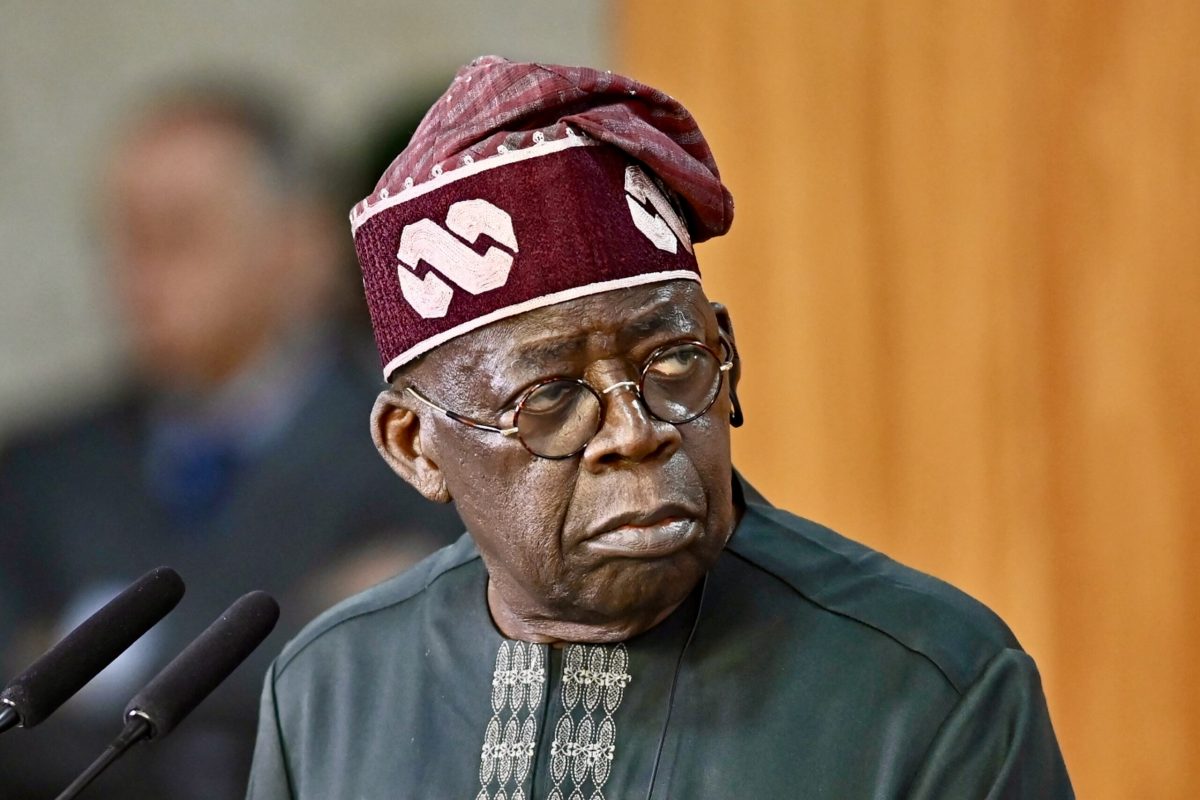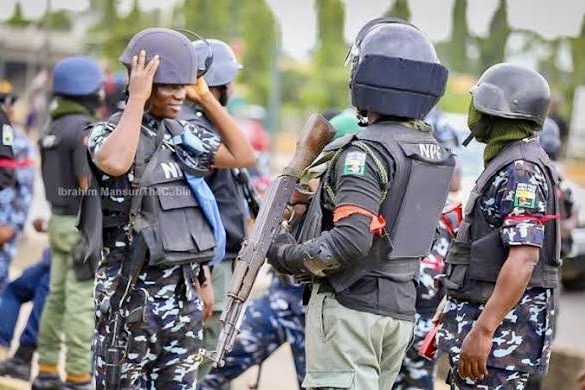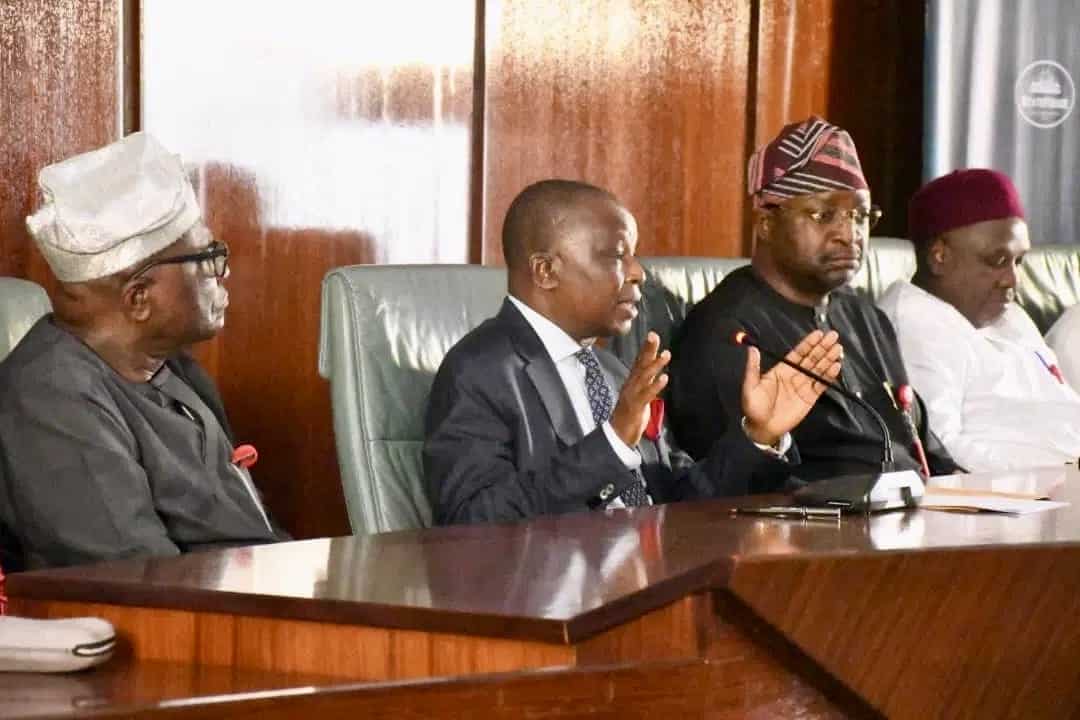
Attorney General Prince Lateef Fagbemi addressed Nigeria’s political crisis, justifying President Tinubu’s state of emergency in Rivers State. The declaration follows a Supreme Court ruling declaring the governor’s actions unconstitutional. Fagbemi emphasised the need for accountability and constitutional adherence, framing the intervention as essential for restoring governance and national stability.
ABUJA, Nigeria — In a press conference that has sent shockwaves through Nigeria’s political landscape, Attorney General of the Federation (AGF) and Minister of Justice Prince Lateef Fagbemi delivered a candid explanation of President Bola Ahmed Tinubu’s unprecedented decision to declare a state of emergency in Rivers State.
Speaking from the State House in Abuja on Wednesday, 19 March 2025, Fagbemi’s remarks have become the focal point of intense national debate, as they lay bare the constitutional and political rationale behind what many are calling a bold intervention to salvage a state teetering on the brink of total governance collapse.
A Crisis Forged in the Fires of Political Mismanagement
For nearly two years, Rivers State has been mired in a crisis born of severe political mismanagement and constitutional breaches. Fagbemi detailed how the crisis, which has roots dating back to 2023, escalated after the state’s governor – in a bid to secure his hold on power – unilaterally dismantled the House of Assembly.
This move not only disrupted the delicate balance between the executive, legislature, and judiciary but also undermined the very foundations of democratic governance in the state.
According to the Attorney General, the governor’s decision to remove key legislative members and replace them with loyalists created an environment where accountability was effectively erased.
“When the governor took the law into his own hands by demolishing the House of Assembly, he not only disregarded the democratic process but also paved the way for a complete breakdown in the system of checks and balances,” Fagbemi explained.
This profound dereliction of duty set the stage for a series of legal challenges that culminated in a historic Supreme Court judgement.
The Supreme Court Judgement: A Constitutional Earthquake
The turning point in Rivers State’s political quagmire came on 28 February 2025, when the Supreme Court delivered a landmark ruling. In its categorical pronouncement, the highest court in the land found that the governor had flagrantly breached the Nigerian Constitution.
Fagbemi emphasised that the court’s decision was not merely a legal formality—it was an unequivocal condemnation of the governor’s despotism.
“The Supreme Court’s findings were both profound and unequivocal,” he stated. “The judgment exposed how the governor’s actions had rendered the entire structure of government in Rivers State ineffective. There was, quite simply, no government left to speak of.”
By establishing that the governance structure in Rivers had been so thoroughly eroded, the ruling provided the legal and moral imperative for the President to act decisively.
For Fagbemi, the Supreme Court’s decision was the necessary catalyst that left President Tinubu with no alternative but to intervene.
“When the highest court of the land declares that the state’s governance is in shambles, any responsible head of state must act. It is not a matter of political convenience but of constitutional duty,” he asserted.
President Tinubu’s Bold Intervention: Taking the Bull by the Horns
Amid growing lawlessness, economic uncertainty, and mounting security threats, President Tinubu took what Fagbemi described as “the only sensible course of action” – declaring a state of emergency in Rivers State.
The Attorney General was unequivocal in defending the President’s move as both timely and necessary.
Fagbemi recounted the lead-up to the decision, highlighting that prior to the emergency declaration, numerous attempts had been made to resolve the crisis through dialogue and mediation.
“Well-meaning Nigerians, leaders of thought, and concerned citizens had all tried to steer the situation back to a semblance of normalcy. But when those efforts failed, the president was left with no choice but to act,” he explained.
The state of emergency, as invoked under section 305 of the Nigerian Constitution, permits the suspension of ordinary governmental functions in times of extreme crisis.
“The law envisages that there will be moments when extraordinary measures are required to preserve lives, property, and the nation’s economic lifeblood. This is precisely one such moment,” Fagbemi asserted.
Critics have suggested that Tinubu’s decision was made hastily. In response, Fagbemi posed a pointed rhetorical question:
“When do you think he should have acted? When everything has completely collapsed?”
His defence rests on the notion that any delay in intervention would have allowed the situation to spiral even further out of control, ultimately leading to irreversible damage not only to Rivers State but to the nation’s economic stability as well.
Constitutional Mandate and the Imperative of Obedience
Central to the Attorney General’s explanation is the inviolable nature of the Nigerian Constitution. Fagbemi reminded his audience that the Supreme Court’s ruling is final and binding.
“There is no higher authority than the judgment of the Supreme Court,” he declared, stressing that every citizen and official has a duty to uphold its determinations. This commitment to constitutional obedience forms the bedrock of his argument in support of the emergency declaration.
By invoking section 305, Fagbemi explained that the emergency is not a power grab or an arbitrary decision. Instead, it is a constitutional safeguard designed for circumstances when the normal functions of government are compromised.
“Extraordinary situations demand extraordinary measures,” he remarked, underscoring that when key institutions have been subverted, the state is left with no alternative but to restore order through decisive intervention.
This legal framework, Fagbemi argued, not only legitimises the emergency declaration but also serves as a deterrent against future breaches of democratic processes.
“If those who undermine our democratic institutions are allowed to get away with it, the consequences for our nation could be dire,” he warned.
The Role of the House of Assembly: From Legislature to Liability
One of the most damning aspects of the crisis, as outlined by Fagbemi, is the near-collapse of the legislative arm in Rivers State. Traditionally, the House of Assembly is charged with ensuring government accountability through budget approvals, oversight of executive functions, and the ratification of key appointments.
However, the governor’s interference transformed this vital institution into a rubber-stamp body for his unilateral decisions.
Fagbemi recounted how the governor’s preferential treatment of select legislators—coupled with the outright dismissal of dissenting voices—resulted in a legislative body that no longer served the interests of the people.
“When the very institution meant to act as a check on executive power is rendered dysfunctional, the foundations of governance are undermined,” he asserted.
This systemic failure left the state vulnerable to further abuse, making the emergency declaration a necessary corrective measure.
Security, Economic Stability, and the Imperative of Action
The repercussions of the political crisis in Rivers State extend far beyond the corridors of power. The state’s volatile security environment, compounded by deliberate acts of vandalism against vital oil pipelines, has posed a direct threat to Nigeria’s economic lifeline.
For years, Rivers State has played a critical role in the country’s oil production, contributing significantly to national revenue and economic stability.
Fagbemi highlighted that, prior to the crisis, President Tinubu’s policies had boosted oil production from 900,000 to approximately 1.5 million barrels per day—a 45% increase that had transformed the economic prospects of many states.
“The governor’s mismanagement, however, has not only jeopardised this progress but has also endangered the lives of millions by inviting militant attacks on our critical infrastructure,” he warned.
In this context, the state of emergency is portrayed as a pre-emptive measure to secure both the physical safety of citizens and the economic interests of the nation.
“The president’s intervention was not about political expediency—it was about ensuring that the economic and security lifelines of Nigeria are not irreparably damaged,” Fagbemi stated, reinforcing the argument that immediate action was the only viable option.
The Impeachment Question: A Compromise or a Calculated Move?
The emergency declaration has sparked intense debate over whether it serves as a compromise to shield the governor and his deputy from the full brunt of impeachment. Fagbemi addressed these concerns head-on, noting that there had been whispers of an imminent impeachment notice from the House of Assembly.
“Had the impeachment process been allowed to run its full course, both the governor and his deputy would have been removed from office for the remainder of the term,” he explained.
While some have interpreted the state of emergency as a political manoeuvre to postpone or soften the blow of impeachment, Fagbemi maintained that the measure was a necessary response to an extraordinary situation.
“It appears to be a compromise, but it is a compromise born of necessity rather than political calculation. When the options are either total governmental collapse or temporary suspension to restore order, the latter is the only acceptable course,” he argued.
By framing the decision in these terms, Fagbemi shifts the focus away from personal vendettas and partisan interests, urging Nigerians to view the move as a safeguard for democracy and national security.
“This is not about saving individuals; it is about saving the very fabric of our state and, by extension, our nation,” he insisted.
Lessons from the Past: A Comparison with Previous Emergencies
In drawing comparisons with earlier instances of emergency rule in Nigeria, particularly during the tenure of former President Goodluck Jonathan, Fagbemi was careful to delineate the unique circumstances surrounding the Rivers State crisis.
While emergency measures have been deployed in the past—such as during the insurgency and the COVID-19 pandemic—the current situation is fundamentally different.
“In previous emergencies, the measures were reactive responses to discrete security threats. Here, we are dealing with a systemic breakdown of governance,” he explained.
This historical perspective is critical, Fagbemi argued, in understanding why President Tinubu’s decision was not only justified but also imperative.
“There is a clear distinction between addressing an isolated incident and intervening in a situation where the entire democratic structure has been compromised,” he noted.
This comparison serves to reinforce the view that the emergency declaration is a response to a deep-seated crisis rather than an overreach of executive power.
The Broader Implications: Democracy, Accountability, and National Unity
Beyond the immediate need to restore order in Rivers State, the Attorney General’s explanation carries profound implications for the future of Nigerian democracy. Fagbemi warned that failing to address the breakdown in governance could set a dangerous precedent—one where despotism and unchecked power become the norm rather than the exception.
“The emergency declaration is not an end in itself,” he stressed. “It is a temporary suspension of normal government functions designed to create the space necessary for reform and reconstitution. If we allow such breaches of the Constitution to go unchallenged, the very essence of our democracy is at risk.”
This call for accountability extends not only to the governor and the derelict legislature but also to all political actors who undermine the institutions of governance.
Fagbemi’s message is one of national unity and a plea for every Nigerian to take collective responsibility in upholding the values enshrined in the Constitution.
“We must all, collectively and individually, respect the rule of law. Only then can we hope to rebuild a government that truly represents the will and interests of the people,” he concluded.
Rebuilding Trust and Charting a Path Forward
As the state of emergency continues to reverberate through Rivers State and the broader national polity, the challenge now is to transition from crisis to recovery. Fagbemi hinted that once stability is restored, a process of reconciliation and political reorganisation will be necessary.
“A Rivers State Sole Administrator may eventually be appointed, and with that, there is an opportunity to rebuild the legislative structure from the ground up,” he indicated.
This period of transition, however, will not be without its challenges. Deep-seated mistrust between political factions, compounded by years of mismanagement, means that the road to recovery will be long and fraught with difficulties.
“Reconciliation is not merely about removing individuals from power; it is about restoring faith in the democratic process and ensuring that every Nigerian enjoys the dividends of genuine governance,” Fagbemi emphasised.
The Attorney General’s explanation, therefore, serves as both a justification for the present intervention and a blueprint for the future. It calls upon all stakeholders—from national leaders to grassroots activists—to engage in a concerted effort to rebuild a system that is transparent, accountable, and inclusive.
Concluding Reflections: A Pivotal Moment for Nigeria
In sum, Attorney General Prince Lateef Fagbemi’s detailed explanation of President Tinubu’s proclamation of a state of emergency in Rivers State presents a compelling case for decisive action in the face of a governance breakdown.
His remarks have laid bare the constitutional, political, and economic imperatives that left the President with no alternative but to intervene. By invoking the Supreme Court’s landmark judgement, outlining the catastrophic implications of legislative collapse, and underscoring the critical need to secure Nigeria’s economic lifeline, Fagbemi has offered a robust defence of the emergency declaration.
This intervention, while undoubtedly controversial, is portrayed as a necessary measure to preserve national unity and prevent further descent into anarchy. The Attorney General’s message is clear: when the institutions that underpin democracy are under siege, only bold, constitutionally grounded actions can restore order and pave the way for meaningful reform.
As Nigeria stands at this pivotal crossroads, the eyes of the nation—and indeed the world—are fixed on Rivers State. The coming days will reveal whether this emergency measure can indeed act as a catalyst for genuine political renewal or whether it will serve as a cautionary tale of what happens when the rule of law is allowed to falter.
One thing, however, remains indisputable: the accountability of those in power, as articulated by Attorney General Fagbemi, is non-negotiable, and the path to recovery begins with a steadfast commitment to constitutional principles.