ABUJA — Nigeria’s confrontation with South Africa over renewed xenophobic attacks has moved from diplomatic protest to parliamentary escalation, with the Senate resolving to send a joint National Assembly delegation to Pretoria in a bid to halt the violence and protect Nigerians caught in the latest wave of anti-foreigner unrest.
The delegation will be a joint committee of both chambers and that Senate President Godswill Akpabio will lead it, while Reuters says at least 130 Nigerians in South Africa have already asked to be flown home under a new government-assisted repatriation scheme.
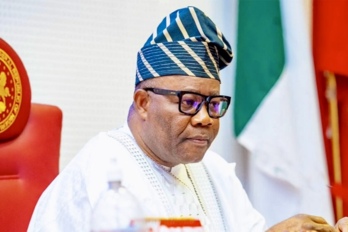
Akpabio’s intervention was striking for both its tone and its political weight. In remarks circulated online and repeated in the current debate, he described the attacks as “barbaric”, “cruel” and “stone age behaviour”, insisting that Nigeria could not remain passive while its citizens were being terrorised abroad.
His position mirrors the Senate’s formal resolution, which followed a motion condemning the attacks and authorising a cross chamber mission to South Africa.
LThe political message is clear: Abuja is no longer treating this as a routine consular issue, but as a test of Nigeria’s ability to defend its citizens beyond its borders.
The federal government is already acting on the ground. Reuters reports that Nigeria has condemned the violence, including the deaths of two Nigerians allegedly assaulted by security officials, and is demanding “full cooperation” from South Africa on autopsy reports, post mortem documents, case files and access to legal processes for the bereaved families.
Play The Ministry of Foreign Affairs has also summoned South Africa’s High Commissioner in Abuja, while Nigerian diplomatic missions in South Africa are working with local authorities to reduce risks to Nigerians.
The Guardian further reports that the South African envoy was summoned for a meeting in Abuja on May 4, 2026, after reports that harassment, violence and property destruction had escalated.
What makes the latest episode politically dangerous is that it is unfolding against a familiar and embarrassing backdrop.
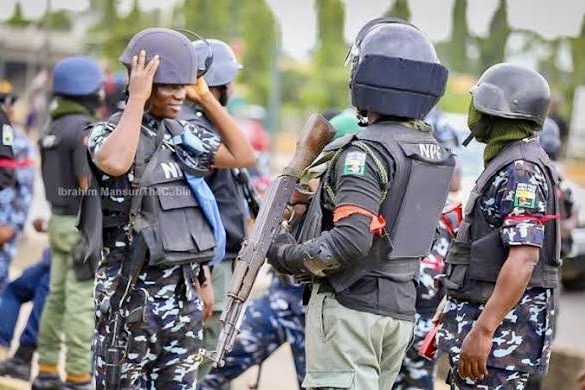
Reuters says protests in Pretoria and Johannesburg have been driven by demands for tougher action against illegal immigration, with undocumented foreign nationals blamed by demonstrators for pressure on jobs, security and public services.
South Africa last month promised to crack down on xenophobic attacks after Ghana and other African countries complained, but those assurances have not prevented the current backlash or the fresh Nigerian repatriation request.
MReuters also says more protests were scheduled for May 4 and May 8, a sign that the crisis may still deepen before it settles.
For Nigeria, this is not an isolated diplomatic flare up. Premium Times notes that xenophobic attacks in South Africa have recurred since the early 2000s, with major waves in 2008, 2015 and 2019, when Nigerian businesses were destroyed and citizens were evacuated.
Reuters reported in 2015 that Nigeria recalled its top diplomat over attacks on foreigners, while the Guardian reported in 2019 that President Cyril Ramaphosa condemned anti foreigner violence after riots in Johannesburg claimed lives and wrecked businesses.
The pattern matters because it exposes a repeated gap between public promises from Pretoria and real protection for migrants on the streets.
The current backlash is also being intensified by domestic pressure inside Nigeria. Punch reported on April 29 that the National Association of Nigerian Students urged the Federal Government to protect Nigerian students in South Africa, warning of a “disturbing pattern of hostility” and calling for emergency shelters, hotlines, financial assistance and a coordinated evacuation plan for those willing to return.
That student intervention shows the issue is no longer limited to foreign policy circles. It has become a public safety concern, a diaspora protection question and a measure of whether Nigeria can defend its nationals with speed, seriousness and leverage.
Seen properly, Akpabio’s move is both symbolic and strategic. Symbolic, because it signals outrage and solidarity with Nigerians who feel abandoned.
Strategic, because parliamentary diplomacy can create additional pressure on the South African state at a moment when it is already facing criticism from other African governments. But the real test will not be the optics of a delegation.
It will be whether South Africa produces arrests, prosecutions, transparent investigations and visible guarantees of safety for Nigerians and other foreign nationals. Without that, this will be remembered as another cycle of outrage, summonses and promises.
In essence, the Akpabio mission is Nigeria’s latest attempt to turn moral anger into diplomatic muscle. The Senate has spoken, the Foreign Ministry has moved, and pressure is mounting from students, families and the wider public.
What happens next will determine whether this crisis becomes a turning point in Nigeria South Africa relations or merely the latest chapter in a long and painful record of anti Nigerian violence abroad.
Follow us on our broadcast channels today!
- WhatsApp: https://whatsapp.com/channel/0029VawZ8TbDDmFT1a1Syg46
- Telegram: https://t.me/atlanticpostchannel
- Facebook: https://www.messenger.com/channel/atlanticpostng