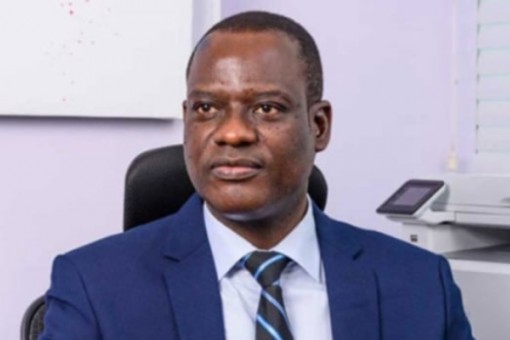
Finance Minister Taiwo Oyedele calls Nigeria’s proposed external borrowing an investment in infrastructure and growth. But the decisive questions are what each loan will finance, how much repayment will cost and whether Nigerians will see measurable benefits.
Nigeria’s plan to raise $21.7bn in external financing is being sold as an investment in the country’s economic future. Yet, the argument that the money will create valuable assets does not remove the debt obligations that will come with it.
That distinction lies at the heart of the debate confronting President Bola Tinubu’s administration as it seeks National Assembly approval for a supplementary external borrowing plan covering 2026 and 2027.
Finance Minister and Coordinating Minister of the Economy Taiwo Oyedele has rejected criticism that the proposal represents excessive borrowing, insisting that the money is intended to finance productive infrastructure rather than government consumption.
“I’m pleased and excited to inform you that actually this does not qualify as borrowing. This qualifies as investment,” Oyedele told State House correspondents on Wednesday after a Federal Executive Council meeting in Abuja.
The minister’s argument rests on a familiar economic principle: borrowing can be justified when the assets it finances generate benefits greater than the cost of financing them.
But the distinction between a productive loan and an expensive public liability depends on evidence, not terminology. Roads must reduce travel costs, power investments must improve electricity supply, and rail projects must generate sufficient economic activity to justify their construction and financing.
For Nigeria, therefore, the real test is not simply whether the proposed projects are desirable. It is whether their costs, financing terms, implementation arrangements and expected returns withstand public scrutiny.
What Nigeria’s $21.7bn borrowing plan covers
President Tinubu submitted the proposal to the National Assembly as a programme to finance infrastructure and other investments across several sectors. The request comprises $20.52bn and approximately €1.045bn, equivalent to roughly $1.17bn, bringing the total to about $21.7bn. Legislative approval is required before the government can proceed with the proposed financing programme.
According to details outlined by the government, the plan covers 46 projects across 11 sectors, with 29 projects expected to receive financing on concessional or blended terms.
Transportation accounts for the largest share, at approximately $10.6bn. The proposed investments include sections of the Lagos–Calabar Coastal Highway and Sokoto–Badagry Highway, alongside the Kano–Kaduna rail project.
Ten flagship projects account for $12.5bn, or about 58 per cent of the overall package.
The proposed allocation also includes approximately $4bn for social sectors, agriculture, energy, social protection, climate and education. The government says this component will be funded entirely on concessional terms.
The development case is significant. Better roads could connect agricultural communities to markets, reduce the cost of moving goods and improve access to essential services. More reliable electricity could lower operating costs for manufacturers and small businesses. Efficient rail transport could strengthen regional trade and reduce pressure on roads.
Yet the scale of the programme makes project-level scrutiny particularly important. A list of national priorities is not, by itself, proof that every project has been appropriately costed, can be completed on schedule or will deliver value for money.
The government needs to demonstrate not only what it intends to build but also why each project merits its proposed cost and financing structure.
The interest-rate argument has limits
Oyedele has presented the proposed financing terms as evidence that Nigeria is pursuing a more financially disciplined borrowing strategy.
About $7.9bn is expected to come from multilateral and bilateral development partners, with the World Bank accounting for a proposed $5bn component at an average interest rate of about 2.1 per cent.
The remaining financing is expected from other sources, including regional development finance institutions, export credit agencies and commercial banks.
For the commercial component, the government has cited an average indicative rate of 7.8 per cent. Oyedele contrasted this with yields of between 9.1 and 9.6 per cent on Nigeria’s November 2025 Eurobond, attributing the improved financing prospects partly to credit-rating upgrades by Fitch, Moody’s and S&P.
The comparison is encouraging, but it is not sufficient to establish the full cost of the proposed borrowing.
Interest rates alone do not reveal the total financing burden. Loan maturities, grace periods, arrangement fees, repayment schedules, currency exposure and other contractual conditions all influence how expensive a loan ultimately becomes.
Nor are commercial loan rates and sovereign bond yields automatically comparable without examining their respective terms.
For lawmakers, the relevant question is whether the government can publish enough information to establish the full cost of each financing arrangement and explain why it offers better value than available alternatives.
Concessional financing may reduce the immediate burden on public finances. It does not eliminate the need for sound project selection, effective implementation and repayment planning.
Why the debt remains debt, even when it finances investment
The minister’s distinction between borrowing and investment is economically useful but potentially misleading if interpreted literally.
Borrowing describes how the government obtains the money. Investment describes what the money is used to do.
A repayable external loan remains a debt obligation even when it finances a road, railway, power facility or agricultural programme. Its economic justification depends on whether the asset generates sufficient financial, social or productivity benefits to compensate for its cost.
The risk becomes more serious when projects are delayed, abandoned, overpriced or unable to deliver the benefits promised at approval.
A highway may improve connectivity, but its wider economic value depends on construction quality, maintenance, traffic demand and connections to productive communities. A railway may reduce freight costs, but only if it attracts sufficient traffic and is supported by functioning logistics infrastructure. Power investments may expand transmission capacity, but their impact also depends on the wider electricity system.
These are not arguments against borrowing. They are reasons to insist on evidence before committing future public revenue.
Oyedele argued that Nigeria cannot develop major infrastructure by relying solely on accumulated savings.
“If Aliko Dangote was going to save money to build his refinery, it would not have been built in his lifetime,” he said, using the industrialist’s refinery as an example of the role of financing in large-scale investment.
He added: “To the extent that you borrow one naira to create value of more than one naira, you should please borrow more.”
The principle is straightforward. The challenge is establishing, before the loans are taken, that the expected value will exceed the full cost and risk.
Private companies can also raise capital, sell assets or restructure operations when projects underperform. Governments have a different set of constraints. They must service public debt from revenue and maintain essential services even when a project fails to generate its expected returns.
The comparison with private investment, therefore, is useful but incomplete.
The existing debt burden makes value for money essential
Nigeria is not assessing the proposed borrowing in isolation.
The Federal Ministry of Finance’s economic reform scorecard put total public debt at approximately ₦159.28tn at the end of December 2025. Its assessment also identified debt servicing against relatively low government revenue as a central fiscal constraint, estimating debt-service costs of about ₦15.8tn against projected Federal Government revenue of ₦36.87tn in 2026.
That is more than 40 per cent of projected federal revenue.
The ratio does not, on its own, establish that Nigeria cannot afford additional borrowing. Debt sustainability depends on several factors, including the cost and maturity of loans, the exchange rate, economic growth, government revenue and the productivity of the assets financed.
But it highlights the opportunity cost of borrowing. Money used to service debt is money that cannot simultaneously fund hospitals, schools, security, social protection or other public priorities.
The government has also argued that the debt-service-to-revenue ratio has fallen substantially from the 97 per cent it says prevailed when Tinubu took office in May 2023.
Both measures should be interpreted in the context of their underlying periods and definitions. A falling ratio represents progress, but it does not mean new liabilities carry no fiscal risk.
The government must establish that the proposed projects can be financed without creating undue pressure on future budgets, particularly if implementation takes longer or revenues fall short of expectations.
States and agencies also stand to receive funds
Another important element of the proposal is that the full amount is not intended for the Federal Government alone.
Oyedele said approximately $4.8bn was earmarked for borrowing by states and public agencies. About $3.3bn would go directly to states, while approximately $1.45bn would be channelled through agencies and development finance institutions, including the Bank of Industry, Development Bank of Nigeria, Transmission Company of Nigeria and electricity distribution companies.
The figures are rounded, but the distinction matters. The federal government acts as the interface for external borrowing, even where financing supports projects implemented by other public bodies.
Oyedele said: “The Federal Government has the constitutional duty to be the interface for all external borrowing. So when people say we are borrowing $21.7bn, they need to know that a significant chunk is for states, the FCT, and agencies, not for the Federal Government alone.”
That explanation provides important context, but it also raises a practical accountability question: who will be responsible for delivering each project, managing disbursements and demonstrating results?
When funds pass through multiple levels of government and public institutions, oversight needs to follow the money from the original financing agreement to the final expenditure.
Each implementing institution should have identifiable responsibilities, published milestones and a clear process for reporting delays, cost changes and delivery failures.
The fact that a project benefits a state or public agency should not weaken scrutiny of its financing.
Four projects illustrate the potential benefits
In his briefing, Oyedele also highlighted four of 10 financing-related memoranda approved by the Federal Executive Council.
The first was a €155.9m credit facility from Deutsche Bank and other lenders to upgrade five substations under the Presidential Power Initiative Phase One. The government says the work is intended to improve electricity reliability and reduce energy costs for homes and businesses.
The second was a $970m syndicated term loan from Standard Chartered and the Africa Finance Corporation for rolling stock on the Karu–Maradi rail line. The stated objectives include supporting freight transport, strengthening regional trade and lowering logistics costs along the Northern Economic Corridor.
The third was a €76.8m credit from the ECOWAS Bank for Investment and Development to Bauchi State for a transport infrastructure development programme, including urban and rural roads and farm-to-market access routes.
The fourth concerned non-intrusive inspection scanners for the Nigerian Customs Service, with funding for technical support, repairs and maintenance. Oyedele said the equipment would accelerate cargo clearance and help detect smuggling, misclassification, contraband and dangerous small arms.
These are tangible objectives against which performance could be measured.
For electricity, the government could publish changes in transmission capacity, outages and the reliability of supply in the affected areas. For rail, it could report freight volumes, operating costs and cargo transit times. For roads, it could track kilometres completed, journey times and access to agricultural markets. For customs scanners, it could disclose clearance times and verified detection results.
Such indicators would turn broad promises into measurable public commitments.
The four examples should not, without a financing breakdown, be assumed to represent the entire $21.7bn programme or be added to it as separate totals. The government should clarify which financing approvals are included in the proposed package and which are outside it.
Atiku demands disclosure before approval
The borrowing proposal has drawn criticism from former Vice-President Atiku Abubakar, the African Democratic Congress presidential candidate, who has urged lawmakers to suspend consideration until the government publishes fuller details.
Atiku questioned the timing and transparency of the request, arguing that Nigerians need more than a list of sectors to understand how such a large amount would be spent.
He called on the National Assembly to demand project-by-project information covering costs, locations, contractors, loan terms and repayment obligations before approving the financing.
His criticism reflects a legitimate scrutiny test for public borrowing, although the allegations and concerns he has raised are not, by themselves, evidence of wrongdoing.
The government, for its part, says the financing will support 46 projects over an average project lifespan of five years and will not necessarily be drawn down in full.
That distinction is important. A borrowing plan is not the same as money already disbursed, and parliamentary approval would not automatically mean that all the funds had been borrowed or spent.
But approval should not be treated as a substitute for scrutiny. Lawmakers need to understand not only the proposed projects but also the conditions under which money can be drawn, the repayment profile and the consequences if projects fail to meet their targets.
Will the economic recovery reach households?
Oyedele defended the borrowing plan against the backdrop of what he described as a recovery in Nigeria’s macroeconomic position.
He said economic growth had accelerated, foreign reserves had strengthened, inflation had eased and the debt-service burden relative to revenue had declined since 2023.
The minister also cited government interventions, including ₦372.6bn disbursed through the Nigerian Education Loan Fund to more than 1.5 million students, cash transfers exceeding ₦600bn to more than 10 million households and subsidised single-digit loans for over 800,000 micro, small and medium-sized enterprises.
These figures, as presented by the government, are relevant to assessing its wider economic programme. They do not remove the need to assess the proposed loans on their own merits.
The National Bureau of Statistics reported headline inflation of 14.63 per cent in September 2026, down from 20.98 per cent a year earlier. Yet food inflation remained 19.59 per cent year-on-year, despite a decline in food prices on a month-on-month basis.
That distinction matters to households. A slower rate of inflation does not necessarily mean that prices have returned to previous levels or that food has become affordable.
The World Bank’s October 2026 Nigeria Development Update estimated real GDP growth of 4.2 per cent in the first half of the year. It also stressed that stronger economic performance must translate into more inclusive growth, better services and improved living standards.
The policy challenge is therefore twofold: stabilise the economy and ensure that public investment produces visible improvements in daily life.
If the borrowing plan succeeds, lower logistics costs, better electricity and stronger transport links could improve productivity and ease some of the pressures facing households and businesses. If projects underperform, repayment obligations will remain even when the anticipated benefits do not materialise.
What lawmakers should demand
The National Assembly has a responsibility to evaluate the proposal on its financing terms, economic rationale and implementation safeguards, not simply on the government’s stated ambitions.
Before approval, lawmakers should be able to examine a public project register containing the location, total cost, implementing agency, contractor-selection process, expected completion date and measurable objectives of each investment.
The financing documents should disclose interest rates, fees, grace periods, maturities, repayment schedules, currencies and any guarantees or other contingent obligations. Where financing is described as concessional or blended, the terms should be stated clearly enough for the public to understand the actual benefit.
A credible monitoring framework should also specify how progress will be reported, how cost overruns will be addressed and who will conduct independent audits. Disbursements and implementation milestones should be published regularly enough for citizens, journalists and lawmakers to identify emerging problems.
This is especially important for projects that require several years to complete. A five-year investment horizon creates opportunities for economic gains, but it also extends the period during which costs can rise, policies can change and political priorities can shift.
Transparency should not end once a loan has been signed. It should continue throughout procurement, construction, operation and repayment.
The final test is what Nigeria gets for the money
Oyedele is right on one essential point: borrowing is not automatically harmful, and refusing to borrow can also carry economic costs when a country lacks critical infrastructure.
The stronger argument, however, is not that borrowing should be reclassified as investment. It is that investment must be demonstrated.
Nigeria needs roads that work, electricity that businesses can rely on, railways that carry goods efficiently and agricultural networks that connect farmers to markets. Such assets can expand productive capacity and strengthen the tax base from which future public obligations are paid.
But good intentions are not economic returns, and the promise of future growth cannot replace transparent costing and credible oversight.
The $21.7bn proposal should therefore be judged by three questions: What will each loan deliver? What is the full cost of repayment? And what independently verifiable evidence will show that Nigerians received value for the money?
The answers will determine whether this plan becomes a foundation for stronger economic growth or another long-term obligation whose benefits fall short of its price.
For the Tinubu administration, the task is not merely to persuade Nigerians that borrowing can create wealth. It is to demonstrate, project by project, that the proposed financing is worth taking on.
Follow us on our broadcast channels today!
- WhatsApp: https://whatsapp.com/channel/0029VawZ8TbDDmFT1a1Syg46
- Telegram: https://t.me/atlanticpostchannel
- Facebook: https://www.messenger.com/channel/atlanticpostng


Join the debate; let’s know your opinion.