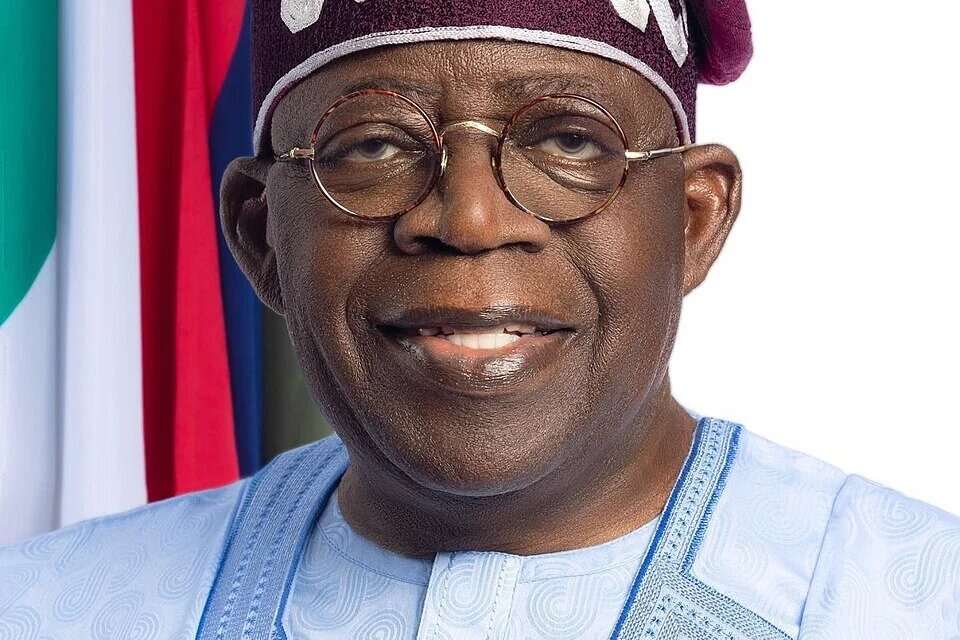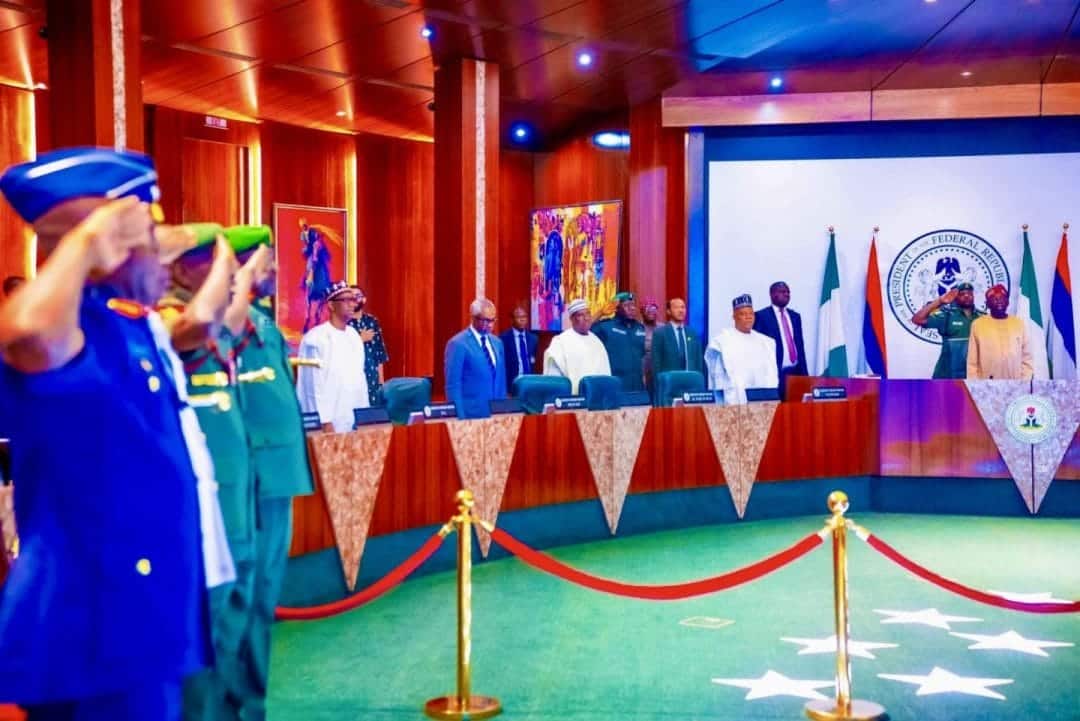
Lavish perks for Nigeria’s retired generals under Tinubu ignite public anger as citizens face economic hardship. Explore the controversy and its implications.
The Politics of Extravagance: Tinubu’s Retirement Perks for Service Chiefs Amidst Nigeria’s Economic Woes
ABUJA, Nigeria — The recent revelation that President Bola Ahmed Tinubu approved extravagant retirement packages for top military officials has sparked a nationwide debate, raising critical questions about governance priorities, fiscal responsibility, and the plight of ordinary Nigerians.
Under the revised Harmonised Terms and Conditions of Service (HTCOS) for the Nigerian Armed Forces, the retirement benefits for service chiefs and other senior military officers include bullet-proof SUVs, $20,000 annual foreign medical allowances, personal aides, and a range of domestic staff.
Signed into effect on December 14, 2024, these provisions have drawn fire from various quarters, including medical professionals, civil society organisations, and concerned citizens. Critics argue that the lavish perks symbolise a troubling disconnect between the government’s actions and the dire socioeconomic conditions plaguing Nigeria.
This report delves into the implications of these retirement benefits, the criticisms they have garnered, and the broader questions they raise about governance, equity, and public accountability.
A Breakdown of the Perks
The HTCOS outlines an extensive list of retirement benefits for senior military officers, reflecting a hierarchy of privilege. The Chief of Defence Staff (CDS) and service chiefs are entitled to bullet-proof SUVs, maintained and replaced every four years, in addition to a backup Peugeot 508 or its equivalent.
These vehicles come with a full suite of support, including three service drivers and an orderly. Retired service chiefs are also provided with five domestic aides, including two cooks, two stewards, and a civilian gardener.
Medical benefits are equally generous. While lieutenant generals are entitled to $20,000 for annual medical treatment abroad, it is speculated that service chiefs receive significantly higher allowances. These perks extend to include local and international security escorts, personal firearms (retrievable upon death), and retention of military uniforms for ceremonial occasions.
For lower-ranking generals, such as major generals and brigadier generals, the benefits slightly taper off but remain substantial. They include Toyota Land Cruisers or equivalent vehicles, domestic staff, and annual medical allowances ranging from $10,000 to $15,000. Even colonels are entitled to free domestic medical care and Toyota Corollas.
The Healthcare Irony: A Vote of No Confidence?
Perhaps the most contentious aspect of these benefits is the foreign medical allowance. Medical professionals and civil society leaders have criticised the government for institutionalising medical tourism, which they argue reflects a profound lack of confidence in Nigeria’s healthcare system.
Prof. Bala Audu, President of the Nigerian Medical Association (NMA), lambasted the decision, stating, “Any retirement benefits received by government officials should be invested within Nigeria.”
Echoing this sentiment, Prof. Muhammad Muhammad of the Medical and Dental Consultants Association of Nigeria (MDCAN) emphasised the need to revamp Nigeria’s healthcare infrastructure.
“The decision to send retired officers abroad for treatment signals the government’s lack of faith in our local healthcare facilities,” Prof. Muhammad noted.
This critique highlights a glaring contradiction: while the government is willing to spend exorbitantly on foreign medical care for elites, millions of Nigerians struggle to access basic healthcare services. Dr. Tope Osundara, President of the Nigerian Association of Resident Doctors (NARD), argued that Nigeria possesses the medical expertise required to meet these needs but suffers from inadequate funding and outdated infrastructure.
Governance or Gluttony?
The timing of these extravagant benefits is particularly troubling. Nigeria is grappling with an economic crisis marked by soaring inflation, a depreciating naira, and widespread poverty. Millions of Nigerians live on less than $1.90 a day, yet resources are being channelled into luxury perks for a privileged few.
Friday Odeh, Country Director of Accountability Lab Nigeria, described the development as “alarming.” He questioned whether the retiring service chiefs have earned such rewards, given the ongoing security challenges plaguing the nation.
“For over 12 years, Nigeria has been battling insurgency, banditry, and kidnapping. Have the service chiefs truly delivered enough to justify these packages?” Odeh asked.
This critique strikes at the heart of a deeper governance issue: the prioritisation of elite interests over public welfare. The extravagant packages for military elites contrast sharply with the struggles of ordinary Nigerians, who face worsening insecurity, unemployment, and decaying infrastructure.
The Security Irony: Rewarding Mediocrity?
The justification for these perks becomes even more questionable when viewed against the backdrop of Nigeria’s persistent security challenges. While the military has made some gains in the fight against insurgency, these victories have been uneven and insufficient. Regions like the North-East and North-West remain hotspots of violence, with communities ravaged by banditry and kidnappings.
Okechukwu Nwaguma, Executive Director of the Rule of Law Advocacy and Accountability Centre, criticised the policy, stating, “The retirement benefits reflect a troubling disconnect between government actions and the realities faced by citizens.” He argued that such lavish rewards for military leaders send the wrong signal, especially when their performance has left much to be desired.
Public Outrage and Calls for Accountability
The outcry over the retirement perks has galvanised calls for greater transparency and accountability in governance. Civil society groups have demanded a reassessment of the policy, urging the government to prioritise investments in public services rather than elite privileges.
The retirement benefits also raise questions about the broader culture of entitlement among Nigeria’s political and military elites. This culture not only undermines public trust but also perpetuates a cycle of inequality and poor governance.
A Nation at a Crossroads
The approval of extravagant retirement perks for Nigeria’s military elites underscores the deep-seated governance challenges facing the country. At a time when millions of Nigerians are struggling to make ends meet, the government’s decision to prioritise luxury benefits for a select few is both tone-deaf and unjustifiable.
As the debate continues, one thing is clear: Nigeria must confront the systemic issues that allow such policies to flourish. Whether through increased public scrutiny, grassroots activism, or legislative reforms, the push for accountability and equity must become a national priority.

Structural Inequities in Governance: The Culture of Elite Entitlements
The retirement benefits controversy has exposed the widening gap between Nigeria’s political and military elite and the ordinary citizen. At the core of this issue lies a systemic failure to prioritise equitable governance and social justice. While millions of Nigerians struggle to afford basic healthcare, the allocation of $20,000 annually for foreign medical treatment underscores a troubling culture of elitism. The decision to provide retired generals with luxury SUVs, domestic aides, and extensive security details reflects a governance model that prioritises elite comfort over public welfare.
This discrepancy raises an important question: who truly benefits from Nigeria’s wealth? As the nation grapples with ballooning debt and soaring inflation, the government’s decision to fund extravagant perks for retired officials sends a message that public resources are reserved for a privileged few. This entrenched disparity perpetuates a cycle of distrust between the governed and their leaders, eroding any semblance of accountability.
The Nigerian Health Sector: A Reflection of Policy Misalignment
The Nigerian healthcare system, once a beacon of hope in West Africa, now languishes in disrepair. Chronic underfunding, brain drain, and a lack of modern facilities have turned local hospitals into symbols of despair. The decision to allocate foreign medical allowances to retired generals is an indictment of the government’s failure to invest in the sector.
Critics argue that the millions spent on medical tourism could be redirected toward revamping local hospitals. For instance, the $20,000 annual medical allowance for each retired general, if pooled, could fund modern diagnostic equipment, train healthcare professionals, and establish specialised treatment centres. This would not only reduce the dependence on foreign medical care but also restore confidence in the Nigerian healthcare system.
Prof. Bala Audu’s assertion that benefits should be localised highlights a broader issue of national pride and sustainability. By outsourcing healthcare solutions abroad, the government inadvertently signals a lack of confidence in its institutions. This lack of faith permeates every facet of governance, from education to infrastructure, creating a culture of dependency that undermines national development.
Military Performance and Public Perception
The justification for extravagant retirement packages also hinges on the effectiveness of the military leadership. Over the past decade, Nigeria’s armed forces have been mired in allegations of corruption, procurement fraud, and operational inefficiencies. While some progress has been made in combating insurgency, the persistent insecurity in many regions casts doubt on the merit of these perks.
The public has every right to question whether the service chiefs have earned such lavish rewards. Reports of under-equipped troops, unpaid allowances, and delayed pensions for lower-ranked officers paint a grim picture of resource mismanagement within the military. If frontline soldiers, who bear the brunt of conflict, are denied basic entitlements, why should retired generals enjoy luxury benefits?
Governance and the Erosion of Public Trust
The controversy has far-reaching implications for governance in Nigeria. By prioritising elite interests over public welfare, the Tinubu administration risks alienating the citizenry. Policies that disproportionately favor the wealthy deepen public disenchantment and foster a sense of exclusion.
This perception is particularly damaging in a nation like Nigeria, where economic hardship and social inequality are rife. The vast unemployment rate, coupled with rising food and energy costs, has left many Nigerians struggling to make ends meet. Against this backdrop, the government’s decision to fund extravagant perks for retired officials appears callous and disconnected.
A Call for Policy Reforms
The current debate should serve as a wake-up call for comprehensive reforms in governance and public resource allocation. To rebuild trust and foster national unity, the Tinubu administration must prioritise policies that address the needs of the majority. This includes:
- Investing in Local Healthcare: Redirecting funds allocated for foreign medical allowances toward upgrading local hospitals. This would not only improve healthcare access for Nigerians but also create jobs and reduce medical tourism.
- Ensuring Transparency in Military Spending: Conducting audits and enforcing accountability in military procurement processes to eliminate corruption and ensure that resources reach frontline troops.
- Rethinking Elite Benefits: Revising retirement packages to align with the economic realities faced by ordinary Nigerians. This could involve capping allowances, localising benefits, and eliminating unnecessary luxuries.
- Engaging the Public: Establishing platforms for citizen participation in policymaking to ensure that government actions reflect the will of the people.
- Strengthening Governance Institutions: Building robust institutions that promote accountability, fairness, and inclusivity in governance.
The retirement benefits saga is a microcosm of the broader challenges facing Nigeria. It underscores the need for a governance model that prioritises equity, accountability, and national development. As Nigerians grapple with economic hardship, the onus is on the Tinubu administration to demonstrate empathy and responsibility.
Only through bold reforms and a commitment to the greater good can the government hope to bridge the gap between the elite and the masses. The time to act is now, for the future of Nigeria depends on it.
Additional reports: Osaigbovo Okungbowa, Suleiman Adamu and Peter Jene