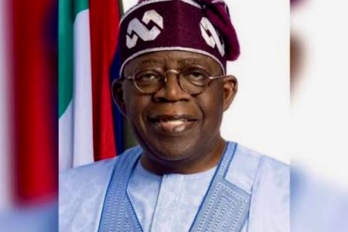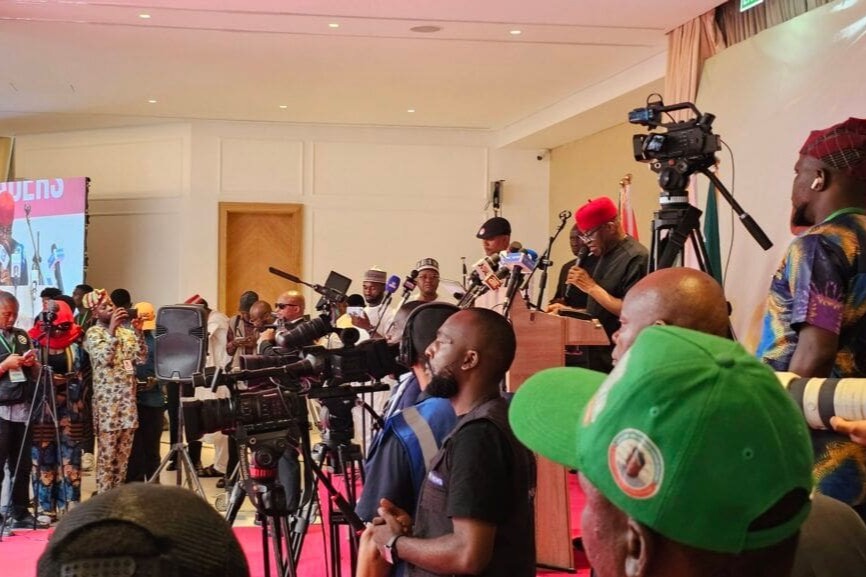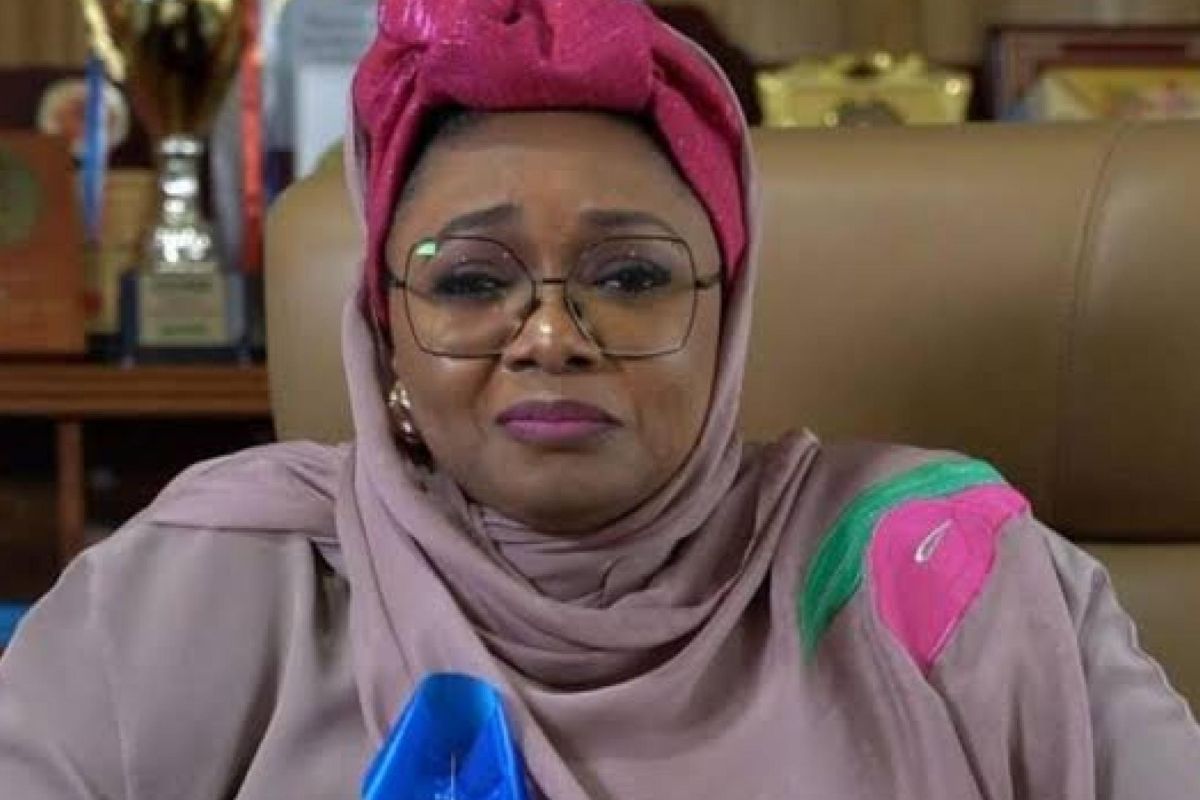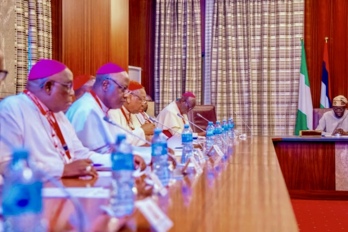
What was meant to be a discreet conversation between President Bola Tinubu and the Catholic Bishops’ Conference of Nigeria has now become a public relations brawl, with the Presidency accusing Cardinal John Onaiyekan of an “abuse of clerical privilege” after he went on ARISE News to restate the bishops’ concerns and the President’s pushback.
The dispute is no longer only about what was said behind closed doors; it is now about who gets to define the national mood, and whether religion has become the latest battlefield in Nigeria’s argument over hardship, insecurity and trust.
The Presidency’s case, set out by Temitope Ajayi, is blunt. In Ajayi’s words, “There is something fundamentally inappropriate” about Onaiyekan giving a television interview to interpret a private meeting, which he described as “an abuse of clerical privilege”.
Ajayi argued that the bishops came with a catalogue of Nigeria’s economic, social and security problems, but that Tinubu “listened patiently” and replied point by point. In the Presidency’s telling, the President did not dismiss the bishops; he contested their assessment with counter-claims about progress already made.
That version of events is important because it shows the battle is not over whether the bishops spoke, but over what exactly they were entitled to do after the meeting. Ajayi insisted that a private audience should have remained private, warning that “public influence should be exercised with discretion”.
He also framed the President as a leader already saturated with information, saying Tinubu reads multiple newspapers, watches television discussions and receives daily intelligence briefings. Those are Ajayi’s claims, not independently verified facts, but they explain the Presidency’s core defence: the President does not need a bishop’s interview to understand Nigeria.
Onaiyekan’s response, however, suggests the meeting was far from cordial agreement. Speaking on ARISE News, he said Tinubu made it “quite clearly” known that he disagreed with the bishops’ concerns. “When the nation is bleeding, you cannot expect a polite meeting with the Head of State,” he said, adding that the President told them “the nation is not bleeding” and that the economy was “doing fine”.
That is a direct contradiction of the Presidency’s attempt to cast the bishops as unfairly negative. It also reveals the real political problem: both sides left the room with entirely different readings of the same encounter.
The substance of the July 28, 2026 meeting matters just as much as the optics. State House records show the bishops raised concerns about security, quality tertiary education, poverty, democratic backsliding and credible elections.
Tinubu responded that the country was being stabilised, said the ongoing restructuring of security operations would deliver victory over terrorism, banditry and kidnappings, and argued that the Nigerian Education Loan Fund, or NELFUND, was part of the government’s poverty-alleviation effort.
He also said mission schools are constitutionally a matter for state governments, recalling that he returned mission schools while he was governor of Lagos State.
That is where the argument becomes more political than pastoral. Tinubu’s reply was not simply about schools, or even education. It was a constitutional reminder that the presidency is not the final authority on every issue the bishops want solved.
His point, according to the State House release, was that governors, not the President, must decide on the return of mission schools. In other words, the administration is trying to turn a religious grievance into a federal structure argument. That may be legally neat, but it does little to soften the public anger around schools, hunger and insecurity.
The wider public context explains why the exchange has landed so sharply. The bishops’ intervention was delivered at a time when Nigerians are still arguing over the cost of living, the credibility of reforms and the persistence of violence in several parts of the country.
Onaiyekan’s language — “the nation is bleeding” — deliberately dramatised that pain. Tinubu’s language — “we are stabilising the nation” and the country has emerged from “a dark tunnel” — sought to project recovery and resilience. Those are not just different opinions; they are competing political narratives about whether the administration is relieving suffering or merely describing it.
Ajayi’s strongest line may also be his most revealing: the suggestion that clerics should not assume they are the only people speaking truth to power. That is a dangerous line to run in a country where public trust in institutions is thin.
If the Presidency is right, then Onaiyekan overstepped by turning a private exchange into a televised commentary. If Onaiyekan is right, then the Presidency is trying to police the public language of moral criticism while sidestepping the substance of the bishops’ warnings.
Either way, the episode exposes a deeper weakness in the Tinubu project: the administration is still struggling to persuade sceptical Nigerians that its version of reality is the one they are living through.
For now, the row has done what many political rows in Abuja do best: it has shifted attention from policy delivery to elite theatre. Yet beneath the noise is a serious question. When bishops say the nation is bleeding and the Presidency says it is stabilising, who is listening to the people caught in the middle? That is the question the administration cannot keep answering with press statements alone.
Follow us on our broadcast channels today!
- WhatsApp: https://whatsapp.com/channel/0029VawZ8TbDDmFT1a1Syg46
- Telegram: https://t.me/atlanticpostchannel
- Facebook: https://www.messenger.com/channel/atlanticpostng