As allegations of parallel primaries, political interference and factional manipulation deepen in Plateau State, INEC’s published candidate list offers one answer to the governorship question. But the unresolved divisions within the NDC raise a bigger question about the credibility of Peter Obi’s opposition project.
Peter Obi is seeking to persuade Nigerians that the country needs a different kind of politics. In Plateau State, however, the party carrying his presidential ambition is struggling to demonstrate that difference within its own ranks.
The dispute over the Nigeria Democratic Congress (NDC) governorship ticket has developed into a damaging confrontation between the party’s national leadership and its Plateau State structure, exposing competing claims of authority, disputed nomination procedures and allegations of political interference.
At the centre of the controversy are Da Jonathan Sunday Akuns and Alfred Ali Dapal Damiyal, two politicians whose competing claims have divided party officials and complicated preparations for the 2027 governorship election.
The implications extend beyond Jos.
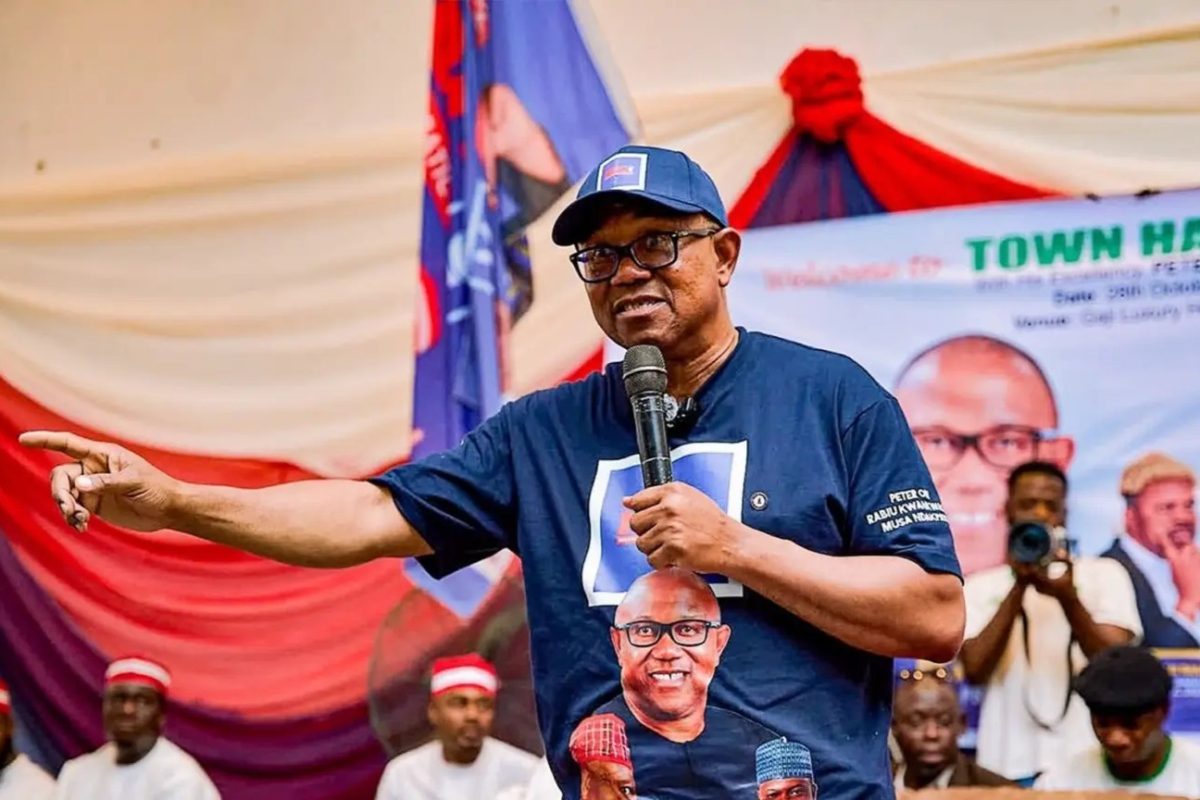
Obi is the NDC’s presidential candidate, with Rabiu Musa Kwankwaso as his running mate. The party has appointed Obi co-chairman of its National Campaign Council, placing him at the centre of its national election machinery.
A party preparing to challenge President Bola Tinubu and the governing All Progressives Congress (APC) cannot afford to appear incapable of enforcing transparent rules within its own state organisations.
The Plateau dispute therefore presents Obi with an uncomfortable political test: whether the promise of democratic renewal can survive the realities of party organisation, political bargaining and the ambitions of powerful local interests.
And the stakes are becoming more immediate.
INEC’s list names Akuns, but the political dispute continues
The Independent National Electoral Commission’s published final list of candidates for the 2027 Plateau governorship election names Jonathan Sunday Akuns as the NDC candidate, with Jonathan Pwajok Jahwon as his running mate.
The commission’s list contains 17 governorship candidates representing different political parties.
The election is scheduled for 6 February 2027, following the presidential and National Assembly elections on 16 January.
The appearance of Akuns on the official list is significant. It establishes the NDC candidate presently recognised in INEC’s published election records. It also contradicts any suggestion that the commission’s current list gives equal official recognition to Akuns and Dapal.
But an electoral list does not automatically resolve every underlying dispute about how a candidate emerged.
That is an essential distinction.
A political party may have a candidate whose name appears in the electoral commission’s records while members continue to challenge the legitimacy of the nomination process that produced that candidate.
That is precisely the problem confronting the NDC in Plateau.
The national leadership maintains that Akuns emerged through its authorised nomination arrangements. The state faction supporting Dapal disputes that position and insists that a separate nomination exercise produced its preferred candidate.
The disagreement has created two competing centres of political authority in a party that must now persuade voters to trust its ability to govern.
How the NDC’s internal dispute escalated
The controversy has its roots in competing nomination exercises and disagreements over who possesses the authority to determine the party’s governorship candidate.
Reports of the dispute indicate that Akuns emerged unopposed from an NDC primary conducted on 29 May 2026 under the supervision of the party’s national leadership.
The national leadership subsequently maintained that its National Working Committee (NWC) was responsible for managing the nomination process.
A further substitution exercise was conducted on 15 September under national supervision. The exercise was intended to affirm Akuns as the party’s candidate.
The situation became complicated when Plateau State Chairman Solomon Yakubu Ndam backed a separate exercise that reportedly involved chairmen from seven of the state’s 17 local government areas.
That exercise produced Alfred Dapal Damiyal, who had previously participated in the PDP governorship primary in Plateau State.
The national and state structures were now advancing different candidates.
NDC National Auditor Oluwole Adedapo, who was delegated by the NWC to conduct the national exercise, maintained that Akuns emerged unopposed.
He also alleged that the state chairman opposed the national exercise and proceeded with a separate meeting involving local government party officials.
Ndam, for his part, denied wrongdoing and maintained that INEC monitored the relevant exercise and compiled its report.
The NDC National Secretary, Ikenna Morgan Enekweizu, also defended the national leadership’s position.
In comments reported by The Guardian, he made the party’s position clear:
“We have forwarded the name of Da Jonathan Sunday Akuns to INEC and anything outside that is an aberration.”
That statement was important because it demonstrated that the controversy was not simply a disagreement between two aspirants. It involved a direct challenge to the authority of the party’s national leadership.
The question is whether the party’s constitution and nomination records support that position and whether the relevant procedures were followed.
Those questions cannot be settled by competing press statements.
The court intervention added another layer of uncertainty
The dispute soon moved beyond party offices and into the courtroom.
On 28 September 2026, the Federal High Court in Jos granted an interim order following an ex parte application filed by Alfred Dapal.
The case, identified as FHC/J/CS/87/2026, challenged the nomination process that produced Akuns.
Justice S. T. Ishaya restrained Akuns from presenting himself as the NDC’s Plateau governorship candidate pending the hearing and determination of the case.
The court also restrained the NDC and INEC from taking steps that would undermine the reliefs sought by the applicant.
Dapal argued that he had emerged from the 15 September nomination exercise organised at the NDC secretariat in Dogon Karfe, Jos North.
The interim order temporarily complicated Akuns’s public position and intensified uncertainty within the party.
It was not, however, a final ruling declaring Dapal the legitimate candidate.
That distinction was important then and remains important now.
In an interview published on 1 November, Akuns offered a significant update to the legal dispute.
He said that after the parties were heard on 20 October, the Federal High Court set aside and dismissed the earlier interim order.
According to Akuns, there was consequently no subsisting injunction preventing him from continuing his campaign.
He also maintained that Dapal had not appeared on the NDC membership register submitted to INEC, had not purchased the party’s nomination forms and had not undergone the required screening or contested the national leadership’s primary.
These are consequential allegations. They go directly to whether Dapal possessed the party membership and nomination credentials required to challenge the national candidate.
But they remain claims advanced by Akuns and require verification against the party’s membership register, nomination records and court documents.
Atlantic Post has not independently examined the written ruling of 20 October. The latest interview therefore provides an account of the court’s subsequent action, not a substitute for the court’s certified order.
Nevertheless, the most recent official candidate list continues to identify Akuns as the NDC nominee.
This is the clearest publicly verifiable indication of his present electoral standing.
A divided party is beginning to lose its institutional authority
Perhaps more damaging than the competing governorship claims is the extent to which the dispute has affected the NDC’s internal cohesion.
On 14 October, opposition to Ndam’s leadership became more visible when the Plateau State Deputy Chairman, three zonal chairmen and at least 12 of the state’s 17 local government chairmen reportedly backed a vote of no confidence against the state chairman and members of the State Executive Committee.
The development was reported by Africa Independent Television.
The dissident officials questioned the state leadership’s handling of the governorship dispute and demanded greater adherence to party directives and internal procedures.
Importantly, the signatories acknowledged that their vote of no confidence did not automatically remove or suspend the affected officials. Any disciplinary action, they said, had to comply with the party’s constitution and due process.
That is an important qualification.
It suggests that the division is not merely about personalities. It is also about the institutional mechanisms through which the NDC exercises authority and resolves disagreements.
When senior officials, local government chairmen and national party officers appear unable to agree on a fundamental nomination question, the organisation risks losing the confidence of its own members.
The consequences could extend to other candidates.
Candidates contesting legislative seats under the NDC platform need a functioning party structure capable of organising agents, mobilising supporters, coordinating campaign activities and defending the party’s interests.
A governorship dispute that discourages cooperation across local government areas could weaken the wider electoral campaign.
Indeed, The Guardian previously reported that some NDC candidates declined to attend a meeting convened to harmonise party agent arrangements because they feared their participation would be interpreted as supporting one of the competing governorship camps.
That is a particularly troubling development.
A party unable to bring its candidates into the same room risks making it considerably harder to build the grassroots machinery required for an effective election campaign.
The alleged APC arrangement: Political accusation or documented strategy?
The allegations raised by community leader Abdullahi Iliya introduce an even more politically sensitive dimension to the crisis.
He alleged that powerful APC interests were exploiting opposition divisions in Plateau to improve the ruling party’s chances of retaining the governorship.
He specifically accused Governor Caleb Mutfwang and what he described as an entrenched Mwaghavul political bloc of participating in an arrangement designed to influence opposition nominations.
He also named former Plateau governors and APC figures Joshua Dariye and Simon Lalong in his allegations.
The most consequential part of his argument concerns an alleged political understanding under which opposition support for Obi’s presidential ambition would be exchanged for accommodation of APC interests in the Plateau governorship election.
He dismissed the suggestion as “a fat lie and a calculated scheme to deceive”.
Abdullahi further alleged that the arrangement was designed to weaken credible opposition candidates and consolidate the APC’s electoral advantage.
These allegations deserve scrutiny. They do not, however, constitute proof of a political conspiracy.
Atlantic Post has not independently established that Mutfwang, Dariye or Lalong participated in an agreement with NDC officials to exchange electoral support.
Nor does the official INEC candidate list demonstrate that the APC engineered the NDC’s internal disagreement.
The fact that Mutfwang moved from the PDP to the APC in January 2026 is independently established. He won the 2023 Plateau governorship election under the PDP before defecting to the governing party and emerging as the APC’s candidate for re-election.
That change fundamentally altered the state’s political landscape.
It also gives the opposition a legitimate reason to examine political realignments and possible alliances. But political realignment should not be confused with evidence of a secret agreement.
The allegation concerning ethnic political dominance requires even greater caution.
Plateau’s complex ethnic and communal history makes claims of political exclusion particularly sensitive. Describing an entire ethnic bloc as the architect of a political conspiracy without documentary evidence risks deepening divisions that democratic competition should seek to reduce.
The proper investigative questions are narrower and more verifiable.
Who organised each nomination exercise? Which officials were authorised to conduct it? Who participated? What membership records were used? Which candidates purchased forms and underwent screening? What did INEC’s monitoring officers record?
Unless these questions are answered with documentary evidence, allegations of an ethnic or political arrangement should remain allegations.
What does Obi know, and what responsibility does he carry?
The dispute raises an uncomfortable question about the relationship between Obi’s national political project and the conduct of state-level party officials.
An associate of the presidential candidate, quoted anonymously in the account supplied for this report, rejected suggestions that Obi was backing Dapal.
The associate argued that Obi generally avoided interfering directly in state chapter disputes and maintained that internal party disagreements should be resolved through established procedures.
That explanation is relevant, but it does not entirely remove Obi from the political consequences of the controversy.
There is an important difference between personally directing a local nomination exercise and exercising national political leadership when a dispute threatens the credibility of the party.
Obi may have no responsibility for the actions of individual Plateau officials. But he cannot completely separate his presidential brand from the organisation that is campaigning in his name.
The NDC has already moved beyond preliminary political discussions.
On 25 October, the party announced its National Campaign Council, with former Bayelsa Governor Henry Seriake Dickson as chairman and Obi as co-chairman.
Kwankwaso was named co-vice-chairman, while National Chairman Cleopas Moses Zuwoghe was appointed vice-chairman.
The party also appointed senior figures to coordinate its national campaign and political mobilisation.
This is the structure expected to present the NDC as a credible national alternative.
Its stated ambition is to promote a new, just and prosperous Nigeria through a coordinated political campaign.
But national structures cannot compensate indefinitely for weak state-level organisation.
Obi’s political challenge is therefore not necessarily to intervene personally in the Plateau nomination dispute. It is to insist that the party’s rules apply consistently, that the national leadership explains its decisions and that the legal process is respected.
A presidential candidate who campaigns on accountable leadership must be prepared to demand accountability from his own political organisation.
Why the crisis could cost the NDC more than a governorship ticket
There is no established evidence that the Plateau dispute has already reduced Obi’s national electoral support.
Nor can the APC’s prospects in Plateau be attributed solely to the NDC’s internal disagreements.
The 2027 governorship contest will involve 17 candidates, and voters will make decisions based on several factors, including the incumbent government’s record, security, infrastructure, economic opportunities and the credibility of competing candidates.
But the political risk to the NDC is real.
First, a divided party could struggle to mobilise polling unit agents and coordinate election-day operations.
Second, supporters who believe their preferred candidate has been unfairly excluded may withdraw their support or refuse to campaign.
Third, prolonged factional disputes could encourage political defections, weaken fundraising and make opposition alliances more difficult.
Fourth, the controversy could reinforce public cynicism about political parties, particularly among voters attracted to Obi’s promise of a departure from established political practices.
The effect could be more damaging because the NDC is still building its national political identity.
Its supporters will expect more than compelling presidential speeches and ambitious policy promises. They will expect transparent internal processes, respect for party rules and an ability to resolve disagreements without political intimidation or administrative manipulation.
If those standards are absent in Plateau, opponents will inevitably question whether the party’s promises are sustainable.
And if the dispute is resolved through opaque political bargaining rather than transparent procedures, the damage could outlast the immediate election.
The documents the NDC must put before its members
The most effective way to end the controversy is not another press conference or political accusation.
It is documentary transparency.
The NDC national leadership should publish or make available to relevant party stakeholders the records establishing the authority and conduct of its nomination exercises.
These should include the applicable party constitutional provisions, the authorisation for the national and state-level exercises, the membership register submitted to INEC, nomination form records, screening reports, attendance records, minutes of the primary exercises and the relevant INEC monitoring documents.
The party should also clarify the precise legal status of the litigation and make the 20 October court order available for verification.
The status of any competing party-issued nomination certificates should also be explained.
Such disclosure would help establish whether the dispute arose from an administrative failure, conflicting interpretations of party rules or deliberate attempts by individuals to exercise authority beyond their constitutional responsibilities.
It would also allow party members and voters to assess the competing claims on evidence rather than political loyalty.
The NDC’s national leadership should not assume that the appearance of Akuns on INEC’s list ends the political argument.
An official candidate list may settle the immediate question of whose name the commission has published. It does not automatically repair relationships between divided party officials or restore the confidence of members who believe their voices have been ignored.
Plateau may become a test of Obi’s political credibility
The Plateau controversy is not, by itself, a verdict on Peter Obi’s presidential prospects.
A dispute in one state cannot establish the national mood, and there is no credible electoral evidence presently demonstrating that the controversy has significantly altered the 2027 presidential race.
But political credibility is accumulated through conduct as much as through promises.
For Obi, the danger is that opponents could use the Plateau dispute to challenge the sincerity of his democratic reform message.
For the NDC, the danger is institutional. It could enter the most consequential election in its existence with factions questioning the legitimacy of its decisions and candidates struggling to work together.
Abdullahi warned that Obi and the NDC were “sleepwalking through this well-oiled conspiracy”. That is his political assessment, not an established finding.
Yet the underlying question cannot simply be dismissed.
Can a party persuade Nigerians that it will protect democratic institutions while its own officials remain divided over the rules governing candidate selection?
Akuns offered a principle in his 1 November interview that captures the challenge facing the party:
“A party that settles its disputes by the constitution and the courts is practising the discipline it will need to govern.”
That principle should now be applied without exception.
The national leadership must demonstrate transparency. The state leadership must account for its actions. Rival aspirants must respect the legal process. And Obi must ensure that the political movement built around his presidential ambition does not become another organisation in which democratic principles are celebrated in public but contested behind closed doors.
Plateau’s governorship ticket may be a relatively small piece of Nigeria’s national electoral map.
But the manner in which the NDC resolves the dispute could reveal a great deal about the kind of political organisation Obi is asking Nigerians to trust.
The question facing the NDC is no longer simply who will fly its flag in Plateau. It is whether the party can demonstrate that the democratic standards it promises Nigerians are standards it is prepared to live by itself.
Follow us on our broadcast channels today!
- WhatsApp: https://whatsapp.com/channel/0029VawZ8TbDDmFT1a1Syg46
- Telegram: https://t.me/atlanticpostchannel
- Facebook: https://www.messenger.com/channel/atlanticpostng