Peter Jene, Senior National Correspondent
In a nation already beset by deep-rooted challenges, the Catholic Bishops Conference of Nigeria (CBCN) has issued a stark and unsettling warning: Nigeria is sitting on a ticking time bomb. The weighty declaration came during the opening session of the 2024 Second Plenary Assembly in Auchi, Edo State, where the bishops voiced grave concerns over the country’s deteriorating state under President Bola Tinubu’s leadership. This development, laden with implications, threatens to destabilise the fragile socio-political landscape of Africa’s most populous nation.

The Catholic Bishops Speak Out: A Cry for Justice and Reform
The CBCN, an influential body within Nigeria’s religious and socio-political sphere, did not mince words. The conference’s President, Archbishop Lucius Ugorji of Owerri, delivered a scathing assessment of Nigeria’s current state, drawing attention to the systemic issues of poverty, corruption, and hardship that continue to plague the nation.
“We are indeed sitting on a ticking time bomb,” Archbishop Ugorji warned, his voice resonating with a sense of urgency. He lamented that despite the promises of progress and reform, Nigeria remains mired in conditions that not only perpetuate suffering but also foster a dangerous climate of unrest. The bishops’ message is clear: if these issues are not addressed, the country may be on the brink of an unprecedented crisis.
A Nation in Peril: The Alarming State of Nigeria
Nigeria’s current predicament is a complex web of socio-economic and political challenges, each feeding into the other, creating a cycle of despair and disillusionment. The bishops’ concerns are not unfounded, as the symptoms of a failing state are increasingly evident.
Poverty and Hardship: Despite being one of the largest economies in Africa, Nigeria’s wealth disparity is staggering. Millions of Nigerians live in abject poverty, with little to no access to basic necessities such as food, clean water, healthcare, and education. The removal of fuel subsidies and the floating of the naira, while aimed at economic reforms, have only exacerbated the situation for the average Nigerian, driving up the cost of living and deepening the sense of hopelessness.
Corruption: Corruption continues to be a pervasive problem, eating away at the very fabric of Nigerian society. From the highest levels of government to local institutions, corruption has undermined public trust and stunted the nation’s development. The bishops highlighted that as long as corruption remains unchecked, any efforts at reform will be futile, and the nation’s future will remain bleak.
Insecurity: Insecurity remains one of Nigeria’s most pressing issues, with the government struggling to maintain control over various regions. The rise of insurgency, banditry, and kidnapping has left many parts of the country in a state of perpetual fear. The bishops noted that the government’s inability to effectively address these security challenges has only fueled public frustration and anger.
The #EndBadGovernance Protests: A Symptom of Deeper Malaise
The bishops’ warning comes on the heels of the recent #EndBadGovernance protests, a nationwide movement that saw thousands of Nigerian youths take to the streets from August 1 to 10, 2024. These protests, driven by anger over the deteriorating state of the nation, were a powerful manifestation of the growing discontent among the populace.
The protests were not just a call for better governance but a cry for survival. For many Nigerians, especially the youth, the current state of affairs offers no future. The lack of jobs, the failing economy, and the rampant corruption have left them feeling abandoned by those in power. The bishops acknowledged the legitimacy of these protests, emphasising that peaceful demonstration is a constitutional right and an essential part of any democracy.
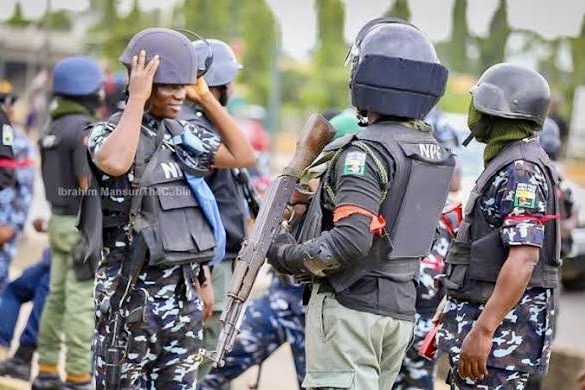
However, the protests were not without controversy. Security forces, in their bid to quell the unrest, resorted to violence, leading to the deaths of several protesters. The bishops condemned these actions in the strongest terms, expressing their sorrow for the loss of life and calling for accountability.
The Government’s Response: A Delusional Denial?
In response to the growing unrest, the government has attempted to downplay the severity of the situation, with some officials even suggesting that the protests were unnecessary and that the state of the nation is not as dire as portrayed. This stance, according to the bishops, is not only delusional but also dangerous.
The crackdown on protesters and the subsequent attempts to arrest those involved on trumped-up charges have raised serious concerns about the government’s commitment to democratic principles. The bishops warned that such actions could strip citizens of their rights and freedoms, creating an environment where dissent is not tolerated, and the truth is suppressed.
The bishops’ use of the phrase “ticking time bomb” is particularly telling. It suggests that the current state of Nigeria is not sustainable and that without meaningful intervention, the nation could face a catastrophic collapse. The implications of this are far-reaching, not just for Nigeria but for the entire West African region, which could be destabilized by a Nigerian implosion.
The Economic Reforms: A Double-Edged Sword
At the heart of Nigeria’s current woes are the economic reforms introduced by President Tinubu’s administration. While these reforms, including the removal of fuel subsidies and the floating of the naira, were intended to stabilize the economy, they have had unintended consequences that have deepened the economic crisis.
Fuel Subsidy Removal: The removal of fuel subsidies was seen as a necessary step to reduce the government’s budget deficit and free up resources for development. However, this policy has led to a sharp increase in the cost of fuel, which in turn has driven up the cost of transportation, goods, and services. For a population already struggling to make ends meet, this has been a bitter pill to swallow.
Floating the Naira: The decision to float the naira was aimed at attracting foreign investment and boosting the country’s foreign exchange reserves. However, the immediate effect has been a significant devaluation of the naira, leading to skyrocketing inflation and further eroding the purchasing power of the average Nigerian. The bishops pointed out that while these reforms may have been well-intentioned, their implementation has been poorly managed, resulting in more harm than good.
The bishops’ critique of the economic reforms is not just about the policies themselves but about the lack of a safety net for those most affected. They argue that without adequate measures to protect the poor and vulnerable, these reforms are doomed to fail, leaving Nigeria worse off than before.
The Debt Burden: A Looming Catastrophe
Another issue highlighted by the bishops is Nigeria’s growing debt burden. The nation’s debt has ballooned in recent years, with much of the government’s revenue now going towards servicing these debts. This has left little room for investment in critical sectors such as education, healthcare, and infrastructure.
The bishops expressed concern that the government’s reliance on borrowing to finance its budget deficit is unsustainable and could lead to a debt crisis. They warned that if the current trend continues, Nigeria could find itself in a situation where it is unable to meet its debt obligations, leading to a loss of confidence from international investors and a further decline in the economy.
The bishops’ warning is a call to action for the government to rethink its approach to economic management. They urged the administration to prioritise fiscal responsibility and to find alternative ways to generate revenue without resorting to excessive borrowing. Failure to do so, they warned, could have dire consequences for the country’s future.
The Role of the Church: A Beacon of Hope?
In the midst of this bleak outlook, the bishops also offered a message of hope. They emphasised the need for Nigerians to place their trust in God and to continue to pray for the nation’s transformation. The Church, they said, will continue to play a vital role in advocating for justice, peace, and good governance.
The bishops called on all Nigerians, regardless of their religious or political affiliations, to unite in the pursuit of a better future. They stressed that the challenges facing the nation can only be overcome through collective action and a commitment to the common good.
Conclusion: A Nation at a Crossroads
The Catholic Bishops’ warning that Nigeria is sitting on a ticking time bomb is a stark reminder of the precarious state of the nation. The combination of poverty, corruption, insecurity, and economic mismanagement has created a volatile environment that could erupt at any moment. The recent #EndBadGovernance protests are just one indication of the growing frustration and anger among the populace.
The government’s response, characterised by denial and repression, only serves to exacerbate the situation. The bishops’ message is clear: without meaningful reform and a genuine commitment to addressing the root causes of Nigeria’s problems, the country is headed for disaster.
As Nigeria stands at a crossroads, the choices made by its leaders in the coming months will determine the nation’s future. Will they heed the warnings and take the necessary steps to avert catastrophe, or will they continue down a path that leads to ruin? The answer to this question will shape the destiny of Nigeria for generations to come.