President Bola Tinubu has described his emergence as Nigeria’s leader as an extraordinary favour from Allah, warning that political power can be withdrawn from those who misuse it. But Nigeria’s Constitution places sovereignty with its people, raising a more immediate question: how will his administration demonstrate that it deserves their confidence?
President Bola Ahmed Tinubu has invoked the ultimate authority of Allah over political power, describing his emergence as Nigeria’s President as a divine favour and warning that no human being can permanently possess the authority to govern.
His declaration, delivered while reflecting on his recent Umrah pilgrimage to Saudi Arabia, carries a message of humility and responsibility. It also raises a question that extends beyond religious conviction: what happens when the exercise of political power is measured not by divine favour but by the everyday experiences of the people being governed?
For millions of Nigerians confronting economic pressures, insecurity and uncertainty about their future, the answer will be found less in the symbolism of a pilgrimage than in the performance of the government in Abuja.
From the Holy Kaaba to Nigeria’s corridors of power
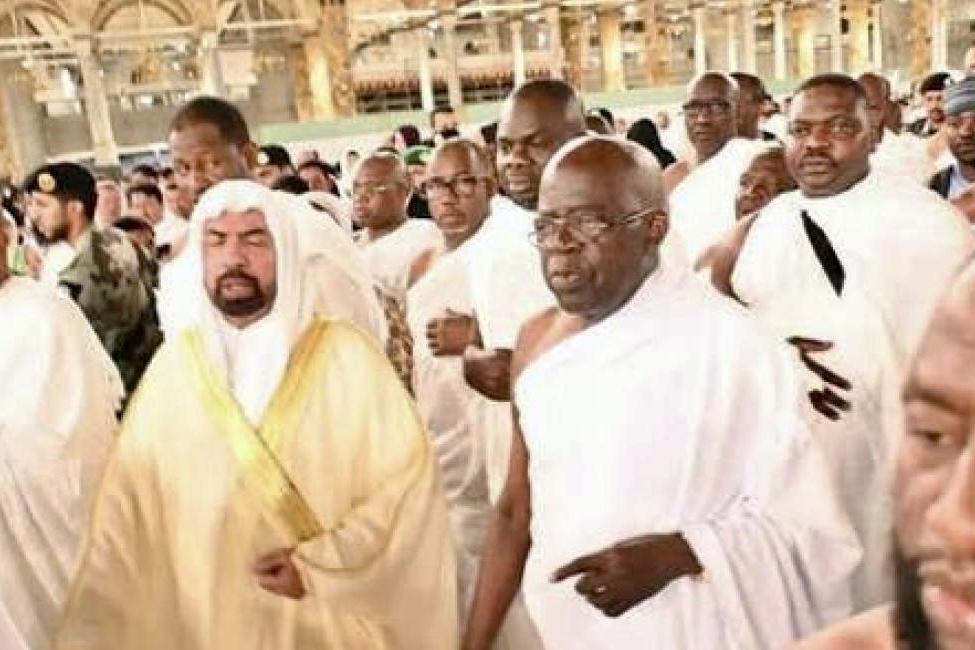
Tinubu made the remarks following his October 2026 pilgrimage to Makkah, where he was granted access to enter and pray inside the Holy Kaaba.
The Presidency confirmed that the President travelled to Saudi Arabia to perform Umrah, with the announcement of his departure issued on 28 October.
During his visit, Sheikh Dahlulah Muthawal of Masjid al-Haram led him into the Kaaba. Tinubu subsequently thanked Saudi Arabia’s King Salman bin Abdulaziz Al Saud and Crown Prince Mohammed bin Salman for facilitating the experience.
Reflecting on the privilege, he said:
“There is no other God but Almighty Allah. He is the giver and the taker. He owns power and authority. He says, ‘If I give you, use it well. If you don’t use it in accordance with my dictates, I can take it from you and give it to another person. I am the only One who has that authority.’”
He described his emergence as President and Commander-in-Chief as an exceptional blessing.
“I have faith in that, and I believe extremely well that He has done me and my country a great favour. Out of many millions of people, to be the President and Commander-in-Chief is a favour that only Almighty God can do to a human being,” he said.
The President also disclosed that his prayers centred on obtaining the wisdom and resilience to continue serving Nigerians.
“Well, I asked for wisdom and resilience to continue to serve the people. I know that prayer has been granted. Before the 2023 election, I did the same thing. I asked Allah to bless my Umrah then, and He did. And I promised that I would come back to thank Him.”
The Presidency’s account also described his reflections on the green, white and green fencing surrounding the Kaaba, which he said reminded him of Nigeria’s national colours.
“I can’t believe the fencing of the Ka’abah is in Green-White-Green, which reminds us of the Nigerian identity,” he said.
He added that Nigeria would overcome its challenges and hostility through faith in God.
“We are all facing challenges and hostility around us. We will overcome them with faith in God Almighty. I’m grateful forever. I thank the King and the royal Crown Prince.”
What the Qur’an says about political power
The President specifically referenced Surah Aal-Imran, verse 26, which addresses Allah’s ownership of sovereignty and His authority to grant and withdraw it.
The verse is commonly translated along the lines of: “O Allah, Owner of Sovereignty, You give sovereignty to whom You will and You take sovereignty away from whom You will.”
An important distinction is necessary.
Tinubu’s additional wording about using power well and losing it for failing to act according to divine instructions represents his application of the verse to leadership. Those expressions are not part of the standard English translation of Qur’an 3:26.
The distinction does not diminish the religious message. It clarifies the difference between the original scriptural wording and the President’s political interpretation of it.
His central argument is unmistakable: political authority is temporary, and those who receive it have a responsibility to exercise it properly.
That is a message with considerable relevance to a country where public trust in political leadership remains a central national concern.
Nigeria’s Constitution places another obligation on the President
Nigeria’s constitutional framework provides an important institutional context for Tinubu’s remarks.
Section 14(2)(a) of the 1999 Constitution declares that sovereignty belongs to the people of Nigeria, from whom government derives its powers and authority through the Constitution.
Section 14(2)(b) goes further, stating that the security and welfare of the people shall be the primary purpose of government.
These provisions establish the constitutional foundation of democratic accountability.
There is no necessary contradiction between Tinubu’s religious convictions and these constitutional principles. A President is entitled to recognise God as the ultimate authority in his personal faith. Nigeria’s Constitution also recognises God in its preamble.
Section 10, meanwhile, provides that neither the Federal Government nor a state government shall adopt any religion as its state religion.
The distinction is between personal religious conviction and the legal source and limits of public authority.
Tinubu’s presidential oath, contained in the Constitution’s Seventh Schedule, requires him to discharge his duties faithfully and in accordance with the Constitution and the law.
It also commits him to protecting the Constitution, acting without fear or favour, and devoting himself to the service and well-being of Nigerians.
Consequently, the President’s performance must remain open to scrutiny by citizens, the legislature, the judiciary and other constitutionally recognised institutions.
In Nigeria’s democratic system, the electorate is not a passive audience to presidential authority. It is a central source of that authority.
The economic test: Recovery versus household reality
Tinubu’s religious reflections came against the background of an administration that continues to defend its economic reforms and claim progress in stabilising the Nigerian economy.
There are measurable improvements.
Nigeria’s economy expanded by 4.43 per cent year-on-year in the second quarter of 2026, according to the National Bureau of Statistics.
Headline inflation also declined to 14.63 per cent in September 2026, compared with 20.98 per cent in September 2025.
Food inflation, however, remained elevated at 19.59 per cent.
The distinction matters. A declining inflation rate means prices are rising more slowly. It does not mean that the prices of food, transport, electricity and other essential goods have returned to earlier levels.
The World Bank’s assessment provides another measure of the challenge.
It estimated that 69.6 per cent of Nigerians lived below the lower-middle-income poverty threshold of $4.20 per day in 2025. It also estimated that 123 million people, representing 50.8 per cent of the population, lived in extreme poverty.
The World Bank acknowledged that reforms introduced since 2023 had improved macroeconomic performance. But it warned that economic growth remained insufficient to generate enough productive employment and materially reduce poverty.
This presents a more demanding test of Tinubu’s promise to usher in prosperity.
The administration can point to stronger economic indicators. Nigerians, equally, are entitled to ask how those gains are translating into affordable living costs, employment, better infrastructure and improved household incomes.
Macroeconomic stability is important, but it is not the final measure of successful government.
The security question remains unresolved
The President’s assurance that Nigeria will overcome its challenges through faith also deserves examination against the continuing security situation.
The National Human Rights Commission’s September 2026 Human Rights Situation Dashboard documented 208 killings and 210 kidnappings through its Human Rights Observatory during the reporting period.
The Commission also reported concerns involving mass abductions, deaths in custody, attacks on security personnel and violence against children.
These figures represent incidents documented by the Commission’s monitoring system, not a definitive count of every killing or kidnapping nationwide.
Nevertheless, they reinforce the scale of the public safety responsibilities confronting the government.
For families affected by kidnapping, communities exposed to armed attacks and citizens unable to travel safely, the promise of overcoming insecurity requires demonstrable improvements in intelligence, policing, military operations, prosecutions and protection of vulnerable communities.
Faith can sustain hope. It cannot replace the institutional capacity and political decisions required to protect lives.
A presidency surrounded by privilege and public expectation
Tinubu’s pilgrimage was accompanied by a high-profile Nigerian delegation.
Those named by the Presidency included Attorney-General of the Federation and Minister of Justice Lateef Fagbemi, Coordinating Minister of Health and Social Welfare Ali Pate, and governors from Borno, Sokoto, Jigawa, Kaduna, Yobe and Kwara states.
Business figures accompanying the President included BUA Group Chairman Abdulsamad Rabiu and Oando Chief Executive Wale Tinubu.
The gathering brought together political officeholders, members of the Federal Executive Council and influential business leaders in one of Islam’s most sacred places.
The President described the experience as historic and expressed gratitude to the Saudi royal leadership.
But the significance of the occasion should not obscure the responsibility shared by those who occupy positions of influence in Nigeria.
The country needs political leadership that can translate national resources, private investment, institutional capacity and public policy into tangible improvements in people’s lives.
Tinubu himself acknowledged this responsibility when he said:
“My commitment to Project Nigeria is higher. I am determined to usher in prosperity and fully develop the country, consistent with the wish of Allah and the support of the people.”
He also declared: “The foundation is solid, and the economy has come out of the dark tunnel.”
That assessment will ultimately be tested against economic data and the experiences of ordinary Nigerians.
The real meaning of power is what leaders do with it
Tinubu’s words from Makkah can be interpreted as a reminder that political authority is neither permanent nor a personal possession.
It is also an opportunity for his administration to reinforce a principle that should define democratic leadership: power is a responsibility, not an entitlement.
Yet Nigeria’s constitutional democracy demands more than an acknowledgement that authority can eventually disappear.
It requires leaders to account for how they exercise it while they still possess it.
The President may believe that Allah determined his emergence and retains the ultimate authority to withdraw his position. Nigeria’s Constitution, meanwhile, establishes the obligations that govern his conduct in office and the people whose welfare must remain at the centre of government.
The two ideas can coexist.
But for Nigerians measuring leadership through the price of food, the security of their communities, access to healthcare, employment opportunities and the quality of public institutions, the most important question remains unanswered by religious declarations alone.
If power is a trust, its worth must be demonstrated through service.
And if the President believes that authority can be taken away when it is misused, his administration faces an immediate responsibility: to show Nigerians, through measurable results, that the extraordinary favour he describes has become a tangible benefit to the country.
Follow us on our broadcast channels today!
- WhatsApp: https://whatsapp.com/channel/0029VawZ8TbDDmFT1a1Syg46
- Telegram: https://t.me/atlanticpostchannel
- Facebook: https://www.messenger.com/channel/atlanticpostng
Join the debate; let’s know your opinion.