Governors are being pushed to turn lower energy costs into cheaper transport, while a fast-growing CNG and EV ecosystem opens new channels for jobs, finance and private investment.
President Bola Tinubu has set October 1 as the target for measurable reductions in transport fares, but the figures show that the bigger story is no longer just cheaper journeys. CNG and electric mobility are creating a new Nigerian market for vehicle conversion, refuelling, maintenance, training, finance and fleet operations. The unresolved question is whether those savings can be passed consistently from cheaper energy to the passenger.
The October 1 test
President Bola Tinubu has directed Nigeria’s 36 state governors to ensure that more commuters begin to see lower transport fares from October 1, as the Federal Government expands its National Affordable CNG Transit Programme.
The directive followed discussions with the Nigeria Governors’ Forum in August. The governors subsequently began working through an implementation structure chaired by Kwara State Governor and NGF Chairman AbdulRahman AbdulRazaq. By September 10, state representatives had met in Abuja to examine how the programme could move from a broad national commitment to specific routes, fleets and infrastructure.
The important detail is that October 1 is not a promise of one uniform national fare.
Instead, each state is expected to identify its busiest transport corridors, determine practical interventions and submit three priority actions that can be delivered around the deadline. States are also expected to create implementation teams working directly with Pi-CNG & EV.
That makes the next 12 days a test of execution.
It also turns transport affordability into a sizeable commercial opportunity.
The savings already visible
Tinubu says Nigerians are already seeing the effect of lower-cost energy on selected routes.
In Borno, government-supported CNG and electric transport services are charging about ₦50 to ₦100 on some routes where commercial operators charge between ₦300 and ₦600. Independent reporting from Maiduguri has also documented the ₦50 to ₦100 fares under the state’s subsidised mass-transit system.
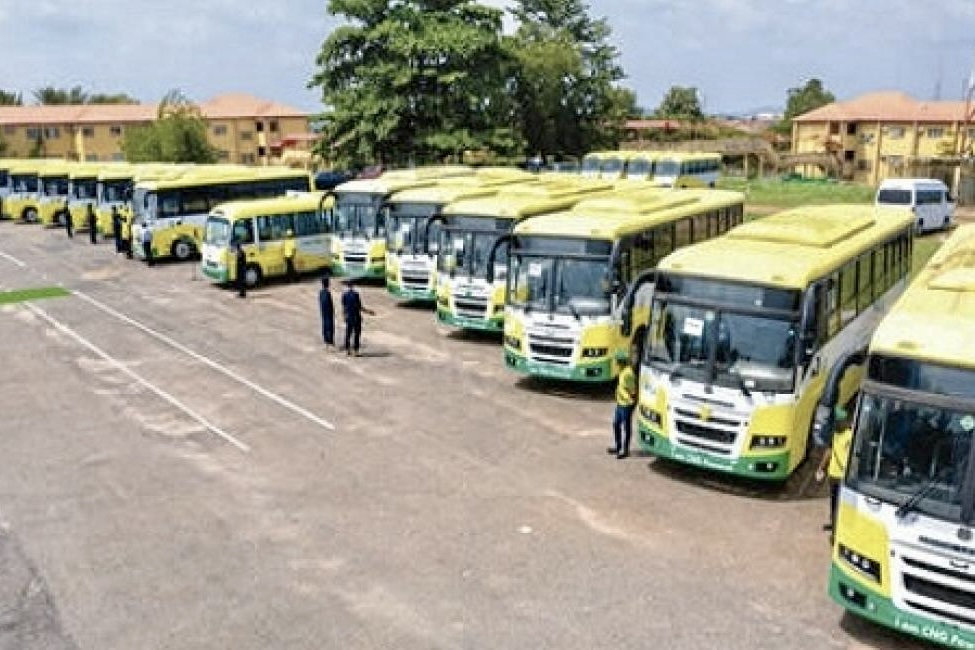
In Enugu, the President cited a fall in the Enugu-Nsukka fare from ₦2,500 to ₦1,500 after the deployment of CNG buses. Reporting from the route has separately documented the ₦1,500 state-bus fare and the competitive pressure it placed on private transport operators.
Plateau, Tinubu said, is carrying about 13,000 commuters daily on government-supported buses for ₦200, against commercial fares above ₦500.
In Niger State, the President cited a Suleja-Abuja fare of about ₦550 against roughly ₦800.
In Abuja, the Federal Government’s partnership with the National Union of Road Transport Workers has already produced a 40 per cent reduction on several routes. Area 1-Gwagwalada, for example, fell from ₦1,500 to ₦900, while Area 1-Wuse moved from ₦400 to ₦240.
Tinubu said:
“These are not projections. Nigerians are already experiencing these savings.”
He also told states:
“Above all, ensure that savings from cheaper energy reach Nigerian citizens through lower fares.”
The figures are significant, but they need to be read carefully.
The President’s reference to the Lagos-Ibadan route in Oyo State, for instance, relates to the initial deployment of Pacesetter CNG buses at ₦3,200. Pacesetter later increased that fare to ₦5,000 from February 1, 2025. That means the ₦3,200 figure is better understood as an example of an early subsidy or deployment price, not as evidence of a fixed September 2026 fare.
That is an important distinction.
It shows why lower fuel costs do not automatically produce a permanent lower fare. Operators still face maintenance, financing, fleet replacement, staffing, insurance, terminal and infrastructure costs.
The CNG economy is becoming a jobs market
The transport directive sits on top of a much larger industrial shift.
Pi-CNG & EV’s current public figures show more than 120,000 vehicles converted to CNG, more than 400 certified conversion centres, more than 90 refuelling stations and 7,700 trained technicians. Its programme materials put direct and indirect jobs created at more than 10,000.
Those numbers point to a market extending well beyond filling stations.
Every new CNG vehicle creates demand for installation, inspection, servicing, diagnostics, parts, safety checks and specialist repairs.
New stations create demand for construction, engineering, logistics, dispensing equipment, security, retail and maintenance.
Fleet expansion creates demand for drivers, route managers, workshop staff, spare-parts suppliers, insurance services, tracking technology and fleet financing.
The Federal Government has also linked vehicle conversion to consumer credit. Under the Credit Access for Light and Mobility Fund, motorists, commercial transport operators and fleet owners can access structured financing for CNG conversion, with some financing arrangements offered at rates as low as 9 per cent and repayment over six months.
That creates another opportunity.
The CNG transition is beginning to connect transport with consumer finance.
States are building demand before October 1
The national programme is no longer dependent only on Abuja.
Pi-CNG & EV says Niger State has procured 200 CNG buses, with 35 already operating, while Abia has deployed 40 electric buses and 20 charging stations and plans to take its fleet to 100 by December.
Ogun has acquired 1,500 electric motorcycles and more than 20 battery-swap stations.
Cross River has deployed 720 electric vehicles.
Delta reported 13 operational conversion centres and four CNG stations, with another 50 CNG buses expected.
Adamawa has signed an agreement for 2,000 electric tricycles, while Anambra has identified six priority corridors and is preparing to train 1,000 young people in vehicle conversion. Benue has also trained technicians and established a conversion centre.
For young Nigerians looking for technical work, those numbers are more important than the political language surrounding the programme.
The emerging opportunities are concrete.
A trained mechanic can move into CNG conversion.
An electrical technician can specialise in EV charging systems.
An entrepreneur can establish a supported conversion workshop.
A logistics company can serve CNG stations.
A business can supply safety equipment, compressors, storage systems, spare parts or workshop tools.
A financial institution can structure vehicle-conversion loans.
A software company can build fleet-monitoring, route-management, payment and station-location tools.
The opportunity is therefore not confined to owning a bus.
Infrastructure is the next bottleneck
There is already evidence that the network is expanding.
Pi-CNG & EV’s current station directory lists 91 stations across 23 states. The Federal Government also says more than 100 gas projects are being financed through the Midstream and Downstream Gas Infrastructure Fund, including 15 CNG mother stations and 86 daughter stations, while an additional 500 refuelling stations have been directed for rollout.
The administration has also commissioned new infrastructure, including the Portland Gas CNG mother station in Ojota, Lagos, with stated dispensing capacity of 96,000 standard cubic metres per day, alongside associated distribution infrastructure.
Yet the geography remains uneven.
The current infrastructure is not equivalent to a fully mature nationwide transport-fuelling system.
That is one reason the Federal Government expanded the Pi-CNG mandate in March to include electric vehicles while also directing faster deployment of mobile refuelling units.
For private investors, this gap is potentially the market.
States need stations where converted vehicles already exist.
They need conversion capacity where demand is growing.
They need charging infrastructure where electric buses, motorcycles and tricycles are being deployed.
And they need maintenance ecosystems to keep those fleets on the road.
The money behind the transition
The government has repeatedly presented the CNG programme as an investment catalyst.
But the programme’s own published figures require careful reading.
Its current public-facing website cites more than $2.5 billion in investment secured, while its detailed impact report lists more than $491 million in private-sector investment and ₦250 billion in CNG value-chain investment. Those figures may refer to different funding categories, stages or definitions, but the published pages reviewed do not clearly reconcile them.
That is an important transparency issue for investors.
Capital providers will want to know the difference between announced investment, committed investment, disbursed capital and operational assets.
The same applies to conversion centres.
The current programme website says more than 400 certified centres, while the detailed impact report records 337-plus established centres within its earlier reporting framework. The figures may reflect expansion after that reporting period, but the programme would make the market easier to understand if its public dashboards used a single clearly dated methodology.
That does not erase the scale of the expansion.
It makes measurement more important.
Tax incentives add another opening
The Federal Government has already put fiscal incentives behind domestic gas utilisation.
The Nigeria Customs Service announced zero import duty on machinery, equipment and spare parts imported for Nigerian gas utilisation and said CNG equipment, conversion components and related infrastructure were covered by relevant VAT incentives. The Federal Ministry of Finance has also described CNG and electric vehicles as part of its wider energy-sector fiscal incentives.
For businesses, the message is clear in economic terms.
The state is trying to lower the cost of entering a transport-energy market that it expects to grow.
That could accelerate local assembly, conversion equipment supply, workshop development and specialised services.
The passenger remains the final link
The biggest unresolved issue is not whether CNG can reduce operating costs.
The evidence already shows that it can.
The harder question is whether every layer between the fuel pump and the passenger will pass those savings through.
Pi-CNG & EV’s September stakeholder meeting openly recognised that challenge. States were asked to identify corridors and infrastructure gaps, while state investment agencies were encouraged to attract private capital into CNG and EV infrastructure.
Pi-CNG & EV Executive Chairman Ismaeel Ahmed said:
“The savings that come from the adoption of CNG must ultimately reach the Nigerian commuter.”
He also said:
“Benefits of this policy must not only be for the vehicle owner; they must be felt by citizens as well.”
That is the economic logic behind the October 1 deadline.
The programme only works for commuters when the chain is complete: affordable conversion, reliable gas supply, accessible refuelling, efficient vehicles, commercially viable operations and enforceable fares.
The same chain determines whether thousands of Nigerians gain lasting jobs or whether the opportunity remains concentrated around a limited number of large operators.
Tinubu has rejected a return to the former petrol subsidy model, calling it:
“the ruinous petrol subsidy regime that consumed trillions of naira and left our economy exposed to every movement in international oil prices.”
His stated alternative is faster deployment of CNG and locally developed transport technologies.
“Nigeria has the gas. We are building the infrastructure. We are already seeing the savings.”
The next stage is less about announcing the transition than proving its economics at scale.
By October 1, the question for commuters will be simple.
What will they actually pay?
For businesses and job seekers, the question is broader.
Who will build, finance, convert, fuel, repair, operate and monitor the vehicles that are expected to move Nigeria into a cheaper transport economy?
That is where the biggest part of the opportunity may be.
Follow us on our broadcast channels today!
- WhatsApp: https://whatsapp.com/channel/0029VawZ8TbDDmFT1a1Syg46
- Telegram: https://t.me/atlanticpostchannel
- Facebook: https://www.messenger.com/channel/atlanticpostng