Atlantic Post | International News and Investigations
Pope Leo XIV says a small lung nodule was detected early and doctors recommend surgery. But with its nature undisclosed and a major Latin American tour approaching, the questions now extend beyond the operating theatre.
VATICAN CITY — Pope Leo XIV’s announcement that he will undergo surgery to remove a small growth from his lung has raised an important question about the health of the 71-year-old pontiff: what can the public reasonably know about his condition when even the earliest medical findings remain incomplete?
The Pope disclosed on Sunday, 11 October, that doctors had discovered a localised lung nodule during recent medical examinations. He said it had been detected early and was well contained, adding that doctors had advised removing it.
The Vatican has not disclosed whether the growth is benign or malignant.
That distinction matters. The announcement confirms a medical finding and a planned intervention, but it does not establish a cancer diagnosis. It also leaves important questions about the precise nature of the lesion, the planned procedure and the results that doctors may obtain after examining the removed tissue.
For the Catholic Church, which counts more than a billion followers worldwide, the episode is an early test of how Pope Leo’s administration communicates uncertainty about the health of the person at its centre.
What Pope Leo Has Revealed
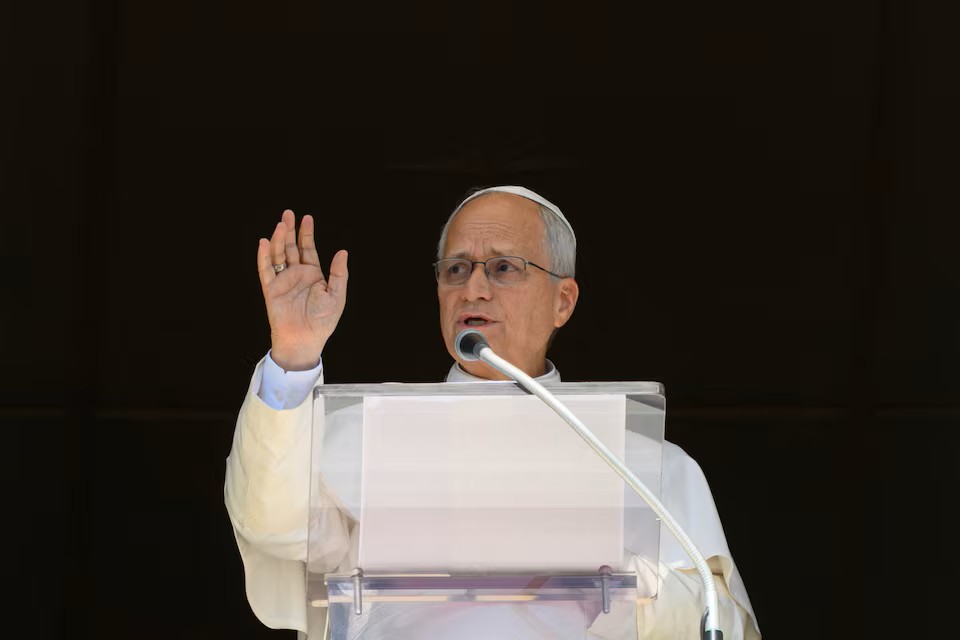
Addressing pilgrims gathered in St Peter’s Square for his weekly Sunday prayer, Leo offered a direct explanation of his condition.
‘Recently, during some medical examinations, doctors found a localized nodule in my lung,’ he said. ‘It was detected at a very early stage and is well contained.’
He continued: ‘The doctors believe it is advisable to intervene, so, following their advice, I have decided to undergo surgery to remove it. The operation is already scheduled for the next few days.’
The Pope also thanked the faithful for their support and prayers.
His announcement was notable for its directness. Rather than leaving questions about his immediate health to speculation, Leo addressed the issue himself in a public religious setting.
The Vatican press office said his recovery from surgery was expected to take about a week. Further medical details had not been released at the time of the announcement.
That is enough to establish the immediate plan, but not enough to determine the seriousness of the underlying condition.
The term ‘lung nodule’ describes a small, localised abnormality. Such nodules can be benign, although some prove to be cancerous. The label alone cannot establish which outcome applies to an individual patient.
A Lung Nodule Is Not a Cancer Diagnosis
Medical experts caution against interpreting the word ‘growth’ as confirmation of cancer.
The American Thoracic Society says fewer than 5 per cent of lung nodules overall turn out to be cancerous. Risk varies according to factors including a nodule’s size and appearance, the patient’s age, smoking history and other medical risks.
The general statistic cannot, however, predict the outcome of the Pope’s case. His individual risk cannot be assessed reliably without details of the lesion and relevant clinical findings.
Stephen Liu, a lung cancer specialist at Georgetown University in Washington and division chief of haematology-oncology at MedStar Georgetown University Hospital, explained why surgical removal may be recommended.
‘Lung nodules are fairly common and are often benign,’ he said.
He added: ‘When there is sufficient concern, and when it is safe to do so, based on the location of the nodule and the overall health of the patient, surgical removal can provide a definitive diagnosis.’
The procedure may therefore serve two purposes: removing the abnormality and allowing doctors to establish what it is.
Until the findings are available, claims that Leo has cancer—or that the operation is merely routine—would go beyond the publicly established facts.
Early detection is potentially encouraging, but the word ‘early’ should not be treated as a guarantee of a particular outcome. The final assessment depends on the medical evidence.
The Vatican’s Challenge: Reassurance Without Speculation
Leo’s predecessor, Pope Francis, experienced several hospitalisations as his health deteriorated in his later years. His medical episodes sometimes prompted intense public attention and confusion about the state of his health.
The present announcement gives Leo an opportunity to set a clear approach to medical communication from the outset.
His decision to address the matter personally offers an identifiable source for the initial information. But the next test will be whether the Vatican provides timely, accurate updates as the operation takes place and doctors establish the nature of the nodule.
This does not mean the Pope must surrender his medical privacy. Nor does public interest entitle journalists or followers to every detail of his treatment.
The relevant distinction is between private medical information and facts necessary to understand whether the pontiff can continue carrying out his public responsibilities.
A clear update confirming that surgery has taken place, explaining the broad outcome where appropriate, and clarifying any effect on official duties would help limit the space for speculation.
Silence does not automatically indicate a worsening condition. Equally, reassuring language should not be mistaken for a medical verdict.
For a religious institution whose leadership carries global spiritual and diplomatic responsibilities, credible communication requires both restraint and clarity.
Will Surgery Affect the Pope’s November Tour?
The timing is significant because Leo is preparing for a demanding international journey.
The Vatican’s published programme schedules an 11-day apostolic visit to Uruguay, Argentina and Peru from 6 to 17 November.
The itinerary includes meetings with political authorities and civil society, Masses, prayer services, encounters with clergy and visits to communities across the three countries. It also includes several flights and a succession of public engagements.
The schedule makes the recovery period relevant beyond the immediate medical question.
The Vatican expects Leo to recover in about a week, but it has not publicly provided enough medical detail to establish exactly how the procedure and recovery will affect his workload.
As of the latest reports, no cancellation of the November journey had been announced. The published itinerary remains a useful indicator of the plans in place, not a guarantee that every engagement will proceed unchanged.
The Pope had referred to the forthcoming visit before discussing his health at Sunday’s address, thanking Catholics for their prayers ‘for the pastoral visit I will undertake’.
Whether the itinerary needs to be adjusted will depend on medical advice and his recovery. A demanding travel schedule cannot, by itself, establish that complications are likely, just as an expected recovery period does not guarantee that every commitment will remain practical.
Italian Prime Minister Offers Support
Italian Prime Minister Giorgia Meloni expressed support for the pontiff as he prepared for surgery.
‘I would like to express to the Holy Father my personal support, and that of the Italian government, as he faces this challenge in the coming days,’ she said.
Meloni also praised his demeanour, adding: ‘The serenity and composure with which he spoke about it (today) … are reassuring.’
Her statement reflects the public significance of the Pope’s health, which extends beyond the Vatican and the Catholic faithful.
Leo was elected in May 2025 and is relatively young compared with some recent occupants of the papacy. He is known to enjoy sports, including tennis, and Reuters reported no previously known health issues. Neither an active lifestyle nor the absence of previously reported problems, however, can determine the nature of a newly discovered lung nodule.
The Questions Still Awaiting Answers
The central facts remain limited but clear: doctors found a localised lung nodule; the Pope says it was detected early; his doctors recommend surgical removal; and the Vatican expects recovery to take about a week.
Several questions remain unresolved.
The Vatican has not publicly identified the nodule as benign or malignant. It has not supplied detailed clinical findings or explained precisely what doctors observed that led them to recommend surgery. Nor has it issued a full medical prognosis based on the results of the procedure.
Those gaps should not be filled with conjecture.
The most meaningful next developments will be confirmation that the operation has taken place, any appropriate update on the findings, and clarification of the Pope’s recovery and official engagements.
For now, the announcement is a health scare, not a confirmed cancer diagnosis. The decision to act on a finding doctors consider appropriate to remove shows that the Pope is following medical advice. The eventual significance of the nodule can only be assessed through clinical evidence.
Leo has placed the essential information before the public himself. What follows will reveal whether that initial openness becomes a consistent approach to communicating a pontiff’s health—protecting his privacy without leaving followers to mistake uncertainty for either catastrophe or certainty of recovery.
Follow us on our broadcast channels today!
- WhatsApp: https://whatsapp.com/channel/0029VawZ8TbDDmFT1a1Syg46
- Telegram: https://t.me/atlanticpostchannel
- Facebook: https://www.messenger.com/channel/atlanticpostng

Join the debate; let’s know your opinion.