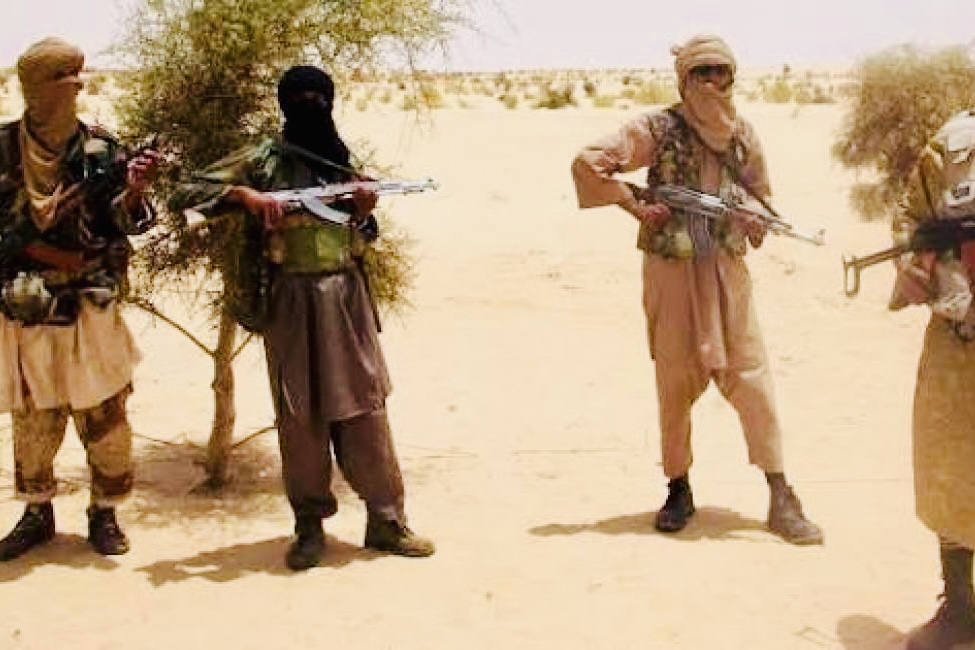
At least 22 people are feared dead, while another account puts the toll at 27. The unanswered questions now concern civilian protection, previous threats along the road and the government’s response.
An army-led escort was supposed to help traders reach their market safely. Instead, the convoy became the scene of a deadly ambush that has left civilians and security personnel feared dead, with the final casualty count still disputed.
At least 22 people are feared dead after suspected bandits attacked traders travelling under Nigerian Army escort in Zamfara State on Sunday, 11 October 2026. A separate casualty breakdown published by investigative journalists and attributed to security researcher Malik Samuel puts the toll at 27, including eight security personnel and 19 civilians.
The difference is more than a matter of arithmetic. It raises an urgent question about the scale of the attack, the fate of the injured and whether authorities have established the full extent of the losses.
The ambush occurred along the Gurusu–Gwashi road in Bukkuyum Local Government Area, a corridor where residents and travellers have faced repeated security threats. The traders were travelling to a weekly market when gunmen struck the convoy, according to reports from the area.
The incident exposes a troubling vulnerability in rural north-western Nigeria: even when civilians travel under the protection of security personnel, the journey can remain deadly.
22 or 27 dead? The casualty figures remain unresolved
A report by Leadership put the number of people feared dead at no fewer than 22. It quoted a resident, Malam Aminu Gwashi, as confirming that the attack killed several people, including members of the security team escorting the traders.
The resident also said other victims sustained injuries and were taken to Bukkuyum General Hospital for emergency treatment.
But a separate account by Malik Samuel, a journalist and security researcher, gave a higher figure.
In a post on X, Samuel wrote:
“Bandits in Zamfara this afternoon attacked a military-led convoy of civilians from Gwashi heading to Nasarawa Market in Bukkuyum local government area.”
He initially reported that 12 civilian bodies had been recovered, alongside casualties among soldiers and police officers.
In a subsequent update, he gave a more detailed breakdown:
“4 soldiers, 3 policemen and 1 civil defence personnel died in the attack, with 19 civilian casualties.”
That breakdown amounts to 27 reported deaths. It has not been established as an official final toll, and the available reporting does not provide an independently verified list of victims.
The accounts also differ over the traders’ destination and direction of travel. While one report described traders travelling from Gurusu to Gwashi for its weekly market, Samuel’s account referred to a convoy travelling from Gwashi to Nasarawa Market.
The precise timing also varies between reports.
These discrepancies do not diminish the reported scale of the violence. They underline the need for a verified account from the relevant security agencies and local authorities.
As of the publication of the reports reviewed for this story, neither the Nigerian Army nor the Zamfara State Police Command had publicly confirmed the final casualty figures.
A multi-agency escort was not enough to prevent the attack
One of the most significant details is that the traders were not travelling alone.
According to Samuel’s account, the escort included personnel from the Nigerian Army, the Nigeria Police Force and the Nigeria Security and Civil Defence Corps (NSCDC).
The reported deaths across all three services suggest that the attackers confronted a convoy protected by a multi-agency security team.
Yet crucial details about the ambush remain unclear. There is no publicly verified account in the reports reviewed of how the attackers approached the convoy, whether the escort had prior intelligence about a threat, how the engagement unfolded or how quickly reinforcements arrived.
Nor is there enough information to establish whether the escort was overwhelmed by superior numbers, caught off guard or operating with insufficient intelligence and support.
Those questions matter because an escort is only one element of civilian protection. Its effectiveness also depends on intelligence gathering, route-risk assessments, communications, rapid reinforcement and the capacity to evacuate casualties after an attack.
Without an official operational account, it would be premature to conclude that the military failed in its duties or that the attack was preventable. But the deaths attributed to both civilians and security personnel demand a transparent review of what happened.
The objective should be to establish not simply how many people died, but how a security arrangement intended to protect traders was breached.
The road had already experienced explosive incidents
The Gurusu–Gwashi road’s recent security history makes the latest attack particularly concerning.
On 27 August 2026, TheCable reported that two people were killed when an improvised explosive device detonated along the road in Bukkuyum. The report, citing security sources, said preliminary findings indicated that a motorcycle had triggered the device.
Earlier that month, the Zamfara State Police Command announced that a suspected explosive device had been discovered and neutralised along the same route.
The incidents do not establish that Sunday’s ambush was predictable, or that the device incidents were connected to the latest attack. They do, however, demonstrate that the corridor had experienced serious security threats before the convoy was attacked.
That history raises a practical question: how are previous incidents along vulnerable roads incorporated into decisions about when, where and how civilian convoys are escorted?
Security agencies would need to establish whether threat assessments were updated, whether the route was considered safe for the journey and what precautions were in place.
Those details have not been provided in the reports reviewed.
The wider picture is also troubling. In April 2026, Premium Times documented repeated attacks and kidnappings along major roads in western Zamfara, including the Anka–Gurusu corridor.
A humanitarian worker quoted in that report described the area’s insecurity in stark terms:
“From Mayanchi junction up to Gurusu through Anka, the road is really ungoverned with no security checkpoints.”
That assessment predates Sunday’s attack, but it captures the persistent challenge facing people who depend on these roads to trade, farm and move between communities.
The cost of insecurity reaches beyond the casualty count
For rural traders, market journeys are economic lifelines. Weekly markets connect farmers, merchants, transport operators and consumers. They provide outlets for agricultural produce, access to essential goods and income for households that often have few alternatives.
When a journey to market becomes dangerous, the effects spread far beyond those directly attacked.
Traders may stop travelling, transport costs can rise as operators avoid vulnerable routes, and fewer goods may reach local markets. Farmers may struggle to sell produce, while consumers face reduced supply and higher prices.
The result is a security crisis that also undermines livelihoods and food access.
The consequences are especially severe when people feel compelled to choose between risking an armed attack and losing a vital source of income.
The ambush therefore raises a question beyond the immediate military response: how can communities retain access to commercial activity when the routes connecting them to markets remain vulnerable?
An effective response must protect lives while restoring the confidence required for ordinary economic activity to resume.
Survivors reportedly need blood as casualty verification continues
The reported condition of the wounded adds another urgent dimension to the incident.
Samuel said injured survivors were evacuated to Anka General Hospital and warned of a shortage of blood supplies.
“There is a scarcity of blood at Anka General Hospital, where the wounded were evacuated.”
The separate report quoting Aminu Gwashi identified Bukkuyum General Hospital as the destination for injured victims. The available accounts do not clarify whether casualties were taken to both facilities or whether the reports describe different stages of the evacuation.
That distinction should be established so that the public and relevant authorities have an accurate picture of where survivors are receiving care and what assistance is required.
The immediate priority is medical treatment for the wounded, alongside timely information for families searching for missing relatives.
Authorities should also clarify the number of people injured, the facilities receiving them and whether emergency supplies, including blood, have reached the hospitals involved.
Samuel attributed the attack to suspected bandit leader Muhammad Gwaska, writing that it was:
“most likely carried out by Muhammad Gwaska.”
That remains an allegation, not an independently verified identification of the attackers. Security agencies would need to establish responsibility through evidence before any attribution can be treated as confirmed.
What the military and police must now explain
The attack demands more than a general condemnation of violence.
The Nigerian Army, Operation FANSAN YAMMA, the Zamfara State Police Command and the NSCDC should provide a coordinated account of the incident, including the confirmed death toll, the number and condition of survivors, and the circumstances surrounding the ambush.
A credible investigation should establish the composition and mission of the escort, the intelligence available before departure, the sequence of events during the attack and the response time for reinforcement and medical evacuation.
It should also examine how security threats previously reported along the Gurusu–Gwashi corridor informed operational planning on Sunday.
The findings should guide practical measures to protect future journeys, especially for civilians who rely on scheduled market travel for their livelihoods.
There is no basis in the available evidence to conclude that an escort can guarantee complete safety. Armed groups can exploit difficult terrain, limited communications and gaps in surveillance. But the presence of an escort makes it essential to understand what protection was planned, what happened on the road and what can be changed to reduce the risk of another tragedy.
For the families of those reportedly killed, the first requirement is an accurate account of their losses. For survivors, it is urgent medical care. For traders and residents, it is a credible plan that makes essential journeys safer.
The Gurusu–Gwashi ambush is a reminder that security cannot be measured only by the number of personnel deployed. It must also be judged by whether civilians can travel, trade and return home alive.
Until the authorities establish what happened on Sunday, the central questions remain unanswered: how many people were killed, how did the convoy come under attack, and what will change before the next market day?
Follow us on our broadcast channels today!
- WhatsApp: https://whatsapp.com/channel/0029VawZ8TbDDmFT1a1Syg46
- Telegram: https://t.me/atlanticpostchannel
- Facebook: https://www.messenger.com/channel/atlanticpostng



Join the debate; let’s know your opinion.