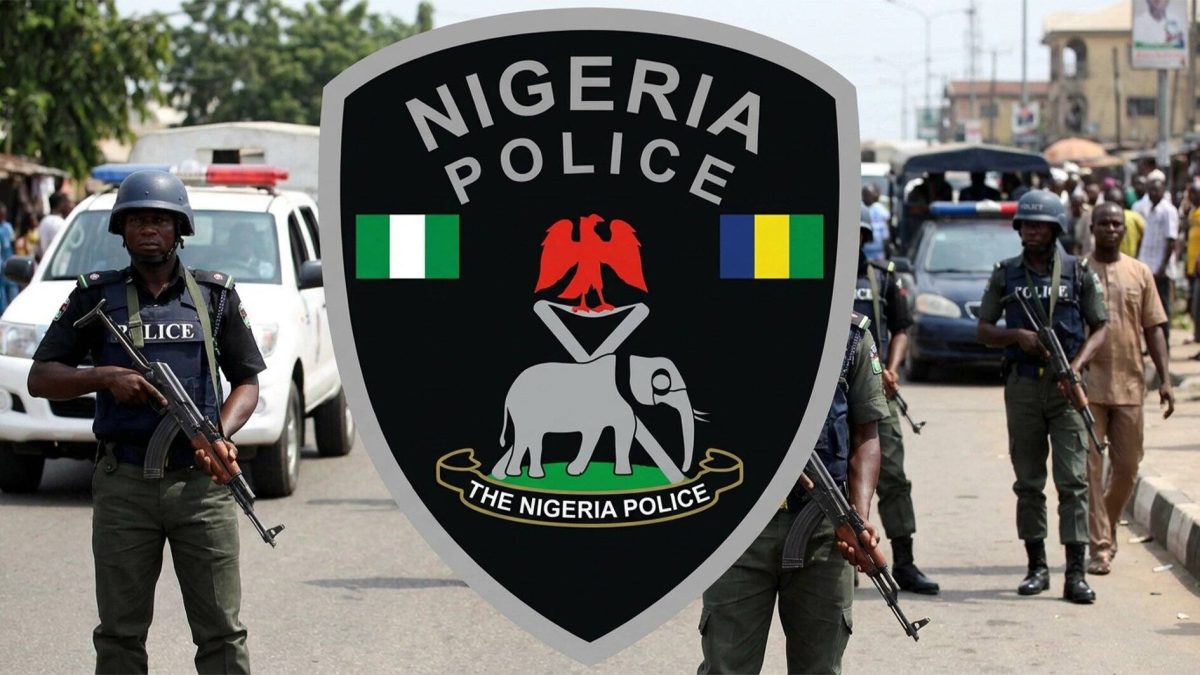
Twelve African countries have joined Nigeria’s new arms-tracing initiative. The critical question is whether investigators will follow the weapons beyond the people caught carrying them.
ABUJA, Nigeria — Nigeria’s latest security initiative could help expose the networks supplying illegal firearms across Africa. But training officers is only the beginning. The real challenge is to turn recovered weapons into evidence against traffickers, identify those financing illegal shipments and ensure investigations lead to lawful, measurable consequences.
With the 2027 elections approaching, Nigerians need more than assurances that security agencies are building capacity. They need evidence that the weapons threatening communities can be traced to their sources and that the people responsible for supplying them are being brought to justice.
Nigeria has begun training police officers from 12 African countries to identify and trace illicit firearms, placing weapons trafficking at the centre of a regional security initiative with potential implications for Nigeria’s 2027 general elections.
The five-day programme, launched on Monday by Inspector-General of Police Olatunji Disu in Abuja, is designed to improve the ability of law-enforcement officers to identify, mark, register and trace small arms, light weapons and ammunition.
Yet the significance of the initiative extends beyond the technical identification of firearms. Its ultimate value will depend on whether investigators can follow the evidence from a recovered weapon to the people who supplied it, financed its movement or diverted it into criminal hands.
The Nigeria Police Force has presented the programme as part of a wider effort to combat terrorism, banditry, kidnapping and organised crime across borders. It has also linked effective weapons tracing to preparations for peaceful elections in 2027.
That is an important ambition. It also sets a demanding standard against which the programme should eventually be judged.
Twelve Countries, One Cross-Border Challenge
The Small Arms and Light Weapons Identification and Tracing Simulation Programme, known as SALW-IT, runs from 12 to 16 October 2026.
Participants come from Nigeria, Chad, the Central African Republic, Mali, Algeria, Côte d’Ivoire, Burkina Faso, Cameroon, Niger, Libya, Benin and the Republic of the Congo.
According to a statement issued by the Force Public Relations Officer, CSP Ani Iniedu, the training combines technical instruction with practical exercises at the Nigeria Police Simulation Centre.
At the opening, Disu described the proliferation of illicit arms as a major threat to peace and security across Africa. He emphasised the importance of cooperation between law-enforcement agencies when investigating criminal networks operating across national boundaries.
The IGP urged participating countries to strengthen intelligence sharing, coordinate investigations and use established legal and institutional channels to locate and apprehend suspects involved in transnational crimes.
He also called on participants to exchange operational experience and establish professional relationships that could continue after the training ends.
The countries represented face different security conditions, but the initiative addresses a shared investigative problem: a weapon recovered in one country may have been manufactured, legally imported, diverted or transferred through several other jurisdictions before reaching its last known possessor.
Without reliable records and timely cooperation, investigators may establish who possessed a firearm without discovering how it entered the illicit market.
That is the gap weapons tracing is intended to close.
The Real Test Begins After a Gun Is Recovered
Recovering a firearm removes a weapon from circulation. Tracing it can reveal information about its origin and movement.
A properly conducted investigation may establish a firearm’s manufacturer, serial number, original importer, authorised recipient and subsequent chain of possession. Where records and international cooperation permit, those details can help investigators identify diversion points, trafficking routes and suspected suppliers.
The distinction matters because the recovery of weapons is only one part of the wider fight against illicit arms.
INTERPOL’s Illicit Arms Records and tracing Management System, known as iARMS, provides an international framework for recording illicit firearms, requesting traces and identifying possible links between weapons and criminal investigations.
INTERPOL reports that its system contains more than 1.5 million records and has supported over 1.4 million tracing operations since 2013. It says the system has also helped identify diversion points and provided investigative leads on weapons trafficking.
These capabilities demonstrate why tracing can be valuable. They do not establish how effectively Nigerian investigators currently use the system or whether the new Abuja programme will expand that use.
The Nigeria Police Force’s announcement did not specify whether participants would undertake exercises using iARMS, other international databases or national tracing systems. It also did not publish measurable targets for the number of weapons to be traced or trafficking networks expected to be identified after the programme.
Those questions matter because training is an investment in investigative capacity, not proof that the resulting investigations have succeeded.
Nigeria’s Firearms Recovery Figures Raise Further Questions
Recent figures released by Nigeria’s National Centre for the Control of Small Arms and Light Weapons (NCCSALW) illustrate the scale of the weapons-management challenge.
In September 2026, the News Agency of Nigeria reported that the centre had recorded 5,449 firearms recovered in recent nationwide operations and destroyed 1,419 illicit weapons during its second-quarter destruction exercise. The centre also said it had destroyed more than 19,000 weapons since its establishment.
The figures require careful interpretation.
The reported recovery total included 5,050 automatic weapons retrieved from the Nigeria Police Force in June. These were described in the report as illicit, unserviceable, decommissioned and obsolete weapons. Another 399 JOJEF automatic guns had been intercepted by the Nigeria Customs Service and handed over to the centre in August.
The figures therefore cover different circumstances and should not be treated as a single measure of firearms seized from armed groups or criminal networks.
The same September report provided a more direct example of an arms-trafficking investigation. The NCCSALW director-general said 11 suspects had been arrested in connection with the illegal importation of 844 assorted automatic firearms and 112,500 rounds of ammunition concealed in a container intercepted by Customs at Onne Port in Rivers State.
The suspects were reported to remain in custody while investigations continued to identify other people involved.
That case illustrates the type of investigative question the Abuja training could help address: not simply how many weapons are found, but who arranged their movement, who received them, how they entered the supply chain and whether evidence can support prosecution.
The police programme’s opening statement, however, did not provide figures showing how many firearms Nigerian police investigators had successfully traced to their original sources, how many trafficking networks had been identified through tracing or how many resulting cases had ended in convictions.
Those omissions do not prove that such work has not occurred. They mean the announcement offers no baseline against which the programme’s eventual results can be measured.
For a course presented as part of a national and regional security response, that is a significant accountability gap.
Why the Training Matters Before Nigeria’s 2027 Elections
The police leadership has specifically linked weapons tracing to electoral security.
The concern is straightforward. Illicit firearms can be used to intimidate voters, threaten electoral personnel, disrupt political gatherings or escalate confrontations during a tense campaign. Weapons moving across borders can also complicate investigations when the people supplying them operate far from the places where the guns are eventually recovered.
Nigeria’s electoral timetable adds urgency to the issue. The Independent National Electoral Commission’s published calendar lists nationwide presidential and House of Assembly elections for 16 January 2027, followed by governorship and State House of Assembly elections on 6 February 2027.
A tracing programme could support prevention by helping investigators identify supply routes and intercept weapons before they reach people intending to use them for violence.
But the relationship between weapons tracing and peaceful elections is not automatic.
A gun recovered after an attack may provide valuable evidence. Preventing that attack requires intelligence, timely operations and a functioning response before violence occurs. Investigations must also distinguish between those directly involved in an offence and people whose connection to a weapon requires further evidence.
Effective tracing is therefore one component of electoral security, alongside intelligence-led policing, impartial enforcement, protection of voters and electoral personnel, and credible investigations into threats and violence.
The training’s relevance will depend on whether these capabilities are integrated into operational planning well before the election period intensifies.
Regional Cooperation Must Produce Operational Results
Disu has called for stronger cooperation among African law-enforcement agencies, including timely intelligence exchanges, coordinated investigations and mutual legal assistance.
That emphasis is consistent with the mandate of the African Union Mechanism for Police Cooperation, known as AFRIPOL, which promotes collaboration between African police institutions against organised transnational crime, terrorism and other security threats.
The IGP also commended AFRIPOL, the Bonn International Centre for Conflict Studies, INTERPOL, relevant African Union entities and experts from the German Armed Forces Verification Centre for supporting the programme.
The next challenge is turning institutional relationships into procedures that work during real investigations.
A trace request is only useful when the relevant records exist, the information can be exchanged lawfully and promptly, and the receiving authority responds in a way that advances the investigation.
Officers must also preserve evidence, document the chain of custody, handle recovered firearms properly and ensure that cases are built in accordance with applicable law.
The police statement says the knowledge gained will be shared with officers across commands and formations through structured training and knowledge-sharing initiatives.
That commitment could broaden the programme’s impact. But multiplying the number of trained officers is not the same as demonstrating improved investigative performance.
The Force will also need to ensure that frontline personnel know when and how to request a trace, where to send the request, how to interpret the result and how to translate a technical finding into admissible evidence.
Disu further disclosed that police chiefs from West and East African countries would meet to discuss crime-related issues and develop strategies to address transnational criminal activity. The announcement did not provide a date or a detailed agenda for that meeting.
A New Course Must Lead to Measurable Outcomes
The Abuja initiative is not the region’s only recent effort to strengthen weapons controls.
In September, ECOWAS, the Bonn International Centre for Conflict Studies and Nigeria’s National Centre for the Control of Small Arms and Light Weapons conducted a five-day training programme in Port Harcourt for security personnel on the physical security and management of state-held weapons and ammunition.
That programme focused on preventing theft, loss, diversion and unsafe storage. The new SALW-IT course concentrates on identifying and tracing weapons. The two activities address different stages of the same wider challenge: preventing firearms from entering criminal circulation and improving accountability when they do.
Together, they underline why arms control cannot rely on a single institution or intervention.
Nigeria needs reliable records, secure stockpiles, effective border controls, cooperation between agencies, forensic capacity and investigations that follow evidence beyond the person found holding a gun.
The police could make the results of the new programme more transparent by publishing periodic figures on firearms submitted for tracing, trace requests made, responses received, weapons linked to identifiable supply routes, trafficking networks investigated and cases referred for prosecution.
Those figures should distinguish between weapons recovered, weapons successfully traced, suspected offenders arrested and cases resulting in convictions. Each measures a different stage of the enforcement process.
The figures would also help the public assess whether regional cooperation is improving over time, rather than relying on announcements about training sessions and institutional partnerships.
For the 12 participating countries, the immediate task is to apply the skills acquired during the five days in Abuja. For the Nigeria Police Force, the longer-term responsibility is to demonstrate that those skills can help dismantle trafficking networks and reduce the flow of illegal weapons.
The programme offers a potentially important tool for investigators. Its success will not be determined by the number of officers who complete the course, but by whether their work can establish where illicit firearms came from, who moved them, who financed their movement and what lawful action followed the evidence.
Ahead of the 2027 elections, that is the distinction between preparing to trace illegal guns and proving that weapons tracing is making Nigerians safer.
Follow us on our broadcast channels today!
- WhatsApp: https://whatsapp.com/channel/0029VawZ8TbDDmFT1a1Syg46
- Telegram: https://t.me/atlanticpostchannel
- Facebook: https://www.messenger.com/channel/atlanticpostng


Join the debate; let’s know your opinion.