Editor

The arraignment of 10 #EndBadGovernance protesters by the Federal Government on charges of treasonable felony raises critical questions about the state of democracy and civil rights in Nigeria. September 2, 2024. The arraignment of 10 #EndBadGovernance protesters by the Federal Government on charges of treasonable felony raises critical questions about the state of democracy and civil rights in Nigeria. September 2, 2024.


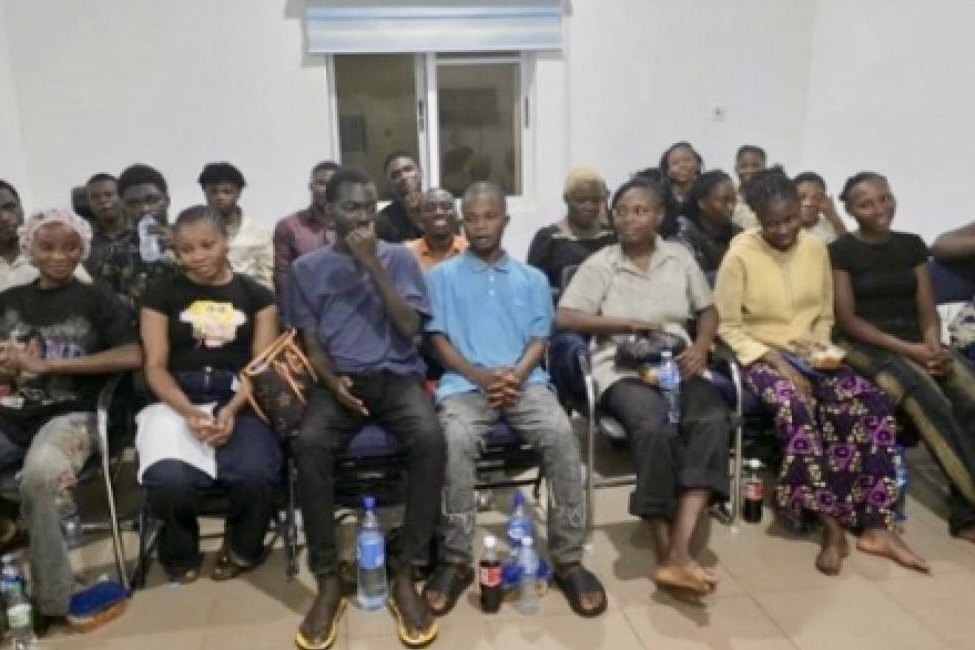
ABUJA, Nigeria — In a shocking and highly controversial move, the Federal Government of Nigeria has taken an unprecedented step by arraigning ten #EndBadGovernance protesters on charges of treasonable felony—a crime that carries the death penalty. The protesters, who were apprehended in Abuja, Kaduna, Kano, and Gombe, have now found themselves at the centre of a legal and political maelstrom that threatens to upend the very fabric of Nigeria’s democracy.
The arraignment, which took place under tight security before a Federal High Court in Abuja, has sent shockwaves across the nation. The defendants, identified as Michael Tobiloba Adaramoye (aka Lenin), Adeyemi Abiodun Abayomi (aka Yomi), Suleiman Yakubu, Comrade Opaluwa Eleojo Simeon, Angel Innocent, Buhari Lawal, Mosiu Sadiq, Bashir Bello (aka Murtala), Nuradeen Khamis, and Abdulsalam Zubairu, all pleaded not guilty to the six-count charge filed against them.
The Charges: A Questionable Basis for Treason
The core of the government’s case rests on the allegation that these protesters were involved in a plot to destabilise Nigeria—a charge that has been met with widespread skepticism and criticism. The notion that peaceful protesters, exercising their constitutionally guaranteed right to dissent, could be charged with treasonable felony has sparked a fierce debate about the limits of state power and the sanctity of civil liberties.
The charge of treasonable felony is one of the most severe accusations that can be levied against an individual in Nigeria. It is not merely a legal designation; it is a political weapon wielded by those in power to silence dissent and stifle opposition. In this context, the arraignment of these ten protesters is not just a legal proceeding; it is a battle for the soul of Nigeria’s democracy.
A History of Repression: The #EndBadGovernance Movement
The #EndBadGovernance movement, which has gained significant traction in recent years, is a grassroots campaign that seeks to hold the government accountable for its failures. From widespread corruption to police brutality, the movement has shone a light on the deep-seated issues that have plagued Nigeria for decades. However, rather than engaging with the legitimate grievances of its citizens, the government has responded with repression and intimidation.
The current administration, led by President Bola Ahmed Tinubu, has shown a troubling pattern of intolerance towards dissent. This is not the first time that the Nigerian government has sought to crush a popular movement through the use of excessive force and legal intimidation. The #EndSARS protests of 2020, which called for an end to police brutality, were met with a similarly heavy-handed response, culminating in the tragic events at the Lekki Toll Gate.
In many ways, the arraignment of these ten protesters is a continuation of this disturbing trend. It is a clear message from the government that any challenge to its authority will be met with the full force of the law, no matter how spurious the charges may be.
Legal Battle: The Fight for Justice
The defendants, who have been detained under highly questionable circumstances, have not taken these charges lying down. Represented by a consortium of lawyers led by renowned human rights advocate Femi Falana, they have challenged the legality of their arrest and detention. The protesters argue that their detention was based on a flawed court order issued by Justice Emeka Nwite on August 22, 2024, which allowed the Inspector General of Police to remand them for 60 days pending the conclusion of an investigation.
The protesters’ legal team has filed a motion on notice, arguing that the ex-parte motion used to secure their remand was predicated on the suppression and misrepresentation of material facts. They contend that the order constitutes a gross abuse of the court process and have asked the court to set aside, discharge, and vacate the ex-parte order. Additionally, they are seeking bail for the detained protesters.
At the heart of this legal battle is the fundamental question of whether the Nigerian government can continue to use the judiciary as a tool for political repression. The outcome of this case will have far-reaching implications for the rule of law in Nigeria and the protection of civil liberties.
The Role of the Judiciary: Complicit or Independent?
The role of the judiciary in this case cannot be overstated. The Federal High Court in Abuja, under the presiding judge, Justice Emeka Nwite, finds itself at a crossroads. Will it uphold the principles of justice and the rule of law, or will it succumb to the pressures of an overreaching executive?
The initial decision to remand the protesters for 60 days has raised serious concerns about the independence of the judiciary. Critics argue that the judiciary has become a willing accomplice in the government’s efforts to silence dissent. The ex-parte motion that led to the protesters’ remand is seen by many as a clear example of how the judiciary can be manipulated to serve the interests of those in power.
However, there is still hope that the judiciary can redeem itself. The upcoming hearings on the protesters’ motion to set aside the remand order will be a crucial test of the judiciary’s independence. If the court rules in favour of the protesters, it could send a powerful message that the judiciary is not beholden to the executive and that it remains committed to upholding the rights of all Nigerians.
The Broader Implications: Democracy at a Crossroads
The arraignment of the #EndBadGovernance protesters is not just a legal matter; it is a pivotal moment in Nigeria’s democratic journey. The government’s actions have laid bare the fragility of Nigeria’s democracy and the ease with which it can be undermined by those in power.
At its core, democracy is about the protection of individual rights and the ability of citizens to hold their government accountable. When these rights are trampled upon, as they have been in this case, it threatens the very foundation of the democratic system. The arraignment of these protesters on charges of treasonable felony is a direct attack on the rights of all Nigerians to express their dissent and demand better governance.
Furthermore, the government’s actions have set a dangerous precedent. If peaceful protesters can be charged with treasonable felony simply for exercising their rights, then no one is safe from the reach of the state. This creates an environment of fear and intimidation, where citizens are discouraged from speaking out against injustice.
The International Dimension: Nigeria’s Reputation at Stake
Nigeria’s handling of the #EndBadGovernance protests has not gone unnoticed by the international community. Human rights organisations, foreign governments, and international bodies have all expressed concern about the government’s heavy-handed response to dissent. The arraignment of these protesters on charges of treasonable felony is likely to further damage Nigeria’s reputation on the global stage.
Nigeria, as a member of the international community, is bound by various human rights treaties and conventions that guarantee the right to peaceful assembly and freedom of expression. The government’s actions in this case are a clear violation of these international obligations, and they risk isolating Nigeria from its international partners.
The international community will be closely watching the outcome of this case. A ruling in favour of the protesters could help restore some of Nigeria’s tarnished reputation, while a ruling against them could lead to further condemnation and even sanctions.
Civil Society’s Response: A Call to Action
Civil society organisations, human rights activists, and concerned citizens have all rallied behind the #EndBadGovernance protesters. They see this case as a defining moment in the struggle for democracy and human rights in Nigeria. There have been calls for nationwide protests and international advocacy to draw attention to the plight of the detained protesters and to demand their immediate release.
The actions of civil society in this case are crucial. They serve as a counterbalance to the government’s overreach and ensure that the voices of the oppressed are not silenced. The support of civil society also puts pressure on the judiciary to act independently and to deliver a just and fair ruling.
What’s Next for the #EndBadGovernance Protesters?
The future for the #EndBadGovernance protesters, as well as for Nigeria as a whole, hinges on several critical developments in the aftermath of their arraignment. Here’s what could be next for them:
Legal Proceedings: The Fight in Court
The next immediate step will be the legal battle in the Federal High Court. The protesters’ legal team, led by Femi Falana, will argue for the dismissal of the treasonable felony charges and the setting aside of the remand order. If successful, the court may grant bail to the protesters, allowing them temporary freedom while the case proceeds.
The court’s ruling on their motion to vacate the ex-parte order will be pivotal. A ruling in favor of the protesters could lead to their release and a significant blow to the government’s case. Conversely, if the court upholds the charges and denies bail, the protesters may face a prolonged legal battle, possibly under continued detention.
Public and International Pressure: Amplifying Their Cause
Public support and civil society activism will likely intensify. Protests, both within Nigeria and internationally, may escalate to pressure the government for their release and to highlight the broader issues of governance and civil rights abuses.
International organisations and foreign governments could apply diplomatic pressure on Nigeria, potentially leading to discussions at the United Nations or other global forums. If Nigeria’s judiciary is seen as complicit in political repression, there could be calls for sanctions or other measures.
Government Response: Repression or Reconciliation?
The Nigerian government’s next moves are crucial. The administration might choose to double down on its stance, continuing to prosecute the protesters and possibly expanding its crackdown on dissent. This could lead to more arrests, stricter controls on civil liberties, and a tense political atmosphere.
Alternatively, the government might opt for a more reconciliatory approach, especially if public opinion turns sharply against it. This could involve dropping charges, negotiating with civil society groups, and making concessions to address the root causes of the protests.
Impact on the Political Landscape: A Potential Turning Point
The outcome of this situation could significantly impact Nigeria’s political landscape. If the protesters are eventually exonerated or if the charges are dropped, it could embolden other activist groups and citizens to demand greater accountability and governance reforms.
On the other hand, if the government successfully prosecutes the protesters, it could have a chilling effect on future dissent, leading to a more authoritarian environment where civil liberties are increasingly curtailed.
Long-Term Implications: Shaping Nigeria’s Democratic Future
This case may set a precedent for how future protests and dissent are handled in Nigeria. If the judiciary stands firm in protecting civil rights, it could strengthen Nigeria’s democratic institutions. However, if the judiciary is perceived as yielding to government pressure, it could erode public trust in the legal system.
The broader implications include potential reforms in Nigeria’s governance structure, depending on how the public and civil society react to the government’s actions. It could trigger a more robust movement for constitutional reforms, greater autonomy for state institutions, and increased public participation in the political process.
Personal Impact on the Protesters: Life After the Trial
For the individual protesters, their futures will be shaped by the outcome of the trial. If acquitted, they might emerge as prominent voices in Nigeria’s civil rights movement. However, if convicted, they could face severe consequences, including long-term imprisonment or worse, depending on the final charges upheld by the court.
Regardless of the outcome, the experience of being charged with such severe crimes will likely have a profound personal impact, influencing their future activism and personal lives.
The Uncertain Road Ahead
The #EndBadGovernance protesters stand at the centre of a critical moment in Nigeria’s history. Their legal battle and the government’s response will not only determine their fate but also have lasting consequences for the nation’s democratic integrity. Whether this situation leads to greater repression or sparks a new wave of democratic engagement remains to be seen. However, what is clear is that the road ahead is fraught with uncertainty, and the next steps taken by all parties involved will be decisive in shaping Nigeria’s future.
The Path Forward: A Time for Reflection and Reform
The arraignment of the #EndBadGovernance protesters has exposed deep flaws in Nigeria’s governance and justice systems. It is a moment of reckoning for the nation—a time to reflect on the state of democracy and the need for meaningful reform.
For the government, this is an opportunity to reassess its approach to dissent and to recognize that the suppression of legitimate protest only serves to deepen the divisions within the country. The government must understand that true democracy cannot thrive in an environment of fear and repression. It must take steps to engage with its citizens, address their grievances, and build a more inclusive and accountable governance system.
For the judiciary, this case presents an opportunity to reaffirm its commitment to the rule of law and to the protection of civil liberties. The judiciary must resist any attempts to undermine its independence and must deliver a ruling that upholds the rights of the protesters and all Nigerians.
Conclusion: A Nation at a Crossroads
As the legal battle over the arraignment of the #EndBadGovernance protesters unfolds, Nigeria finds itself at a crossroads. The decisions made in the coming weeks and months will shape the future of the nation’s democracy and determine whether Nigeria can truly claim to be a government of the people, by the people, and for the people.
The stakes could not be higher. The world is watching, and the Nigerian people are waiting. Will justice prevail, or will the forces of repression continue to tighten their grip on the nation? The answer to this question will define Nigeria’s democratic journey for years to come.