Deck
An investigative long read tracing the 18 months after Nigeria scrapped the PMS subsidy. Who gained. Who lost. What the state actually saved. And how everyday life was altered.
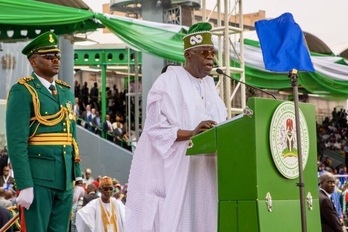
On 29 May 2023 President Bola Ahmed Tinubu told the nation that the fuel subsidy was gone. The line was short and brutal and it changed the economics of almost everything in Nigeria. In the 18 months that followed roads, factories, markets and living rooms all felt the aftershock.
Prices jumped. Strikes convulsed cities. New actors stepped into the oil value chain. The argument has become the defining economic debate of the era. Did the move free resources for development, or did it simply inflict pain on the poor?
What 18 months means here
For clarity this feature measures the period from 29 May 2023 through 29 November 2024. That is the window most analysts mean when they talk about the first 18 months of the reform.
Within that interval, petrol retail prices shifted from a subsidised regulated band to market-driven levels. Further adjustments followed as supply, local refining, and global crude prices all played out.
Timeline in brief
The announcement on 29 is 2023 ended decades of stop gap subsidy policy. It immediately reshaped pump prices across the federation.
Within weeks, national averages surged. They had previously hovered at artificially low levels. Large regional spreads appeared as logistics costs and scarcity took effect.
Over the next year and a half further price adjustments, periodic shortages, and market reorganisation followed.
By late 2024 parts of the country were paying many multiples of the 2023 pre removal pump price.
The headline arithmetic
One simple fact frames everything else. The pump price that was widely associated with the subsidy era was roughly ₦175 per litre in May 2023 in many places. This price was replaced by market prices. In some months, these prices reached and exceeded ₦1,000 per litre.
That is not a rounding error. It is a distributive shock that translated into transport fare rises, higher food costs and new cost structures for manufacturers. Millions of households experienced income compression when wages did not keep pace.
The state says it bought breathing room
The presidency and finance managers argued the move was fiscal hygiene. By ending a subsidy line that had for years consumed billions, the federal government said it would free resources. These resources will go toward roads, electricity, and local refining.
The administration produced estimates of annual savings and new investment flows tied to the policy.
One widely cited government figure suggested gains in the billions of dollars each year from the removal and associated reforms. The claim underpinned a narrative of sacrifice for future public goods.
How markets adjusted
Two linked market developments matter. First the state oil company and wholesale channels re priced petrol to recover full costs and market margins.
Second new domestic refining capacity and supply deals reconfigured where and how fuel was sourced. The arrival into the market of refined product from the new large scale private refinery altered bargaining power.
NNPC began purchasing from local refineries and adjusted retail guidance accordingly. The immediate effect was higher consumer prices but also a change in the distribution chain that will matter for years.
The human ledger
Numbers and policy talk are necessary but not sufficient. The real measure of change is in livelihoods.
A commuter in Lagos told a local journalist that her daily budget for transport nearly doubled within weeks. The bus operator who had previously run on thin margins found himself forced to raise fares or cut routes.
Market traders who buy goods in bulk and depend on transport reported higher landed costs. They also noted the need to reduce inventory.
Small factories reliant on petrol for generators added fuel surcharges to invoices. The result was a cascade effect that landed mostly on households with fixed or informal incomes.
Across towns and cities stories repeated. In many places the cost of moving a sack of rice rose. The price of a short shared taxi trip and the cost of last mile logistics both rose.
For those in the informal economy who depend on daily cash flows the shock was immediate and often uncompensated. Several small surveys recorded sharp declines in disposable income for lower income groups. These declines occurred during the 18 month window.
The politics of pain
Pain translated into politics. Labour federations moved from protest threats to nationwide action. In the summer of 2023 unions staged warning strikes. In 2024, there were disputes over minimum wage. Rising transport and food prices had a knock-on effect. These issues produced a general strike that shut down parts of the country for days.
The unions used the subsidy removal as a central grievance among many but the narrative of failed cushioning amplified unrest. The political fallout forced repeated negotiations between government and union leaders.
Who gained in the short term
The removal created immediate winners among specific actors.
Refiners with available product found new buyers and improved margins. Importers who had nimble access to foreign exchange and shipping filled gaps and sold at market prices.
Private filling stations that could source product early from local refineries or have efficient logistics saw improved throughput.
On the macro side the federal treasury stopped writing large subsidy cheques and had the rhetorical advantage of fiscal space.
That enabled the executive to justify capital plans and new spending commitments. However, translating rhetoric into tangible projects remained contested in many quarters.
Who lost
The immediate losers were vulnerable households and many MSMEs. Transport dependent workers, petty traders, daily wage earners and rural households felt the burden sharply.
Manufacturers who faced higher energy and transport costs had to recalibrate pricing or cut output. For firms that run diesel generators, the cost of operation rose. This happened because petrol and diesel markets rebalanced. Additionally, distribution costs climbed.
There was also a reputational loss for political actors who had campaigned on promises to protect the poor. Trust deficits widened when promised cushioning or compensatory programmes failed to reach intended beneficiaries at scale.
The unions and opposition parties converted economic discontent into political pressure and street mobilisation.
The subsidy and the informal ration
A less obvious effect was how the removal changed informal markets. Where station supply was inconsistent, small scale middlemen and tanker crews created parallel markets.
In some states, scarcity and rationing led to long queues and occasional hoarding. Where private refineries could supply, localised relief cropped up. But where logistics were weak rural consumers were worst hit.
The market mechanism that replaced the subsidy is blunt. It sets prices to clear markets but it does not distribute liquidity to the poorest. Analysts insist that without efficient social transfers or targeted subsidies the poorest pay the entire adjustment in cash and time.
Field reports from several states documented long queues. They also noted regional price variations. Additionally, there was the emergence of new cost centres in local economies.
The role of refining and the claim of substitution
Local refining was seen as a substitute for imports. It was argued that this approach would lower costs over time. In the 18 month window private refinery capacity began to change the conversation.
New and expanded refineries supplied product to the market and NNPC adjusted procurement to buy local. That shift is structural but incomplete. Local refining eased some supply pressures and allowed domestic sourcing in part of the country.
But capacity constraints, feedstock bottlenecks and distribution gaps limited the scale of substitution in the first 18 months. The net effect was a partial easing of supply risk for some regions. Other regions still depended on imports and traders.
Inflation and the broader macro picture
The subsidy removal fed into a broader inflation dynamic that was already being driven by currency moves and supply disruptions. Inflation rose steeply in the months after the reform. That rise compounded the cost shock and squeezed real wages.
The statistical story was simple. Transport and energy cost increases fed through to food and services. Central banks and fiscal managers faced a policy trade off between stabilising prices and supporting growth. The net result was a period of higher headline inflation that fed public discontent and political risk.
Fiscal follow through or symbolic savings
The presidency argued the money saved from not paying subsidies would be redeployed into infrastructure and social investment. Some budget lines did get larger in nominal terms and the government pointed to new investment deals.
For many citizens, the promised improvements were slow to appear. The political narrative of sacrifice for gain felt hollow. This was especially true when immediate living standards fell.
Much of the early fiscal gain is used to close financing gaps. These gaps are created by other reforms and legacies, as seen from a sceptical perspective. Translating headline savings into visible projects requires procurement execution and strong governance.
In many states, there is a lag between claim and delivery. This delay fuelled suspicion that subsidy savings might simply shore up current spending. Rather than finance transformative projects, these savings may not be used as intended.
Corruption and the reallocation question
Subsidy politics had been embedded in networks of influence and rent. Ending the public subsidy did not automatically dissolve those networks. Instead they migrated. Where subsidies had been administered centrally new rent opportunities appeared in import licensing, product allocation, local sourcing contracts and logistics.
A key investigative question in the months after removal was whether patronage rents were replaced by more transparent markets. Another concern was whether opacity simply shifted form.
Evidence in the first 18 months was mixed. Some procurement moved onto new balance sheets. Other deals remained opaque. Investigations and watchdog reporting found instances of enriched intermediaries but systemic accountability remained uneven.
Case study one: Lagos transport hub
In a densely packed Lagos bus park drivers and small fleet owners adjusted routes and fares. The proprietor of a 14 seater shared bus spoke with a reporter. He said his diesel and petrol costs had doubled. He had to cut the number of daily trips.
An urban household that relies on shared transport found its monthly travel bill jump by a third. The knock on effect was lower disposable income and less spending in local markets.
Businesses that supplied the buses with parts and casual labour reported fewer customers. The micro picture in Lagos reflected the macro pattern.
Case study two: A textile microfactory in Kano
An owner of a small textile workshop in Kano explained how the removal hit production costs. He ran two generators and used petrol for some internal movement of goods.
With transport costs up his raw material cost rose and he had to delay orders. He tried to pass on the cost increase to buyers but demand weakened. The owner had to lay off an apprentice.
Across northern industrial clusters similar stories were common and the cumulative effect was lower employment in labour intensive SMEs. Local studies captured a pattern of business contraction that was aggravated by the subsidy exit.
The social safety net question
A recurrent failing of the first 18 months was the lack of a credible safety net. It was not scaled and did not target those most affected. Governments announced cash transfers and conditional support but implementation lagged.
Where programmes worked they offered relief. But coverage was often patchy. The result was that many of the poorest households experienced the full brunt of the adjustment without cushion.
That failure was central to the politics of anger that followed. International lenders and donors emphasised the need for well-targeted transfers. They also stressed the importance of reforms. However, the institutional capacity to deliver rapid large-scale protection was not fully in place.
What changed structurally
After 18 months three structural changes look durable.
First the price discovery mechanism for PMS moved from political scheduling to market based pricing. That is now the new baseline for policy debates.
Second domestic refining and new procurement channels have altered the supply map. The longer term promise is less import dependence and a stronger local industry if feedstock logistics can be secured.
Third the political economy of energy reform shifted. Subsidy removal normalised a more technocratic approach to energy prices but also sharpened demands for transparency and compensation.
These are structural outcomes. Whether they become net gains for ordinary Nigerians depends on fiscal choices, governance and the speed of public investment.
What lobbyists and markets are doing now
Energy sector investors and logistics firms recalibrated their strategies. New contracts were signed. Middlemen consolidated. Traders who had access to foreign currency and ports gained advantages. A new market for storage, inland distribution and refined product trading expanded.
That ecosystem growth will determine who captures gains in the medium term. If competition deepens and governance improves, prices could stabilise at lower levels than the initial shock. If not the market may entrench oligopolies and high margins. Early signs pointed to both contestation and consolidation.
The political verdict so far
Politically the removal cost popularity for the incumbent and amplified union power for a period. But it also gave the executive a story of fiscal responsibility that appealed to investors.
The tug of war between short term political pain and longer term economic credibility became the defining contest. In the 18 month window the immediate weight of public discontent was visible.
Whether the political balance tilts back in favour of reform depends on visible and timely public goods reaching voters. Without that the policy risks being remembered primarily as a source of hardship.
How to measure success when the shock is political and economic
Success requires three things.
First transparent accounting of subsidy savings and clear reporting of how funds were redeployed.
Second scaled social protection that targets the worst affected households.
Third reforms to logistics and refining that lower real costs to consumers.
If any of these elements are absent, the removal will be judged by the immediate suffering it produced. This judgment can be seen as fair or not. It’s likely to overshadow the longer term possibilities it unlocked.
In the first 18 months, reformers won the fiscal argument. They lost, in large part, the political communications and social protection battle.
Five things the subsidy removal changed in 18 months
- Price setting moved decisively to markets and away from political ruling.
- Supply chains reconfigured as local refineries began to supply and as traders reallocated roles.
- Fiscal lines were unclogged at least on paper and headline savings were declared.
- Household budgets tightened especially for the informally employed and daily wage earners.
- Politics intensified with strikes and protests that forced repeated negotiations.
Who should be accountable
Accountability falls into three channels.
Ministers and agencies must publish clear, audited reconciliations of the claimed savings and the projects financed.
Parliaments must insist on visible and traceable spending plans and oversight of procurement tied to new refining deals.
Civil society and media must track implementation and hold both government and private actors to account where opacity appears.
Without these accountability mechanisms the policy gains risk being invisible to most citizens.
What to watch next
Watch three things.
- Whether budgeted capital projects tied to subsidy savings materialise within 12 months.
- Whether targeted social transfers are scaled and digitised to reach the poorest.
- Whether domestic refining moves from episodic supply into steady year round production and distribution.
If those three trends align, the policy could justify its pain. If not, the removal will be remembered as a cost borne by the poor. It will also be seen as a gain captured by better connected actors.
Closing assessment
Eighteen months after the declaration that “the subsidy is gone” Nigeria is not at the end of a story but at a hinge. The reform altered incentives and created space for legitimate industrial policy. It also exposed weaknesses in social protection and governance.
The arithmetic of subsidy removal is simple. The politics and the human consequences are not. The long run prize of lower fiscal waste and better local refining is real. But the short run cost was paid by families who had no seat at the table when the decision was taken. That imbalance must be addressed if reform is to claim popular legitimacy.
Follow us on our broadcast channels today!
- WhatsApp: https://whatsapp.com/channel/0029VawZ8TbDDmFT1a1Syg46
- Telegram: https://t.me/atlanticpostchannel
- Facebook: https://www.messenger.com/channel/atlanticpostng