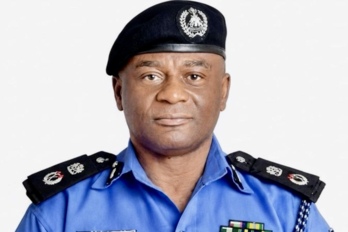
ABUJA — Nigeria’s debate over state police has moved from theory to political reality, and the country’s top police chief has now admitted the central anxiety hanging over the reform: whether governors could hijack the new outfits for partisan ends.
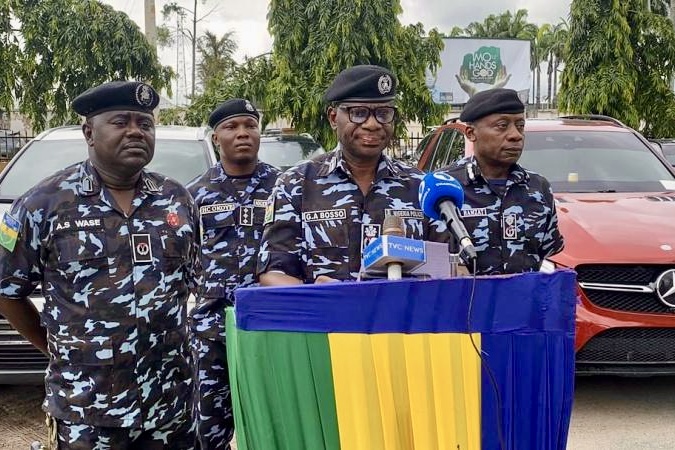
Inspector-General of Police Olatunji Rilwan Disu made the remarks on Wednesday at Force Headquarters, Abuja, while receiving participants of the National Defence College, who presented a research project titled State Police and National Security: Strategic Options for the Nigerian Police by 2035.
Disu’s language was unusually direct. He asked: “Will these state police be hijacked?” and, in a separate warning on control and accountability, “Who can give the directive to take over?”
Those questions go to the heart of Nigeria’s long-running mistrust of decentralised policing, especially in a political environment where state governors often wield enormous influence over appointments, budgets and local power networks.
The police chief said the country should not rush into state policing without studying jurisdictions that have already experimented with similar systems, naming India, Ethiopia and the United States as examples from which Nigeria can learn.
That caution lands at a critical moment. In June 2026, Nigeria’s parliament passed a constitutional bill to let each of the country’s 36 states establish and operate its own police force alongside the federal Nigeria Police Force.
Reuters and the Associated Press both reported that the reform still needs approval from at least two-thirds of state assemblies before it can take effect.
Supporters say state police could improve response times, local intelligence and operational flexibility in a country facing insurgency, banditry, kidnapping, farmer-herder violence, separatist unrest and oil theft.
Critics, however, warn that governors could use state police to intimidate opponents, suppress dissent or protect political interests.
The backdrop to that debate is a worsening security environment that has already forced Abuja to rethink the architecture of policing. In November 2025, President Bola Tinubu declared a nationwide security emergency and ordered the police and army to recruit more personnel, with the police authorised to add 20,000 officers and reach a strength of 50,000.
Reuters reported in June 2026 that the move toward decentralised policing gained momentum precisely because the centralised model has struggled to respond quickly enough to Nigeria’s multiple, overlapping security crises. Disu’s intervention suggests the police leadership accepts the need for reform, but not at the expense of safeguards.
Indeed, his comments read less like resistance to state police and more like a demand for guardrails. He praised the National Defence College team for their comparative research, said the topic was timely, and argued that the work should have been done much earlier.
In one telling line, he said, “It is not too late,” before adding, “You have done fantastic research.”
The implication is clear: Nigeria can still build a workable model, but only if the law spells out who commands state police, who funds them, who supervises them, and who can step in when a state structure is abused or collapses operationally.
Without those answers, state police could become another layer of political contest rather than a fix for insecurity.
This is now the real test for the reform camp. The argument is no longer whether Nigeria should decentralise policing, because the political momentum has already shifted in that direction.
The harder question is whether lawmakers and state assemblies can build a system strong enough to improve security, but tight enough to stop abuse.
Disu’s warning should therefore be read as a stress test for the entire project: if the country cannot design credible checks on command, funding and disciplinary powers, it risks creating a new security force that merely imports old political problems into a new uniform.
Follow us on our broadcast channels today!
- WhatsApp: https://whatsapp.com/channel/0029VawZ8TbDDmFT1a1Syg46
- Telegram: https://t.me/atlanticpostchannel
- Facebook: https://www.messenger.com/channel/atlanticpostng