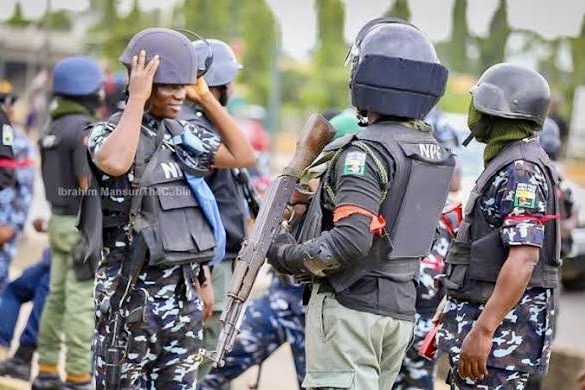
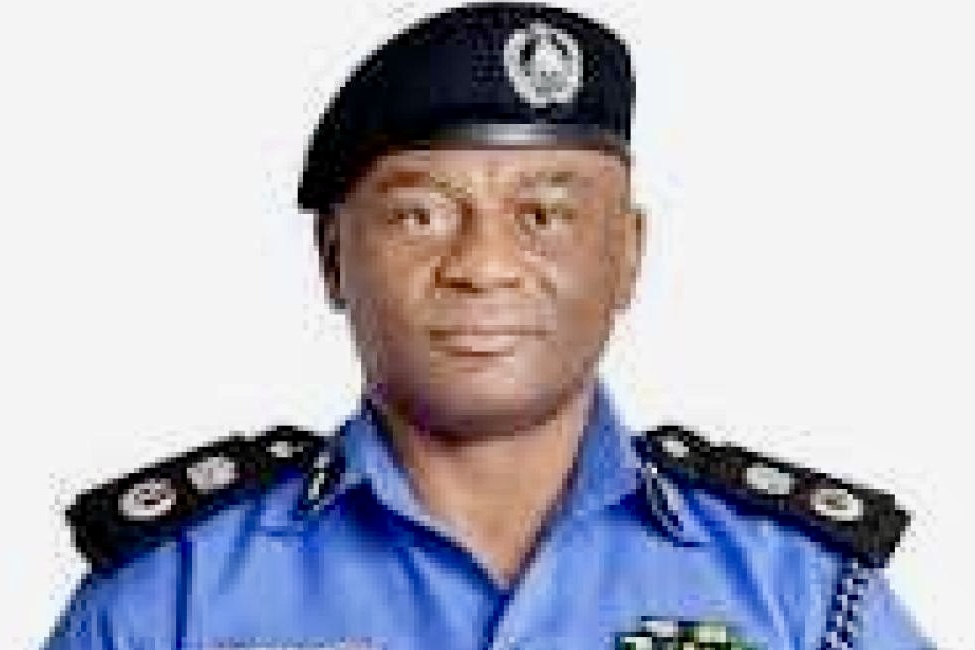
What looks like a simple welfare gesture on paper may tell a larger story inside the Nigeria Police Force. According to a police wireless message reported on Saturday, Inspector-General of Police Olatunji Disu has approved a two-week break for officers and men who took part in the just-concluded 2026 National Police Day parade.
The directive, circulated to major formations and commands, applies only to personnel involved in the parade and was reportedly issued from the Inspector-General of Police Secretariat in Abuja.
The timing is revealing. Official State House records show that Disu was appointed acting Inspector-General on 24 February 2026 and later ratified as Inspector-General by the Police Council in early March, placing him squarely at the centre of a reform-heavy, politically sensitive security moment.
National Police Day itself was described by the Presidency as institutionalised last year, underscoring that the parade is now a formal part of the force’s public calendar rather than a symbolic one-off.
The message that triggered the latest reaction was blunt in its language. It reportedly read: “GRATEFUL BE INFORMED THAT X INGENPOL HAS GRACIOUSLY APPROVED X TWO WEEKS BREAK X FOR ALL OFFICERS AND MEN X INVOLVED IN THE JUST CONCLUDED 2026 POLICE DAY PARADE.”
Politics Nigeria says the signal was copied to several strategic units, including Nigeria Police Signals, the Force Criminal Investigation Department, the ICT department, Federal Operations, commissioners of police, the National Command and Control Centre, and Mobile Police formations.
That distribution matters. A circular sent so widely inside the system suggests this was not a casual memo, but an operational instruction intended to move quickly through the chain of command.
In plain terms, the force appears to be saying that those who helped stage the parade should be stood down for recovery after what was evidently a demanding national deployment.
That is an inference, but it is strongly supported by the scale of the parade, the internal routing of the message, and the official framing of Police Day as an annual national event.
The official account of the parade itself reinforces that interpretation. At the grand finale in Abuja, the Presidency said the event featured march-past, procession and tactical displays by various police units and cadets of the Police Academy.
President Bola Tinubu used the occasion to praise officers’ sacrifice while warning that the badge is “not an ornament of power” but a reminder of duty.
He also stressed that public confidence in policing depends on trust, professionalism and restraint.
Disu’s own words at the event were equally loaded. The State House says the IGP acknowledged the risks and sacrifices of officers nationwide, urged the force to rise above indiscipline and misconduct, and pledged that leadership under him would stand firmly with officers who follow the rules and serve with dignity.
He also promised a more disciplined, accountable and professional force.
Against that backdrop, the two-week break reads less like a perk and more like a signal that the new command wants to reward visible effort while trying to rebuild morale.
There is also a deeper institutional angle. Police parades are not just pageantry. They require rehearsal, coordination, discipline and deployment across multiple commands.
When a force already burdened by internal pressure, public scrutiny and security demands is asked to present a polished national display, the hidden cost is borne by the officers on the ground.
The break therefore looks like a recognition that ceremonial duty still extracts a real human and operational toll. That is the most plausible reading of the directive based on the available record.
The bigger question is whether this gesture is an isolated reward or part of a broader welfare rethink inside the Nigeria Police Force. The optics are clear enough.
A force that wants public legitimacy must first convince its own personnel that sacrifice is noticed, rest is permitted, and discipline will be matched by humane management.
In that sense, the two-week break is not just about time off. It is about command culture, morale and the message being sent to a rank and file that routinely carries the weight of national security expectations.
That conclusion is an inference, but one the official statements make hard to ignore.
For now, the headline is simple. Disu has approved a two-week break for parade officers. The subtext is more important. The Nigeria Police Force has just staged a national show of strength, and the leadership has quietly admitted that strength comes at a cost.
How that cost is managed in the months ahead will tell Nigerians more about police reform than any parade ever could.
Follow us on our broadcast channels today!
- WhatsApp: https://whatsapp.com/channel/0029VawZ8TbDDmFT1a1Syg46
- Telegram: https://t.me/atlanticpostchannel
- Facebook: https://www.messenger.com/channel/atlanticpostng