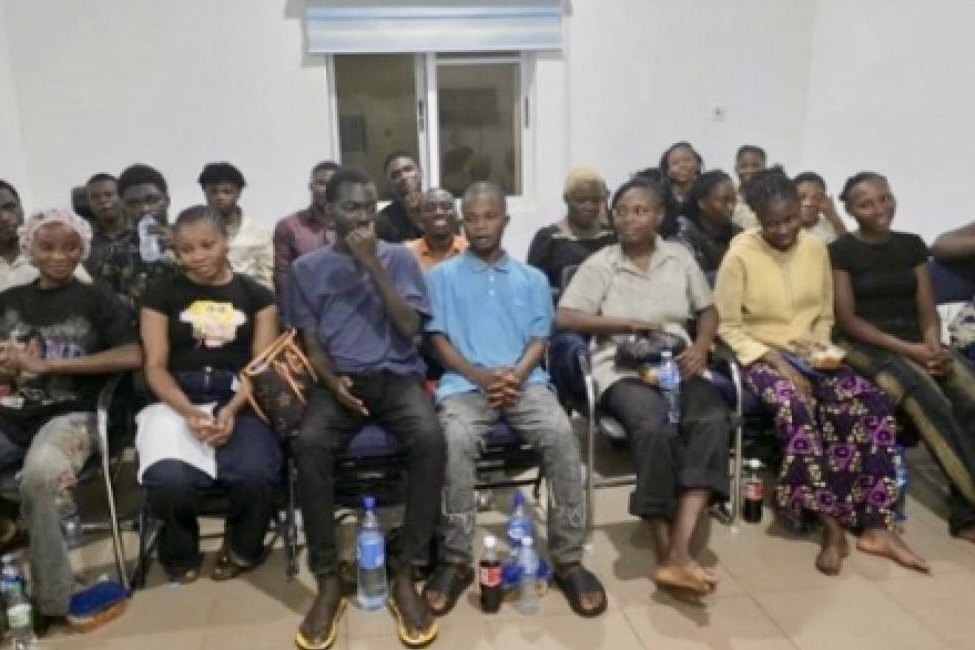
Southern Kaduna Church Abductions Test Kaduna’s Security Plan
When Christian leaders gathered at the 2026 Southern Kaduna Prayer Summit in Kafanchan, the message was not only spiritual. It was operational. Protect worship centres. Secure the release of abducted worshippers. Restore confidence in public security.
The chairman of the Southern Kaduna Christian Leaders, Apostle Dr. Emmanuel Kure, delivered the appeal. Families were waiting through what he described as nearly two weeks without releases. There was no visible progress.
In a region where faith institutions double as community anchors, there is fear. Places meant for sanctuary are now being seen by armed groups as soft targets. They are considered high leverage bargaining chips.
The warning comes during a broader shift in Nigeria’s security crisis. This shift directly affects the Business, Jobs, Tech, and Money brief. Kidnapping is no longer only a security headline. It is a parallel rural tax system, a labour market shock, and a capital flight accelerant.
When worshippers are abducted from churches, the signal to investors and to farmers is the same. If communal life can’t be protected, commerce can’t scale.
This feature focuses on Southern Kaduna. It treats insecurity as an economic system. This system can be measured, compared, and disrupted.
What The Clerics Are Really Asking For
On the surface, the demands are straightforward.
Protection for worship centres, including stronger patrol presence, rapid response capacity, and intelligence led deterrence around high risk communities.
A faster and more transparent government response when mass abductions occur. A framework for communities to coordinate with security agencies without sliding into vigilantism.
Underneath those points is something more structural. Clerics are asking the state to reassert its monopoly on legitimate force in rural spaces. Armed groups increasingly behave like regulators in these areas. They decide who travels, who farms, who sleeps, who worships, and who pays.
Kure’s intervention also highlights a moral and reputational issue for public institutions. The longer hostages remain in captivity, the more households lose confidence that it works.
That confidence is not an abstract civic value. It is a prerequisite for rural investment, school attendance, market days, and labour mobility.
His remarks on ransom demands are also a direct economic argument. If kidnappers can credibly demand tens of millions of naira, then they have already priced rural people out of freedom.
That is the core of the ransom economy. It concentrates pain among households least able to pay. Then, it amplifies the damage through debt. It leads to asset sales and reduces productive activity.
The January Shock And Why It Matters
Southern Kaduna has experienced cycles of violence for decades, including communal and political crises that predate today’s banditry wave. But the current pattern is distinct in three ways.
First, it is increasingly transactional. Armed groups abduct in bulk, calculate bargaining value, and negotiate through intermediaries.
Second, it is increasingly decentralised. Multiple gangs work across forest corridors, sometimes overlapping with ideological militant networks but often behaving as profit driven enterprises.
Third, it is increasingly embedded in rural supply chains. When highways, feeder roads, and village paths are unsafe, the farm to market link breaks.
Recent mass abductions linked to church attacks in the area have sharpened these dynamics. The operational detail matters. Coordinated raids during services suggest planning, local knowledge, and a confidence that response will be delayed.
Even if hostages are eventually released, the effect persists. People shift routines. Churches cut night vigils. Traders avoid early morning routes. Farmers reduce distance cultivation and concentrate closer to homes, which lowers output.
It is also not an isolated faith issue. Kure explicitly called for Christians and Muslims to protect places of worship. This serves as a reminder that the target is vulnerability, not theology.
In Southern Kaduna, communities are intertwined. Widespread insecurity is a blunt instrument. It harms everyone’s incomes, not only a single group’s safety.
The Ransom Economy And The Rural Balance Sheet
The most useful way to understand kidnapping in Southern Kaduna is to treat it like a violent credit market.
Armed groups extend a form of coerced credit. They seize a person, then offer a contract. Pay and we release. Delay and the price rises, often in cash, motorcycles, fuel, food, or other logistics.
Households finance this contract through four common channels.
One, distress asset sales. Livestock, land parcels, equipment, stored harvest, shop inventory.
Two, high interest borrowing from informal lenders.
Three, community pooling, which spreads the shock and depresses local capital formation.
Four, diaspora remittances, which divert funds away from education, health care, and small business expansion into emergency payments.
National level statistics reinforce how large this shadow economy has become. A national household crime survey by National Bureau of Statistics estimated millions of kidnapping incidents over a twelve month reference period. It reported ransom payments in the trillions of naira.
Even allowing for the limits of household surveys, the signal is unambiguous. Ransom payments are now macro economically significant.
For Southern Kaduna, the micro economics are brutal. Many abducted worshippers come from farming households, petty trade, and informal wage work.
These households tend to be asset light and cash constrained. If kidnappers demand sums that exceed annual earnings, the household cannot pay without destroying its productive base.
That is why Kure’s claim that rural farmers cannot raise such amounts matters. It is not rhetoric. It is a diagnosis of liquidity collapse.
When a farmer sells breeding stock to pay ransom, next season’s output falls. When a trader empties inventory, market activity shrinks.
When a household borrows at punitive rates, it reduces consumption and increases child labour risk. Multiply this across dozens or hundreds of households and the local economy stalls.
Southern Kaduna’s Exposure Is Also A Jobs Story
Southern Kaduna sits within Kaduna State, a state that markets itself as an investment destination and an agro industrial corridor.
Policy documents and state strategy papers often highlight agriculture as a dominant share of the state economy. It is highlighted alongside manufacturing and services.
In practical terms, that means rural stability is not a side issue. It is the foundation for jobs.
Insecurity attacks employment in at least five ways.
Labour withdrawal
People avoid farms, forests, and long distance plots. Seasonal labourers refuse contracts in high risk areas. Youth unemployment rises as mobility falls.
School disruption and skills loss
Kidnappings have repeatedly targeted schools in Kaduna over the years, creating long run human capital damage. When education is unsafe, the future workforce shrinks in skill and confidence.
Market contraction
Traders reduce travel, increase prices to compensate risk, and shift to safer but less efficient routes. This raises food prices and lowers consumer welfare.
Investment delay
Small factories, agro processing hubs, and warehouses do not expand when security costs are unpredictable. Insurance premiums rise where cover is available at all. Informal security spending grows.
Tech and infrastructure fragility
Telecom towers, power lines, and transport projects face higher vandalism risks and higher protection costs. Digital inclusion suffers in precisely the communities that most need it.
This is why the remarks by Dan Amos, the House of Representatives member for Jema’a and Sanga, deserve attention. Their significance goes beyond the prayer summit context.
His reference to electricity supply and industrial growth reflects a policy logic. Security and power are complements. You can improve power reliability and still fail to attract investment if kidnapping risk remains elevated.
Government Response And The Kaduna Model Under Pressure
Kaduna has experimented with multiple security approaches over the past decade. These range from kinetic operations to negotiated releases. There have also been efforts to restore livelihoods in affected areas.
State officials have recently spoken publicly about using dialogue as part of a broader peace and intelligence strategy. They have claimed that hundreds of kidnapping victims were secured for release through engagement with armed groups.
The state has also pointed to historical incident and fatality figures over several years to justify a shift in approach.
This mix raises a hard question for Southern Kaduna.
When does dialogue save lives, and when does it entrench a ransom economy
The evidence across Nigeria suggests dialogue can produce short term releases, especially where gangs are fragmented and responsive to incentives. But it also carries a long term risk.
If armed groups learn that mass abduction reliably forces negotiation and generates payments, they scale the model. It becomes a business plan.
That is why clerics are insisting on visible early intervention. Early pressure can disrupt negotiations before demands harden. Delayed response increases the perception that the state is bargaining, not governing.
A second pressure point is public communication. In mass abduction events, early official denial or silence can inflame panic, politicise response, and degrade trust. Trust is operational. Communities share intelligence when they believe it will be used quickly and responsibly. When they believe it will be denied, delayed, or leaked, they stop cooperating.
A third pressure point is capacity. Rural policing is thin, response times are slow, and forest terrain favours motorbike based gangs. Without sustained intelligence fusion and rapid deployment capability, the state remains reactive.
The Community Protection Dilemma
Kure’s call for communities to strengthen local protection is practical, but it is also fraught.
Community vigilance can reduce risk through coordinated neighbourhood watch. Improved lighting can also help. Controlled entry points during services contribute to safety. Moreover, direct liaison with police and military units is essential.
It can also backfire if it turns into armed vigilantism. This often escalates cycles of revenge. It raises the probability of false accusations.
The safest path for worship centres is layered protection that remains lawful.
Hardening targets
Simple changes like controlled entry during services, volunteer stewards trained in de escalation, and clear emergency exits.
Communication protocols
Community hotlines linked to designated security contacts, with pre agreed response triggers.
Early warning networks
Village level incident reporting that feeds into local government and security command structures.
Movement discipline
Avoiding predictable patterns such as fixed early morning routes for choir rehearsals or night long vigils without protection.
Technology that fits the terrain
Low cost surveillance where feasible, but also basic radio communications in areas with poor mobile coverage.
This is also where business and tech policy can contribute. Community safety tech does not have to be sophisticated. It has to be reliable. In rural Kaduna, power and connectivity constraints mean the best tools are often the simplest ones.
The Economics Of Motorcycles, Forest Corridors, And Supply Chains
Across north west Nigeria, banditry thrives on mobility. Motorcycles offer speed, low cost maintenance, and the ability to traverse forest paths that vehicles cannot.
This is why ransoms sometimes include motorcycles rather than cash. A motorcycle is both a store of value and a production asset for the gang. It sustains operations.
Southern Kaduna’s geography matters too. Forest corridors and inter state routes provide both hideouts and access to markets for stolen goods. Where the state cannot persistently dominate these corridors, armed groups impose tolls, seize travellers, and extract rents.
For commerce, that translates into a security premium.
Transporters price risk into freight costs. Farmers accept lower farm gate prices because fewer buyers are willing to travel. Traders hoard goods, raising price volatility. Consumers pay more for staples. Real incomes fall.
This is the bridge between a church abduction headline and a food inflation story. When rural movement is unsafe, the supply chain becomes scarce. Scarcity becomes price.
A Short Historical Lens On Southern Kaduna
Southern Kaduna’s contemporary insecurity sits on older fault lines.
The region has witnessed recurring ethno-religious tensions since the late twentieth century. There have been episodes of communal violence in and around Kafanchan and Zangon Kataf. These tensions include contested debates over identity, political representation, land, and religious freedom.
These events shaped perceptions of vulnerability and grievance that still influence how communities interpret today’s attacks.
However, today’s kidnapping wave differs from earlier cycles in motive and method. It is less about local riot dynamics and more about criminal enterprise in rural spaces.
Even when violence adopts a religious frame in public debate, the operational patterns often align with profit seeking.
That distinction is important because it shapes policy. You cannot solve a ransom economy with rhetoric. You disrupt it by collapsing profitability and raising capture risk.
Comparative Lessons From The Sahel
To understand where Southern Kaduna could be heading, it helps to look outward to the Sahel. It is especially useful to examine Burkina Faso, Mali, and Niger.
In those countries, armed militant groups have expanded by combining violence with economic warfare. They blockade roads, extort communities, disrupt markets, and force populations into compliance through fear. The goal is territorial influence and revenue.
There are differences. Southern Kaduna is not experiencing the same scale of territorial takeover as parts of the Sahel. Nigeria’s state institutions are larger, and the security landscape is more complex with multiple armed actors. Yet the economic logic is comparable.
When insecurity becomes profitable, it spreads. When rural governance collapses, armed groups fill the vacuum. When communities lose trust in official protection, they either pay, flee, or arm themselves.
The key lesson is that tactical victories do not end the model if the revenue engine remains intact. The Sahel experience suggests three priorities.
Persistent presence, not episodic raids
Armed groups return when forces leave.
Protect markets and transport routes
Control of commerce is often as decisive as control of territory.
Disrupt financing and logistics
Fuel, motorcycles, weapons supply, and ransom payment channels are the arteries.
For Kaduna, that implies a strategy that treats kidnapping like organised economic crime, not random violence.
What A Credible Southern Kaduna Security Plan Looks Like
A credible plan is measurable. It should publish targets, timelines, and performance indicators, even if sensitive details remain confidential.
Key operational priorities would include:
Rapid response units positioned closer to high risk communities
Response time is everything in mass abduction incidents.
Intelligence integration with community reporting
Local knowledge is the cheapest intelligence source if trust exists.
Forest corridor dominance operations that are sustained
Short sweeps create headlines. Sustained operations change incentives.
Victim support services
Trauma care, legal support, and livelihood recovery are part of resilience. Families who lose everything to ransom become economically displaced.
Clear rules on negotiation and ransom
Ambiguity fuels the market. If government does not pay, it should show credible rescue ability. If it engages, it should explain guardrails to avoid incentivising repeat attacks.
Faith site protection protocols
Churches and mosques are predictable gathering points. They need standard protective guidance, designed with community feedback.
This is also where federal and state coordination matters. States do not control the military. The federal government does. But states bear political responsibility for local safety. When coordination fails, criminals exploit seams.
The Election Cycle Risk
Dan Amos raised the point that Nigeria is approaching another election cycle. In Southern Kaduna, elections can heighten tension and widen misinformation.
Armed groups may also exploit the period. They bet that governments will seek quick wins. This situation can increase incentives for kidnappings and negotiations.
The economic danger is that election season uncertainty piles on top of insecurity, producing a double hit to investment. Businesses delay decisions. Farmers cut risk exposure. Young people seek exit routes through migration.
For a state that wants to sell itself as an investment hub, Southern Kaduna’s safety is crucial. It becomes a reputation risk for the entire brand.
What Readers Want To Know
Are worship centres being targeted specifically
In practice, worship centres are targeted because they concentrate people at predictable times and often lack formal security. Motive can include intimidation, profit, or both.
Does paying ransom make communities safer
Ransom can secure releases in the short term, but it often strengthens the kidnapping economy and increases future risk.
What is the most effective deterrent
A mix of intelligence led policing and rapid response capability helps mitigate incidents. Sustained dominance of forest corridors also contributes. Additionally, protection of transport routes tends to reduce incidents over time.
Can communities protect themselves without becoming vigilantes
Yes, through lawful vigilance structures, trained stewards, early warning systems, and direct liaison frameworks with security agencies.
Key Takeaways For Business, Jobs, Tech And Money
Insecurity is now a major rural economic policy issue, not only a security issue.
Kidnapping acts like a tax on households and trade.
Ransom payments destroy productive assets and depress future output.
The damage continues long after hostages return.
Investment narratives collapse when communities can’t travel safely to worship, markets, or farms.
Security is the first infrastructure.
Kaduna’s strategy will be judged on measurable outcomes in Southern Kaduna.
Trust depends on speed, transparency, and consistency.
The Sahel shows what happens when economic warfare becomes normal.
Stopping the revenue engine is the strategic centre.
Follow us on our broadcast channels today!
- WhatsApp: https://whatsapp.com/channel/0029VawZ8TbDDmFT1a1Syg46
- Telegram: https://t.me/atlanticpostchannel
- Facebook: https://www.messenger.com/channel/atlanticpostng