The United States Consulate in Lagos and the Federal Bureau of Investigation (FBI) have praised the Economic and Financial Crimes Commission (EFCC) for what they described as its investigative effectiveness and sustained efforts in tackling sextortion and transnational financial crimes.
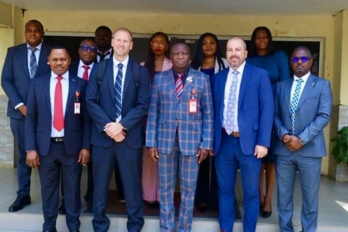
The commendation came on Monday, July 6, 2026, during a courtesy visit to the acting Zonal Director of EFCC Lagos Zonal Directorate 2, Assistant Commander of the EFCC, ACE I Bawa Usman Kaltungo, in Ikoyi, Lagos, by Assistant Law Enforcement Attaché of the United States Consulate, SSA James Smith, and SSA Thomas Pepper of the Cyber Division, FBI Headquarters.
The visit, according to the U.S. officials, was aimed at strengthening existing cooperation between the two sides, particularly in the area of information sharing and intelligence exchange for the fight against criminal activity involving Nigerians and foreign nationals.
Speaking at the interactive session, Smith said the engagement was intended to deepen collaboration between the U.S. Consulate and the anti-graft agency in the investigation of cross-border crimes.
He said stronger cooperation would improve information gathering and intelligence sharing in the ongoing effort to combat sextortion, cybercrime and other transnational offences.
Pepper also thanked the EFCC for the opportunity to engage with its officials, saying the FBI was keen to improve the quality and speed of the information it shares with the Nigerian agency.
“Already, we have been enjoying a robust collaboration and partnership with the EFCC in so many cases.
“But I want to state that we are willing to improve the timeliness and efficiency of the investigative information we share with the EFCC,” he said.
According to him, enhanced and targeted information sharing would further strengthen the working relationship between both agencies in their efforts to tackle sextortion.
Pepper said sextortion had become a priority issue in the United States and proposed the setting up of a joint team to support intelligence gathering and information sharing on cases reported to the Commission, as well as requests made by the EFCC to the FBI.
While speaking on the proposed joint operation, he urged the EFCC to speed up investigations into sextortion cases, adding that the FBI was working on obtaining additional identifiers that would be forwarded to the Commission.
Kaltungo, in his response, thanked the visiting delegation and assured them of the EFCC’s willingness to cooperate where necessary.
He said the Commission remained open to collaboration with international partners and other countries.
“Our doors are always open for collaboration. We also maintain similar collaborations with other countries and international partners.
“However, we do need your assistance and support to enable us to track and apprehend these perpetrators in good time.
“The availability of tracking tools will help in making our work faster.
“I assure you of our continued cooperation and support; and we are here to assist,” he said.
Kaltungo also assured the delegation that the Commission would expedite investigations into the cases presented by the FBI.
Also speaking, the Head of Investigations, ACE11 Moses Oguzi, said the EFCC had enjoyed a strong working relationship with the U.S. Government and the FBI over the years.
He, however, asked the visiting officials to provide a clear framework for the proposed operation so the Commission could be guided in the specific direction of the collaboration.
Oguzi also sought clarification on whether the proposed partnership would be restricted to computer-related fraud or extended to other forms of financial crime, especially as cases of visa fraud continue to rise.
In response, Smith said a list would be provided and noted that the agencies were working to ensure that the EFCC receives only relevant material.
“We have a lot of cases. Also, relevant information tailored to the agreed areas of interest will also be shared to avoid overwhelming the EFCC with unnecessary data,” he said.
The meeting underscores the growing importance of international cooperation in the fight against cyber-enabled fraud, sextortion and other forms of financial crime that increasingly cross national borders.
It also reflects the expanding role of the EFCC in working with foreign law enforcement agencies as cases involving online exploitation, identity theft, fraud and related offences become more sophisticated and more difficult to investigate without timely intelligence sharing.
The latest engagement in Lagos suggests that both sides are looking beyond routine cooperation towards a more structured and focused exchange of information, with sextortion emerging as a key area of concern for investigators on both sides of the Atlantic.
Follow us on our broadcast channels today!
- WhatsApp: https://whatsapp.com/channel/0029VawZ8TbDDmFT1a1Syg46
- Telegram: https://t.me/atlanticpostchannel
- Facebook: https://www.messenger.com/channel/atlanticpostng