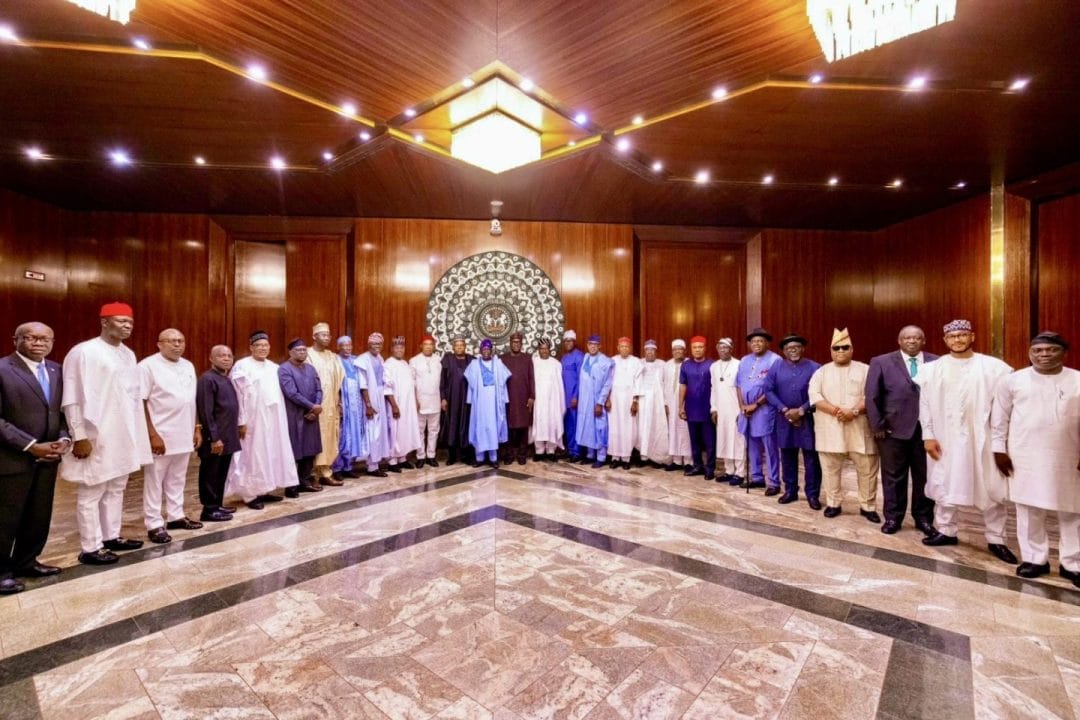
SERAP sues Tinubu and Nigeria’s 36 governors at ECOWAS Court, alleging abuse of the Cybercrimes Act 2024 to silence activists, journalists, and critics.
ABUJA, Nigeria — In a move that has shaken the foundations of Nigeria’s constitutional democracy, the Socio-Economic Rights and Accountability Project (SERAP) has initiated a groundbreaking lawsuit against President Bola Ahmed Tinubu’s administration and the 36 state governors.
Filed at the ECOWAS Community Court of Justice in Abuja, this legal action challenges what SERAP describes as the systemic misuse of the Cybercrimes (Amendment) Act 2024 to curtail freedom of expression and suppress dissent.
The lawsuit, which comes in the wake of growing allegations of authoritarian tactics by Nigerian authorities, has drawn widespread attention both domestically and internationally. SERAP’s Deputy Director, Kolawole Oluwadare, in a statement dated January 12, 2025, underscored the gravity of the situation, calling the amended Cybercrimes Act “vague, arbitrary, and repressive.”
The provisions, he asserted, have been weaponised to silence activists, journalists, bloggers, and ordinary Nigerians who dare to voice dissent or critique the government.
The Cybercrimes Act: A History of Controversy
The origins of this contentious legislation date back to 2015, when the Cybercrimes (Prohibition, Prevention, etc.) Act was enacted. While ostensibly aimed at combating cyber fraud and online criminal activities, Section 24 of the original law became infamous for its broad and ambiguous language. It criminalised the transmission of information deemed “grossly offensive” or likely to cause “annoyance” or “inconvenience.”
This provision faced significant backlash from civil society, journalists, and human rights activists, who argued that it was being exploited to suppress legitimate expression. In a landmark judgment delivered on March 25, 2022, the ECOWAS Court declared Section 24 “arbitrary, vague, and repressive,” ordering its repeal to align with Nigeria’s obligations under the African Charter on Human and Peoples’ Rights and the International Covenant on Civil and Political Rights.
In response, the Nigerian government introduced the Cybercrimes (Amendment) Act 2024, claiming to address these concerns. However, SERAP contends that the reworded provisions merely cloak the same authoritarian intent in legal jargon.
The organisation’s court filing highlights the ambiguity in Section 24(1)(b), which criminalises actions that could “cause a breakdown of law and order.” SERAP argues that this undefined phrase opens the door to arbitrary enforcement and abuse.
Allegations of Systemic Abuse
SERAP’s lawsuit is not merely a theoretical critique of legislative language—it is firmly rooted in lived realities. The organisation has documented a litany of cases where the amended Act has allegedly been weaponised against individuals critical of the government.
One high-profile victim is activist Dele Farotimi, who faced charges under the amended law for his outspoken critiques of government policies. Similarly, journalist Agba Jalingo was charged with cyberstalking after publishing a report implicating a relative of a former Cross River governor in academic fraud.
Even seemingly innocuous comments have been met with the heavy hand of the law. Social media user Chioma Okoli was arrested for a post questioning the sugar content of a tomato mix brand. The absurdity of such cases underscores SERAP’s contention that the Cybercrimes Act has become a tool of intimidation rather than justice.
In another instance, four bloggers were re-arraigned for allegedly defaming public officials, while a popular singer faced charges for supposedly harassing the Benin Crown Prince online. These cases illustrate a pattern of selective enforcement aimed at stifling dissent and discouraging scrutiny of those in power.
SERAP’s Legal Arguments
Central to SERAP’s lawsuit is the assertion that the Cybercrimes (Amendment) Act 2024 fails to meet the standards of clarity, necessity, and proportionality required under international human rights law. The organisation argues that the legislation imposes restrictions on freedom of expression that are neither narrowly tailored to serve a legitimate purpose nor proportionate to the harm they seek to prevent.
“Freedom of expression is not just a fundamental right; it is the cornerstone of any democratic society,” Oluwadare emphasised in his statement. “The Nigerian authorities have not only failed to uphold this right but have actively undermined it through repressive legislation and selective enforcement.”
SERAP’s filing with the ECOWAS Court seeks several remedies, including:
- A declaration that Section 24 of the Cybercrimes (Amendment) Act 2024 is unlawful and inconsistent with Nigeria’s human rights obligations.
- An order compelling the government to repeal or amend the legislation to align with international standards.
Implications for Nigeria’s Democratic Space
The stakes in this legal battle extend far beyond the specifics of the Cybercrimes Act. At its core, the lawsuit raises fundamental questions about the state of democracy, the rule of law, and human rights in Nigeria. Critics argue that the Tinubu administration, despite its democratic mandate, has displayed alarming tendencies toward authoritarianism.
The amended Cybercrimes Act, they contend, is emblematic of a broader strategy to consolidate power, suppress dissent, and erode the checks and balances essential to democratic governance. By targeting journalists, activists, and ordinary citizens, the government risks alienating the very constituencies whose trust and cooperation are essential for effective governance.

Unveiling Structural and Policy Failures in Nigeria’s Cybercrime Law Enforcement
The Socio-Economic Rights and Accountability Project’s (SERAP) lawsuit against President Bola Ahmed Tinubu and Nigeria’s 36 state governors is not merely an isolated legal challenge. It represents a broader indictment of structural and policy inadequacies that have plagued Nigeria’s governance, particularly in the realms of human rights and the rule of law.
As the dust settles on the controversy surrounding the Cybercrimes (Amendment) Act 2024, a critical analysis reveals a troubling pattern of systemic failures that have allowed the misuse of this legislation to flourish.
These failures are rooted in a combination of judicial inertia, executive overreach, and a lack of accountability mechanisms, all of which have created fertile ground for the erosion of fundamental freedoms in Nigeria.
Judicial Complicity and Inertia
One of the most glaring issues in the enforcement of the Cybercrimes Act is the apparent complicity—or at the very least, inertia—of Nigeria’s judiciary. Despite its constitutional mandate to serve as the guardian of civil liberties, the judiciary has often been criticised for enabling the misuse of laws through permissive interpretations and a lack of rigorous scrutiny.
The ECOWAS Court’s 2022 ruling, which declared Section 24 of the original Cybercrimes Act unconstitutional, should have been a watershed moment for judicial reform in Nigeria. Yet, the Nigerian judiciary has largely failed to uphold the principles articulated in that judgment.
Instead of acting as a bulwark against executive excesses, courts have frequently sanctioned the arbitrary application of cybercrime laws, often at the expense of freedom of expression.
SERAP’s lawsuit underscores this judicial failure by highlighting how vague and ambiguous provisions in the amended Act have been weaponised to criminalise dissent. The organisation’s legal filing explicitly criticises the judiciary for failing to demand greater precision and clarity in the drafting of legislation that has such profound implications for human rights.
Executive Overreach and the Chilling Effect
At the heart of the controversy is the Nigerian executive’s penchant for overreach. Successive administrations, including the current Tinubu government, have demonstrated a troubling willingness to exploit legal ambiguities to consolidate power and silence critics.
The Cybercrimes (Amendment) Act 2024 exemplifies this strategy. While ostensibly aimed at addressing the ECOWAS Court’s concerns, the amendments introduced by the Tinubu administration merely replaced overtly repressive language with equally ambiguous phrasing.
For instance, the criminalisation of actions that could “cause a breakdown of law and order” in Section 24(1)(b) is so broadly defined that it effectively grants the government carte blanche to target any expression it deems inconvenient.
This chilling effect is not merely theoretical. As SERAP’s lawsuit details, the law has been used to prosecute individuals for activities that, by any reasonable standard, fall within the ambit of legitimate expression.
The arbitrary arrests and prosecutions of activists, journalists, and social media users serve as a stark reminder of how unchecked executive power can undermine democratic principles.
The Role of International Human Rights Standards
One of the key pillars of SERAP’s argument is the inconsistency of the Cybercrimes (Amendment) Act 2024 with international human rights standards. Under instruments such as the African Charter on Human and Peoples’ Rights and the International Covenant on Civil and Political Rights, to which Nigeria is a signatory, restrictions on freedom of expression must meet strict criteria of necessity, proportionality, and legitimacy.
By these standards, the Cybercrimes Act fails spectacularly. The law’s vague and sweeping provisions do not serve any narrowly defined public interest and are disproportionate to the harms they purport to address. Instead of protecting citizens from cybercrimes, the legislation has become a tool for stifling dissent and curbing media freedom.
SERAP’s lawsuit thus represents not only a challenge to domestic governance but also a plea to the international community to hold Nigeria accountable for its human rights obligations. The organisation’s decision to file the suit at the ECOWAS Court of Justice reflects a strategic recognition of the inadequacies of domestic remedies and the potential for regional institutions to exert pressure on recalcitrant governments.
Broader Societal Implications
The misuse of the Cybercrimes Act has far-reaching implications for Nigerian society. At a time when the country is grappling with profound economic and political challenges, the curtailment of freedom of expression threatens to exacerbate existing tensions and undermine social cohesion.
For activists and civil society organisations, the law represents a significant obstacle to holding the government accountable. Without the ability to freely criticise policies or expose corruption, efforts to promote transparency and good governance are severely hampered.
Journalists, who play a critical role in informing the public and shaping democratic discourse, face an increasingly hostile environment. The arbitrary application of cybercrime laws has created a climate of fear and self-censorship, eroding the media’s capacity to serve as a check on power.
For ordinary citizens, the implications are equally dire. The arrests of individuals like Chioma Okoli for innocuous social media posts highlight the extent to which the Cybercrimes Act has permeated everyday life. The fear of legal repercussions for expressing opinions online has stifled public discourse, depriving Nigerians of the vibrant exchange of ideas that is essential to a healthy democracy.
The Government’s Counterarguments
While SERAP’s lawsuit has garnered significant support, the Nigerian government is likely to mount a vigorous defence. Proponents of the Cybercrimes Act argue that the legislation is necessary to address the growing threat of cybercrime in an increasingly digital world. They contend that the law provides essential tools for combating online fraud, identity theft, and other cyber-related offences.
However, critics counter that this argument is a red herring. While the need to address cybercrime is undeniable, the current legislation fails to strike an appropriate balance between security and civil liberties. Instead of narrowly targeting genuine cybercriminals, the law casts a wide net that ensnares legitimate expression and activism.
The Path to Reform and Nigeria’s Democratic Dilemma
The lawsuit filed by the Socio-Economic Rights and Accountability Project (SERAP) against President Bola Ahmed Tinubu’s administration and Nigeria’s 36 state governors represents more than a legal battle—it is a litmus test for the country’s commitment to democratic principles, human rights, and the rule of law. The stakes are high, not just for the plaintiffs and the accused but for the future of civic space in Nigeria.
SERAP’s Demands: A Clarion Call for Justice
In its filing before the ECOWAS Community Court of Justice, SERAP outlined clear demands aimed at addressing the misuse of the Cybercrimes (Amendment) Act 2024. Chief among these are:
- A Declaration of Unlawfulness: SERAP seeks a judicial pronouncement that Section 24 of the amended Act is inconsistent with Nigeria’s human rights obligations and therefore invalid.
- Legislative Reform: The organisation has called for the repeal or substantial revision of the Act to align it with international human rights standards.
- Institutional Accountability: By bringing the matter before a regional court, SERAP aims to underscore the systemic nature of the problem and push for broader institutional reforms to prevent future abuses.
Potential Outcomes of the Lawsuit
The ECOWAS Court of Justice has a unique mandate to adjudicate human rights violations within the region, and its rulings carry significant moral and legal weight. If SERAP’s lawsuit succeeds, it could lead to:
- Legal Precedents: A favourable ruling would set a crucial precedent, not only for Nigeria but for other West African nations grappling with similar issues.
- Increased Scrutiny: The case could draw international attention to Nigeria’s human rights record, prompting greater engagement from global actors.
- Policy Reforms: A court-mandated overhaul of the Cybercrimes Act could serve as a catalyst for broader legislative reforms aimed at safeguarding freedom of expression.
However, the road ahead is fraught with challenges. The Nigerian government has a track record of resisting international judicial rulings, as evidenced by its delayed compliance with previous ECOWAS Court decisions. Moreover, the highly politicised nature of the case could lead to protracted legal battles and resistance from entrenched interests.
Broader Implications for Nigeria’s Democratic Trajectory
The misuse of cybercrime laws to suppress dissent is symptomatic of deeper issues within Nigeria’s democratic framework. The erosion of civil liberties, coupled with the lack of accountability for abuses of power, poses an existential threat to the country’s democratic experiment.
If left unchecked, the continued weaponisation of repressive laws could further alienate citizens from the political process, exacerbate social tensions, and undermine the legitimacy of democratic institutions. Conversely, a successful outcome for SERAP could serve as a rallying point for civil society and a reminder of the transformative power of collective action.
The Role of International Actors
The international community has a critical role to play in holding Nigeria accountable for its human rights obligations. By leveraging diplomatic channels, providing technical assistance, and imposing targeted sanctions on individuals implicated in rights abuses, global actors can help create an enabling environment for reform.
The Way Forward: Toward a Rights-Respecting Legal Framework
Reforming Nigeria’s legal framework to protect freedom of expression will require a multi-pronged approach, including:
- Legislative Clarity: Laws must be drafted with precision to eliminate ambiguities that enable abuse.
- Judicial Activism: The judiciary must embrace its role as a defender of civil liberties and resist pressures to legitimise repressive laws.
- Civic Engagement: Citizens must remain vigilant and demand accountability from their leaders.
Ultimately, the outcome of SERAP’s lawsuit will not only determine the fate of the Cybercrimes Act but also signal whether Nigeria is prepared to uphold the democratic ideals enshrined in its constitution and international commitments.
Additional reports by Osaigbovo Okungbowa and Peter Jene
Atlantic Post Senior Political and National Correspondents, respectively.