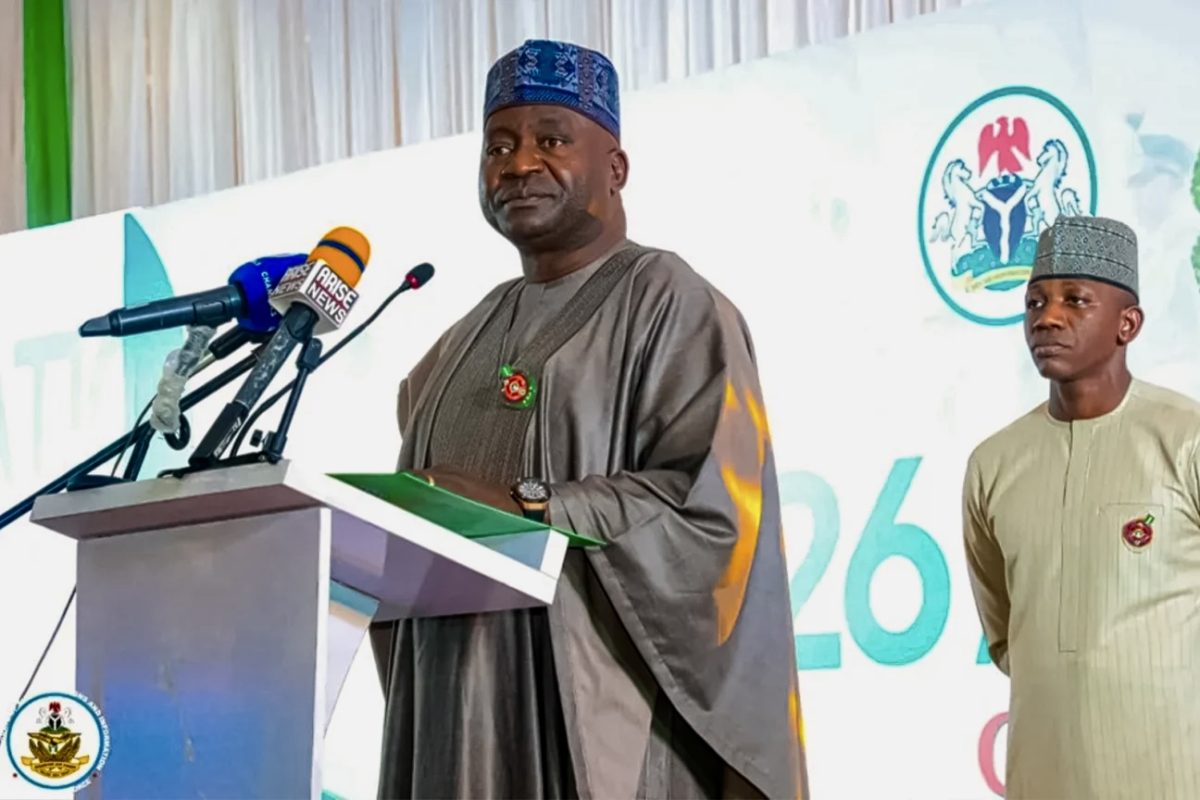
Defence Minister Christopher Gwabin Musa has moved to shut down any suggestion that the arrested military officers had a valid grievance for allegedly plotting against the Tinubu administration, insisting the men involved lacked both judgement and purpose.
In remarks carried from his television interview, Musa said the accused officers were “unserious individuals” and described them as men who, in his view, had no credible reason to attempt to undermine the state.
He also said he himself was among those targeted in the alleged operation, claiming the plotters intended to arrest him and, if he resisted, shoot him.
The significance of Musa’s intervention is that it comes after months of denials, partial disclosures and shifting official language around the case. In October 2025, the military first framed the arrests of 16 officers as matters of indiscipline and service-rule breaches.
By late January 2026, the Defence Headquarters had publicly confirmed that officers had indeed plotted to overthrow President Bola Tinubu’s government, while PREMIUM TIMES reported that the investigation had begun after intelligence suggested the suspects were holding secret meetings and continuing consultations before the plan leaked.
The same reporting also linked the scare to the cancellation of the 1 October Independence Day parade.
That evolution is important because it shows how quickly a story that was once treated as an internal disciplinary issue hardened into one of the gravest national security cases under the present administration.
Reuters later reported that six former security officials were arraigned in Abuja on 13 charges, including treason, terrorism and terrorism financing, with a seventh suspect still at large.
The court refused oral bail requests and ordered the accused to remain in DSS custody pending trial. In the same report, Reuters described the case as the most serious treason prosecution since Tinubu took office in 2023.
Court testimony has now pushed the matter deeper into the public arena. The Guardian reported that a DSS witness told the Federal High Court that one of the accused officers, Col. Mohammed Maaji, played a central role in discussions and operational planning that allegedly included efforts to force access into the Presidential Villa in Abuja.
The witness also said intelligence indicated the group sought to mobilise personnel and resources for actions considered subversive to the Nigerian state.
The court has not ruled on guilt, and the proceedings remain at the evidential stage, but the testimony gives the case a far more concrete shape than the vague rumours that first circulated online.
Musa’s own account adds another layer. Speaking about the alleged plot on Channels Television, as reported by TheCable and Arise News, he said he was a target, that he would have been arrested, and that refusal could have led to him being shot.
TheCable also quoted him calling the plotters “unserious individuals” and saying he could not understand what had entered their heads.
His broader argument was simple: a coup was not justified, the military was being looked after, and the country was not in a condition that required men in uniform to reach for force.
That is a political defence as much as a security one, because it seeks to frame the alleged coup not as a response to frustration, but as reckless personal ambition.
The timing of Musa’s return to government is also politically loaded. AP reported in December 2025 that Tinubu nominated Musa as defence minister weeks after he had been forced out during a military reshuffle, while Reuters said the October changes replaced him as Chief of Defence Staff in a broader shake-up aimed at strengthening security.
PREMIUM TIMES later reported that Musa was sacked from the CDS post after the coup scare, then returned to government as minister of defence.
Considered collectively, the sequence suggests Tinubu kept faith with a man viewed as central to the security reset rather than treating him as tainted by the scandal. That is an inference, but it is a reasonable one based on the appointment pattern.
There is also a wider intelligence trail behind the courtroom drama. PREMIUM TIMES reported that investigators believed the alleged plotters had tentatively fixed a date and were still in consultation when the plan leaked, while later reports said the alleged organisers had marked top political figures, including Tinubu, Vice President Kashim Shettima, Senate President Godswill Akpabio and Speaker Tajudeen Abbas, for assassination or arrest.
One report also said the suspects allegedly targeted senior military figures, including Christopher Musa. Those claims are still tied to the prosecution narrative, not judicial findings, but they explain why the matter has triggered such a severe response from the state.
For now, the most important fact is that Nigeria’s security establishment has moved from silence to admission, from internal discipline language to open treason proceedings, and from whisper networks to evidence in open court.
Musa’s remarks are designed to harden the public case against the accused, but they also reveal the administration’s deeper anxiety: that even a small number of disgruntled officers can force the state to confront old fears about military intervention.
Until the court reaches a verdict, the accused remain presumed innocent. Yet, the record already shows that this is no longer a rumour-driven story. It is a live national security case with political, institutional and democratic consequences.
Follow us on our broadcast channels today!
- WhatsApp: https://whatsapp.com/channel/0029VawZ8TbDDmFT1a1Syg46
- Telegram: https://t.me/atlanticpostchannel
- Facebook: https://www.messenger.com/channel/atlanticpostng