Sanwo-Olu swears in LASIEC Chairman, vows integrity in Lagos elections; urges transparency, tech reforms. Can LASIEC overcome public skepticism?
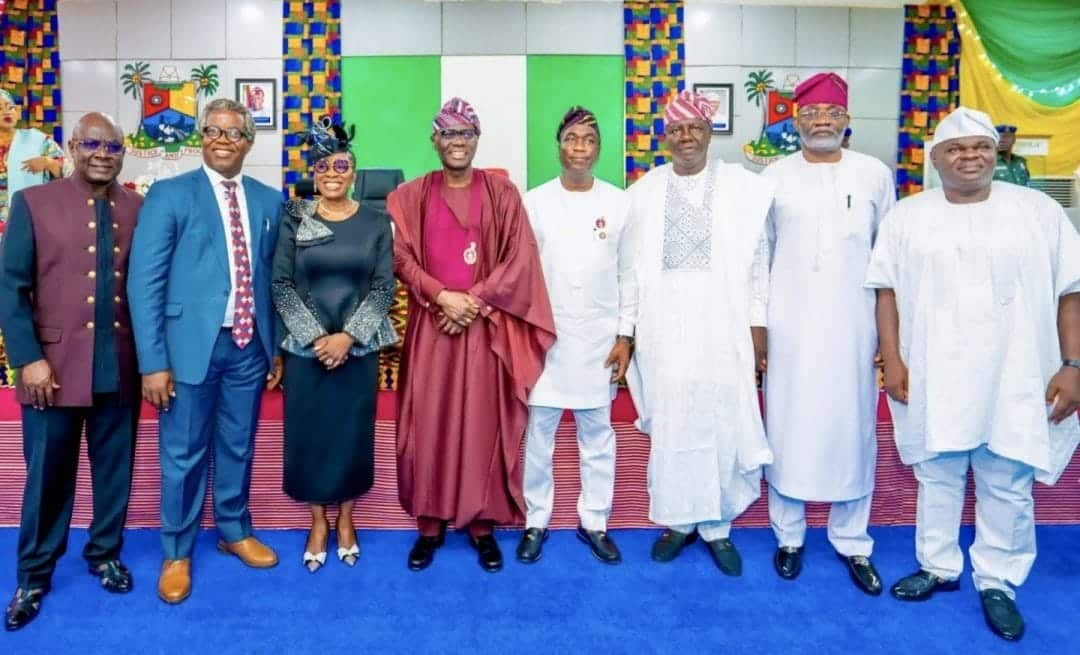
IKEJA, Lagos — In an event that underscores the interplay of governance, democracy, and institutional responsibility, Lagos State Governor, Babajide Sanwo-Olu, presided over the swearing-in of a new leadership team for the Lagos State Independent Electoral Commission (LASIEC). Held at the Banquet Hall in Lagos House, Ikeja, this ceremony introduced Justice Bola Okikiolu Ighile as the new LASIEC Chairman, alongside five other distinguished members.


Adding to the momentous occasion, three new Permanent Secretaries were also inaugurated. The Governor’s emphatic charge to these appointees to uphold integrity, transparency, and credibility in their respective mandates revealed a deeper narrative of Lagos State’s evolving democratic framework.
The Foundation of Democracy in Lagos State
Governor Sanwo-Olu’s remarks highlighted a critical facet of modern governance: the sanctity of credible elections as the cornerstone of sustainable development. The Governor’s assertion that “LASIEC stands as a pillar of our democratic framework” situates the commission as a key player in Lagos State’s governance architecture.
LASIEC’s role in organising free, fair, and credible local government elections cannot be overstated; it is a responsibility that resonates beyond the ballot box, influencing public trust, political stability, and social cohesion.
The Governor’s emphasis on leveraging technology to bolster electoral integrity marks a forward-thinking approach. From biometric voter registration to online platforms for voter education, his vision aligns with global best practices. However, the effectiveness of such measures hinges not only on their implementation but also on the willingness of all stakeholders to embrace change. In a state as politically charged and diverse as Lagos, fostering transparency and impartiality will undoubtedly test the resolve and ingenuity of LASIEC’s leadership.
Leadership Dynamics: Justice Bola Okikiolu Ighile and the LASIEC Team
The appointment of Justice Bola Okikiolu Ighile as LASIEC Chairman is both symbolic and strategic. With a robust legal background, Justice Ighile’s leadership is expected to bring gravitas and judicial insight to the electoral process. Her team, comprising Mr. Samson Ajibade, Mr. Akin Durojaiye Oluwo, Dr. Olumide Olusola Metilelu, Mr. Abeeb Dapo Aileru, and Hon. Oladele Adekanye, represents a mosaic of expertise. Together, they face the formidable task of coordinating local government elections in the state’s 20 Local Government Areas (LGAs) and 37 Local Council Development Areas (LCDAs).
Yet, skepticism abounds. Critics have often questioned the impartiality of electoral commissions in Nigeria, alleging political interference and systemic inefficiencies. LASIEC’s new leadership must navigate these perceptions, ensuring that the commission is seen as an independent arbiter of electoral integrity. Justice Ighile’s pledge to serve passionately and contribute to transparent elections is a promising start, but the real test lies in execution.
The Role of Permanent Secretaries in Policy Implementation
Beyond LASIEC, the swearing-in of three Permanent Secretaries—Mr. Abdul Rafiu Omowole Fashola, Mrs. Kaphayah Olayemi Sarumi, and Mr. Abdul-Rasheed Abiola Muri-Okunola—highlights the Governor’s broader administrative priorities. The Permanent Secretaries are charged with driving the state’s THEMES+ Agenda, a developmental framework targeting critical sectors such as transportation, health, education, and security.
Governor Sanwo-Olu’s directive for these officials to embody professionalism, ethics, and innovation reflects his commitment to efficient governance. However, the challenges of policy implementation in Lagos, a state with a population exceeding 20 million, are immense. The Permanent Secretaries must navigate bureaucratic bottlenecks, resource constraints, and public expectations while maintaining accountability and transparency.
The THEMES+ Agenda: A Vision for Lagos
At the heart of this administrative overhaul is the THEMES+ Agenda, an ambitious plan aimed at transforming Lagos into a 21st-century economy. The agenda’s success depends on seamless collaboration between LASIEC, the Permanent Secretaries, and other state agencies. For instance, credible local government elections can ensure that grassroots leaders are accountable, complementing state-level developmental efforts.
However, critics argue that the THEMES+ Agenda risks becoming another lofty policy framework without tangible outcomes. With rising urbanisation, traffic congestion, and infrastructural deficits, Lagos residents demand results, not rhetoric. The appointment of new leadership across critical sectors provides an opportunity to reset expectations, but the administration must deliver on its promises to maintain public trust.
Challenges and Opportunities Ahead
As LASIEC prepares for the upcoming local government elections, the stakes could not be higher. The commission’s ability to organise credible elections will not only impact governance at the grassroots level but also shape perceptions of the Sanwo-Olu administration’s commitment to democracy.
The Governor’s call for collaboration with political parties, civil society organisations, and the media underscores the need for inclusivity in the electoral process. Yet, achieving this requires overcoming entrenched political divisions and fostering a culture of trust.
Furthermore, the use of technology in elections, while promising, presents its own challenges. Biometric voter registration systems, for example, require significant investment in infrastructure, training, and public awareness. In a state with diverse socio-economic realities, ensuring equitable access to such technology will be critical to its success.
The Roadmap Forward
Without a doubt, the swearing-in of LASIEC’s leadership and the new Permanent Secretaries marks a pivotal moment in Lagos State’s governance narrative. Governor Sanwo-Olu’s vision for a transparent, technology-driven electoral process and efficient policy implementation is commendable. However, the path ahead is fraught with challenges, from addressing public skepticism to overcoming logistical hurdles.
The Governor’s emphasis on integrity, collaboration, and innovation provides a clear roadmap. Whether LASIEC and the new appointees can translate this vision into action remains to be seen. As Lagos prepares for its local government elections, the spotlight will be on LASIEC and its ability to deliver on its mandate. The stakes are high, and the outcome will have far-reaching implications for democracy and governance in Nigeria’s commercial capital.
The swearing-in of the LASIEC leadership and newly appointed Permanent Secretaries by Lagos State Governor Babajide Sanwo-Olu underscores the dynamic interplay between governance and electoral administration in Nigeria’s most populous state. While the event seeks to reinforce the administration’s commitment to democracy and effective service delivery, deeper structural and policy issues cast a long shadow over these optimistic declarations.
The Role of LASIEC: Political Independence or Partisan Tool?
A recurring critique of state electoral commissions across Nigeria is their perceived lack of independence. LASIEC, despite being lauded as a cornerstone of Lagos’ democratic framework, operates within a system where the ruling party often wields disproportionate influence. The appointment of Justice Bola Okikiolu Ighile and her team, while celebrated for their professional credentials, raises questions about whether their mandate will transcend political affiliations.
The Governor’s passionate charge to uphold integrity and credibility in the electoral process is both timely and necessary. However, the history of local government elections in Lagos and other states paints a grim picture of manipulated outcomes, where ruling parties dominate despite widespread dissent. Will LASIEC under Justice Ighile’s leadership break this cycle, or will it succumb to the same partisan pressures that have marred previous elections?
A Systemic Crisis of Public Trust
The credibility of LASIEC is intrinsically linked to public trust. Electoral commissions in Nigeria have long struggled to gain the confidence of citizens, who often view them as extensions of the ruling political elite. Governor Sanwo-Olu’s emphasis on transparency and fairness is a step in the right direction, but rhetoric alone cannot bridge the trust deficit.
To rebuild confidence, LASIEC must adopt tangible measures to ensure inclusivity and impartiality. Leveraging technology, as the Governor suggested, is a critical starting point. Biometric voter registration and electronic transmission of results, if implemented effectively, can minimise electoral fraud and enhance transparency. However, these reforms must be accompanied by robust public awareness campaigns to educate voters about their rights and the electoral process.
The commission’s success in organising credible local government elections will serve as a litmus test for its independence and efficiency. Without demonstrable improvements, LASIEC risks being dismissed as yet another cog in a partisan machinery, undermining its ability to fulfill its democratic mandate.
The THEMES+ Agenda: Lofty Goals, Daunting Challenges
Governor Sanwo-Olu’s THEMES+ Agenda, which focuses on governance, infrastructure, and social development, provides a framework for Lagos’ transformation. However, its ambitious scope is matched by equally daunting challenges. The newly sworn-in Permanent Secretaries are expected to play a pivotal role in driving this agenda, but systemic inefficiencies within Lagos’ public service threaten to derail their efforts.
The Governor’s call for creativity and professionalism among the appointees highlights a broader problem: the lack of innovation and accountability in Nigeria’s civil service. Bureaucratic red tape, coupled with a culture of complacency, has stymied progress in key sectors such as transportation, healthcare, and education. The Permanent Secretaries must navigate these obstacles while ensuring that policy implementation aligns with the administration’s vision for a more inclusive Lagos.
Grassroots Democracy: Local Government Elections as a Test Case
Local government elections, often overshadowed by state and federal contests, are critical to grassroots development. LASIEC’s ability to organise free, fair, and credible elections in Lagos’ 20 Local Government Areas (LGAs) and 37 Local Council Development Areas (LCDAs) will determine the trajectory of governance at the community level.
However, the history of local government administration in Lagos is fraught with inefficiencies and allegations of corruption. Elected officials at this level have often been accused of mismanaging resources and failing to deliver essential services. LASIEC’s role in ensuring that credible candidates are elected is paramount, but this requires more than just administrative rigour.
Civil society organisations and the media must play a proactive role in scrutinising the electoral process and holding LASIEC accountable. Transparent communication and collaboration with stakeholders will be essential to counter allegations of bias and build public confidence in the commission’s activities.
The Governor’s Vision: Inspirational but Unfulfilled?
Governor Sanwo-Olu’s vision for a Lagos where “every voice is heard and every vote counts” is undoubtedly inspiring. However, the reality on the ground paints a more complex picture. The Governor’s administration has faced criticism for its handling of key issues, including traffic congestion, housing shortages, and security concerns. These challenges, coupled with the public’s skepticism about the sincerity of government initiatives, threaten to overshadow the progress made in other areas.
The LASIEC leadership and the newly appointed Permanent Secretaries are stepping into roles that demand not only technical expertise but also a commitment to public service. Their performance in the coming months will serve as a barometer of the administration’s ability to deliver on its promises and address the structural issues that hinder Lagos’ development.
Broader Implications for Democracy in Nigeria
The developments in Lagos hold broader implications for democracy in Nigeria. As the country’s economic and cultural hub, Lagos often sets the tone for governance and political discourse nationwide. If LASIEC succeeds in organising credible local government elections, it could inspire similar reforms in other states. Conversely, a failure to meet public expectations would further erode confidence in Nigeria’s democratic institutions.
Governor Sanwo-Olu’s administration has a unique opportunity to redefine governance and electoral integrity in Lagos. However, achieving this requires more than symbolic gestures; it demands a sustained commitment to transparency, accountability, and innovation. The coming months will reveal whether the administration can rise to the occasion or whether its lofty aspirations will remain unfulfilled.
The developments surrounding the swearing-in of the LASIEC leadership and new Permanent Secretaries highlight critical intersections of governance, electoral integrity, and administrative efficiency in Lagos State. However, deeper issues tied to institutional credibility, political interference, and public trust continue to loom large, casting a shadow over the lofty aspirations outlined by Governor Babajide Sanwo-Olu.
Institutional Credibility: The Achilles’ Heel of LASIEC
LASIEC’s capacity to act as a truly independent body remains a contentious issue. In Nigeria’s political landscape, where ruling parties often wield outsized influence, electoral commissions are frequently accused of bias and manipulation. The Governor’s impassioned calls for transparency, impartiality, and fairness are commendable, but they fail to address the systemic challenges that have plagued similar bodies in the past.
For LASIEC to succeed, it must distance itself from perceived political allegiances. Justice Bola Okikiolu Ighile and her team face an uphill battle in demonstrating that their decisions are guided solely by the principles of justice and equity. This requires not only rigorous adherence to legal frameworks but also proactive measures to engage civil society organizations and opposition parties in building confidence.
Policy Implementation: The THEMES+ Agenda’s Reckoning
While the THEMES+ Agenda outlines an ambitious vision for Lagos, its realisation depends on effective execution. The newly sworn-in Permanent Secretaries are tasked with translating policy blueprints into actionable results, but they face formidable obstacles. Lagos’ sprawling bureaucracy, coupled with resource constraints, has historically stifled innovation and delayed project delivery.
Moreover, public perception of government initiatives remains lukewarm, with many residents expressing skepticism about the tangible benefits of policies. To rebuild trust, the administration must prioritise measurable outcomes, such as improving road infrastructure, decongesting traffic, and expanding access to healthcare and education. The Permanent Secretaries’ ability to cut through red tape and foster inter-agency collaboration will be pivotal.
Electoral Integrity and Grassroots Governance
The upcoming local government elections represent a litmus test for LASIEC’s credibility and the broader democratic process in Lagos. Grassroots governance, often neglected in Nigeria’s political discourse, is critical to addressing the needs of local communities. LASIEC must ensure that the elections are not only free and fair but also inclusive, allowing for diverse voices to shape the future of Lagos’ LGAs and LCDAs.
Governor Sanwo-Olu’s emphasis on leveraging technology, such as biometric voter registration, reflects a global trend toward digitising electoral processes. However, the digital divide in Lagos poses a significant challenge. Urban centres may adapt quickly to such innovations, but rural and underserved areas risk being left behind. LASIEC must adopt a multi-pronged approach to ensure equal access to electoral technology and voter education.
The Political Undertones of LASIEC’s Mandate
The composition and mandate of LASIEC inevitably raise questions about the political implications of its activities. Critics argue that local government elections often serve as platforms for consolidating the ruling party’s dominance, sidelining opposition voices in the process. Governor Sanwo-Olu’s administration must tread carefully to avoid accusations of partisanship, which could erode public confidence in the electoral process.
Justice Ighile and her team must also navigate potential conflicts of interest, particularly in a state as politically active as Lagos. The commission’s commitment to impartiality will be tested in its interactions with political parties, candidates, and voters. Transparent communication, backed by robust legal and procedural safeguards, will be essential to counter allegations of bias.
The Larger Picture: Democracy in Nigeria
The challenges facing LASIEC and the Lagos State government are microcosms of broader issues within Nigeria’s democratic framework. Electoral credibility, governance efficiency, and public trust are recurring themes across the country. While Lagos often sets the pace for innovation and development, its success in these areas will serve as a model—or a cautionary tale—for other states.
Governor Sanwo-Olu’s vision for a Lagos where “every voice is heard and every vote counts” is undeniably inspiring. However, achieving this ideal requires more than rhetoric; it demands sustained commitment, transparency, and accountability. LASIEC’s performance in the upcoming elections will not only shape the political landscape of Lagos but also set a precedent for other states grappling with similar challenges.
Additional report: Osaigbovo Okungbowa
Atlantic Post Senior Political Correspondent