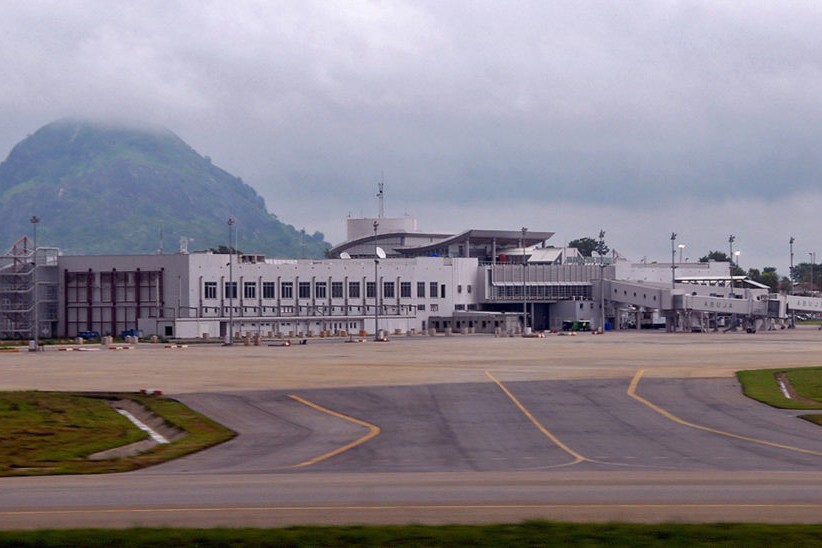
Despite the Port Harcourt refinery’s much-anticipated return to operation, Nigerians won’t see lower petrol prices. PENGASSAN confirms ongoing maintenance and a weak naira as major obstacles. Will this refinery revival truly benefit Nigeria’s economy and the Niger Delta region?
Port Harcourt Refinery’s Controversial Resurgence Sparks Economic Debates Amid PENGASSAN’s Bold Revelations
In a dramatic twist to Nigeria’s energy narrative, the Petroleum and Natural Gas Senior Staff Association of Nigeria (PENGASSAN) has confirmed that the long-anticipated Port Harcourt refinery is now operational, marking a significant milestone in the country’s quest for energy self-sufficiency. The announcement, delivered by PENGASSAN’s National President, Festus Osifo, at the association’s National Executive Council Meeting in Abuja, has dispelled lingering doubts over the facility’s functionality. Yet, the update has also ignited a heated debate: will this development ease the crushing burden of petrol prices on ordinary Nigerians?
At the heart of this revelation lies a paradox. Despite the refinery’s operational status, Osifo categorically stated that its impact on petrol prices would be negligible. This assertion has left many Nigerians puzzled, particularly those who had hoped that domestic refining would finally provide relief from the relentless surge in fuel costs. Osifo’s explanation was sobering: the refinery’s production capacity, which currently stands at 60,000 barrels per day, is insufficient to offset the market forces driven by the weak naira and the country’s heavy reliance on imported petroleum products.
“The confirmation I have today is that the refinery is working,” Osifo declared with a tone of cautious optimism. But beneath this confirmation lies a complex reality. The Port Harcourt refinery, one of Nigeria’s flagship refining facilities, is far from reaching its full potential. While it is currently producing diesel, kerosene, and naphtha, the critical components required for large-scale petrol production remain incomplete. According to Osifo, the refinery’s fractional distillation unit (CDU) is fully operational, but the crucial reformate production unit—a key ingredient in petrol refining—is still undergoing maintenance and upgrades.
This technical bottleneck underscores a broader issue that has plagued Nigeria’s refining sector for decades: the chronic underinvestment and mismanagement of critical infrastructure. For years, the Port Harcourt refinery, along with its counterparts in Warri and Kaduna, has been more of a symbol of Nigeria’s unrealised potential than a beacon of progress. Billions of naira have been sunk into rehabilitation efforts, yet tangible results have remained elusive. The latest announcement, while encouraging, does little to allay fears that the refinery could become another white elephant project in the country’s troubled oil and gas sector.
A Glimpse Behind the Refining Process
Osifo’s detailed breakdown of the refining process offered a rare glimpse into the inner workings of the Port Harcourt facility. The CDU, which serves as the backbone of the refinery, processes crude oil by heating it at various temperatures to produce a range of refined products. This complex process is crucial for separating crude oil into its constituent components, including diesel, kerosene, and naphtha. However, the production of petrol—a more refined and complex product—requires additional stages, including the blending of naphtha with reformate.
Currently, the refinery is only able to produce a limited quantity of petrol due to the absence of a fully functional reformate unit. This limitation has significant implications for Nigeria’s downstream sector, which remains heavily dependent on imported petrol to meet domestic demand. Despite the refinery’s partial functionality, Osifo emphasised that ongoing maintenance efforts are crucial to achieving full-scale operations.
“We appreciate Nigerians for holding the government accountable,” Osifo remarked, acknowledging the public’s growing frustration with the slow pace of progress. “We must ensure the workability of our assets. We cannot just accept everything the government tells us; we must verify it.”
The Currency Crisis: An Unseen Barrier
While the technical challenges facing the Port Harcourt refinery are daunting, they pale in comparison to the economic headwinds buffeting Nigeria’s oil and gas sector. Osifo was unequivocal in his assessment: the weak naira is the single most significant factor driving up the cost of petroleum products. With the naira trading at an alarming 1,700 naira to the dollar, the cost of importing crude oil and refining components has skyrocketed, eroding any potential savings from domestic refining.
“The greatest challenge is the weakness of our currency,” Osifo lamented. “With the naira trading at such a devalued rate, the cost of goods, including petroleum products, will remain high.”
This economic reality presents a grim outlook for Nigerians, who are already grappling with the devastating effects of inflation and a stagnant economy. For many, the promise of an operational Port Harcourt refinery had offered a glimmer of hope—a chance to reduce the country’s dependence on costly fuel imports and stabilise domestic fuel prices. But with the naira in freefall, that hope is rapidly fading.
The broader implications of this currency crisis extend beyond the oil and gas sector. Nigeria’s economy, which is heavily reliant on oil revenues, is facing a perfect storm of challenges, from declining foreign exchange reserves to mounting debt obligations. In this context, the operational status of the Port Harcourt refinery, while significant, is unlikely to provide the immediate relief that many had hoped for.
The Media’s Role in Accountability
Osifo’s acknowledgment of the media’s role in holding the government accountable is a testament to the growing importance of independent journalism in Nigeria’s democratic landscape. Over the years, the media has played a crucial role in exposing the inefficiencies and corruption that have plagued the country’s oil and gas sector. From investigative reports on the mismanagement of refinery funds to in-depth analyses of policy failures, journalists have been at the forefront of efforts to shed light on the sector’s opaque operations.
As the Port Harcourt refinery enters this new phase of operation, the media will undoubtedly continue to scrutinise its progress—or lack thereof. For many Nigerians, the refinery’s success or failure will serve as a litmus test for the government’s broader economic agenda, which has been characterised by ambitious promises but limited follow-through.
In the coming weeks, all eyes will be on the Port Harcourt refinery as it navigates the complex path from partial functionality to full-scale operation. Will it finally deliver on its promise of reducing Nigeria’s dependence on imported fuel? Or will it become yet another chapter in the country’s long history of unmet expectations in the oil and gas sector? As the debate unfolds, one thing is clear: the stakes have never been higher.

The Port Harcourt Refinery Dilemma: A Nation’s Hope Entangled in Economic Turbulence
As Nigeria inches closer to self-sufficiency in petroleum refining, the news of the Port Harcourt refinery’s partial resumption of operations has sparked a nationwide debate. The Petroleum and Natural Gas Senior Staff Association of Nigeria (PENGASSAN) may have confirmed the facility’s functionality, but the questions swirling around its economic impact remain far from settled. At the heart of this unfolding saga is a sobering reality: operational capacity alone will not be enough to shield Nigerians from the soaring costs of petrol and other refined products.
For decades, Nigeria’s refining sector has been a quagmire of failed promises and squandered opportunities. The Port Harcourt refinery, once a symbol of national pride, gradually fell into disrepair, its dilapidated state reflecting the systemic neglect that has characterised the country’s energy infrastructure. Billions of naira earmarked for its rehabilitation over the years have seemingly vanished into a black hole of corruption and inefficiency, leaving many to wonder if this latest announcement is just another false dawn.
Unpacking PENGASSAN’s Announcement: Reality vs. Expectations
Festus Osifo, PENGASSAN’s National President, was unequivocal in confirming that the refinery is producing key petroleum products, including diesel, kerosene, and naphtha. However, his admission that the facility is still undergoing maintenance raises critical questions about its long-term viability. Can a refinery operating at partial capacity make a meaningful dent in Nigeria’s dependence on imported fuel? And more importantly, will it bring any tangible relief to consumers who are already reeling from skyrocketing fuel prices?
Osifo’s remarks were measured, almost cautious, as he sought to temper public expectations. “The refinery is working, but the refining process for petrol is not yet complete,” he explained, emphasising that ongoing maintenance and upgrades are necessary to achieve full functionality. This admission underscores a stark reality: while the refinery’s partial operation is a step in the right direction, it is far from the game-changer that many had anticipated.
The production of diesel and kerosene, while important, does little to address the immediate concerns of ordinary Nigerians, for whom petrol remains the lifeblood of daily life. From powering generators in the face of chronic electricity shortages to fuelling vehicles for transportation, petrol is an indispensable commodity. The refinery’s inability to produce petrol at full capacity, therefore, represents a significant shortfall in meeting the country’s energy needs.
The Shadow of Import Dependency
One of the most damning aspects of Nigeria’s energy crisis is its heavy reliance on imported petroleum products. Despite being Africa’s largest crude oil producer, Nigeria paradoxically imports over 80% of its refined petroleum needs. This dependency has left the country vulnerable to global oil price fluctuations and foreign exchange volatility, with devastating consequences for its economy and citizens.
Osifo’s acknowledgment of the weak naira as a major obstacle to reducing petrol prices is a stark reminder of the structural challenges facing Nigeria’s economy. With the naira trading at an unprecedented 1,700 naira to the dollar, the cost of importing crude oil and refining components has become prohibitively expensive. Even with a fully operational refinery, the high cost of inputs will inevitably be passed on to consumers, negating any potential savings from domestic refining.
“The greatest challenge is the weakness of our currency,” Osifo lamented, highlighting the inescapable link between currency devaluation and rising fuel costs. His words echo a sentiment shared by many economic analysts, who have long warned that Nigeria’s overreliance on oil revenues and its failure to diversify the economy have left it dangerously exposed to external shocks.
A Government Under Pressure
The Nigerian government, under the leadership of President Bola Ahmed Tinubu, finds itself in a precarious position. Having campaigned on a platform of economic reform and infrastructure development, the administration is under immense pressure to deliver tangible results. The Port Harcourt refinery, long touted as a cornerstone of Nigeria’s energy policy, represents a critical test of the government’s ability to execute its ambitious agenda.
Yet, the government’s handling of the refinery’s rehabilitation has been met with skepticism. Critics have accused the administration of failing to provide clear timelines and transparency regarding the project’s progress. The lack of detailed information has fuelled speculation that the refinery’s operational status may be more symbolic than substantive—a public relations move designed to placate an increasingly restive populace rather than a genuine solution to the country’s energy woes.
In response to these criticisms, government officials have pointed to the complex nature of refinery operations and the challenges associated with revamping aging infrastructure. They argue that the partial resumption of operations is a significant achievement, given the years of neglect and underinvestment that preceded it. However, this defense has done little to assuage public concerns, particularly as fuel prices continue to climb.
The Ripple Effect on Nigeria’s Economy
The economic implications of the Port Harcourt refinery’s operations—or lack thereof—extend far beyond the oil and gas sector. Fuel prices have a direct impact on virtually every aspect of the Nigerian economy, from transportation and logistics to agriculture and manufacturing. As the cost of petrol rises, so too does the cost of goods and services, exacerbating inflation and eroding the purchasing power of ordinary Nigerians.
This inflationary spiral has hit the most vulnerable segments of the population the hardest, deepening the already stark levels of poverty and inequality in the country. For millions of Nigerians, the dream of affordable fuel remains as elusive as ever, with the Port Harcourt refinery offering little more than a glimmer of hope in an otherwise bleak landscape.
Economic analysts have warned that without significant policy interventions, the situation is likely to worsen. The government’s decision to remove fuel subsidies, while fiscally prudent, has further strained household budgets, pushing many Nigerians to the brink. In this context, the operational status of the Port Harcourt refinery, while symbolically important, is unlikely to provide the immediate relief that many had hoped for.
A Glimmer of Hope Amidst the Gloom?
Despite the myriad challenges, there are those who see the Port Harcourt refinery’s partial operation as a positive development. Industry insiders argue that the facility’s gradual return to functionality is a necessary first step toward revitalising Nigeria’s moribund refining sector. They contend that with continued investment and maintenance, the refinery could eventually reach its full production capacity, reducing the country’s dependence on imports and stabilising fuel prices in the long term.
Moreover, the refinery’s operation is expected to create jobs and stimulate economic activity in the surrounding region, providing a much-needed boost to local communities. From engineers and technicians to support staff and contractors, the ripple effect of the refinery’s operations could have a significant impact on employment and economic growth.
However, these optimistic projections are tempered by the harsh realities of Nigeria’s economic landscape. With inflation at record levels, unemployment soaring, and the naira in freefall, the path to energy self-sufficiency remains fraught with obstacles. The Port Harcourt refinery, while a critical piece of the puzzle, is unlikely to be a silver bullet for Nigeria’s energy crisis.
As the nation grapples with these challenges, one thing is clear: the road to energy security and economic stability will be long and arduous. The Port Harcourt refinery may be operational, but the journey toward affordable fuel and a resilient economy is far from over.
The Future of Nigeria’s Energy Sector: A Crossroads of Policy, Politics, and Public Trust
As Nigeria stands at the crossroads of an energy revolution, the operational status of the Port Harcourt refinery is more than just a technical achievement; it is a litmus test for the country’s ability to navigate the complex web of policy, politics, and public trust that underpins its energy sector. The stakes could not be higher. With an economy tethered to the volatile swings of global oil markets and a populace clamouring for relief from relentless fuel price hikes, the success or failure of this refinery could redefine Nigeria’s economic trajectory for years to come.
Economic Nationalism vs. Market Realities
At the heart of the debate surrounding the Port Harcourt refinery’s operations is a fundamental tension between economic nationalism and the harsh realities of global markets. On one hand, the Nigerian government’s push to revive domestic refining capacity is driven by a desire to reclaim control over the country’s energy supply chain. For decades, Nigeria’s dependence on imported refined products has been a glaring contradiction for a nation that ranks among the world’s top crude oil producers.
The revival of the Port Harcourt refinery, therefore, represents a symbolic assertion of economic sovereignty—a declaration that Nigeria can refine its own crude and reduce its reliance on foreign imports. Yet, as PENGASSAN President Festus Osifo pointed out, the refinery’s ability to lower fuel prices is severely constrained by the weak naira and the broader macroeconomic environment. The vision of economic self-sufficiency, while noble, must contend with the reality that the global oil market operates on a different set of rules—rules dictated by supply and demand dynamics, geopolitical tensions, and currency fluctuations.
Osifo’s statement, “The greatest challenge is the weakness of our currency,” highlights the extent to which Nigeria’s economic fortunes are intertwined with its monetary policy. With the naira trading at an alarming 1,700 to the dollar, the cost of procuring crude oil and essential refining components remains exorbitant. In this context, even a fully operational Port Harcourt refinery may struggle to deliver the economic benefits that many Nigerians expect.
The Geopolitical Dimension: Fuelling Tensions in a Fragile Region
The operational status of the Port Harcourt refinery also carries significant geopolitical implications, particularly for the Niger Delta region—a hotbed of political unrest, militant activity, and environmental degradation. For years, the region has been plagued by a paradoxical coexistence of immense natural wealth and abject poverty. Oil spills, gas flaring, and environmental destruction have left communities in a state of perpetual crisis, fuelling resentment toward both the government and multinational oil companies.
The resumption of operations at the Port Harcourt refinery presents an opportunity to address some of these longstanding grievances. By creating jobs and stimulating local economic activity, the refinery could serve as a catalyst for development in the region. However, this potential is contingent on the government’s ability to ensure that the benefits of the refinery’s operations are equitably distributed.
Local community leaders and civil society organisations have already begun to raise concerns about transparency and accountability. Will the jobs created by the refinery go to local residents, or will they be outsourced to contractors from other regions? Will the profits generated by the refinery be reinvested in the Niger Delta, or will they be siphoned off to fill the coffers of political elites in Abuja and Lagos?
These questions are not merely academic; they are central to the social contract between the Nigerian state and its citizens. If the government fails to deliver on its promises of economic inclusion and environmental stewardship, the Port Harcourt refinery could become a flashpoint for renewed conflict in a region that has already endured decades of strife.
Public Trust: The Missing Ingredient
Perhaps the most significant challenge facing the Port Harcourt refinery—and by extension, Nigeria’s entire energy sector—is the issue of public trust. Years of broken promises, missed deadlines, and corruption scandals have left many Nigerians skeptical of government announcements. The refinery’s partial operation, while a positive development, has been met with a mix of cautious optimism and outright cynicism.
Festus Osifo’s acknowledgment of the media’s role in holding the government accountable underscores the importance of transparency and public engagement. “We appreciate Nigerians for holding the government accountable,” Osifo stated, emphasising the need for independent verification of the refinery’s operational status. This call for accountability is particularly relevant in a country where public institutions have often been perceived as opaque and unresponsive to the needs of ordinary citizens.
Restoring public trust will require more than just operational milestones; it will demand a sustained commitment to transparency, accountability, and good governance. The Nigerian government must be willing to provide regular updates on the refinery’s progress, disclose the financial details of its rehabilitation, and engage with stakeholders—including local communities, civil society organisations, and industry experts—on a continuous basis.
The Road Ahead: Policy Recommendations for a Sustainable Energy Future
As Nigeria grapples with the challenges and opportunities presented by the Port Harcourt refinery, it is clear that a comprehensive approach is needed to ensure the long-term sustainability of the country’s energy sector. This approach must be rooted in sound economic policy, strategic investment, and a commitment to social and environmental responsibility.
- Currency Stabilisation: Addressing the weakness of the naira is a critical first step toward reducing the cost of refining and making fuel more affordable for Nigerians. This will require a combination of fiscal discipline, monetary policy reforms, and efforts to diversify the economy away from its dependence on oil revenues.
- Infrastructure Development: Beyond the Port Harcourt refinery, Nigeria must invest in modernising and expanding its energy infrastructure. This includes rehabilitating other refineries, developing new refining capacity, and upgrading the country’s pipeline and storage facilities.
- Local Content and Job Creation: Ensuring that the benefits of refinery operations are felt by local communities is essential for maintaining social stability. The government must implement policies that prioritise local content, create jobs for residents of the Niger Delta, and invest in community development projects.
- Environmental Stewardship: The environmental impact of refinery operations must be carefully managed to prevent further degradation of the Niger Delta ecosystem. This includes enforcing strict environmental regulations, conducting regular impact assessments, and investing in remediation and restoration efforts.
- Transparency and Accountability: Finally, the government must prioritise transparency and accountability in all aspects of the refinery’s operations. This includes providing regular progress reports, disclosing financial details, and engaging with stakeholders in an open and inclusive manner.
Conclusion: A Nation at a Crossroads
The Port Harcourt refinery’s partial resumption of operations represents a critical juncture for Nigeria’s energy sector and its broader economic future. While the refinery’s return to functionality is a significant achievement, it is not a panacea for the country’s energy challenges. The path to energy security, economic stability, and social inclusion will require a sustained commitment to reform, investment, and good governance.
As Nigerians look to the future with a mix of hope and apprehension, one thing is certain: the stakes are high, and the choices made today will shape the nation’s destiny for generations to come. The Port Harcourt refinery is more than just an industrial facility; it is a symbol of Nigeria’s resilience, ambition, and potential—a potential that, if harnessed correctly, could transform the country into a global energy powerhouse.
Additional report by Taiwo Adebowale, Atlantic Post Senior Business Correspondent.