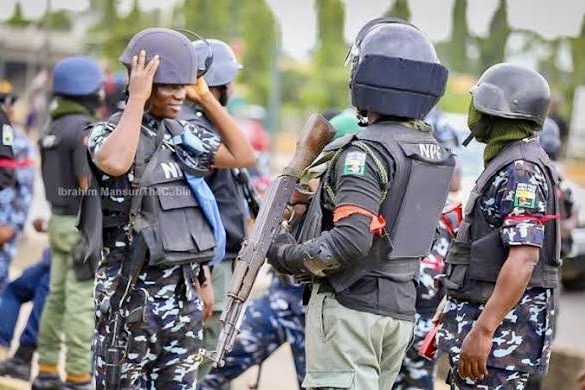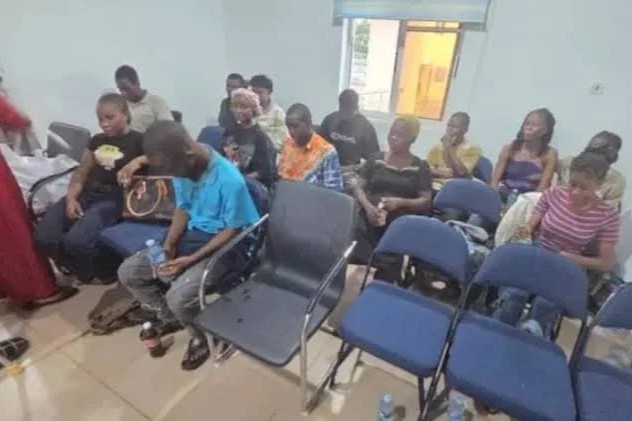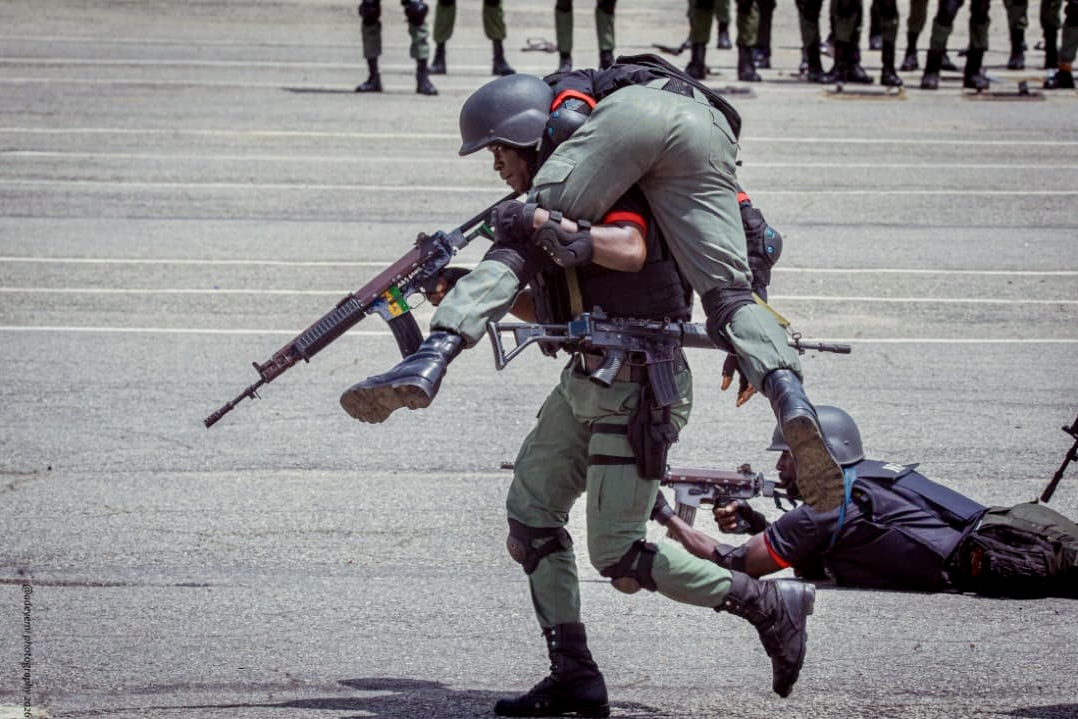
Police Sweep Across Seven States: 13 Suspected Gunmen Neutralised, Five Victims Rescued, Arms Recovered
Nigeria’s security landscape entered the final day of August with the police reporting a fresh series of intelligence-led operations across seven states, including the rescue of kidnapping victims, disruption of bandit and cattle-rustling operations, arrests of suspected armed robbers and the recovery of assault rifles, pistols, ammunition and other criminal exhibits.
The Nigeria Police Force said the operations were conducted between 29 and 30 August 2026 in Ogun, Sokoto, Kano, Abia, Lagos, Katsina and Taraba states, with investigations continuing at the respective State Criminal Investigation Departments.
The latest operational summary is significant beyond its headline figures. Taken together, the incidents expose the very different faces of Nigeria’s security crisis: kidnapping-for-ransom in the forests and rural corridors, armed banditry and cattle rustling in the North, organised carjacking and robbery in Lagos, and efforts by criminal groups to establish hideouts and logistics bases in forested areas of the South-east.
The police account also comes at a particularly sensitive moment for Nigeria’s economy. The IMF says worsening domestic insecurity remains a risk to people and economic activity and has warned that deteriorating security could damage agriculture and oil production. The African Development Bank similarly identifies insecurity as an internal bottleneck that must be tackled to improve investment and Nigeria’s credit prospects.
What happened across the seven states
According to the Police Force’s 31 August executive summary, the largest concentration of reported armed confrontations occurred in the North-West, while successful hostage rescues were recorded in Ogun, Kano and Taraba.
Ogun: kidnapping operation ends with two suspects killed and two AK-47 rifles recovered
In Ogun State, police said operatives rescued Usman Umar, a kidnapping victim, unharmed after combing surrounding forest terrain.
The operation then moved from rescue to pursuit. Police said operatives stormed the kidnappers’ hideout, engaged the gang in a gun battle and neutralised two suspected kidnappers, while other members escaped with gunshot wounds.
Two AK-47 rifles, 25 rounds of ammunition and two mobile phones were reportedly recovered.
The case has been handed to the State Criminal Investigation Department, Eleweran, for investigation.
The development is particularly relevant to businesses and commuters using Ogun’s strategically important road and industrial corridors. Kidnapping in forest belts adjoining major highways does not only threaten passengers; it raises security costs for logistics companies, transport operators, agricultural traders, construction businesses and firms whose employees travel routinely between commercial centres.
Ogun has previously witnessed similar intelligence-led anti-kidnapping operations in forest areas, including operations in which police reported recovering AK-47 rifles and suspected ransom proceeds.
Sokoto: police say bandit attack was intercepted
In Sokoto State, police said tactical teams, the Anti-Kidnapping Unit, the Violent Crime Response Unit and military personnel intercepted suspected armed bandits moving towards Maikujera Village.
A prolonged gun battle reportedly followed.
Police said three suspected bandits were neutralised during subsequent bush-combing operations, while others fled with casualties.
One AK-47 rifle and 22 rounds of ammunition were recovered, while police reported no casualties among security personnel or villagers.
The Sokoto operation is notable because it reportedly stopped the attackers before they reached their intended target — an example of intelligence-led intervention rather than merely reacting after a community has been attacked.
It also fits a broader pattern emerging from recent police operations in Sokoto, where security forces have reported intercepting armed groups moving with rustled livestock.
Kano: rescue achieved, but three victims died
In Kano State, the security picture was considerably more tragic.
Police said tactical teams pursued suspected bandits following an attack in Garun Mallam, forcing the assailants to abandon an abducted man identified as Alhaji Yusif Nadabo, who was rescued.
Three other victims who suffered gunshot wounds were evacuated for medical treatment but subsequently died.
The incident underlines a critical distinction often lost in operational statistics: a successful rescue does not necessarily mean the security operation prevented loss of life.
For businesses, the Kano development also illustrates how attacks on communities can rapidly become commercial disruptions. Victims, witnesses, transport operators and traders caught up in violent incidents can suffer losses long after the perpetrators leave the scene.
The case remains under investigation by SCID Kano.
Abia: police uncover an emerging criminal camp
In Ukwa West Local Government Area of Abia State, police said operatives acted on intelligence that suspected armed hoodlums were attempting to establish a camp in Okohia Forest.
The suspects reportedly fled after sighting police personnel.
A subsequent search produced one locally made pistol, 40 rounds of 5.56mm ammunition, two rounds of 7.62mm ammunition, four empty magazines, military camouflage clothing, substances suspected to be Indian hemp and other exhibits.
The significance of the operation lies less in the arrest tally than in the location.
The discovery of what police described as an attempted criminal camp raises questions about the use of forests as logistical spaces for armed groups. Such locations can become staging points for kidnapping, robbery, weapons storage and movement between communities.
The case is being investigated by SCID Umuahia.
Lagos: carjacking and armed robbery syndicate targeted
In Lagos, police reported the arrest of three suspected members of an armed robbery and carjacking syndicatefollowing intelligence-led tracking.
Three locally manufactured firearms were reportedly recovered: two pistols loaded with five cartridges and a locally made revolver containing three rounds of 9mm ammunition.
Police said efforts were continuing to arrest other alleged members of the syndicate.
This case carries a direct commercial dimension.
Carjacking and armed robbery affect not only private motorists but also ride-hailing businesses, logistics operators, vehicle fleets, insurance companies and businesses whose employees travel after dark. Organised vehicle crime can create a secondary cost through higher security expenditure, insurance risk, fleet losses and disruptions to delivery schedules.
The investigation is being handled by SCID Ikeja.
Katsina: cattle rustling operation doubles as a security intervention
In Katsina State, police said tactical personnel engaged suspected cattle rustlers in a gun battle after an attack on cattle rearers at Tafoki Village.
The five allegedly rustled cows were recovered.
Police also said injured victims were rescued and transported to Funtua General Hospital for treatment.
The case demonstrates why cattle rustling cannot be treated purely as a livestock problem.
Where cattle theft becomes armed organised crime, the consequences can extend across the agricultural value chain — affecting herders, farmers, livestock markets, transporters, food processors and consumers.
Agriculture remains a major source of Nigerian livelihoods, making insecurity in rural production areas an economic issue as much as a policing issue. The IMF has specifically warned that deterioration in domestic security can affect agriculture, food security and overall economic activity.
Taraba: grandmother and granddaughter rescued
In Taraba State, personnel from 67 PMF Takum, Highway Patrol and a DPO-led team conducted an extensive search after a kidnapping report.
Police said Alidoo Cecilia Ityo, 55, and her young granddaughter were found and rescued after the kidnappers abandoned them.
A red Toyota Corolla, registration number JMT-680-XA, was also recovered.
The rescue again demonstrates the operational importance of sustained searching after an abduction rather than treating the initial disappearance as the end of the intelligence cycle.
The investigation is being conducted by SCID Jalingo.
The bigger intelligence picture: kidnapping is becoming an economic system
The seven-state operation must be considered against much larger national numbers.
A new SBM Intelligence report covering July 2025 to June 2026 estimated that 7,825 people were abducted in 1,713 kidnapping and kidnap-related incidents, while at least 1,142 people were killed. The number of victims was up 66 per cent from the preceding period.
More disturbing from an economic perspective is the ransom picture.
SBM estimated that kidnappers demanded about ₦22.9 billion, while approximately ₦7.78 billion was actually paid. The collection rate rose to about 34 per cent, compared with 5.35 per cent in the previous reporting period.
That changes the nature of the problem.
Kidnapping is no longer simply an attack on individual families. It is increasingly an alternative criminal revenue system that can finance weapons acquisition, recruitment, movement and further attacks.
SBM found that one faction of Boko Haram accounted for about 90 per cent of ransom payments recorded during the period, with two mass-abduction cases accounting for approximately ₦7 billion of the total.
The economic implication is stark: every successful ransom transaction potentially strengthens the financial capacity of the criminal ecosystem that produced the kidnapping in the first place.
Seven states, one national security problem — but not one single type of crime
The police report is revealing because the threats are geographically dispersed but operationally different.
Ogun and Taraba illustrate kidnapping and forest-based criminal activity.
Sokoto and Katsina demonstrate the interaction between banditry, livestock theft and rural insecurity.
Kano shows the human cost of violent attacks even where an abduction ends in a rescue.
Lagos exposes an urban organised-crime dimension centred on robbery and vehicle crime.
Abia raises the emerging threat of criminal groups establishing forest camps and stockpiling firearms.
This makes a one-size-fits-all security strategy increasingly difficult to sustain.
What works against a carjacking syndicate in Lagos is not necessarily what is required to dismantle a rural kidnapping network in Ogun or intercept mobile bandit groups in Sokoto.
A disturbing ammunition question deserves clarification
There is also a technical issue in the police statement that firearms analysts and journalists should not ignore.
The Ogun operation describes AK-47 rifles recovered with “5.6mm ammunition”. A standard AK-47 is chambered for the 7.62×39mm cartridge, according to firearms references including the US Bureau of Alcohol, Tobacco, Firearms and Explosives and the UK National Protective Security Authority. (ATF)
This does not necessarily mean the police recovery itself is inaccurate. Nigerian police statements have previously used similar terminology when reporting AK-pattern rifle recoveries. For example, an earlier 2026 Ogun operation was also reported as involving an AK-47 loaded with “5.6mm” ammunition.
However, the discrepancy deserves technical clarification because accurate identification of recovered weapons and ammunition matters for forensic investigation, evidence handling, tracing and eventual prosecution.
The distinction is not merely academic. A court case can depend on establishing exactly what weapon was recovered, what ammunition was found, who possessed it and whether the exhibits can be forensically linked to a crime.
What the law means for suspected gunmen and syndicate members
The operational phase is only the beginning.
Under Section 31 of the Nigeria Police Act 2020, police are required to investigate reported offences in accordance with due process and report their findings for legal advice. The Act also provides for arrest, investigation and subsequent judicial handling of suspects.
Illegal possession of firearms can carry severe criminal consequences under Nigerian law. The Firearms Act provides for substantial imprisonment in specified cases involving prohibited firearms and ammunition, while firearms and ammunition can also be subject to forfeiture following conviction.
That makes the current investigations at SCID Eleweran, SCID Sokoto, SCID Kano, SCID Umuahia, SCID Ikeja, SCID Katsina and SCID Jalingo particularly important.
The credibility of the police operation will ultimately be measured not only by arrests, rescues and recoveries, but by whether investigators can build admissible evidence strong enough to sustain prosecution.
What the operations mean for Nigerian businesses
For business owners, the police statement should not be read simply as a crime bulletin.
It is a business-risk document.
A kidnapping incident on a transport corridor can mean abandoned deliveries, cancelled journeys, higher fuel expenditure, additional security escorts and increased insurance exposure.
A criminal camp in a forest area can threaten agricultural production and rural supply chains.
Cattle rustling can reduce livestock availability and disrupt meat and dairy markets.
Armed robbery and carjacking can affect commercial vehicles, fleet management and employee safety.
Persistent insecurity can also discourage investment in locations perceived as unsafe, raising the cost of doing business and reducing the attractiveness of productive assets.
The World Bank continues to identify kidnapping and banditry among Nigeria’s persistent structural challenges, while noting that weak infrastructure and insecurity hinder domestic market integration and productivity.
The African Development Bank’s 2026 assessment is equally blunt: tackling insecurity is critical to improving Nigeria’s investment environment and global credit prospects.
The real test is sustainability, not the weekend scoreboard
The Nigeria Police Force has reason to publicise successful rescues, arrests and weapons recoveries. They are concrete operational achievements.
But security intelligence is not ultimately judged by how many weapons are displayed after an operation.
The harder questions are what happens next.
Will fleeing suspects be tracked and arrested?
Will weapons recovered be traced?
Can investigators establish the financial networks behind kidnapping and robbery?
Can mobile phone evidence identify commanders, financiers and facilitators?
Can prosecutions translate operational successes into convictions?
And can the criminal networks regenerate after individual gunmen are removed?
Those questions are particularly urgent given SBM Intelligence’s warning that Nigeria’s kidnapping economy is becoming more financially productive despite fewer ransom demands.
Nigeria therefore faces a dual challenge: win tactical encounters while dismantling the economic architecture that makes the crime profitable.
The seven-state police operation is evidence that intelligence-led policing can produce results.
It is not, on its own, evidence that the underlying security crisis has been defeated.
For Nigerian businesses, investors and communities, that distinction could prove decisive.
Police operational summary at a glance
StateReported police actionKey reported recovery/outcomeOgunRescue and forest operation1 victim rescued; 2 suspected kidnappers neutralised; 2 AK-47sSokotoBandit interception3 suspected bandits neutralised; 1 AK-47 recoveredKanoAnti-bandit pursuit1 abducted victim rescued; 3 injured victims later diedAbiaForest intelligence operationPistol, ammunition, magazines, camouflage recoveredLagosCarjacking/robbery arrests3 suspects arrested; 3 firearms recoveredKatsinaAnti-cattle-rustling operation5 cattle recovered; injured victims rescuedTarabaKidnap search operation2 victims rescued; abandoned Toyota Corolla recovered
All operational claims in the table are attributed to the Nigeria Police Force and remain subject to the respective investigations.
Follow us on our broadcast channels today!
- WhatsApp: https://whatsapp.com/channel/0029VawZ8TbDDmFT1a1Syg46
- Telegram: https://t.me/atlanticpostchannel
- Facebook: https://www.messenger.com/channel/atlanticpostng