ABUJA — The Nigeria Police Force says its operatives rescued 35 kidnap victims, arrested more than 60 suspects and recovered firearms, ammunition, suspected illicit drugs, counterfeit foreign currency and electoral materials in coordinated operations carried out across 11 states and the Federal Capital Territory between July 27 and July 30.
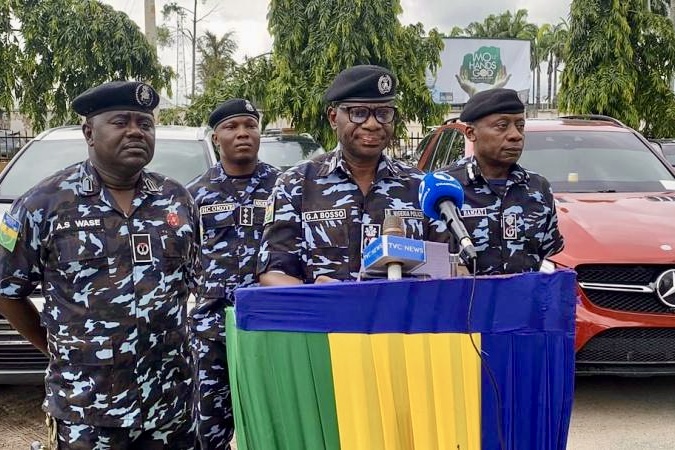
The disclosure was contained in a nationwide operational statement released on Thursday and attributed to the Force Public Relations Officer, CSP Ani Iniedu.
The timing is important. The latest announcement came only days after another police statement claimed “a total of 138 suspects were arrested” and “the Force successfully rescued 23 kidnapped victims” in a separate week-long nationwide operation, suggesting a sustained offensive by the police against violent and organised crime rather than a one-off publicity drive.
That broader pattern does not, however, settle the deeper question of how much durable pressure these raids are placing on the criminal economy itself.
The largest rescue was recorded in Sokoto State, where tactical teams, anti-kidnapping operatives, members of the Village Crime Reduction Unit and soldiers reportedly engaged suspected armed bandits in a gun battle.
Police say the encounter led to the rescue of 32 kidnapped victims (six males and 26 females) after the suspects fled into a forest under what the Force described as sustained security pressure. The State Criminal Investigation Department in Sokoto has since opened an investigation.
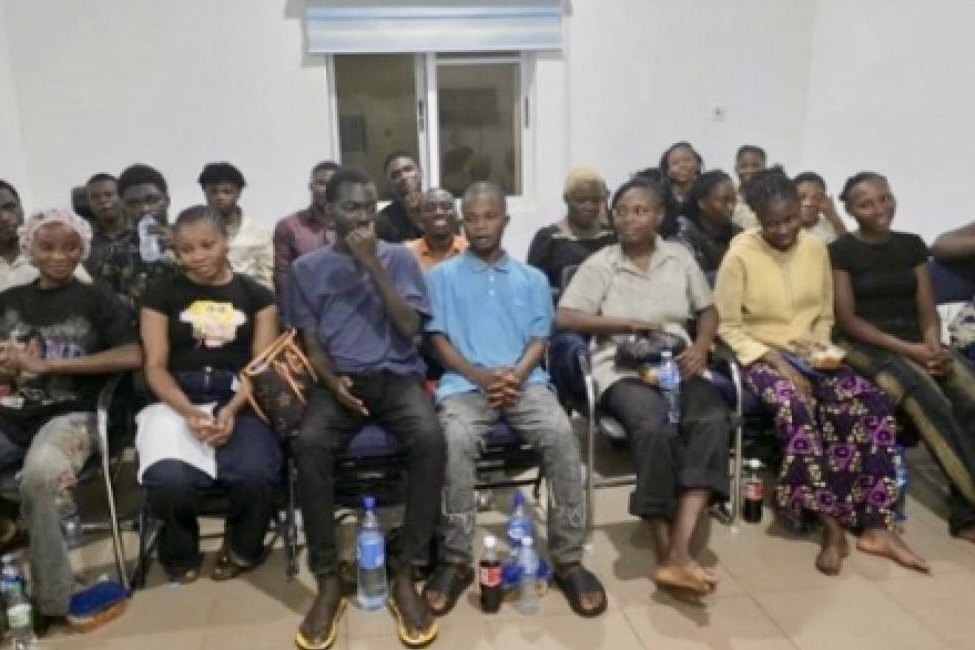
In Nasarawa State, three abducted female students were reportedly rescued unharmed after pressure mounted on their captors. According to the police statement, the students were medically examined before being reunited with their families, while efforts continued to track down the kidnappers.
The rescue underlines a familiar pattern in Nigeria’s anti-kidnapping response: the emphasis remains on recovery and pursuit, while the wider network behind the abductions often remains partially obscured.
Lagos State featured a cluster of operations. Police said they arrested the alleged leader of a highway robbery syndicate during an intelligence-led operation, with the suspect reportedly confessing to robbery and membership of a violent secret cult.
Another kidnap victim was said to have been rescued along the Lagos-Ogun boundary and reunited with family.
In a separate raid, officers arrested 39 suspects at criminal hideouts and recovered 11 hand-push trucks, 14 hanging scales and two standing scales, with the cases now being handled by the SCID in Panti.
In the Federal Capital Territory, police said two suspects were arrested for vandalising solar-powered streetlight installations, with 14 solar poles and accessories recovered.
The Force also announced the arrest of three suspected illicit drug dealers in Abuja, saying large quantities of Pregabalin, Tramadol, Nitrazepam, Codeine and other controlled substances were seized during the operation.
In investigative terms, the FCT findings point to the police confronting not only kidnap and robbery rings, but also the smaller logistical crimes that help keep those networks running.
Delta State produced more firearms-related arrests. One suspect was arrested after intelligence gathering allegedly led to the recovery of two locally fabricated pistols and four rounds of live ammunition.
Police also said seven suspected cult members were arrested in a raid on a criminal hideout, with a double-barrel gun, seven live cartridges, a cult beret and other exhibits recovered.
Those seizures reinforce the long-running concern that cult activity, armed robbery and local firearm manufacture remain tightly linked in parts of the South-South.
In Akwa Ibom State, police said they arrested a wanted suspect accused of stealing goods valued at more than ₦5 million alongside a company vehicle. The suspect reportedly confessed under interrogation.
Officers also arrested two suspects accused of vandalising government drainage infrastructure and recovered quantities of drainage binding wires, with investigators pursuing those allegedly receiving the stolen materials.
These cases may look smaller than the gun battles in the North-West, but they expose the same basic criminal logic: monetise public assets, break infrastructure, and feed an informal black market.
Benue State yielded a suspected gunrunner intercepted during stop-and-search operations, with 115 rounds of live AK-47 ammunition recovered.
Police also said they arrested a suspected illegal firearm manufacturer and recovered a locally made AK-47 rifle and tools allegedly used to produce weapons.
In a country where ammunition circulation often outpaces the public’s understanding of supply chains, that discovery is particularly significant because it points beyond street-level crime to the industrial side of violence.
The statement also recorded arrests in Enugu and Bauchi states over alleged sexual offences. In Enugu, police said a suspect was arrested over alleged defilement and impregnation of a 13-year-old girl. In Bauchi, a suspect was arrested over an alleged rape incident, with the victim said to have received medical treatment while investigations continued.
Elsewhere, in Ekiti State, police said a suspect was arrested over alleged obtaining by false pretence, with counterfeit United States dollars and charms recovered.
In Osun State, six suspects were arrested over alleged vote-buying and other electoral offences, with ₦4,818,500 in cash, a ballot paper specimen, a laptop, a printer, a photocopy machine, a voters’ register and several voters’ cards recovered.
The electoral dimension is a reminder that Nigeria’s security challenge is not limited to guns and kidnapping; it also extends to the integrity of democratic processes.
What remains unclear, at least from the published statement, is how many of the more than 60 suspects have been formally charged, how many are linked to repeat offences, and how many of the recovered items will stand up in court as evidence.
The police have announced the successes; the next test is whether the cases survive prosecution with the same speed and coordination shown during the arrests.
For now, the Force’s message is unmistakable: it wants the public to see a police system pushing hard across multiple crime theatres at once — kidnap corridors, cult hideouts, drug channels, infrastructure vandalism points and election hotspots. The bigger question is whether the violence is truly being dismantled, or merely pushed from one state to another.
Follow us on our broadcast channels today!
- WhatsApp: https://whatsapp.com/channel/0029VawZ8TbDDmFT1a1Syg46
- Telegram: https://t.me/atlanticpostchannel
- Facebook: https://www.messenger.com/channel/atlanticpostng