The reported obstruction of Peter Obi’s convoy in Benue is being treated mainly as another political confrontation. But beneath the shouting, road blockade and competing accusations lies a much bigger economic warning: when political tension and insecurity begin to interfere with movement, investment and public confidence, ordinary Nigerians eventually pay the bill.
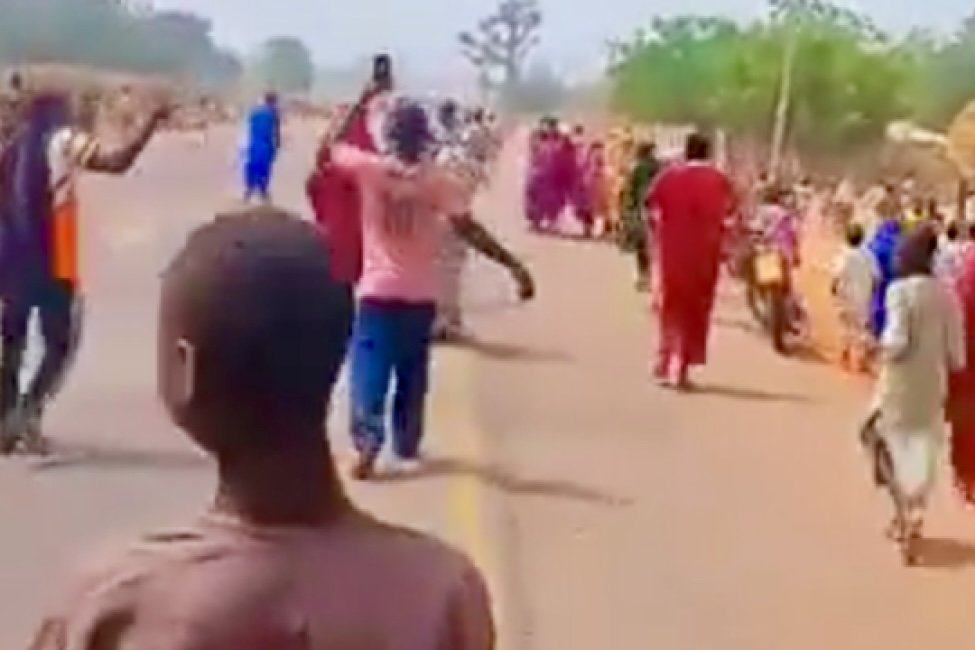
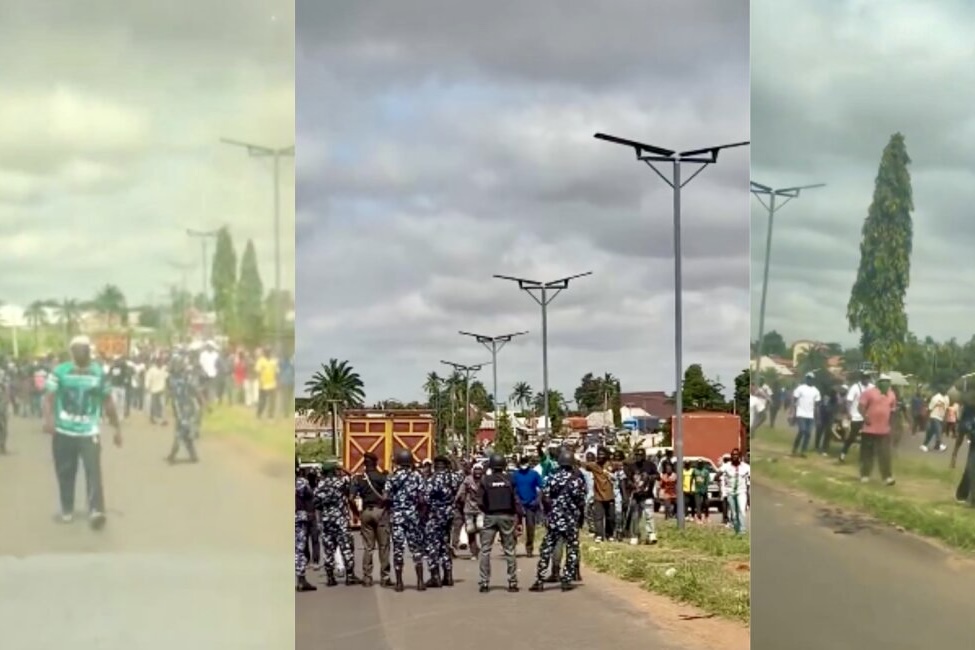
On Tuesday, September 8, 2026, the convoy of Peter Obi, presidential candidate of the Nigeria Democratic Congress (NDC), was reportedly stopped along the Boko/Gboko Road axis after his arrival in Benue. Videos circulated by members of his team showed people blocking the road and pursuing vehicles associated with the convoy. Some reports described those involved as suspected thugs, while The Punch described them as protesters chanting, “We don’t want Peter Obi”.
That is an important distinction.
At the time of reporting, the evidence establishes that Obi’s movement was obstructed, but the claim that the people involved were politically sponsored thugs, or that they were acting on the instructions of the Benue State Government, had not been independently established.
Indeed, Tersoo Kula, Chief Press Secretary to Governor Hyacinth Alia, told TheCable that he was unaware of the incident and rejected the allegation that the state government sponsored thugs.
“Benue government doesn’t do that.”
Obi, however, gave a sharply different account.
“I am in Benue not for a campaign.”
He said he had travelled to commiserate with victims of insecurity and accused political actors of using young people to obstruct his movement. In a separate report, he described the situation as evidence of how far Nigerian politics had deteriorated and called for a politics centred on unity.
The competing accounts make the incident less, not more, significant. Nigeria now needs to know who organised the blockade, why the road was occupied, whether the demonstrators were spontaneous or mobilised, who authorised their presence, and why security personnel on the scene were unable to prevent the confrontation from escalating.
Why this is an economic story, not just a political story
The most important question is not only whether Peter Obi was obstructed.
It is what repeated episodes of this kind do to a state that is desperately trying to attract capital, create jobs and transform an agriculture-led economy.
Remarkably, only a day before the convoy controversy, Governor Alia was at the Benue 2035 Economic Transformation, Capital Formation and Prosperity Summit in Makurdi, where he urged stakeholders to develop practical strategies for investment and job creation.
His message was explicitly economic.
“Potential, by itself, does not transform a society.”
The governor said Benue must convert opportunity into investment, investment into productive activity and productive activity into jobs and higher incomes. The summit itself focused on security and justice, capital formation, agriculture, infrastructure, logistics, technology, artificial intelligence and human capital.
That creates an uncomfortable contradiction.
You cannot market Benue aggressively to investors in the conference hall while investors, traders, farmers, transport operators and political visitors are worrying about whether roads are secure enough to travel.
Capital follows confidence.
The first bill could land on small businesses
For a trader in Makurdi, Otukpa or elsewhere in Benue, political unrest is not an abstract constitutional issue.
A blocked road means customers arrive late. Deliveries are delayed. Vehicles consume more fuel while taking alternative routes. Perishable goods can spoil. Workers may refuse to travel. Meetings are cancelled. Shops close earlier.
A larger security problem compounds those costs.
A 2026 academic study of Ukum Local Government Area found that recurrent kidnapping disrupted farming, obstructed trade routes, displaced farmers, reduced labour availability and discouraged agricultural investment. The researchers concluded that insecurity was undermining agricultural production, rural livelihoods and food security.
That is the economic chain reaction Nigeria repeatedly underestimates:
insecurity → restricted movement → higher operating costs → weaker trade → lower investment → fewer jobs → greater household hardship.
For Benue, the danger is particularly serious because agriculture is central to its economic potential.
A farmer cannot harvest profitably if workers are afraid to enter farms. A transporter cannot run efficiently when routes become unpredictable. A processor cannot operate at full capacity if raw materials are difficult to move. And a financier becomes more cautious when repayment depends on economic activity taking place in an unstable environment.
Political risk can quietly freeze investment
There is a second danger, and it is less visible.
Businesses do not always announce when they lose confidence in a market. They simply postpone decisions.
A factory expansion can be delayed.
A warehouse project can be moved elsewhere.
A farmer can reduce acreage.
A logistics company can avoid a route.
A hotel can decide against investing in a new property.
A venture capitalist can demand a higher return before committing funds.
A 2026 study of Nigerian listed non-financial companies covering 2007–2023 found that corporate investment declined significantly in election years, with election uncertainty exerting an independent negative effect on capital expenditure.
That finding gives the Benue incident a wider significance.
The country is already entering an extended 2027 election cycle. Presidential and National Assembly elections are scheduled for January 16, 2027, according to the current INEC schedule, with campaigns already under way.
Investors are therefore not merely watching inflation, interest rates and exchange rates. They are also watching political stability.
Nigeria has already seen this movie
The current incident should not be examined in isolation.
ACLED’s analysis of Nigeria’s 2023 election found that violence involving political supporters had repeatedly increased around election cycles since 1999. It recorded more than 200 violent events involving party members and supporters in the 12 months preceding the 2023 election, with nearly 100 reported fatalities from those incidents.
The organisation also found that intimidation, attacks on political actors, criminal gangs and local armed groups could interact with existing security crises to increase electoral risk.
The lesson for business is simple: political violence rarely stays inside the political arena.
It spills into transport.
It affects markets.
It changes where people work.
It raises security costs.
It discourages investment.
And ultimately, it reduces the number of productive opportunities available to young Nigerians.
The irony of the 2027 election economy
There is another side to this story.
Nigeria’s election is becoming a huge economic ecosystem.
INEC says it plans to deploy about 1.4 million ad hoc personnel for the 2027 general election, with approximately 707,384 corps members required for each of the presidential/National Assembly and governorship/State Assembly exercises.
That means the election cycle will create demand for thousands of businesses and workers across the country.
Political parties, candidates, civil-society organisations, media houses and election-related contractors will need people for logistics, printing, branding, photography, videography, event management, transport, accommodation, catering, communications, software, data analysis, social-media management, public relations and security-related services.
But there is a crucial distinction between an election economy and a healthy economy.
If violence rises, some of the money generated by elections will simply be diverted towards protection, escorts, insurance, rerouting, emergency logistics and damage control.
That is money that could otherwise create productive employment.
The jobs opportunity hidden inside the crisis
There is, however, an opportunity for Nigerians who are positioning themselves correctly for the next 12 months.
The demand for election-related services will almost certainly expand as the 2027 contest intensifies.
Young Nigerians with practical skills in digital communications, video editing, social-media management, graphic design, data analysis, polling research, event logistics, transport coordination, cybersecurity and fact-checking are likely to find opportunities around campaigns, media organisations, civil-society groups and election-support programmes.
Security concerns may also increase legitimate demand for professionals in risk assessment, event security planning, route planning, emergency response, communications and business continuity.
But this opportunity should not be confused with the criminal economy surrounding elections.
There is a dangerous parallel market in political thuggery, intimidation and mobilisation of vulnerable young people.
That is not a sustainable jobs strategy.
Nigeria’s real opportunity is to turn election spending into formal work — paying young Nigerians to provide lawful services rather than recruiting them into violence.
Obi’s own campaign message is now under scrutiny
The incident also lands awkwardly against Obi’s political message during his recent tour.
On September 7, he said Nigerians he met in Kogi, Benue and Enugu repeatedly raised concerns about insecurity, unemployment, hospitals, schools and poverty.
He said:
“They seek security in their communities, meaningful employment opportunities for our youths…”
Those concerns are precisely why political stability matters economically.
A young man who cannot travel safely to work does not merely have a security problem. He has an income problem.
A farmer who abandons a farm because of violence has an employment problem.
A trader who cannot move goods has a cash-flow problem.
A manufacturer that delays expansion because of uncertainty has a hiring problem.
And a state unable to convince investors that its roads, people and assets are secure has a capital-formation problem.
The peace accord now faces its first serious test
The timing is particularly striking.
On August 19, presidential candidates and major political parties signed a National Peace Accord ahead of the 2027 elections. The agreement was intended to discourage violence, intimidation and inflammatory rhetoric.
INEC Chairman Joash Amupitan urged politicians to make the campaign a:
“marketplace of ideas” rather than a “theatre of war”.
Peter Obi was among those who signed the accord and said no Nigerian should lose his or her life because of an election.
Less than three weeks later, the Benue incident has put those promises under pressure.
The test now is not whether politicians can sign peace documents in Abuja.
The test is whether local political actors, supporters and security agencies can enforce those principles on ordinary roads in Nigerian towns.
A previous warning was already on record
There is also a history between Obi and the Benue authorities that makes the latest confrontation politically sensitive.
In April 2025, Obi said a planned humanitarian visit to Benue was stopped after the state government warned against high-profile visits without prior approval. Obi later questioned how information about his itinerary had reached the authorities after being shared with his security team and the governor’s aide.
That earlier dispute does not prove anything about Tuesday’s incident.
But it means the latest confrontation arrives on top of an existing disagreement over access, political activity and official authority.
That is precisely why an independent investigation is necessary.
What happens next could affect more than Obi
The Federal Government and security agencies now have a straightforward responsibility: establish the facts.
Who organised the road blockade?
Were the people there protesters, political supporters or hired thugs?
Was anyone acting on behalf of a political organisation?
Were threats made?
Were objects thrown at vehicles?
Were police officers deployed before or after the confrontation began?
Why was the convoy unable to proceed?
Did anyone sustain injuries or suffer property damage?
And, critically, did anyone in authority order the obstruction?
The answers matter because the target is bigger than one politician.
The real asset at risk is Nigeria’s political and economic confidence.
The World Bank’s April 2026 Nigeria Development Update says macroeconomic stability has been improving, but household incomes have yet to recover fully and poverty remains high. It argues that Nigeria now has an important opportunity to convert stabilisation into wider economic opportunity and stronger productivity.
That opportunity becomes much harder to realise when insecurity and political intimidation raise the cost of doing business.
The real price of political violence
Nigeria has spent years discussing electoral violence as though it were merely a democracy problem.
It is also a finance problem.
Every violent road blockade carries a possible bill.
Every damaged vehicle is a cost.
Every cancelled business trip is lost revenue.
Every frightened investor is potential capital that may never arrive.
Every farm abandoned because of insecurity is lost output.
Every young person recruited into political violence is one less person developing a productive livelihood.
And every community where politics becomes dangerous becomes a more difficult community in which to build a business.
That is the hidden price of the Benue confrontation.
The immediate question is whether Peter Obi was deliberately targeted.
The bigger question is whether Nigeria can enter the 2027 election without allowing political competition to become another source of economic insecurity.
Benue’s leaders have said they want to convert the state’s potential into investment, jobs, productive activity and prosperity.
The political class now has an opportunity to prove that those words mean something.
Because investors can wait.
Young people cannot.
Follow us on our broadcast channels today!
- WhatsApp: https://whatsapp.com/channel/0029VawZ8TbDDmFT1a1Syg46
- Telegram: https://t.me/atlanticpostchannel
- Facebook: https://www.messenger.com/channel/atlanticpostng