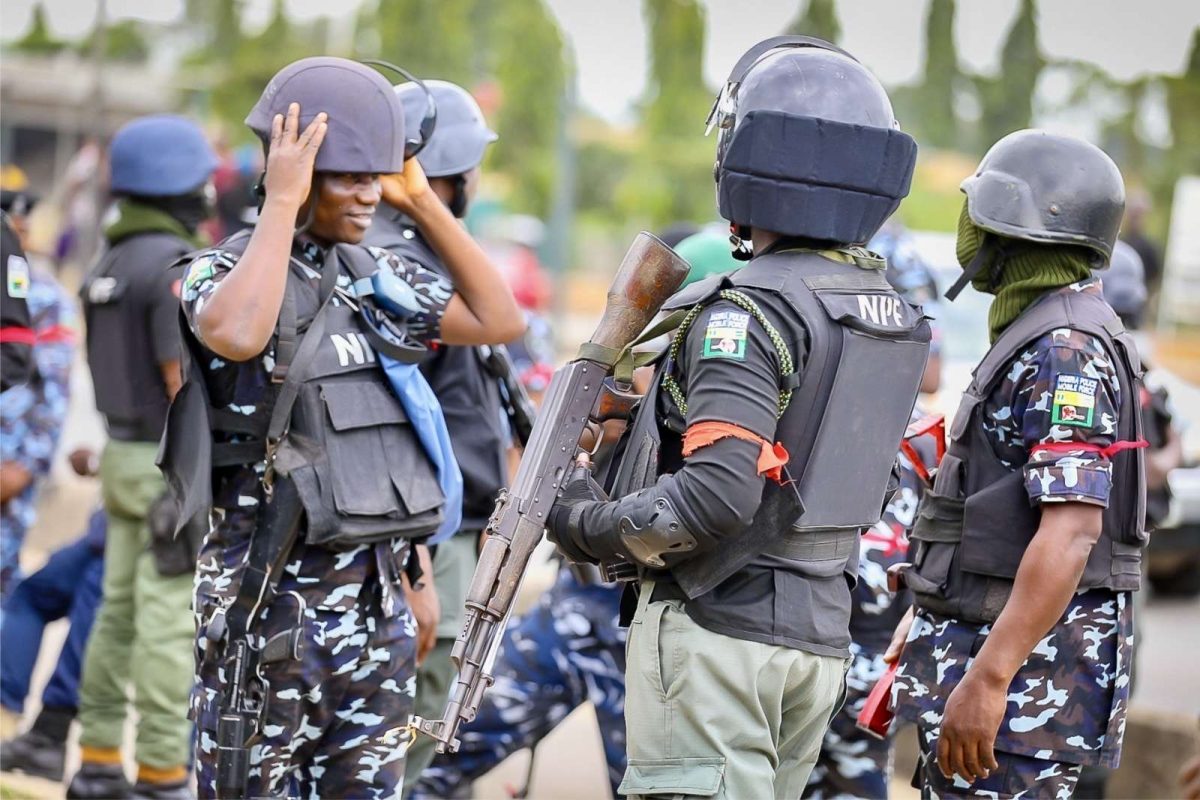
Workers at the Police Service Commission say allowances for the 2022 and 2023 elections remain unpaid. Management blames unreleased Federal Government funding, as the threat of an indefinite strike raises fresh questions about accountability and the preparation of Nigeria’s next elections.
Nigeria’s Police Service Commission (PSC), the federal institution responsible for overseeing appointments, promotions and disciplinary control within the Nigeria Police Force, is facing an industrial crisis of its own.
Workers have threatened an indefinite strike over unpaid allowances dating back to the 2022 Ekiti and Osun governorship elections and the 2023 general elections. Their complaints extend beyond election assignments to outstanding payments for official journeys, police recruitment exercises, training activities and other administrative duties.
The dispute presents an uncomfortable question for an institution expected to hold police officers accountable: who ensures accountability within the organisation responsible for policing the police?
The workers, represented by their unions, have given the commission’s management seven days to settle their outstanding entitlements. A notice dated 10 November warned that an indefinite industrial action would follow if their demands were not addressed.
With the seven-day period approaching its expiry as of Monday, 16 November, the dispute is becoming increasingly urgent. Its timing is particularly significant because Nigeria is approaching another general election, with the presidential and National Assembly elections scheduled for 16 January 2027.
The crisis is therefore about more than outstanding staff allowances. It raises questions about the government’s capacity to finance the institutions responsible for ensuring professional conduct and accountability during elections.
A watchdog caught in its own accountability dispute
The grievances were formally outlined in a communique issued on 5 November following a meeting of the Joint Union Congress of the PSC Unit, held on 2 November at the commission’s headquarters in Jabi, Abuja.
The document was signed by representatives of the Association of Senior Civil Servants of Nigeria and the Nigeria Civil Service Union.
The unions identified several outstanding liabilities, including allowances for the 2022 Ekiti and Osun governorship elections, the 2023 general elections, official trips, the Police Academy, the 2016 police recruitment exercise, the Departmental Selection Board and the 2025 Police Constable medical screening.
Some employees are also demanding outstanding balances of their first 28 days’ payment.
For workers who say they have waited several years for money owed to them, the unresolved claims have become a serious welfare issue.
One aggrieved employee, speaking anonymously to PUNCH, described the financial difficulties encountered by staff deployed for election assignments.
“Some borrowed money to get the work done,” the employee said, questioning why the commission had not settled the outstanding payments despite preparations for another general election.
The allegation is particularly troubling because the PSC’s election-monitoring responsibilities are not merely ceremonial.
Ahead of the 2023 general elections, the commission announced plans to deploy staff monitors to all 774 local government areas to observe police officers’ conduct during election duties. Its stated objective was to ensure compliance with established rules of engagement and provide a mechanism for accountability where officers committed misconduct.
A report published in March 2023 also documented complaints from PSC employees who said they had been stranded in different states following election assignments because they had not received their allowances. Some reportedly struggled to return to their regular duties.
The significance of this history is difficult to ignore. The latest dispute suggests that complaints over election-related payments have persisted long after the 2023 elections.
Management blames unreleased government funding
The PSC has rejected suggestions that funds intended to settle the outstanding liabilities were diverted to purchase official vehicles.
Commission spokesman Torty Kalu acknowledged that workers had not received their allowances for the 2022 Ekiti and Osun elections and the 2023 general elections.
However, he maintained that the commission had not received the Federal Government intervention funding intended to clear the accumulated debts.
He also explained that money released for the commission’s regular operations was tied to specific responsibilities, including disciplinary and promotion matters.
According to him, diverting those allocations to settle historical liabilities could undermine the commission’s ability to perform its current statutory duties.
Kalu said:
“The intervention money to clear those outstanding debts has not been paid.”
He also rejected the allegation that funds approved for the workers’ allowances had been channelled into vehicle purchases, describing the claim as false.
The spokesman said the commission’s secretary had repeatedly visited the Accountant-General’s budget office to pursue the release of the outstanding intervention funding.
He added that the board had appealed to employees to exercise patience while efforts continued to secure the money.
This response introduces an important distinction in the dispute.
The unions are questioning whether funding previously sought for the payment of staff liabilities has been properly accounted for. Management insists that the expected intervention money has not been released.
These are competing accounts, and neither should be treated as established fact without documentary evidence.
The commission needs to clarify how much it owes, how much funding it requested, whether any approval was granted, how much was released and when the outstanding liabilities are expected to be settled.
Without these details, workers and taxpayers are left with competing explanations but no clear picture of the financial position.
The controversy over new vehicles and staff welfare
The unions have also questioned the commission’s reported purchase of 2026-model vehicles while outstanding staff entitlements remain unpaid.
Their concern is not simply that the organisation is acquiring vehicles. It is that management appears capable of undertaking certain expenditure while employees continue to complain about unpaid claims and inadequate working conditions.
The workers have raised concerns about the condition of offices, particularly facilities in Wing B of the commission’s building, which they allege lack adequate protection against extreme heat.
They have also complained about unreliable staff buses, including vehicles that reportedly continue to break down despite repeated repairs and engine replacements.
Other grievances include delays in implementing revised Duty Tour Allowance rates for official training within the Federal Capital Territory, unequal access to training opportunities and alleged non-compliance with a Head of the Civil Service of the Federation circular concerning welfare packages for civil servants at least twice annually.
The unions further complained about outstanding welfare benefits from the previous year and sought an upward review of allowances paid to National Youth Service Corps members attached to the commission.
They also alleged a lack of transparency in financial decisions and the exclusion of some directors and heads of departments from important management discussions.
These claims require separate investigation. The commission’s spokesman addressed the outstanding funding and vehicle allegations in his reported response, but the available account does not provide detailed management answers to the broader complaints about office conditions, transport, training and staff welfare.
The vehicle controversy also requires a documentary answer rather than speculation.
The PSC should publish the relevant procurement details, including the number and cost of vehicles acquired, the funding source and the applicable budgetary approvals.
Such disclosure would help establish whether the purchases were funded independently of the intervention money being sought for staff liabilities.
Why the dispute matters ahead of the 2027 elections
The timing of the threatened strike is particularly sensitive.
According to the Independent National Electoral Commission’s official election calendar, Nigeria’s presidential and National Assembly elections are scheduled for 16 January 2027, while governorship and State House of Assembly elections are scheduled for 6 February 2027.
The PSC is not the electoral commission responsible for organising or conducting elections. That responsibility belongs to INEC.
Nevertheless, the Police Service Commission has an important supporting role in ensuring that police officers deployed for election security operate within the law.
Its constitutional responsibilities include appointments, promotions and disciplinary control over police personnel, excluding the Inspector-General of Police. Its published 2023 election plans also demonstrate its role in monitoring police conduct during electoral operations.
An indefinite strike would not automatically cancel the elections or suspend the operational duties of the Nigeria Police Force.
However, depending on its extent and duration, it could affect administrative functions, promotion and disciplinary processes, recruitment-related activities and the organisation of staff-monitoring assignments.
That possibility deserves attention well before another election cycle places additional demands on the institution.
There is also a broader institutional concern.
Election security depends not only on deploying police officers but also on having credible mechanisms for identifying misconduct, receiving complaints and ensuring that erring personnel face appropriate disciplinary action.
If the staff expected to support those mechanisms are unable to carry out official assignments because they are financing them personally, the credibility of the oversight structure becomes a legitimate concern.
The unanswered financial questions
The immediate dispute cannot be resolved through appeals for patience alone.
The Federal Government needs to clarify whether the intervention funding was approved, whether it has been released and which government office is responsible for any outstanding delay.
The PSC management, in turn, needs to provide a comprehensive schedule of liabilities and a transparent payment plan.
The unions must also distinguish between claims already verified by the commission and those awaiting administrative confirmation. This would make it easier to establish the actual amount owed and prevent the dispute from being reduced to competing generalisations.
Most importantly, the commission should demonstrate that inherited financial obligations are being treated as institutional responsibilities rather than problems that disappear whenever management changes.
The unions captured this argument in their November correspondence with a simple declaration: “Leadership is a continuum.”
The point is difficult to dismiss. A change of chairman, board or management team does not ordinarily erase legitimate liabilities incurred by the institution.
At the same time, the management’s argument about restricted budget allocations raises another question: why have years of outstanding claims not been properly funded and resolved through the government’s budgeting and accounting processes?
Those responsible for public expenditure must provide answers.
Nigeria cannot afford an election oversight crisis
The PSC dispute exposes a problem that goes beyond the immediate demands of federal civil servants.
Nigeria regularly invests considerable political attention in election timetables, security deployments, technology and the conduct of political parties. Yet the institutions expected to enforce professional standards within the security architecture must also be adequately funded and properly managed.
The treatment of PSC employees is therefore part of a larger accountability question.
Allowances owed for official assignments should not become personal debts that workers must finance through private borrowing. Nor should outstanding liabilities be allowed to accumulate across successive managements without a transparent settlement mechanism.
An effective oversight institution must have both the authority and the administrative capacity to perform its responsibilities.
The PSC now has an opportunity to resolve the dispute before it becomes a larger institutional embarrassment. The government must clarify the status of the intervention funding, management must disclose the liabilities and the unions must be given a credible timetable for payment.
The next general election is approaching. Nigeria needs an adequately functioning police oversight commission, not an institution paralysed by unresolved disputes over the cost of doing its own work.


Join the debate; let’s know your opinion.