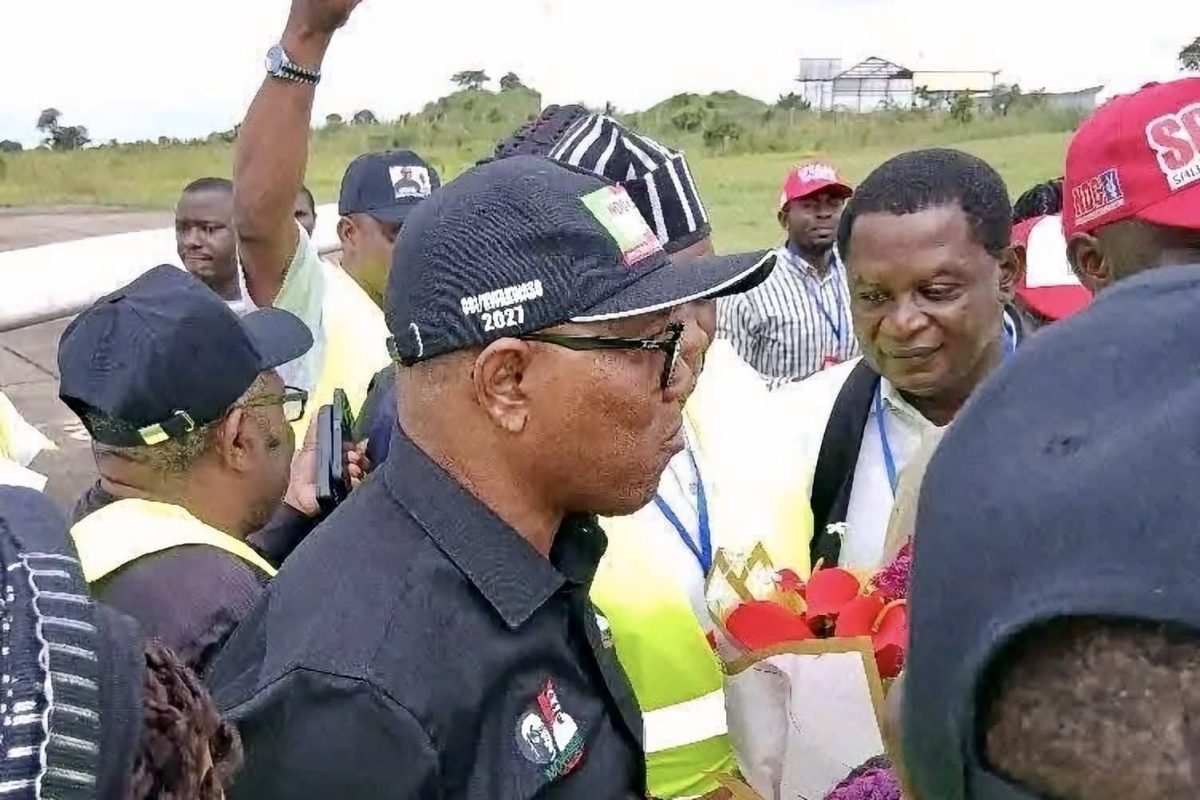
As police investigate the blockade of Peter Obi’s convoy in Benue, the incident exposes a wider economic problem: when political tension spills onto roads, businesses, workers, investors and ordinary commuters pay the price.
The arrest that has opened a bigger economic question
The Benue State Police Command has arrested 46 people over the obstruction of Peter Obi’s convoy along the Makurdi-Gboko federal highway, turning what began as a political confrontation into a wider test of public safety, freedom of movement and the cost of instability to the local economy.
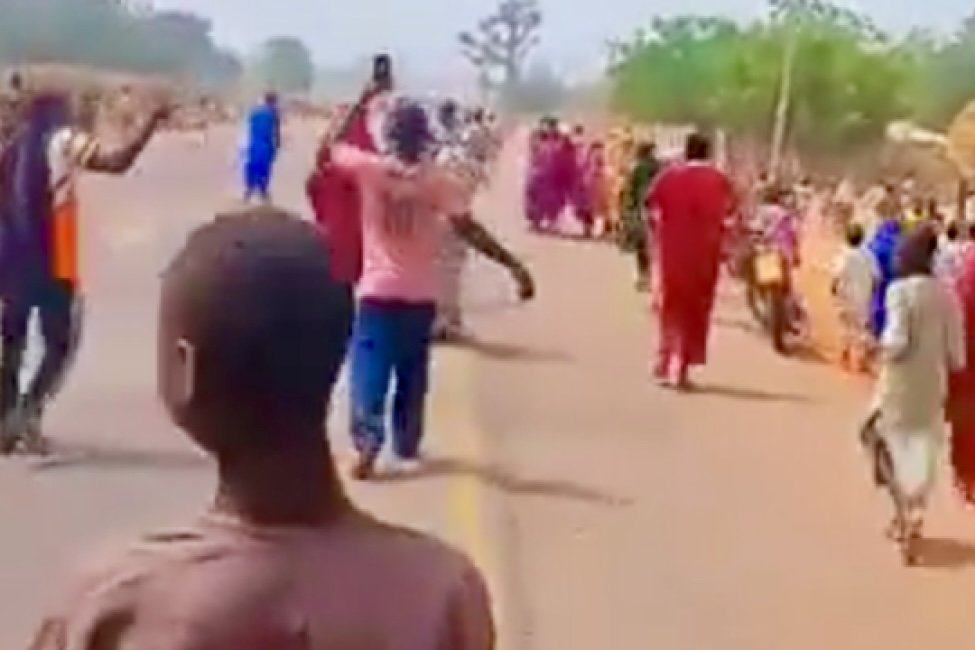
The arrests followed Tuesday’s incident, when youths reportedly mounted a roadblock close to the airport and stopped the convoy as Obi travelled towards Yelewata.
The Nigeria Democratic Congress presidential candidate said he was in Benue to show solidarity with families affected by the deadly 2025 violence in Yelewata. The police said the visit had been communicated to the command and that three police escort vehicles led by an Assistant Commissioner of Police had been deployed.
But the security operation became complicated when the group blocked the road.
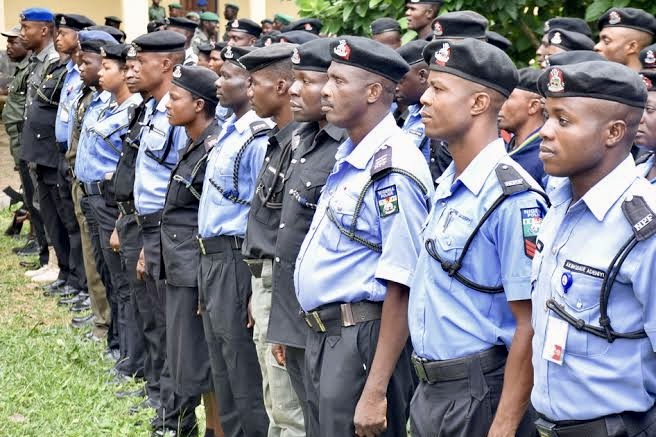
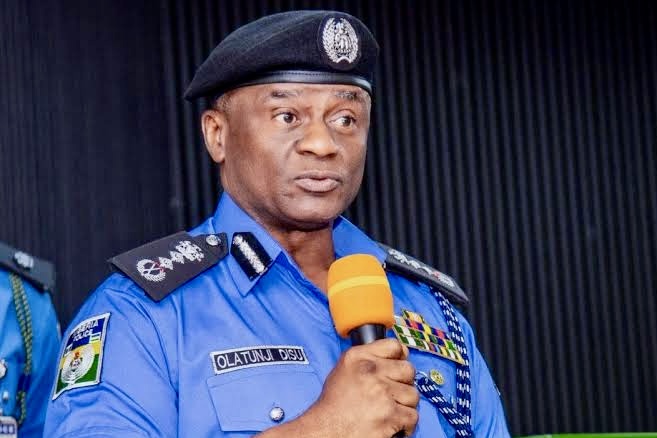
Benue Commissioner of Police Cletus Nwadiogbu said police initially avoided using force because of the danger of deaths and property destruction. He said intelligence-led operations were launched afterwards and that undercover personnel were deployed to identify those involved.
“Key arrests have been made,” Nwadiogbu said, adding that efforts were continuing to apprehend others connected with the incident.
He also stressed a principle with direct economic consequences: “No individual or group has the right to obstruct another person’s movement unlawfully.”
That sentence goes well beyond the political argument over Peter Obi.
For traders, farmers, transport operators, logistics companies and employees travelling between communities, an obstructed road is not merely a political inconvenience.
It is lost time.
It is delayed delivery.
It is additional fuel consumption.
It is missed appointments and disrupted trade.
And when road blockades become normalised, businesses begin pricing insecurity into their operations.
Why a political roadblock becomes a business problem
The Makurdi-Gboko route is not an isolated political pathway. It is part of a road network serving one of Nigeria’s major agricultural states.
Benue is widely regarded as Nigeria’s food basket, and the state is trying to attract new private investment into agriculture. In July, the state government announced an agricultural partnership expected to attract about ₦25 billion into soybean production, irrigation, integrated agriculture, out-grower schemes, value addition, research and vocational training.
That investment story depends on something more basic than finance.
People must be able to move.
Farm inputs must reach producers.
Farmers must reach their farms.
Produce must reach markets.
Workers must reach factories.
Trucks must move without facing arbitrary stoppages.
Benue’s own development plan acknowledges that transportation has a catalytic effect across the economy and identifies better transport infrastructure and services as essential to growth, jobs and livelihoods.
This is why a road blockade, even one lasting only hours, carries a larger economic meaning than the immediate political dispute.
The danger is not necessarily the financial value of this particular disruption.
The danger is repetition.
Insecurity is already hurting the opportunity economy
Benue is not starting from a position of economic calm.
Research published in 2025 found that insecurity had significantly reduced agricultural output in the state, with the study estimating that a one per cent increase in insecurity was associated with declines of about 0.211 per cent in crop output and 0.311 per cent in livestock output.
Another 2025 study found widespread exposure to conflict among farming households in Benue and linked farmer-herder violence to lower crop yields and damaged livelihoods.
The implications extend beyond farmers.
When production falls, processors have less raw material.
When transport becomes riskier, logistics costs rise.
When traders anticipate shortages, prices can increase.
When employers worry about security, expansion becomes more difficult.
When investors see uncertainty around movement and public order, they demand a higher return for taking the risk.
In that environment, the political dispute surrounding Obi’s visit becomes another layer of operational uncertainty.
It does not prove that investors will pull money out of Benue.
But it does reinforce the risk factors that investors watch.
The police response may create another market for jobs
There is also a less obvious side to the story.
The approach of the 2027 elections is likely to increase demand for legitimate security and risk-management services.
Businesses organising conferences, political events, public meetings, media activities, transport operations and large gatherings will need better planning.
That can translate into more demand for trained security personnel, drivers, event safety officers, first-aid teams, communications staff, surveillance operators, digital monitoring specialists, risk advisers and logistics coordinators.
The opportunity is not in political violence.
It is in prevention.
A growing election-security market could create legitimate work for young Nigerians trained in crowd management, emergency response, route planning, intelligence analysis, cyber monitoring and event security.
Companies with the capacity to provide those services legally and professionally could find a growing market as political activity intensifies.
That market will be especially important because electoral tension is no longer confined to voting day.
The International Republican Institute said in August that Nigeria’s 2027 elections face challenges including economic hardship, insecurity and declining confidence in political institutions. Its president, Daniel Twining, warned that violence and intimidation should not replace peaceful democratic competition.
Nigeria’s own electoral commission has described the 2027 election as a major logistical and security test. Following the enactment of the Electoral Act 2026, INEC revised its timetable. Its current website lists the presidential and National Assembly election for 16 January 2027, with the governorship and State House of Assembly elections scheduled for 6 February 2027.
That leaves businesses with little room to ignore election-related security planning.
The political dispute is still unresolved
The most important unanswered question in Benue is not whether 46 people were arrested.
It is who organised the blockade, why it happened and whether the people involved acted independently or on behalf of political actors.
The police say the investigation is continuing and that key leaders are still being tracked.
Obi and supporters have accused people linked to the state government of orchestrating the obstruction.
The Benue State Government has rejected that allegation.
Governor Hyacinth Alia’s Chief Press Secretary, Tersoo Kula, said the government had no knowledge of the action and insisted that the administration did not “engage, patronize, or deploy thugs as instruments of governance or security.”
The government has also suggested the episode could be connected to internal political disputes within the NDC.
Those competing claims remain allegations.
The available evidence establishes that the road was blocked, that police were present, that the convoy was unable to continue and that 46 people have been arrested.
It does not yet establish who ordered or financed the blockade.
That distinction matters.
A serious investigation should therefore follow the evidence trail: statements from the arrested suspects, telephone records where lawfully obtained, CCTV and video footage, police operational logs, intelligence reports, vehicle movements and the identities of those allegedly leading the youths.
Why businesses should pay attention now
For employers and investors, the lesson is straightforward.
Security is an operating cost.
It affects the cost of moving products, protecting employees, insuring assets and maintaining business continuity.
A company operating in a politically tense area may have to spend more on secure transport, route assessment, communications, contingency planning and emergency response.
Small businesses are even more exposed because they usually cannot afford professional risk-management systems.
A shopkeeper cannot easily absorb a day’s lost sales.
A farmer cannot easily absorb a missed market window.
A transporter delayed on a strategic road still burns diesel.
A worker who cannot safely reach a workplace still loses income.
These are small individual losses.
Repeated across thousands of businesses, they become an economic problem.
The opportunity is in making normal business possible
The deeper economic issue raised by the Obi convoy incident is therefore not Peter Obi himself.
It is whether Nigeria can keep political competition from damaging the everyday systems that allow people to earn a living.
Benue is attempting to attract billions of naira into agriculture and value-added production while continuing to battle insecurity that threatens farms, transport routes and household incomes.
That creates a clear opportunity for government and the private sector.
Safer roads.
Professional event-security companies.
Technology for route monitoring.
Emergency transport services.
Digital misinformation monitoring.
Insurance products built around business interruption and political-risk exposure.
Training for security and emergency-response workers.
More reliable logistics.
Those are not glamorous election promises.
They are the infrastructure of an economy that can function despite political competition.
The police investigation into the 46 arrests will determine criminal responsibility.
The larger test belongs to Nigeria’s political system.
Can candidates campaign freely without turning highways into battlegrounds?
Can state authorities protect opponents without being accused of partisan interference?
Can security agencies act early enough to prevent confrontation without appearing passive?
And can businesses continue to move goods, workers and money while the country enters one of its most politically intense periods in years?
Those questions matter far beyond Peter Obi and Benue.
They go directly to whether Nigeria’s next election cycle becomes a marketplace of ideas and investment — or another period in which insecurity quietly raises the price of doing business.
Reporting note: Allegations that the Benue State Government sponsored the blockade have not been independently established. The police investigation remains ongoing.
Follow us on our broadcast channels today!
- WhatsApp: https://whatsapp.com/channel/0029VawZ8TbDDmFT1a1Syg46
- Telegram: https://t.me/atlanticpostchannel
- Facebook: https://www.messenger.com/channel/atlanticpostng