By Peter Jene, Senior National Correspondent
Chaos Unfolds in Southeast Nigeria Over Alleged IPOB Sit-at-Home Order

In an alarming twist of events, Southeast Nigeria is embroiled in a heightened state of panic and uncertainty following an alleged sit-at-home directive declared for Monday and Tuesday, October 21 and 22, 2024. This so-called order, which has been circulating via voice notes and videos on social media, has sent shockwaves through the region, disrupting normal life and stirring up fresh fears of violence. However, the Indigenous People of Biafra (IPOB), often at the centre of such events, has categorically denied any involvement in the declaration, labelling it the handiwork of “criminal elements” and “Finland-based infiltrators.”
While IPOB’s leadership seeks to calm the rising tension, the damage to the Southeast’s fragile social fabric appears to be underway, as official and unofficial engagements in Anambra and other states are already grinding to a halt. The sit-at-home saga raises fresh questions about security in the region, the ongoing instability surrounding the pro-Biafran movement, and the real motive behind the people spreading these false directives.
Unfounded Orders and the Ripple Effect of Fear
In the days leading up to October 21 and 22, a storm of misinformation took over the airwaves and social media platforms, feeding into deep-seated fears of instability and lawlessness in the Southeast. A widely circulated voice note warned residents that they must remain indoors on those dates, or face violent retribution for defying the sit-at-home mandate. The threat, delivered in ominous tones, declared the directive as “sacrosanct” and threatened unspecified actions against those who failed to comply.
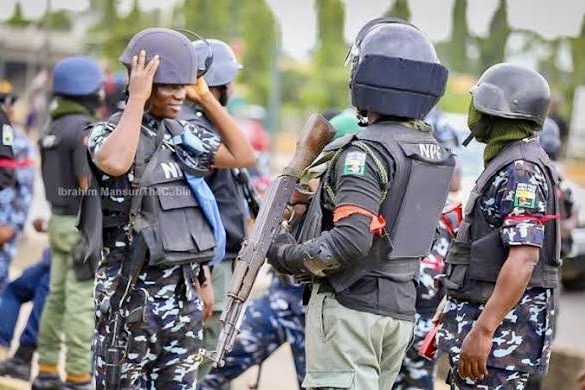
The fallout was almost instantaneous. In Anambra State, many government offices, courts, schools, and markets responded to the rumours by taking swift precautions. Scheduled court cases were rescheduled in anticipation of potential unrest, schools closed their doors for security reasons, and market patrons rushed to engage in last-minute buying to avoid being stranded during the alleged sit-at-home. For instance, a prominent school in Onitsha, one of the region’s commercial hubs, issued a public notice informing parents and guardians that school would not be in session on the specified dates due to “circulating threats from IPOB.”
The law courts were not left out either. One court clerk, who spoke on condition of anonymity, confirmed that cases had been rescheduled “since last week” as a precaution against possible violence. “We don’t want a situation where hoodlums might hijack the vehicle transporting suspects from the prisons to the courts,” the source explained. The underlying fear of criminal elements hijacking the situation appears to be a significant reason why the Southeast’s fragile peace hangs in the balance.
IPOB Responds: “Ignore the False Sit-at-Home Order”
In the face of growing chaos, IPOB’s leadership stepped forward to denounce the purported sit-at-home directive. Emma Powerful, the spokesperson for the Indigenous People of Biafra, condemned the order in no uncertain terms. In a telephone interview with our correspondent, Powerful reiterated that the pro-Biafran group had no hand in the circulating threats, dismissing the rumours as a desperate move by criminal infiltrators bent on exploiting IPOB’s name for personal gain.
“We urge our people to ignore the order and go about their normal business on those days. IPOB did not declare any sit-at-home on October 21 and 22. This illegal order is from criminal elements and Finland-based infiltrators who are not members of IPOB,” Emma Powerful stated.
The group went on to clarify that IPOB had suspended its previous sit-at-home orders, particularly those designed to draw attention to the ongoing detention of its leader, Nnamdi Kanu. “Biafrans must understand that IPOB does not declare unnecessary sit-at-home orders. We have since suspended the practice,” he added.
Powerful’s comments seem to be aimed at dispelling any credibility from the circulating threats, which he argues are being propagated by outsiders masquerading as IPOB members. He specifically pointed fingers at individuals living abroad—most notably in Finland—who, according to IPOB, have hijacked the Biafran cause for personal and criminal motives. “We didn’t want to talk about it again in order to avoid giving undue popularity to the inconsequential order from Finland-based infiltrators,” he concluded.
The Infiltration Problem: Who Is Fuelling These Falsehoods?
One of the key issues raised by IPOB’s denials is the problem of criminal infiltration within the broader pro-Biafran movement. Over the years, the separatist cause has attracted various factions, many of which operate outside IPOB’s formal structure, leveraging the group’s popular support to pursue their own agendas. This has led to a splintering of the pro-Biafran movement, with some rogue actors engaging in acts of violence and intimidation that tarnish IPOB’s image.
The recent chaos caused by the false sit-at-home order highlights how these criminal elements continue to muddy the waters in the Southeast. It remains unclear what motivates these infiltrators, but IPOB’s leadership has often pointed to external influence, particularly from members of the pro-Biafran diaspora.
The reference to Finland-based infiltrators appears to be a thinly veiled jab at Simon Ekpa, a controversial figure in the Biafran independence movement who has often clashed with IPOB’s mainstream leadership. Ekpa, who resides in Finland, has gained notoriety for continuing to call for sit-at-home orders despite IPOB’s suspension of the practice, further complicating the situation for Southeast residents. His insistence on defying IPOB’s central command has led many to accuse him of fuelling unrest in the region from his safe perch abroad.
The Real Cost of the Sit-at-Home Debacle
Beyond the immediate threat of violence, the uncertainty surrounding these sit-at-home declarations has a broader economic and social impact on the region. On the streets of Onitsha, panic-buying and market closures have become the norm in response to such directives, as traders and consumers scramble to secure essential goods before the lockdown takes effect.
Furthermore, the consistent disruption to education in the region has long-term implications. Schools are repeatedly forced to shut down as parents fear sending their children out during days of unrest. These closures not only affect academic performance but also create a sense of instability that contributes to a generational sense of insecurity.
According to a market woman in the popular Onitsha market, “Every time we hear of sit-at-home, I lose a day’s earnings. We can’t live like this forever; something must be done.” Her sentiment captures the growing frustration among many Southeast residents, who are increasingly caught between fear of violence and the desire for normalcy.
National Security Concerns: Where Is the Government?
The unfolding situation in the Southeast raises pressing questions about the Nigerian government’s ability to maintain law and order in a region that has been grappling with separatist sentiment for decades. The Buhari administration, which saw Nnamdi Kanu’s arrest and detention as a triumph of law enforcement, has yet to successfully rein in the violence and criminal activity that often arises from these sit-at-home orders.
This recent episode serves as a reminder of the fragile security landscape in the Southeast, where criminal elements and infiltrators can exploit popular causes for their own ends. The question is: How much longer can the region endure these cycles of unrest without a comprehensive and effective security response from the government?
Conclusion: A Region on Edge
As October 21 and 22 loom, the people of Southeast Nigeria find themselves caught between the warnings of violence from criminal elements and IPOB’s call for calm. The panic generated by these false sit-at-home orders is a stark reminder of the power that misinformation and fear can wield in a region already beset by political instability.
While IPOB distances itself from the chaos, the damage to the Southeast’s fragile stability is evident. The Nigerian government, IPOB leadership, and civil society must come together to address the root causes of this unrest—before the region slips further into lawlessness.
As IPOB has urged, residents are advised to go about their normal activities on October 21 and 22, but it remains to be seen whether calm will prevail in a region that has been anything but calm for years.
A Cycle of Distrust and Disinformation
The recurrence of sit-at-home orders—whether genuine or fabricated—has fostered a deep-seated mistrust within Southeast communities. Many residents, caught between conflicting messages from pro-Biafran factions and the government, are unsure whom to believe. The false narrative around this particular sit-at-home order illustrates how easily misinformation can spread, especially in an environment where communication is dominated by informal channels like social media.
One Onitsha resident, who requested anonymity, expressed frustration at the constant disruptions: “How are we supposed to know who is telling the truth? One minute, we hear that IPOB is calling for a lockdown, and the next minute, they deny it. We are tired of living in fear.”
The proliferation of social media platforms, particularly WhatsApp and Facebook, has made it easier for false information to circulate unchecked. With no central authority to verify or debunk claims in real-time, rumours take on a life of their own, creating an atmosphere of fear that can quickly spiral out of control. The video and voice note spreading this false order is a case in point: despite IPOB’s repeated denials, many still fear the possibility of violence, prompting them to take precautions.
This persistent cycle of distrust is not only a security concern but also an impediment to the socio-economic development of the Southeast. When people are forced to prioritise their safety over economic productivity, the ripple effects can be felt across industries. From markets to schools, hospitals to transportation, each sector is impacted by the spectre of violence, real or imagined.
The Diaspora Influence: Simon Ekpa and the Finland Connection
One of the most intriguing aspects of this ongoing crisis is the role of the Biafran diaspora in fuelling local unrest. IPOB’s spokesperson, Emma Powerful, has explicitly called out “Finland-based infiltrators” as being behind the false sit-at-home orders, a clear reference to Simon Ekpa. Ekpa, a former disciple of IPOB leader Nnamdi Kanu, has emerged as a polarising figure within the Biafran independence movement, advocating for more aggressive tactics, including the continuation of sit-at-home orders.
Since Nnamdi Kanu’s detention in Nigeria, Ekpa has sought to position himself as a key figure in the pro-Biafran struggle. However, his hardline stance has often put him at odds with IPOB’s leadership, particularly after the group decided to suspend sit-at-home orders due to the economic toll they were taking on the Southeast.
From his base in Finland, Ekpa has been accused of fanning the flames of violence while remaining insulated from the consequences. The irony is not lost on Southeast residents, who must bear the brunt of the economic losses and security risks posed by sit-at-home declarations, regardless of whether they are genuine or fabricated.
In interviews and public statements, Ekpa has doubled down on his calls for civil disobedience, arguing that it is necessary to force the Nigerian government to release Nnamdi Kanu and address the grievances of the Biafran people. However, many within IPOB and the broader Southeast community see his actions as counterproductive, accusing him of seeking to exploit the situation for personal gain.
This diaspora-driven factionalism within the Biafran movement underscores a larger problem: the disconnect between those living in the conflict zone and those who advocate for radical measures from afar. While individuals like Ekpa may enjoy the relative safety of their foreign residences, Southeast Nigerians are left to navigate the precarious reality of life under constant threat.
The Nigerian Government’s Role: A Failure of Leadership?
The federal government’s response to the ongoing security challenges in the Southeast has been widely criticised as inadequate. While the Buhari administration made a show of force by arresting and detaining Nnamdi Kanu in 2021, this move has done little to quell the rising tide of violence and criminality in the region. If anything, Kanu’s continued detention has become a rallying point for factions like Ekpa’s, who use it to justify their calls for civil unrest.
Moreover, the government’s heavy-handed approach to dealing with separatist agitation—often deploying military forces to enforce peace—has led to accusations of human rights abuses. In several instances, security forces have been accused of extrajudicial killings, arbitrary arrests, and other forms of brutality against civilians, actions that have only deepened the mistrust between Southeast residents and the central government.
The federal government’s lack of a coherent strategy for addressing the root causes of the conflict in the Southeast, such as political marginalisation and economic deprivation, has also contributed to the ongoing unrest. The pro-Biafran movement, for all its internal divisions, taps into real grievances that have yet to be meaningfully addressed by successive administrations.
Economic Impact: A Region in Decline?
The economic consequences of these repeated sit-at-home orders—whether imposed by IPOB, rogue factions, or criminal elements—are difficult to overstate. The Southeast, traditionally a commercial hub, has seen its economic output severely hampered by the constant disruptions. Onitsha, Aba, and Enugu, once bustling centres of trade, now frequently grind to a halt as residents and businesses shut down in anticipation of violence.
Local traders, many of whom operate on razor-thin margins, are among the hardest hit. In Onitsha’s main market, panic-buying is now a regular feature of life, as residents stock up on essentials ahead of anticipated sit-at-home days. This erratic consumer behavior further destabilises the local economy, as traders are unable to plan for regular business cycles.
The transportation sector has also taken a hit. Many commercial drivers refuse to operate during sit-at-home days, fearing that their vehicles might be targeted by criminals looking to enforce the orders. The result is a paralysed transport network, leaving residents stranded and cutting off access to essential services like hospitals and schools.
Moreover, the prolonged disruption to education in the region has long-term implications. Many students, particularly those preparing for national exams, have had their academic schedules repeatedly interrupted by sit-at-home directives. In the long run, these interruptions will likely have a detrimental effect on the region’s educational outcomes, further entrenching the economic disparity between the Southeast and other parts of the country.
A Call for Leadership: IPOB, the Government, and Civil Society
The current situation in the Southeast is untenable. The region cannot continue to operate under the constant threat of violence and economic paralysis. What is needed now, more than ever, is responsible leadership from all sides.
IPOB, for its part, must work harder to differentiate itself from the criminal elements and rogue factions that seek to exploit its cause. While the group has made efforts to distance itself from the false sit-at-home order, its failure to fully control the narrative has allowed fear and uncertainty to take root. IPOB must do more to communicate with Southeast residents, providing clear and consistent messaging that leaves no room for confusion.
At the same time, the Nigerian government must take a more holistic approach to resolving the crisis. Military force alone cannot address the underlying grievances driving the pro-Biafran movement. Instead, the government must engage in genuine dialogue with Southeast leaders, both political and civil, to address issues of political representation, economic development, and security.
Civil society organisations also have a crucial role to play in mediating the conflict. Community leaders, religious figures, and local business owners must come together to provide a united front against the forces of division. Only through collective action can the Southeast hope to break free from the cycle of violence and misinformation that has plagued it for so long.
Uncertainty Looms Over October 21 and 22
As October 21 and 22 approach, the fate of Southeast Nigeria hangs in the balance. Despite IPOB’s assurances that the sit-at-home order is false, the fear it has generated is palpable. Schools have closed, courts have rescheduled cases, and markets are bracing for the worst. The spectre of violence, whether real or imagined, has once again paralysed the region.
In the end, this crisis is not just about a false sit-at-home order—it is a reflection of the deep divisions and unresolved grievances that continue to define life in the Southeast. Until these issues are addressed, the region will remain vulnerable to the whims of criminal elements and rogue factions, leaving its residents to live in perpetual fear of the next directive.
For now, all eyes are on October 21 and 22, as Southeast Nigeria holds its breath, waiting to see whether calm or chaos will prevail.