The postponed inauguration of a Sharia court in Oyo has ignited a fierce debate, probing Nigeria’s delicate balance of secularism, religious freedom, and unity.
The Controversial Postponement and Its Immediate Fallout
The Supreme Council for Shari’ah in Nigeria’s Oyo State chapter has found itself at the centre of controversy after indefinitely postponing the inauguration of a Sharia court initially scheduled for January 11, 2025. The announcement, signed by the Khadimul Muslimeen of Oyo Kingdom, Imam Daud Igi Ogun, emphasised a message of peace, yet the decision has exposed deep societal fissures and reignited a heated debate over the role of Sharia law in Nigeria’s socio-political landscape.
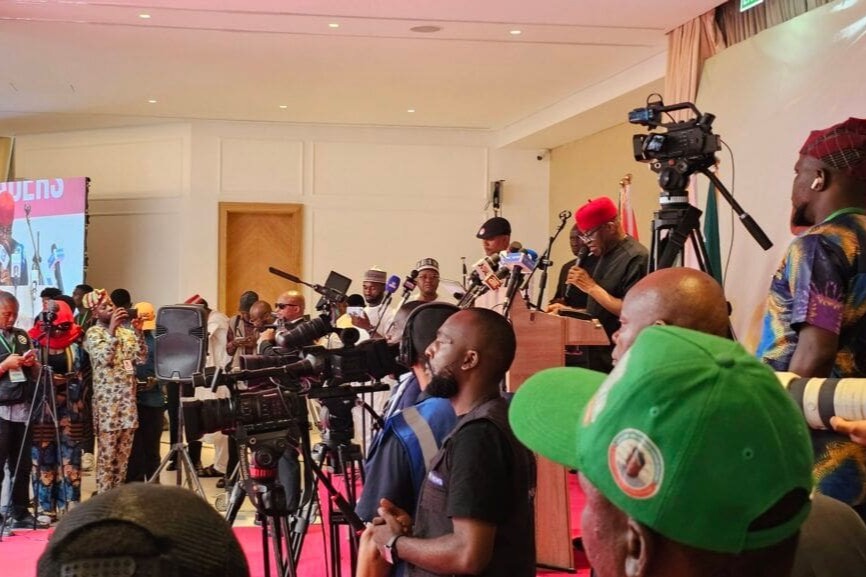
The now-suspended ceremony, planned to take place at the Muslim Community Islamic Center in Oyo, was expected to feature prominent dignitaries. These included the Bashorun of Oyo land, High Chief Yusuf Akinade Olayinka 1, as the Royal Father of the Day, and the Aare Musulumi of Oyo land, Alhaji Tajudeen Kamorise, as the chief host. Despite its intended grandeur, the event quickly courted controversy after a flier announcing the inauguration went viral, drawing both support and vehement opposition.
Public Outcry: A Divided Reaction to Sharia Law Expansion
The initial public reaction to the announcement was polarised. Many netizens, particularly from the southwestern region dominated by the Yoruba ethnic group, expressed strong disapproval. Critics argued that introducing Sharia courts in the South West, a region characterised by religious plurality and secular legal traditions, could threaten the fragile coexistence among religious groups. Others questioned the motives behind the push for Sharia law in a region historically resistant to such religious-centric legal systems.
Social media became a battleground, with hashtags trending both in support of and against the proposed Sharia court. Proponents lauded the initiative as a necessary step for Muslims in the region to resolve disputes in accordance with Islamic law. On the other hand, opponents saw the move as an encroachment on the region’s secular ethos, with some even accusing the organisers of attempting to import northern Nigeria’s predominantly Islamic legal framework into the South West.
The Role of Religious Diversity in the South West
Oyo State, like much of southwestern Nigeria, is a melting pot of religious beliefs. The Yoruba people, who dominate the region, are known for their religious tolerance, with families often comprising members of different faiths—Islam, Christianity, and traditional African religions. This unique dynamic has fostered a largely secular approach to governance and law. The introduction of a Sharia court, however, challenges this delicate balance, raising fears of religious polarisation.
Historically, Sharia law has been confined to the Muslim-majority northern states of Nigeria, where it operates alongside the country’s secular legal system. The push for a Sharia court in Oyo represents an unprecedented expansion into territory where such legal practices have little historical or cultural precedent. This divergence from tradition has fuelled speculation about the underlying motives of the Supreme Council for Shari’ah in Nigeria’s Oyo chapter.
A Strategic Retreat or a Forced U-Turn?
The indefinite postponement of the Sharia court inauguration raises questions about the factors that influenced the decision. Was it a strategic retreat in the face of mounting public opposition, or were there deeper political and social pressures at play? Some analysts suggest that the backlash on social media and from civil society groups may have forced the organisers to reconsider their plans. Others point to potential behind-the-scenes interventions by traditional and political leaders in Oyo, who may have sought to avoid any action that could destabilise the region.
Imam Daud Igi Ogun’s statement, which emphasised that “Islam portrays peace,” appeared to be an attempt to quell tensions. However, the statement did little to address the substantive concerns raised by critics. By sidestepping the debate over the appropriateness of introducing Sharia law in Oyo, the Supreme Council for Shari’ah has left the door open for further speculation and controversy.
The Road Ahead: Navigating a Legal and Cultural Minefield
This postponement, while temporarily defusing tensions, has not resolved the fundamental issues at the heart of the controversy. The debate over the role of Sharia law in a secular and pluralistic society like Nigeria is far from settled. The Oyo Sharia court saga is not just about a postponed inauguration; it is a microcosm of the broader challenges facing Nigeria as it grapples with its dual identity as both a secular state and a deeply religious society.

The Broader Implications and Paths Forward
The postponed inauguration of the Sharia court in Oyo State has ignited a debate that transcends the immediate controversy, probing the very soul of Nigeria’s national identity. This final instalment explores the potential repercussions of this saga on social cohesion, interfaith relations, and governance while offering insights into possible resolutions.
Social Cohesion at a Crossroads
Nigeria’s history is replete with episodes of religious and ethnic strife, underscoring the fragility of its social fabric. The Oyo Sharia court controversy threatens to exacerbate these tensions, particularly in a region celebrated for its religious tolerance. For decades, the South West has been a beacon of interfaith harmony, where Christians, Muslims, and adherents of traditional religions coexist peacefully. The introduction of a Sharia court, however, raises fears that this delicate balance could be disrupted.
Critics argue that the court could serve as a flashpoint for sectarian conflict, especially if its operations are perceived as favoring one religious group over others. Such perceptions could fuel resentment among non-Muslims, potentially sparking protests and deepening mistrust. Even within the Muslim community, there is no consensus on the court’s necessity or appropriateness, reflecting broader divisions over the role of religion in public life.
The postponement of the court’s inauguration provides an opportunity to address these concerns. However, it also risks leaving the issue unresolved, creating a vacuum that could be exploited by extremists or political opportunists. Failure to manage the situation carefully could have long-term consequences, not just for Oyo but for Nigeria as a whole.
Interfaith Relations: A Test of Tolerance
The Oyo Sharia court saga is a litmus test for Nigeria’s interfaith relations. It forces the question of whether the country’s diverse religious communities can coexist peacefully while maintaining their distinct identities and practices. This is particularly challenging in a context where religion is often politicised, fuelling divisions rather than fostering understanding.
Religious leaders have a crucial role to play in defusing tensions and promoting dialogue. Christian and Muslim leaders in Oyo must come together to clarify the purpose and limitations of the proposed Sharia court, addressing misconceptions and building trust. Interfaith forums could provide a platform for such discussions, allowing stakeholders to voice their concerns and seek common ground.
The government, too, has a responsibility to uphold the principles of secular governance while respecting religious freedoms. Clear communication and consistent enforcement of constitutional safeguards are essential to ensuring that the Sharia court operates within its legal boundaries, without infringing on the rights of non-Muslims.
Governance and Federalism: Lessons for Nigeria
The controversy also highlights the challenges of governing a diverse federation like Nigeria. It underscores the need for a more nuanced approach to federalism, one that accommodates regional differences without undermining national unity. This requires a delicate balancing act, as seen in the dual legal system that allows for the coexistence of Sharia and common law.
However, the Oyo Sharia court saga reveals the limits of this model. It exposes the gaps in Nigeria’s legal and constitutional framework, which often leave room for ambiguity and conflict. To address these issues, the government must invest in legal reforms that clarify the scope and application of Sharia law, ensuring that it does not encroach on secular governance or human rights.
Potential Paths Forward
To move beyond the current impasse, stakeholders must prioritise dialogue, transparency, and inclusivity. The following steps could help chart a path forward:
- Public Awareness Campaigns: Educate the public about the legal framework governing Sharia courts, dispelling myths and addressing fears. This could help build understanding and reduce tensions.
- Stakeholder Engagement: Bring together religious leaders, traditional rulers, civil society groups, and government officials to discuss the implications of the Sharia court and explore ways to address concerns.
- Legal Safeguards: Strengthen constitutional protections to ensure that the introduction of Sharia courts does not infringe on the rights of non-Muslims or undermine secular governance.
- Monitoring and Evaluation: Establish mechanisms to monitor the operations of Sharia courts, ensuring transparency and accountability. This could include oversight committees with representatives from diverse religious and ethnic backgrounds.
- Conflict Resolution Mechanisms: Develop frameworks for resolving disputes arising from the implementation of Sharia law, drawing on best practices from other multicultural societies.
Conclusion: A Defining Moment for Nigeria
The postponed inauguration of the Sharia court in Oyo State is more than a local issue; it is a microcosm of Nigeria’s broader struggles with diversity, governance, and identity. It forces the nation to confront difficult questions about the role of religion in public life, the limits of federalism, and the meaning of secularism in a deeply religious society.
Whether this controversy becomes a stepping stone toward greater understanding or a catalyst for division depends on how it is handled in the coming weeks and months. The stakes are high, not just for Oyo but for Nigeria as a whole. This moment calls for visionary leadership, constructive dialogue, and a commitment to the principles of justice and equality.
As the dust settles, one thing is clear: the Oyo Sharia court saga is a defining moment for Nigeria, a test of its ability to navigate the complexities of its diverse identity. The world will be watching, and the lessons learned here could resonate far beyond Nigeria’s borders.
Additional report: Peter Jene, Atlantic Post Senior National Correspondent.