By Editor
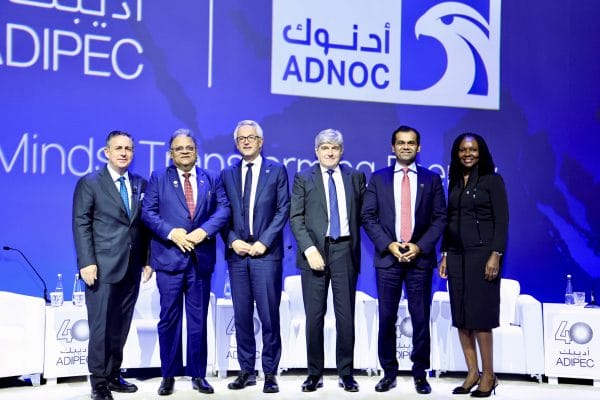
At the Abu Dhabi International Petroleum Exhibition & Conference (ADIPEC) 2024, a global platform dedicated to the most pressing energy and environmental issues of our time, the Nigerian National Petroleum Company (NNPC) Ltd. made a compelling call for unity and transparency in the pursuit of global decarbonisation. With over 180,000 participants and industry leaders in attendance, ADIPEC serves as a key meeting ground for energy giants to strategise ways to transition towards cleaner energy and address the sector’s heavy carbon footprint. Represented by Executive Director Upstream Mrs. Oritsemeyiwa Eyesan, NNPC Ltd. Group CEO Mele Kyari underscored a dual concern that resonates deeply within Nigeria and across other developing nations in Africa: how to responsibly reduce emissions without exacerbating energy poverty.

Africa, and Nigeria in particular, face unique and complex challenges. On one side of the equation lies the urgent necessity to phase out carbon emissions and align with global environmental standards; on the other, a profound struggle to provide basic energy access to millions still living in energy poverty. This dual burden places Nigeria in a precarious position, one where attempts at aggressive decarbonisation could undermine socio-economic stability unless carefully managed. The speech by NNPC’s leadership at ADIPEC reignited the long-standing debate over whether the developed world and international financial bodies are sufficiently committed to providing the necessary resources and financial support to help nations like Nigeria navigate their own unique paths to sustainability.
Kyari’s statement went beyond mere advocacy, revealing strategic insights into Nigeria’s policy direction and highlighting key initiatives such as the “Decade of Gas” and the removal of the long-standing fuel subsidy. These moves, while intended to support a transition towards cleaner energy sources, have sparked significant debate domestically and internationally. Skeptics question whether such policies are realistic or effective given the current socio-economic landscape and the substantial financial investments required. Yet, NNPC’s commitment to its decarbonisation objectives at a prestigious international platform like ADIPEC demonstrates Nigeria’s resolve to be part of the global climate solution while fiercely protecting its national interest and prioritising its citizens’ energy needs.
Decarbonisation: A Global Mandate with Unequal Burdens Expanded
The call for global decarbonisation has become an indisputable mandate, with nearly every nation committing to the Paris Agreement’s goal of reaching net-zero emissions by the middle of the century. However, the burden of achieving these goals is not distributed equally, and countries like Nigeria face uniquely challenging circumstances that set them apart from their wealthier counterparts in Europe and North America. For developing nations in the Global South, the pressing need to reduce emissions is complicated by their lower starting points, infrastructural limitations, and longstanding socio-economic challenges. Unlike developed countries, which have enjoyed the fruits of industrialisation and stable energy access for centuries, countries like Nigeria are still in the throes of addressing basic energy security for their populations.
In his remarks, Kyari emphasised that any realistic path to decarbonisation must take these disparities into account, advocating for a more nuanced understanding of what achieving net-zero means for countries that cannot rely on the same level of infrastructure, funding, or technological development as their wealthier peers. His remarks highlighted an issue often neglected in climate policy discussions: how to ensure that all nations, regardless of economic status, have a fair opportunity to contribute to the global goal without sacrificing their developmental needs.
Kyari’s call for financial inclusivity reveals a significant gap in the current climate financing mechanisms, which tend to favor projects in wealthier nations, leaving countries like Nigeria to grapple with severe underfunding for critical infrastructure. Nigeria’s substantial natural gas reserves, estimated at 209 trillion cubic feet, present a viable path for reducing emissions domestically, yet the funds to develop these resources and transition to a cleaner energy model are lacking. International financial bodies and oil companies, which traditionally finance oil and gas projects, are increasingly steering their funds toward projects in developed markets, particularly those that focus on gas exports over local consumption.
For Nigeria, this inequity is a barrier to progress, as the country cannot effectively transition to a cleaner economy without significant external support. As Kyari pointed out, without accessible financing, the Global South risks being left behind, forced to adopt decarbonisation policies without the requisite tools and resources. His statements at ADIPEC underscore a crucial reality: if global decarbonisation is to be truly equitable, there must be a dedicated effort to bridge the financial and technological divides that currently leave Africa and other developing regions at a severe disadvantage.
The ‘Decade of Gas’ and Fuel Subsidy Removal: A Double-Edged Sword Expanded
In an ambitious policy shift, Nigeria declared a “Decade of Gas” initiative, marking a clear commitment to reducing emissions by transitioning from diesel and other heavy carbon-emitting fuels to cleaner, gas-based solutions. Gas, as a relatively cleaner fossil fuel, is seen by many as an ideal bridge in the global transition to renewable energy. This “Decade of Gas” policy is NNPC’s answer to the question of how Nigeria can pragmatically reduce its carbon footprint while still addressing its vast energy poverty. The policy aims to position gas as a primary fuel source, providing cleaner energy to a country where over 40% of the population currently lacks reliable electricity access. While it sounds promising on paper, many experts remain skeptical of its feasibility given Nigeria’s infrastructural and logistical constraints.
Beyond the Decade of Gas, Nigeria’s recent decision to remove fuel subsidies has also sparked significant debate. On one hand, the subsidy was seen as an unsustainable expense, draining the national budget and limiting funds that could otherwise be directed toward infrastructure development and social services. In the context of decarbonisation, removing the subsidy was intended to encourage a market-based economy, making room for investment in cleaner energy sources and deterring reliance on cheap, dirty fuels. However, the immediate aftermath of this policy shift has been economically destabilising for millions of Nigerians, as the sudden surge in fuel prices has compounded the economic burdens of daily life.
The removal of the fuel subsidy has exposed a critical dilemma for Nigeria’s energy policymakers: how to pursue environmental goals without compromising the economic stability of the population. The policy shift, while beneficial in the long term for Nigeria’s economic and environmental health, has left many struggling with increased transportation and living costs. There are concerns that this could hinder broader public support for decarbonisation initiatives, as people are more likely to prioritize immediate economic needs over long-term environmental benefits. Critics argue that without adequate cushioning measures, such as subsidies for public transportation or support for alternative energy sources, the economic impact could be severe enough to stall other decarbonisation efforts.
The dual approach of declaring a “Decade of Gas” and removing fuel subsidies, while bold and potentially transformative, could also become a political and social minefield. With rising public discontent over increased costs and economic pressure, Nigeria’s decarbonisation path may face obstacles if policymakers do not carefully manage the economic repercussions of these initiatives. There is an urgent need for strategic planning to mitigate the social impact and ensure that these policy decisions are perceived as beneficial, not punitive, by the wider Nigerian public. In light of these complexities, Kyari’s remarks at ADIPEC reflect an acute awareness of the delicate balance Nigeria must strike as it seeks to transition towards a greener future.
A Quest for Transparent Collaboration, Not ‘Vilification’ Expanded
During his speech, Kyari drew attention to the tendency within the global environmental movement to “vilify” nations and industries that appear to lag behind in meeting decarbonisation targets. Instead of casting blame, he argued that what the world needs is a constructive, transparent approach that takes into account the various starting points of each country. For countries in Africa, where political instability, economic challenges, and infrastructural limitations make rapid decarbonisation particularly challenging, vilification can be counterproductive. By pressuring nations to meet standards that do not account for these complexities, the global community risks alienating key stakeholders and perpetuating inequities rather than bridging them.
Kyari advocated for transparency as the bedrock of meaningful collaboration, pointing out that genuine progress requires honesty about the limitations and difficulties that different countries face. Transparency allows stakeholders to build trust, facilitating partnerships that recognize the diverse realities across the globe. This call for non-judgmental support has special resonance for Nigeria, a country that has often been subjected to international criticism without sufficient recognition of the obstacles it faces.
One of the positive examples Kyari highlighted was the collaboration between NNPC and TotalEnergies, a partnership that exemplifies the kind of cooperative spirit he called for. Using advanced methane measurement and detection technology, TotalEnergies has joined forces with NNPC to address one of the oil and gas industry’s most pressing environmental issues—methane emissions. Methane is a potent greenhouse gas with a far greater short-term impact on climate change than carbon dioxide. By investing in technology to monitor and reduce methane emissions, NNPC and TotalEnergies are addressing an environmental issue head-on, showcasing how collaboration can yield real, measurable benefits.
However, this collaboration remains the exception rather than the rule, and Kyari’s remarks highlight an urgent need for similar partnerships across the industry. For Nigeria, the path to sustainable development is riddled with challenges that cannot be overcome by one nation alone. Transparent, cooperative relationships with international corporations and financial bodies are essential if Nigeria is to meet its decarbonisation goals without undermining its economic stability.
Financing Decarbonisation in the Global South: The Capital Challenge Expanded
One of the critical points made by NNPC’s Group CEO Mele Kyari during his ADIPEC 2024 speech was the capital constraint that countries like Nigeria face in their decarbonisation efforts. With vast gas reserves, Nigeria holds significant potential for reducing emissions through the use of natural gas as a transitional fuel. However, tapping into these reserves requires massive investments in infrastructure, from extraction and processing facilities to distribution networks. Kyari stressed that, while Nigeria has the resources, it lacks the capital to fully develop them. This dilemma has profound implications, not only for Nigeria but also for the broader Global South, as it exposes a major gap in international climate finance mechanisms.
The balance sheet of the Nigerian government and NNPC alone cannot bear the weight of the investments needed to drive the energy transition. Although international oil companies (IOCs) have historically financed many of Nigeria’s oil and gas projects, the shift toward decarbonisation in developed markets has redirected much of this capital toward renewable energy projects outside Africa. Kyari pointed out that much of the financing for these projects prioritises export gas rather than local consumption, limiting Nigeria’s ability to harness its resources for domestic energy needs.
Kyari’s call for capital access highlights an issue at the heart of global climate financing: the inequity in the allocation of funds. Although the Global South contributes far less to global emissions than wealthier nations, countries like Nigeria are increasingly burdened with meeting strict decarbonisation targets while lacking adequate financial support. Kyari’s remarks emphasised the need for innovative financing mechanisms and partnerships that could channel more capital toward African nations’ decarbonisation efforts. Without this financial assistance, he warned, the Global South’s progress toward sustainability would be stymied, as these nations are forced to prioritise immediate energy needs over long-term environmental goals.
The question of how to finance decarbonisation in Nigeria raises further concerns about the international community’s commitment to equitable climate solutions. While initiatives like the Green Climate Fund exist, their accessibility and effectiveness for countries like Nigeria have been widely criticised. Kyari’s call for a “level playing field” is, therefore, more than just a request for fair treatment; it is a demand for a fundamental reassessment of the global financial architecture, one that ensures that countries in the Global South can participate meaningfully in the energy transition.
The Importance of Technological Partnerships: Learning from TotalEnergies Expanded
In an encouraging example of industry collaboration, Kyari praised TotalEnergies for partnering with NNPC on methane measurement and detection technology—a cutting-edge tool that enables more precise monitoring of emissions across oil and gas operations. Methane emissions are particularly damaging to the environment due to their short-term potency as a greenhouse gas, making methane management a critical component of any serious decarbonisation strategy. The use of advanced technology in this area not only helps to reduce environmental impact but also demonstrates how international partnerships can play a crucial role in supporting countries with limited technological resources.
This collaboration with TotalEnergies provides a blueprint for how other global energy firms might engage with Nigerian companies to foster innovation and share technology. For Nigeria, the technology provided by TotalEnergies is more than a tool for reducing emissions—it represents an opportunity to leapfrog to more sustainable practices without the costly and time-consuming process of developing such technologies from scratch. However, while this partnership is promising, it also raises questions about why more international firms are not following TotalEnergies’ example. If the oil and gas industry truly values decarbonisation, then more companies should be willing to provide the necessary resources and technology to help developing nations achieve these goals.
Kyari’s emphasis on the need for “phenomenal” collaboration within the energy sector underscores the idea that decarbonisation cannot happen in isolation. Countries with more resources and advanced technologies have a responsibility to share their expertise and assist those nations still developing their energy infrastructures. For Nigeria, whose resources are vast but financial and technological means limited, such collaborations could mean the difference between slow, incremental progress and transformative, scalable change. Partnerships like the one with TotalEnergies are therefore invaluable, as they offer a model for how industry players can support each other in the quest to reduce global emissions.
Balancing Energy Transition with Economic Realities Expanded
One of the key messages from Kyari’s ADIPEC address is the need to balance Nigeria’s economic realities with its environmental aspirations. Nigeria’s economy remains heavily dependent on oil revenues, and the country is navigating a precarious economic landscape marked by inflation, unemployment, and currency devaluation. In this context, the demand to decarbonise, though critical, must be tempered with a realistic assessment of what Nigeria can afford. As Kyari pointed out, decarbonisation is not only about reducing emissions; it is about creating a sustainable energy ecosystem that meets the needs of the Nigerian people without sacrificing economic stability.
The push toward a gas-driven economy, as part of the Decade of Gas, represents Nigeria’s attempt to strike this balance. By pivoting to gas, Nigeria hopes to reduce its environmental impact while maintaining a robust energy sector capable of supporting the country’s economic ambitions. However, this strategy comes with its own set of challenges. Building the infrastructure to support a gas-based economy requires billions of dollars in investments, and while the removal of fuel subsidies frees up some government revenue, it is not enough to cover the massive costs associated with this transition.
Kyari’s remarks bring to light a critical dilemma facing developing nations. For Nigeria, transitioning away from fossil fuels is not merely an environmental issue; it is a question of survival in a rapidly changing global economy. Without adequate support from international stakeholders, Nigeria risks economic instability, which could, in turn, undermine public support for decarbonisation efforts. If the public perceives decarbonisation policies as contributing to economic hardship, the government may face significant political backlash, making it even harder to implement environmentally friendly initiatives.
Charting a Realistic Path Forward: A Call to Action for Global Energy Equity Expanded
In his call for enhanced collaboration, transparency, and equitable access to resources, NNPC’s Group CEO Mele Kyari articulated a vision for decarbonisation that acknowledges the distinct challenges and limitations of developing nations. Nigeria, like many other countries in the Global South, faces an uphill battle in its attempt to reconcile the global mandate for environmental sustainability with pressing local economic needs. For Nigeria, achieving a net-zero economy is not a straightforward endeavour but a complex balancing act that requires both domestic commitment and international cooperation.
Kyari’s participation at ADIPEC 2024 highlights Nigeria’s commitment to being an active player in the global environmental movement, but his remarks also underscore the necessity of an inclusive approach. The notion that decarbonisation should not be pursued through “vilification” but rather through mutual understanding speaks to the broader issue of fairness in the global climate dialogue. As Kyari stressed, without recognising the economic and infrastructural disparities between countries, the global community risks perpetuating inequities that will make it even harder to achieve a unified approach to climate change.
NNPC’s dual approach, through initiatives like the Decade of Gas and the removal of fuel subsidies, is emblematic of Nigeria’s attempt to carve out its path toward sustainability. However, as the Nigerian government navigates the complexities of economic reform, energy security, and environmental protection, it will need robust support from both the private sector and the international community. Financial aid, technological partnerships, and capacity-building initiatives are essential to ensuring that Nigeria and other developing nations can participate fully in the energy transition without compromising their economic growth.
The path forward is clear: if the world is serious about achieving net-zero emissions, then the approach to decarbonisation must be inclusive and fair. Developed nations and international financial institutions must take a proactive role in supporting the energy transitions of countries that are economically disadvantaged. For Nigeria, achieving its environmental goals will require a global commitment to shared responsibility and mutual benefit. Kyari’s call for a “level playing field” is a timely reminder that the global community can only achieve meaningful decarbonisation if it embraces a model that supports the unique needs of all nations, not just the wealthiest.
In this context, Nigeria’s decarbonisation journey offers a critical lesson for the world: true environmental progress can only be achieved through unity, understanding, and a commitment to fairness. As ADIPEC 2024 draws to a close, the global energy sector must consider how to transform Kyari’s words into action. The world is watching, and the stakes could not be higher. For Nigeria and the developing world, the path to a sustainable future is within reach—but only if the world is willing to act in a spirit of genuine collaboration and shared purpose.