The latest video attributed to a Boko Haram faction has pushed the Ngoshe hostage crisis into a darker and more dangerous phase, with the group claiming that its 72-hour deadline has expired and threatening harm to 416 women and children said to be in captivity in Borno State.
In the circulation now being widely reported, the faction identified itself as Jama’atu Ahlis-Sunna Lidda’Awati Wal-Jihad, or JAS, and declared that “there is no more discussion,” while also boasting that negotiations had collapsed.
What makes the situation more alarming is that this is not an isolated propaganda stunt. The United Nations Security Council records JAS as Boko Haram, listing it as an entity associated with al-Qaida and noting that the group has conducted a violent insurgency marked by attacks and kidnappings in Nigeria and neighbouring states.
That background matters because it shows the Ngoshe threat sits inside a long running pattern of coercion, hostage taking and terror messaging, not a one off outburst.
The timeline is equally troubling. On 20 April, Nigerian outlets reported that the group had issued a 72-hour ultimatum and demanded a ransom of N5 billion for the release of the abducted victims.
The video, according to those reports, warned that the captives could be moved to different locations if the demand was not met.
The Cable and Punch both reported that the victims were taken from Ngoshe in Gwoza Local Government Area and that BOSYA, the Borno South Youth Alliance, said it had been involved in mediation.
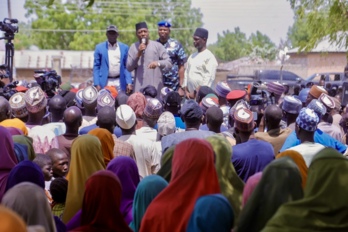
BOSYA has now emerged as the most visible civilian intermediary in the crisis. In the reports reviewed, the group said it had repeatedly pleaded for more time and described its role as humanitarian, not political.
BusinessDay reported that Samaila Ibrahim Kaigama said the terrorists contacted him directly and claimed they had selected 68 women from the abducted group for distribution among commanders after the deadline.
That claim is still a terror claim, not an independently verified fact, but it underlines how the insurgents are using fear, fragmentation and public spectacle to dominate the narrative.
The pressure on the ground has already turned kinetic. Vanguard reported on 23 April that 12 captives escaped from the 416 held in Ngoshe, while 18 other people, including farmers and firewood scavengers, were killed in a fresh Boko Haram ambush in the Gwoza area.
That sequence is important. It suggests the hostage crisis is not happening in a vacuum but alongside active insecurity, civilian vulnerability and an insurgent effort to keep rural communities off balance.
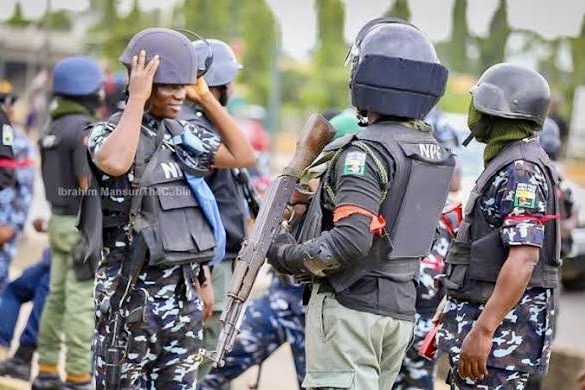
The presidency had previously acknowledged the March attack on Ngoshe. In a State House statement on 6 March, President Bola Tinubu condemned the assault, mourned the dead, and directed the armed forces to intensify efforts to rescue those kidnapped.
He also said the military had killed scores of terrorists during its response. That official position shows the federal government is aware of the strategic significance of Ngoshe, but it also highlights the gap between public statements and the continuing reality of abductions, threats and fresh attacks.
The broader security picture is no less grim. AP has reported in recent days on deadly militant attacks in north eastern Nigeria and on the continuing strain on civilian communities, while the Global Centre for the Responsibility to Protect says Nigeria remains in a current crisis with intensified violence from Boko Haram and ISWAP, especially in Borno and Yobe.
Taken together, those findings point to a region where insurgents still have the initiative in too many rural spaces, even when the state claims battlefield gains.
The latest video therefore serves three purposes for the insurgents. First, it attempts to extract leverage from the state by threatening mass harm. Second, it tries to terrorise families and communities into silence. Third, it seeks to humiliate official power by portraying government responses as ineffective.
The reported phrases “there is no more discussion” and “money does not blind us” are not just threats. They are a deliberate attempt to stage a public contest over who controls life, movement and fear in southern Borno.
For Nigeria, the hard question is no longer whether Boko Haram can still kidnap and threaten civilians. The evidence from Ngoshe shows that it can. The real question is whether the state can protect remote communities before insurgents turn every hostage crisis into another public humiliation.
The failure to secure the countryside, prevent repeat abductions and protect rural economic activity is now part of the same security story as the hostage threat itself.
Follow us on our broadcast channels today!
- WhatsApp: https://whatsapp.com/channel/0029VawZ8TbDDmFT1a1Syg46
- Telegram: https://t.me/atlanticpostchannel
- Facebook: https://www.messenger.com/channel/atlanticpostng