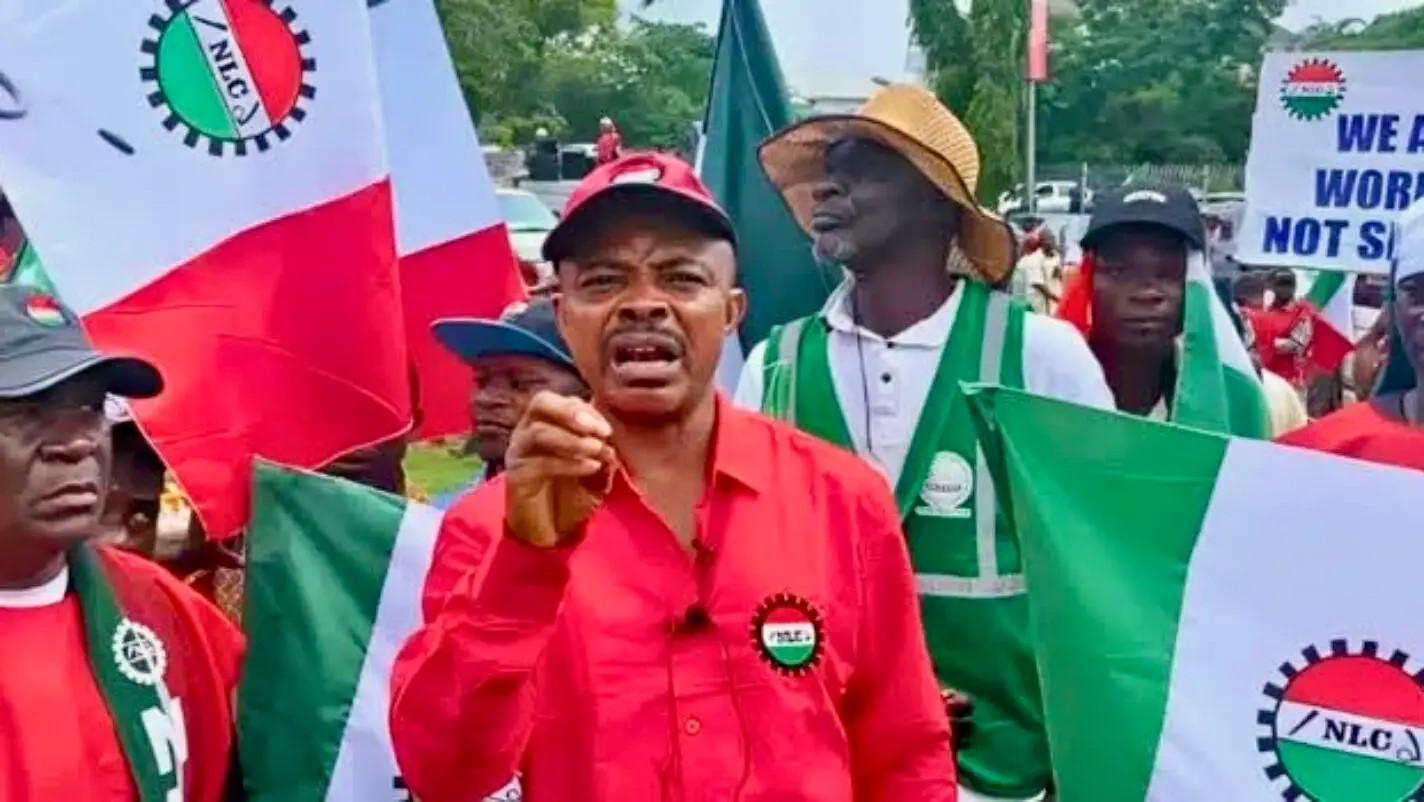
ABUJA, Nigeria — In a dramatic escalation that underscores Nigeria’s simmering economic challenges, the Nigeria Labour Congress (NLC) has ordered a daily boycott of services provided by telecommunications giants MTN, Airtel, and Glo. This protest, scheduled from 11:00 AM to 2:00 PM every day starting February 13, 2025, has ignited fierce debates about corporate exploitation and government fiscal mismanagement.
This report delves into the explosive details of this developing story, examining its implications for Nigerians amid rising economic hardship.
A Bold Stand Against Economic Exploitation
Labour leaders Joe Ajaero, President of the NLC, and Secretary Emmanuel Ugboaja have taken an uncompromising stance, demanding the immediate reversal of a newly imposed tariff hike.
According to an official statement, the NLC labelled the increase as “arbitrary and exploitative” – a move that not only burdens already struggling Nigerians but also symbolises a broader failure by both corporate entities and the government to safeguard the welfare of the people.
Critics argue that the tariff hike is ill-timed, considering the backdrop of rising inflation, stagnant wages, and persistent economic malaise. For many Nigerians, the increase represents yet another instance of profit-driven policies that exacerbate social inequality and economic stress.
The NLC’s directive to boycott telecom services is seen as a radical, albeit necessary, measure to compel accountability and force a re-evaluation of government and corporate priorities.
The Mechanics of the Boycott and Its Escalation
Starting Thursday, February 13, 2025, workers and citizens have been mobilised to withhold from utilising the services of MTN, Airtel, and Glo during a critical three-hour window each day. The NLC’s statement stressed that this campaign would continue until the end of February 2025, or until the contentious tariff is reversed.
Furthermore, the union has warned that failure to meet their demands by February 29 will trigger even more severe actions, including a potential nationwide shutdown of telecom services from March 1.
This bold threat of a complete telecom shutdown is not without precedent in the country’s recent history, yet it marks a significant escalation in industrial action. By targeting telecommunications – an essential service that underpins modern economic and social interactions – the NLC is effectively putting the nation on a collision course with both the government and corporate powerhouses.
This protest could disrupt not only business operations but also the daily communications that many Nigerians rely on for personal and professional connectivity.
Economic and Social Ramifications
The implications of this boycott extend far beyond the immediate inconvenience of disrupted mobile services. In a nation where mobile telephony is a lifeline for commerce, education, and social engagement, the NLC’s call to arms has the potential to create widespread economic disturbances.
The telecommunications sector is a major contributor to Nigeria’s GDP and a significant employer in its own right. A prolonged shutdown or even daily disruptions for several hours could reverberate across industries, affecting trade, investment confidence, and the broader economic landscape.
Labour observers are divided. Some applaud the NLC’s determination to stand up for workers and ordinary Nigerians, arguing that the move highlights the need for corporate responsibility and a reassessment of government policies.
Others caution that the boycott could inadvertently hurt those it seeks to protect, particularly if essential communications are compromised in times of crisis or emergency. The debate continues as stakeholders weigh the short-term disruption against the long-term goal of fostering fairer economic policies.
Political Fallout and Broader Fiscal Concerns
Beyond the immediate concerns of the telecommunications sector, the NLC has not shied away from a broader critique of the government’s fiscal strategy. In addition to the tariff hike, the union has taken aim at ongoing tax reform bills, criticising fiscal policies that risk further burdening an already strained populace.
The NLC’s actions reflect a broader sentiment among workers and civil society groups that the government’s economic policies are increasingly out of touch with the realities of life for many Nigerians.
The protest thus serves as a dual-edged sword: it is both a direct challenge to telecom companies and a pointed rebuke of government policies that, in the eyes of the union, prioritise revenue generation over the welfare of the citizenry.
By spotlighting these issues, the NLC is attempting to galvanise a nationwide debate on economic justice and the role of government in protecting the most vulnerable segments of society.
Corporate Accountability Versus Consumer Welfare
At the heart of this controversy lies a fundamental question: how can Nigeria balance the imperatives of corporate growth with the equally pressing need to safeguard consumer interests?
The tariff hike, deemed “exploitative” by the NLC, is indicative of a broader trend where profit margins are prioritised over consumer welfare.
For a nation grappling with high inflation and a cost of living crisis, even marginal increases in essential service fees can tip the scales, plunging millions into further economic distress.
Telecommunications companies, which have long been heralded as engines of progress and connectivity, now find themselves at a crossroads. They must navigate the treacherous waters of maintaining profitability while addressing mounting public discontent.
The NLC’s protest is a clarion call for a more equitable approach – one where corporate strategies are aligned with the socio-economic realities of the Nigerian populace.
The Road Ahead: Will Demands Be Met?
As the days tick by towards the critical deadline of February 29, all eyes are on the telecom giants and the government. Will they heed the demands of the NLC and reverse the tariff hike, or will the protest escalate to a full-scale shutdown with potentially far-reaching consequences?
The stakes could not be higher. The decision reached in the coming days will not only shape the future of Nigeria’s telecommunications landscape but could also signal a shift in the nation’s broader economic and political paradigms.
In these tumultuous times, the NLC’s actions serve as a potent reminder of the power of collective action. Whether one views the boycott as a justified response to exploitative economic practices or a disruptive force that could hinder essential services, its impact on Nigeria’s socio-economic fabric will be profound.
As the debate rages on, one thing remains clear: the demand for fair, transparent, and socially responsible economic policies has never been louder.
As Nigeria stands on the precipice of what could be a landmark protest in its modern economic history, the interplay between corporate accountability and government responsibility takes centre stage.
The coming days promise not only to reshape the telecommunications sector but also to redefine the relationship between the state and its citizens. For now, the nation watches, listens, and braces itself for the next act in this unfolding drama of economic justice.
- Additional report by Taiwo Adebowale, Atlantic Post Senior Business Correspondent