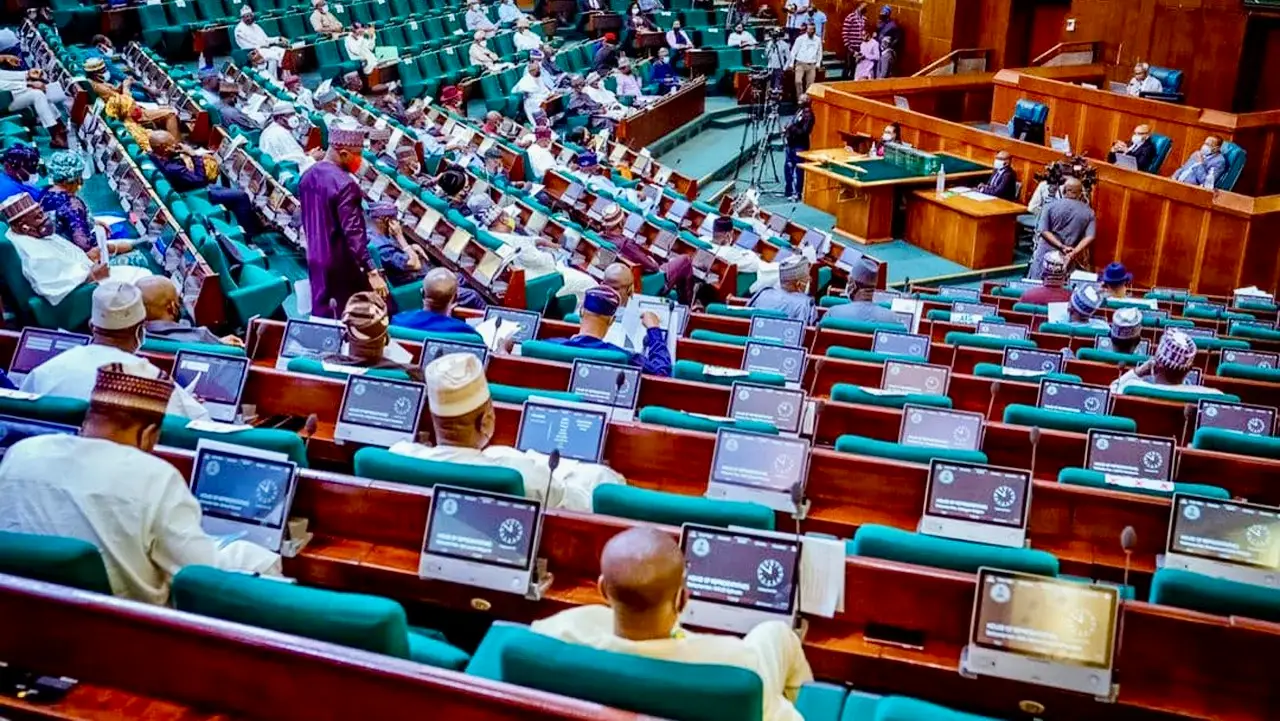
NINAS Co-Convener Tony Nnadi launches a scathing rebuttal against Nigeria’s National Assembly proposal for 31 new states, decrying the back‐door state creation gambit and the misuse of the 2014 Confab Report. Read our in-depth analysis of Nigeria’s constitutional crossroads.
NINAS Exposes Federal Government’s Back-Door State Creation Gambit: A Battle Over Nigeria’s Constitutional Future
In a dramatic and uncompromising statement issued on February 7, 2025, the NINAS Secretariat has thrown down the gauntlet against what it describes as an illicit, unilateral state-creation gambit.
With rhetoric that is as explosive as it is incisive, Tony Nnadi—acting on behalf of NINAS—has denounced the National Assembly’s proposal to carve Nigeria into an additional 31 states and countless local governments.
According to NINAS, this proposal is nothing more than a desperate ploy by an illegitimate federal government to rework Nigeria’s “fraudulent” 1999 Constitution using the discredited 2014 Confab Report.
In this report, we unpack the statement, place it in the context of Nigeria’s ongoing constitutional and political crisis, and examine the far-reaching implications for the future of the Nigerian federation.
Unpacking the State-Creation Gambit
At the heart of NINAS’ declaration lies a vehement rejection of any attempt to restructure Nigeria along lines that could further fragment the country. The statement bluntly labels the state-creation proposal as a “back-door attempt” to undermine Nigeria’s unity by exploiting an outdated and, in NINAS’ view, illegitimate constitutional framework.
Tony Nnadi’s rhetoric is unambiguous: any effort to reconfigure Nigeria’s states based on the 2014 Confab Report is not only procedurally flawed but also strategically aimed at weakening the federation’s foundational structure.
NINAS argues that the National Assembly’s move, which ostensibly seeks to “rework” the federal structure, is a calculated deviation from the Federation Imperative—a principle deemed sacrosanct for the survival of Nigeria’s union.
By insisting on a wholesale “Grand Union Renegotiation” of Nigeria’s political framework, NINAS positions itself as the guardian of a sovereign nation, resisting what it perceives as the encroachment of partisan agendas on the country’s constitutional destiny.
The 2014 Confab Report: Catalyst for Controversy
Central to the NINAS critique is the use of the 2014 Confab Report as a basis for restructuring Nigeria. The report, which emerged from the 2014 National Conference, has long been a flashpoint in Nigerian political debates.
NINAS contends that the report is “dead on arrival” due to its inherent disconnect from the constitutional mandate established at the inception of the conference.
According to Tony Nnadi, the delegates at the 2014 National Conference represented states, geopolitical zones, and civil society—not the myriad ethnic groups that constitute Nigeria’s populous. Thus, any restructuring based on this report, he argues, fails to reflect the exclusive sovereignty vested in the peoples of Nigeria.
This argument is not new. The ideological battles over the legacy of the 2014 National Conference have resurfaced repeatedly in Nigerian politics, particularly as regional and ethnic fault lines continue to influence policy debates.
By invoking the report’s inherent shortcomings, NINAS not only challenges its legitimacy but also warns of the potential disintegration of Nigeria’s delicate union if its recommendations are enacted.
Tony Nnadi’s Scathing Rebuttal: Analysing the Rhetoric
In a follow-up response to public enquiries, Tony Nnadi did not mince words. Drawing parallels with past controversial moves—such as Tinubu’s “Local Government Autonomy” and contentious “Tax Reform Bills”—Nnadi labeled the state-creation proposal as “ill-thought out, nauseating and provocative.”
His rhetoric is fiercely charged, describing members of the National Assembly as “demented fellows” who have, under the influence of a “fraudulent Unitary Constitution of Nigeria (1999),” effectively hijacked Nigeria’s sovereignty.
Key points in Nnadi’s response include:
Constitutional Fraud: NINAS maintains that everything built on the 1999 Constitution—including the states, local governments, and the legislative list—is fundamentally compromised. Adding new states would not remedy the underlying constitutional malaise but instead compound the federation’s disintegration.
Historical Mandate and the 2014 National Conference: NINAS recalls that the 2014 Conference, convened by President Goodluck Jonathan, was intended to revisit Nigeria’s founding principles. However, a critical clause was allegedly inserted into the Terms of Reference—a clause that ensured any outcomes would merely be absorbed into the existing 1999 framework. NINAS claims that this betrayal led to its early withdrawal from the process on October 8, 2013.
Implications for National Sovereignty: The statement underscores that any deviation from the “Grand Union Renegotiation Imperative” will invite a collapse of Nigeria’s union. NINAS warns that those who pursue the 2014 Confab recommendations will ultimately find themselves in a “head-on collision” with the entrenched forces of Nigerian sovereignty.
These points reflect a broader frustration within segments of the Nigerian political elite who see the current constitutional framework as a relic of a bygone era—one that was imposed without the genuine consent of the people.
NINAS’ stance, as articulated by Nnadi, is that the time has come for a fundamental rethinking of Nigeria’s union, rather than incremental, politically motivated changes that serve narrow interests.
Historical and Political Context
Nigeria’s political landscape has long been marred by debates over its federal structure. Since the imposition of the 1999 Constitution, successive governments have grappled with the challenges of state creation and the balancing act between central authority and regional autonomy.
The present controversy is not an isolated incident but rather a continuation of longstanding disputes over how Nigeria should be governed.
The Legacy of the 1999 Constitution:
Many political observers argue that the 1999 Constitution, which laid the foundation for Nigeria’s current federal system, has increasingly been seen as a document that privileges central control over true federal autonomy.
NINAS’ reference to this constitution as “fraudulent” underscores a broader sentiment that the document does not reflect the aspirations of Nigeria’s diverse populace.
The 2014 National Conference:
Convened as an attempt to address Nigeria’s constitutional shortcomings, the 2014 National Conference was intended to pave the way for a more inclusive and representative governance framework. However, according to NINAS, the process was derailed from the start.
The insertion of a clause that ensured the outcomes would be integrated into the 1999 Constitution is seen as a betrayal of the conference’s original mandate. This historical episode remains a sore point for those advocating for a genuine reexamination of Nigeria’s political union.
Previous Controversial Reforms:
The current state-creation proposal echoes previous reform efforts that have sparked widespread debate. NINAS draws comparisons to the controversies surrounding Tinubu’s push for Local Government Autonomy and Tax Reform Bills—efforts that, according to Nnadi, similarly bypassed critical judicial and public oversight.
These instances highlight a recurring pattern: politically expedient measures that, critics argue, undermine the foundational principles of Nigerian federalism.
Implications for Nigeria’s Federal Structure
The stakes in this constitutional debate are nothing short of existential for Nigeria. If the proposals backed by the National Assembly and the federal government were to be enacted, the country could witness a radical reordering of its political map—a move that, in NINAS’ view, would further entrench the weaknesses of the current federal system.
Fragmentation of the Federation:
By creating an additional 31 states, critics argue that the already fragile balance of power among Nigeria’s federating units would be further eroded. Such a move could exacerbate regional tensions, fueling ethnic and political divisions that have long plagued the nation.
Erosion of National Sovereignty:
NINAS warns that any restructuring based on the 2014 Confab Report is tantamount to a betrayal of Nigeria’s sovereignty. The argument is that the report’s recommendations lack the legitimacy required to serve as the basis for such a profound transformation, especially when they were not endorsed by the full spectrum of Nigeria’s diverse constituencies.
The Call for a Grand Union Renegotiation:
Instead of incremental adjustments, NINAS advocates for what it terms a “Grand Union Renegotiation”—a comprehensive, all-encompassing dialogue that would fundamentally reexamine and renegotiate the terms of Nigeria’s union.
For NINAS, this is the only viable path to ensuring that any future constitutional framework genuinely reflects the will of the Nigerian people.
Critical Analysis and Forward Look
Tony Nnadi’s statement is both a scathing denunciation of current political manoeuvres and a rallying cry for a more radical rethinking of Nigeria’s constitutional future.
His argument is rooted in a deep-seated belief that the existing constitutional framework has long been compromised by political expediency and a lack of genuine representation.
The rhetoric is provocative—designed to galvanise public opinion and force a reckoning with the foundational issues of Nigerian governance.
However, the debate is far from one-sided. Proponents of the state-creation proposal argue that such measures are necessary to address regional disparities, improve administrative efficiency, and ensure that local interests are adequately represented in the federal structure.
They contend that the creation of new states could serve as a corrective to decades of centralised governance, offering a more localised approach to policy-making and resource allocation. Yet, as NINAS emphasises, these benefits are moot if the underlying constitutional crisis remains unaddressed.
The reliance on the 2014 Confab Report—widely criticised for its procedural and substantive shortcomings—only deepens the skepticism among those who demand a more genuine and inclusive constitutional dialogue.
For Nigeria’s political stakeholders, the way forward is fraught with challenges. The call for a “Grand Union Renegotiation” represents not only a rejection of piecemeal reforms but also a challenge to the entrenched interests that have long dominated Nigeria’s political landscape.
Such a renegotiation, if it were ever to materialise, would require an unprecedented level of political will, consensus-building, and, crucially, a recognition of the diverse aspirations of Nigeria’s citizens.
Conclusion
In a nation where political debates are as much about identity and history as they are about policy, the NINAS statement stands out as a bold and uncompromising challenge to the status quo.
Tony Nnadi’s vehement denunciation of the state-creation gambit and the misuse of the 2014 Confab Report is a clarion call for a fundamental reassessment of Nigeria’s constitutional and federal arrangements.
As the debate rages on, one thing is clear: the future of Nigeria’s union hinges on whether its leaders can transcend partisan interests to forge a truly representative and enduring constitutional framework.
For now, NINAS has made its position unequivocally known—any attempt to alter Nigeria’s union without addressing the deep-rooted issues of sovereignty and representation will be met with fierce resistance.
The coming months promise to be a defining period in Nigeria’s political evolution, as stakeholders on all sides grapple with the complexities of a nation in search of its true identity.
Atlantic Post will continue to monitor and report on this developing story. Stay tuned for further in-depth analyses and exclusive insights into the unfolding constitutional debate that could redefine the future of Nigeria.