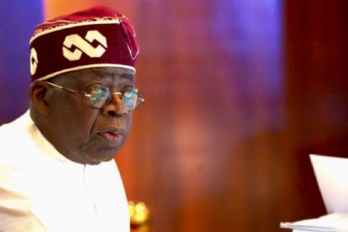
ABUJA, Nigeria — The Bola Tinubu administration is once again leaning on the World Bank for a major external facility, with a fresh $1.25bn loan now said to be at an advanced stage and headed for board consideration on June 26, 2026.
The proposed package, titled Nigeria Actions for Investment and Jobs Acceleration, would be the second-largest single World Bank facility secured under the current administration if it gets the green light.
That alone tells a bigger story than the headline number. Nigeria is not just borrowing again; it is deepening its dependence on multilateral finance at a moment when inflation remains painful, living costs are still elevated, and the political temperature is rising ahead of the 2027 election cycle.
The timing is especially sensitive because the proposed board date falls about six months and 21 days before the January 16, 2027 presidential election cited in the revised INEC timetable.
The fresh borrowing would sit behind only the $1.5bn Reforms for Economic Stabilisation to Enable Transformation Development Policy Financing approved by the World Bank in June 2024.
That earlier operation formed part of a broader $2.25bn package that the Bank said was designed to help stabilise the economy, support vulnerable Nigerians, and back Nigeria’s drive to raise non-oil revenues and protect fiscal sustainability.
What makes the new request politically and economically important is the clear signal that the World Bank is not merely handing out cash. Its project appraisal document links the proposed Nigeria Actions for Investment and Jobs Acceleration operation to reforms around the Central Bank of Nigeria rulebook, microfinance bank regulation, factoring rules and fintech oversight.
In other words, the money appears tied to policy changes that are meant to improve how credit moves through the economy, not simply to plug budget holes.
That is also why the proposal deserves close scrutiny. The World Bank’s own explanation to The PUNCH last week was that its projects are “not disbursed as a one-off” but released in instalments and only after agreed conditions are met.
The lender’s external affairs officer, Mansir Nasir, said projects run for a set time and disbursement depends on the instrument and milestones. That matters because Nigeria’s frustration with slow-moving approvals is now public.
The warning shot came from the Accountant-General of the Federation, Dr Shamseldeen Ogunjimi, who said Nigeria could walk away from such arrangements if delays persist.
His exact warning was blunt: “If approvals take more than six months, the Nigerian Government may no longer honour such arrangements.”
He also urged the Bank to accelerate approval and disbursement because these facilities are loans, not grants.
That statement is revealing for two reasons. First, it shows Abuja is increasingly impatient with the pace of multilateral financing even while it continues to seek it. Second, it exposes the tension between reform rhetoric and repayment reality.
Nigeria is asking for money to support investment, jobs and competitiveness, yet the same government is signalling that it may resent the very conditions and timelines attached to the borrowing. That is not a contradiction the markets will ignore.
The debt implications are equally stark. According to The PUNCH, using the exchange rate cited in its report, the $1.25bn facility would be worth about N1.70tn.
If approved and fully disbursed, Nigeria’s external debt would rise from N74.43tn to at least N76.13tn, while total public debt would climb from N159.28tn to about N160.98tn. In dollar terms, total public debt would move from $110.97bn to roughly $112.22bn.
Those figures are not being floated in a vacuum. The PUNCH also reported that Nigeria’s debt to the World Bank rose to $19.89bn as of December 31, 2025, up from $17.81bn a year earlier, according to Debt Management Office data.
The DMO’s own debt pages show that it published Nigeria’s 2025 external and total public debt stock reports on April 13, 2026, underscoring how fresh and politically loaded this debt conversation has become.
For the Tinubu administration, the argument will be familiar. Borrow now, reform fast, and hope growth, revenues and investor confidence eventually catch up.
The World Bank has repeatedly framed Nigeria’s reform package in those terms, saying its financing supports efforts to stabilise the economy, raise revenues and protect the poor.
But for ordinary Nigerians still facing higher prices and tighter incomes, the blunt question remains whether the country is borrowing its way to recovery or borrowing its way into a more expensive future.
That is why this proposed loan is more than another funding headline. It is a referendum on Nigeria’s economic strategy, on the speed of reform delivery, and on how much more debt a strained public balance sheet can absorb before the politics of borrowing begin to outrun the economics of repayment.
Follow us on our broadcast channels today!
- WhatsApp: https://whatsapp.com/channel/0029VawZ8TbDDmFT1a1Syg46
- Telegram: https://t.me/atlanticpostchannel
- Facebook: https://www.messenger.com/channel/atlanticpostng