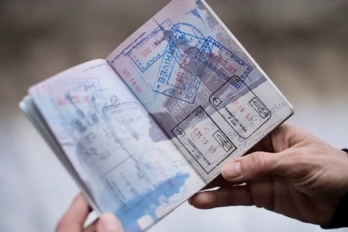
The United States has drawn a hard line against AI-polished passport and visa photos, warning that applicants who submit digitally edited or filtered images risk delay, rejection, or a fresh request for a compliant photograph.
In a notice last updated on 19 March 2026, the State Department said digital enhancement tools, retouching apps and artificial intelligence edits are not permitted for passport photos, because the image must reflect the applicant’s current appearance.
The language from Washington is unusually blunt. The department’s warning posted on its official travel account said,
“Do NOT use AI or digital editing tools on your passport photo. We will not accept photos that are edited or filtered.”
That message now sits alongside the department’s broader photo rules, which insist that images be recent, natural and unaltered.
At the centre of the policy is identity verification. The State Department says a passport photo must be taken within the last six months, in colour, against a plain white or off-white background, and directly facing the camera with a neutral expression.
For visa photos, the department also specifies that the head must be properly sized in the frame, the eyes must be open, and the background must be free of shadows, lines or objects.
The department has also made clear that applicants should not try to “improve” their images after the shot is taken. Its digital photo guidance says applicants should not use filters or retouching tools to change their appearance, and its visa photo FAQ says photos must not be digitally enhanced or altered.
In other words, the problem is not merely cosmetic. Any edit that changes facial appearance can trigger a rejection.
This is where the issue becomes more than a passport-office annoyance. U.S. border and aviation systems increasingly depend on facial comparison and biometric checks to confirm that the person standing at the counter is the same person pictured on the document.
CBP says its biometric facial comparison technology is used at airports, while TSA says facial comparison technology is used to verify identity in certain screening environments. That makes the passport photograph a frontline security document, not a social-media portrait.
The warning also lands at a moment when AI photo tools are everywhere. Beauty filters, face-shaping apps and instant portrait enhancers have made it normal for people to post images that are subtly, or sometimes dramatically, different from their real appearance.
That habit may be harmless on social media, but the State Department is signalling that it becomes a problem the moment the image is used for a passport or visa application.
The agency’s rules are designed to make sure officials can still identify the traveller at airports, consulates and border checkpoints.
For applicants, the practical message is simple: use a current photograph, keep it plain, and do not let software touch it.
The State Department says applicants renewing online must upload a digital photo that meets specific file requirements, and it notes that the photo tool can crop an image but does not decide whether the picture is acceptable. Final approval remains with a Department of State employee after submission.
There are also strict rules around eyewear and coverings. The department says glasses should be removed for passport photos, while head coverings are only allowed for religious or medical reasons, and even then the full face must remain visible without shadows.
It further says uniforms should not be worn, and that applicants should keep their face directly toward the camera. For children and babies, the same logic applies: no extra person in the frame, no obstruction and no hidden identity.
The larger story here is not simply bureaucratic rigidity. It is a recognition that identity fraud now lives in the grey zone between convenience and deception. As image-editing tools become easier to use, official agencies are tightening the boundary between a portrait and proof of identity.
The State Department is essentially telling applicants that the passport photo is not a creative exercise. It is evidence. And evidence, in this context, must look like the person walking through the airport gate.
For travellers, especially those preparing U.S. visa or passport paperwork, the safest approach is the oldest one: take a fresh photo, use plain lighting, avoid filters, and submit exactly what the rules ask for.
In the age of AI-generated faces, Washington is making one thing clear: the official photo must belong to the real person, not the improved version.
Follow us on our broadcast channels today!
- WhatsApp: https://whatsapp.com/channel/0029VawZ8TbDDmFT1a1Syg46
- Telegram: https://t.me/atlanticpostchannel
- Facebook: https://www.messenger.com/channel/atlanticpostng