Twenty-five state assemblies have backed the constitutional change, clearing a major political hurdle. But the Senate’s Christmas deadline now faces a harder test: delivering a workable policing system that protects communities without turning governors into unchecked police chiefs.
Nigeria’s long-running debate over state police has crossed a significant constitutional hurdle. Whether it can now cross the more difficult boundary between legislation and safer communities is another question.
The Senate says Nigeria will have a new policing law before the end of 2026. Its promise comes after the required two-thirds of state Houses of Assembly endorsed a constitutional amendment designed to create State Police Services alongside a Federal Police Service.
Ondo State added its support on Monday, 26 October, when its House of Assembly unanimously passed the Constitution of the Federal Republic of Nigeria, 1999 (Sixth Alteration) Bill, 2026. The vote followed the approval of 24 state assemblies announced by the Presidency on Friday, 23 October, taking the reported total to 25.
For communities confronting killings, kidnappings, banditry and other violent crimes, the political breakthrough raises hopes that policing could become more responsive to local threats.
But it also opens a more difficult debate. Who will control the new police services? Who will investigate officers accused of abuse? How will states pay for recruitment, equipment and training? And what protection will citizens have when a governor’s political interests conflict with their right to peaceful assembly or fair treatment?
These questions could determine whether decentralised policing becomes a public-safety reform or creates another layer of political risk.
Senate promises a law before Christmas
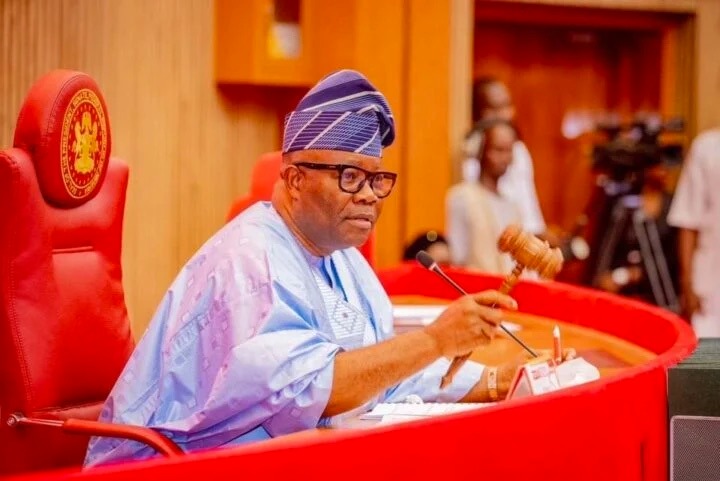
Yemi Adaramodu, chairman of the Senate Committee on Media and Public Affairs, has given Nigerians an ambitious timeline.
Speaking to The PUNCH, Adaramodu said the state police proposal had become the leading priority in the National Assembly’s ongoing constitutional review.
“Already, we have promised Nigerians that before the end of this 10th National Assembly, a new police law will be enacted for Nigerians. And then, before we even leave for Christmas, it would have been done,” he said.
He maintained that lawmakers intended to move the proposal through the remaining stages without unnecessary delay.
“There’s nothing to worry about. The policing bill will be done expeditiously as we promised and it will become law before the end of this year, by the grace of God. We are determined,” he added.
Adaramodu also described the proposal as a response to the public’s demand for more effective policing.
“This is a popular bill. We know that it’s what Nigerians want and need. So, definitely we are not going to waste a minute on it.”
Yet the Senate spokesman acknowledged an important limitation: the National Assembly cannot complete an ordinary legislative process on the strength of an executive timetable alone.
“Well, we cannot pass comment on what the executive said until we receive correspondence from them,” he said, referring to the Federal Government’s timeline for submitting its proposed policing legislation.
That admission points to the immediate obstacle. The constitutional amendment and the operational legislation are related, but they are not the same piece of work.
The constitutional milestone is not the finish line
The Senate passed the state police constitutional amendment on 24 June 2026, followed by the House of Representatives on 23 July. The National Assembly transmitted it to the 36 state assemblies on 16 September for consideration.
Section 9(2) of the 1999 Constitution requires the support of at least two-thirds of state Houses of Assembly for this type of constitutional alteration. With 24 of the 36 states meeting that threshold, the proposal cleared a major procedural hurdle.
Ondo’s subsequent vote took the reported number of approving states to 25. The state’s lawmakers directed their clerk, Benjamin Jaiyeola, to forward the resolution and the assembly’s observations to the National Assembly.
The remaining administrative task of collating and authenticating the formal resolutions matters. A publicly announced tally establishes political momentum; the legislature must still complete the necessary procedural work.
Senator Victor Umeh, who represents Anambra Central, said the approvals would return to the National Assembly for verification.
“Well, now that 24 state assemblies have concurred to the state police bill, it will come back to us,” he said.
“What this means is that we have met the constitutional threshold. So, if it comes back to the Senate, we will verify all the things sent.”
That distinction is important. The required number of state approvals is a constitutional milestone, not evidence that state police stations are ready to open or that operational arrangements have been completed.
The National Policing Bill, 2026, is intended to establish the wider legal and operational framework for the proposed dual system. It remains a separate part of the process.
The executive’s bill is still in the legal review stage
The Presidential Working Group on the National Policing Bill, chaired by President Bola Tinubu’s Chief of Staff, Femi Gbajabiamila, submitted the draft National Policing Bill, 2026, alongside 29 consequential amendment bills, to the Federal Ministry of Justice on 19 October.
The ministry is expected to return the validated drafts to the working group by Friday, 30 October. The group will then conduct its final consideration before presenting the documents to the President for consideration and subsequent transmission to the National Assembly.
On 15 October, Gbajabiamila said the proposed legislation was “90% ready” and indicated that it would be sent to the legislature within about two weeks.
The 19 October submission marked progress, but the subsequent legal review means the remaining legislative timetable is tight. The National Assembly would still need to consider the executive’s proposals through the applicable legislative stages.
Adaramodu has made clear that the Senate will not treat an announced executive deadline as a substitute for formally receiving the bills.
The year-end target is therefore a political commitment whose delivery depends on several institutions completing their work promptly.
What state police could change on the ground
Supporters argue that a centralised police system covering a country as large and diverse as Nigeria struggles to respond effectively to every local security threat.
For Umeh, the solution is to bring policing closer to the communities where crimes occur.
“We in the National Assembly support state police for the simple reason that Nigeria is a very large country, so much that policing it will require some level of decentralisation,” he said.
He argued that local knowledge would help officers develop intelligence networks and respond more quickly.
“We cannot continue to have one central police force to provide security to Kebbi, Calabar, Sabon Gari, Ikot Abasi and all the far ends of this country. No, we must decentralise it to have two police commands, especially state police, to get nearer to the grassroots,” he said.
Umeh added: “Every security issue is local. Through the intelligence of people in that state, we will be able to respond on time. Every criminal hides in the community, and there is a tendency they would be known to the locals.”
The argument has practical appeal. Officers familiar with local terrain, languages, community networks and recurring security threats may be better positioned to identify suspicious activity and build relationships with residents.
But local knowledge is not a substitute for professional training, reliable intelligence, adequate equipment or independent oversight. Nor does an officer’s place of origin automatically make that officer more impartial, competent or trustworthy.
A state police service will need to earn public confidence through its conduct, not merely its proximity to the people it serves.
The governor-control question cannot be ignored
The central concern surrounding state police has always been the potential for political interference.
Under the proposed constitutional framework passed by the Senate, state police commissioners would be appointed by governors following a recommendation from the National Police Council, subject to confirmation by their respective state assemblies. The proposed provisions also envisage lawful written directives of a general policy nature concerning public safety and public order.
These arrangements could bring greater accountability to state governments. They could also concentrate considerable influence in the hands of governors unless the final legislation places clear limits on their powers.
The Senate’s version of the constitutional amendment includes safeguards intended to prevent the use of state police for partisan, ethnic, religious, sectional or personal interests. It also envisages national minimum standards covering recruitment, vetting, training, discipline, use of force, complaints and professional conduct.
The question is not merely whether these safeguards appear in legislation. It is whether they can be enforced when a state government has a political interest in a police operation.
Could state police protect opposition rallies as firmly as governing-party events? Would an officer be able to resist an unlawful order without risking dismissal or punishment? Could residents report extortion or assault by state officers to an independent body capable of investigating and imposing consequences?
Those are tests that a legislative timetable cannot answer.
Nigeria already has documented concerns about police accountability. In February 2026, Amnesty International published an investigation into the Imo State Police Command’s Anti-Kidnapping Unit, popularly known as Tiger Base. The organisation documented allegations of arbitrary detention, torture, extortion and enforced disappearances.
The report concerned an existing police unit, not a newly created state police service. It does not establish that decentralised policing would reproduce the same abuses. It does demonstrate why effective complaints mechanisms, independent investigations and consequences for misconduct must be central to any reform.
A police service closer to the people can make protection more accessible. Without accountability, it can also make coercive power more immediate.
Funding and state readiness could decide the outcome
The proposal also raises an economic and administrative challenge.
Recruiting officers is only the beginning. A functioning service needs salaries, pensions, training institutions, firearms controls, vehicles, communications equipment, detention facilities, forensic capacity, records systems and mechanisms for handling complaints.
States would also need clear rules on cooperation and jurisdiction when criminal investigations cross state boundaries or involve federal responsibilities.
Gbajabiamila’s working group has identified several of these issues as essential to the proposed framework.
In August, the Presidency said the legislation would address state readiness, certification, national standards, independent oversight, human rights, sustainable funding and the transition to a dual-policing structure.
Gbajabiamila said a state service should have credible arrangements for recruitment, vetting, training, pay, pensions, equipment, custody, complaints, discipline, data, firearms control, independent oversight and financial sustainability before beginning operations.
Those requirements are crucial. A state that cannot reliably pay its officers or maintain investigative equipment could struggle to build an effective service. Weak recruitment and vetting could expose communities to corruption or infiltration by criminal interests.
There is also the question of inequality. States have different revenue bases, security pressures, administrative capacity and geographical needs. A workable national framework must establish minimum standards without assuming that every state can immediately sustain the same level of policing.
The aim should be to ensure that a resident’s access to competent and accountable law enforcement does not depend entirely on the financial resources of the state in which that person lives.
A procedural question that needs public clarification
There is another matter that deserves attention before the process advances much further.
The National Assembly’s published guide to constitutional alteration states that presidential assent is not required after the necessary state ratifications. Yet the Presidential Working Group’s 23 October statement described the constitutional amendment as eligible to return to the National Assembly for transmission to the President for assent.
The two official accounts do not describe the final step in the same way. The proper constitutional procedure should be clarified publicly by the relevant legislative authorities, rather than left to competing descriptions in official statements.
This should not be confused with the separate National Policing Bill and its consequential amendments, which must proceed through the applicable legislative process.
Clear explanations of how the two tracks fit together would help Nigerians distinguish a constitutional change from the laws, institutions and implementation arrangements needed to put it into practice.
Ondo calls the reform overdue
In Ondo, lawmakers welcomed the constitutional amendment as a necessary response to the country’s security challenges.
Majority Leader Olatunji Oshati moved the motion for passage, which was seconded by Allen Oluwatoyin, who represents Ese-Odo constituency.
Speaker Olamide Oladiji described state policing as “long overdue”.
He said the proposed arrangement would enable security agencies to respond more swiftly to crime and other security concerns, adding: “State policing would help reduce crime through improved intelligence gathering and proactive security measures.”
The assembly’s unanimous vote underscores the political support the proposal has attracted. The unresolved task is to convert that agreement into legislation capable of surviving operational, constitutional and accountability tests.
What Nigerians should demand from the final law
The Senate says state policing is needed to improve the enforcement of existing security laws and tackle the persistent killings, abductions, banditry and terrorism threatening communities.
Adaramodu said: “We want to put an end to all these incessant killings, abductions, and activities of these marauders, bandits and terrorists in Nigeria. So, we have enacted a lot of laws in the National Assembly to deter them. The only thing we need now is the enforcement.”
He argued that enforcement would be more effective with state police on the ground.
That is the central promise. But the public should judge the final framework against specific, measurable questions.
Can state police investigate crime independently of political instructions? Will officers face credible sanctions for abuse? Can residents make complaints without fear of retaliation? Will state services meet minimum national standards before operating? Are there clear rules for federal intervention, cooperation across state borders and disputes over jurisdiction? Will funding arrangements support reliable salaries, training and equipment over time?
The answers should be visible in the legislation and in the institutions established to enforce it.
The danger is that the Christmas deadline becomes the main measure of success, while the safeguards that determine public safety receive less scrutiny.
Nigeria has reached the point where a large part of its political establishment supports bringing policing closer to communities. It has not yet demonstrated that the new system will necessarily produce better protection, fairer enforcement or stronger accountability.
The next test is not whether lawmakers can meet a deadline. It is whether they can design a system in which no governor, police commander or political faction stands above the law.
State police could mark a significant change in Nigeria’s approach to public safety. The country will need more than a new structure to make that change work. It will need clear limits on power, competent institutions, sustainable funding and a system that protects citizens even when those in authority would prefer otherwise.
Follow us on our broadcast channels today!
- WhatsApp: https://whatsapp.com/channel/0029VawZ8TbDDmFT1a1Syg46
- Telegram: https://t.me/atlanticpostchannel
- Facebook: https://www.messenger.com/channel/atlanticpostng

Join the debate; let’s know your opinion.