
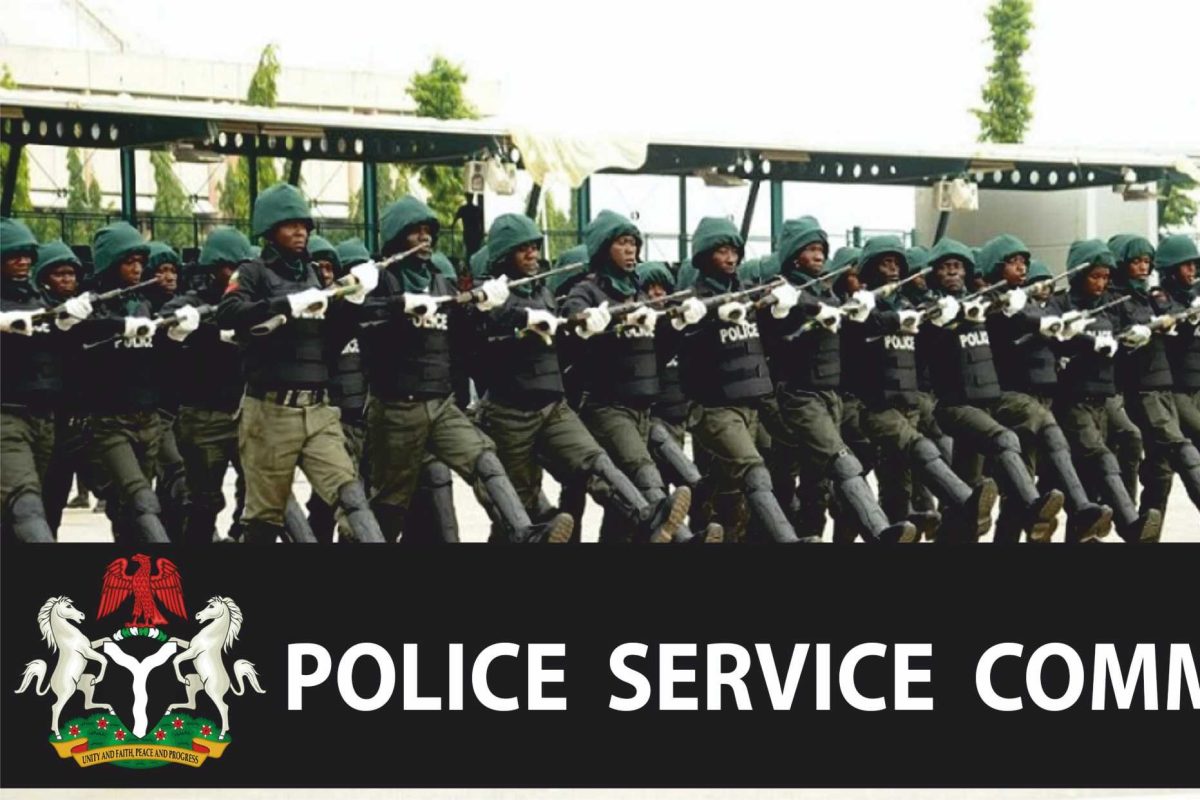
Nigeria’s Inspector-General of Police, Olatunji Disu, has redeployed two Deputy Inspectors-General, 13 Assistant Inspectors-General and several Commissioners of Police to strategic commands. But the real test of the reshuffle will be whether new leadership can translate promotions into better intelligence, stronger investigations and greaterv poll public confidence in policing.
Nigeria’s Inspector-General of Police, Olatunji Rilwan Disu, has undertaken a significant restructuring of senior police leadership, placing intelligence, criminal investigations, technology and specialised operational commands at the centre of a fresh deployment exercise.
The postings, announced by the Nigeria Police Force on Monday, 16 November 2026, affect two Deputy Inspectors-General of Police (DIGs), 13 Assistant Inspectors-General of Police (AIGs) and numerous Commissioners of Police (CPs) assigned to state commands, departments and specialised formations.
On the surface, the exercise represents a routine administrative consequence of recent promotions. Beneath that explanation, however, lies a more consequential question about the direction of Nigerian policing.
Can a change of leadership at the top translate into a meaningful improvement in the security of ordinary Nigerians?
The positions affected include some of the most consequential operational and investigative offices within the Nigeria Police Force. Their effectiveness will influence how intelligence is collected, how criminal investigations are conducted, how officers are trained and how security operations are coordinated across the country.
For a country confronting persistent security challenges, the consequences of these appointments extend well beyond the careers of the officers involved.
Intelligence and investigations take centre stage
Two of the most strategically important appointments are at Force Headquarters in Abuja.
DIG Olaolu A. Adegbite has been posted to head the Force Intelligence Department, while DIG Dankombo F. Morris takes charge of the Department of Information and Communication Technology.
The appointments place two senior officers at the intersection of intelligence gathering and technological capacity.
Intelligence-led policing depends on more than the collection of information. It requires the ability to identify patterns, evaluate threats, connect seemingly unrelated criminal activities and provide commanders with reliable information before violence occurs.
The Force Intelligence Department therefore occupies a critical position in the country’s security architecture.
Its effectiveness will increasingly depend on how successfully the police develop actionable intelligence and translate it into operational decisions.
The appointment of DIG Morris to the ICT Department is equally significant.
Modern criminal investigations increasingly depend on digital evidence, electronic databases, communications infrastructure, biometric identification and the ability to manage information across geographically dispersed police formations.
The Nigeria Police Force identifies electronic information systems, communications networks and fingerprint identification among the responsibilities of its ICT department.
The challenge is to ensure that technology becomes an operational instrument rather than an administrative accessory.
Without reliable databases, secure communications and properly integrated information systems, even well-trained investigators can struggle to identify suspects, connect criminal networks and build credible cases.
Another important appointment concerns the Force Criminal Investigation Department (FCID).
AIG Clement Robert has been posted to head the department, while AIG Ugobueze Ogbodo takes charge of the FCID Annex in Enugu.
GThe FCID is particularly important because the police describe it as their highest investigative arm, responsible for handling serious and complex criminal cases and coordinating investigations across the Force.
The effectiveness of the two new leaders will therefore have implications for the investigation of major criminal offences and the quality of cases eventually presented before Nigerian courts.h
The appointment of AIG Ibrahim Gotan to the Force Intelligence Department adds another senior officer to an area of policing that demands close coordination.
Thirteen AIGs receive strategic postings
Beyond the two DIG appointments, 13 Assistant Inspectors-General have been assigned new responsibilities.
The postings include:
- AIG Enyinnaya Adiogu – Zone 4 Police Headquarters, Makurdi.
- AIG Clement Robert – Force Criminal Investigation Department, Abuja.
- AIG Betty Enekpen Otimeyin – Maritime Police Command.
- AIG Ibrahim M. Balarabe – Zone 7 Police Headquarters, Abuja.
- AIG Olusegun E. Omosayin – Department of Training and Development.
- AIG Ugobueze Ogbodo – FCID Annex, Enugu.
- AIG Ohagwu F. Ndukwe – Zone 17 Police Command, Akure.
- AIG Taylor L. Olarewaju – Nigeria Police Cooperative, Lagos.
- AIG Regina Cosmas Udoette – Zone 16 Police Headquarters, Yenagoa.
- AIG Afolabi W. Olutokunbo – Department of Operations.
- AIG Martin O. Nwogoh – Police Air Wing.
- AIG Shetima J. Muhammed – Force Border Patrol, Abuja.
- AIG Ibrahim Gotan – Force Intelligence Department.
The geographical spread of these appointments is noteworthy.
The zonal commands in Makurdi, Abuja, Akure and Yenagoa provide important supervisory structures for policing across different parts of the country.
Meanwhile, the Maritime Police Command and Border Patrol Force operate in areas where criminal activities can extend beyond conventional state boundaries.
Maritime policing is particularly important for the protection of waterways, shipping interests and coastal communities. Border security requires effective intelligence, surveillance and coordination with other security agencies.
The Police Air Wing also provides an operational capacity that can support surveillance, personnel deployment and other policing activities.
These responsibilities make the quality of leadership, equipment, training and interdepartmental cooperation essential to the success of the appointments.
Commissioners deployed to state commands and specialised units
The latest exercise also includes changes affecting Commissioners of Police.
The announced state command postings include:
- CP Sunday J. Okeobor – Plateau State Command.
- CP Sheikh M. Danko – Nasarawa State Command.
- CP Johnson A. Babalola – Ondo State Command.
- CP Salisu F. Bello – Niger State Command.
The announcement also lists the Commissioner of Police for Enugu State Command without providing the officer’s name.
Further appointments to specialised responsibilities include:
- CP Akika O. Ikpi – Special Enquiry Bureau, FCID Annex, Lagos.
- CP Felix A. Nnebue – Anti-Human Trafficking, Abuja.
- CP Mamman Bitrus Giwa – Special Enquiry Bureau, FCID, Abuja.
- CP Charles E. Dike – Special Protection Unit, Abuja.
- CP Gazali Alade Abdul-Salam – Operations, Force Intelligence Department, Abuja.
- CP Nelson Nwamana – Administration, FCID Annex, Lagos.
- CP Muhammed Yusuf Adamu – Police Railway Command, Lagos.
- CP Okezie Chikezie – Training and Courses, Police Academy, Wudil.
- CP Agbo B. Usman – Forensics, FCID.
These assignments cover several areas with direct consequences for public safety.
The Anti-Human Trafficking Unit, for example, occupies an important position in the fight against organised exploitation, human trafficking and related cross-border crimes.
The Special Protection Unit is responsible for specialised protection duties, while the railway command operates within a transport environment that requires security coordination and protection of passengers and infrastructure.
The deployment of a commissioner to forensic investigations also deserves attention.
Forensic capacity is essential to modern criminal justice. Evidence collected from crime scenes, fingerprints, digital devices and other scientific sources can help investigators establish facts beyond witness testimony.
But the existence of specialised units alone does not guarantee results. Their performance depends on equipment, technical competence, professional standards and the ability to secure evidence that can withstand judicial scrutiny.
A wider personnel transition is underway
The postings follow a significant promotion exercise by the Police Service Commission.
On 29 October 2026, the Commission approved the promotion of more than 3,800 police officers, including two DIGs, 10 AIGs and 17 Commissioners of Police.
Among those elevated to DIG were Olaolu Adegbite and Dankombo F. Morris, both of whom now appear in the new posting announcement.
The promotion exercise also included several officers subsequently assigned to strategic positions, including Ugobueze Ogbodo, Ohagwu Felix Ndukwe, Taylor Lennox Olanrewaju, Regina Cosmas Udoette, Afolabi Wilfred Olutokunbo, Martin Nwogoh, Shetima Jauro Mohammed and Ibrahim Gotan.
The Police Service Commission chairman, DIG Hashimu Salihu Argungu (retd.), urged promoted officers to regard their advancement as motivation to improve their service.
He stressed that “much is expected from them” in securing lives and property and enforcing the law.
The latest deployments therefore represent part of a wider rearrangement of responsibilities following the promotion of senior personnel.
However, promotions and postings should not be confused with demonstrated improvements in institutional performance.
The public ultimately judges police leadership by what happens outside Force Headquarters.
The public trust problem Disu cannot ignore
One of the most difficult challenges confronting the Nigerian police is the relationship between the institution and the population it serves.
The ability of law enforcement agencies to prevent crime depends partly on whether citizens are willing to share information, report suspicious activities, identify suspects and cooperate with investigations.
That cooperation becomes difficult when communities lack confidence in the police.
The Africa Polling Institute’s 2026 Nigeria Social Cohesion Report provides an important indication of the challenge.
The institute reported that only 24 per cent of respondents expressed trust in the police. Its research was based on 5,315 household interviews conducted between January and February 2025.
Although the research predates the November 2026 postings, it provides a useful measure of the institutional credibility problem the new police leadership must confront.
Public trust cannot be restored through new appointments or official declarations alone.
It depends on the treatment of suspects, the handling of complaints, the conduct of officers during arrests, the transparency of investigations and the willingness of the institution to discipline personnel who abuse their authority.
The Nigeria Police Act 2020 already provides a statutory framework for addressing misconduct.
Sections 131 to 134 provide for Police Complaints Response Units at Force Headquarters and across state commands, with responsibilities covering complaints of misconduct, serious human rights violations and alleged criminal offences involving police officers.
The law also requires relevant investigative findings to be submitted to the complaints unit within 21 days of a complaint being made.
The question is how consistently these provisions are implemented.
Police reform must move beyond official declarations
The latest reshuffle also comes against the background of Nigeria’s revised Police Regulations, signed in November 2025 and gazetted in February 2026.
The regulations are intended to strengthen command structures, disciplinary procedures, professional standards, oversight and human rights protections.
The Federal Government announced the framework’s implementation in April 2026, with Disu reaffirming the Force’s commitment to integrating the regulations into training and operational activities.
The IGP’s stated position was unequivocal:
“Accountability and professionalism will remain at the core of our mandate.”
That commitment now requires measurable implementation.
For the new leadership at the FCID, for example, the relevant indicators should include the quality of investigations, the handling of serious criminal cases and the ability to secure credible evidence.
For the intelligence leadership, the benchmarks should include the timely identification of threats, effective information sharing and the prevention of attacks.
The ICT department should demonstrate improvements in database management, communications reliability and the use of technology in investigations.
State and zonal commanders should be assessed on response times, crime prevention, public complaints and the professionalism of officers under their supervision.
These are more meaningful measures of performance than the number of officers promoted or the number of commands reshuffled.
An unanswered question in the Enugu posting
There is also a detail in the announcement that deserves clarification.
The 16 November release identifies a new Commissioner of Police for Enugu State Command but does not provide the officer’s name.
This is particularly important because the Police Service Commission had earlier announced the appointment of CP Fidelis Ogarabe as Commissioner of Police for Enugu State following its deployment exercise reported on 6 November.
The new announcement does not establish whether Ogarabe remains in that position or whether another officer has replaced him.
The Force should clarify the assignment to avoid uncertainty over the officer responsible for the command.
Accurate public records of senior appointments are important for accountability, especially when citizens need to know which commander is responsible for a particular formation.
The real test begins after the decorations
IGP Disu has charged the newly posted officers to uphold professionalism, accountability and integrity while demonstrating commitment to public service.
The message is consistent with the expectations of a modern police institution.
But Nigeria’s security challenges require more than administrative restructuring.
They demand intelligence that prevents attacks, investigations that withstand legal scrutiny, technology that improves operational effectiveness and commanders who accept responsibility for the conduct of personnel under their authority.
The new appointments provide Disu with an opportunity to strengthen the institutional foundations of Nigerian policing.
They also create a fresh test of his leadership.
For Nigerians living with insecurity, the significance of these postings will not be measured by the seniority of the officers or the importance of their new offices.
It will be measured by whether communities become safer, criminal networks face more effective investigations and citizens can approach the police with greater confidence.
The reshuffle has changed who occupies the offices. The harder task is changing what those offices deliver.
Follow us on our broadcast channels today!
- WhatsApp: https://whatsapp.com/channel/0029VawZ8TbDDmFT1a1Syg46
- Telegram: https://t.me/atlanticpostchannel
- Facebook: https://www.messenger.com/channel/atlanticpostng

Join the debate; let’s know your opinion.