An in-depth analysis of Nigeria’s alarming economic paradox: household consumption is plummeting despite rising disposable incomes. Explore the impacts of inflation, policy missteps, and business struggles on everyday Nigerians.
In a startling revelation that has left economists and business leaders reeling, Nigeria’s latest GDP data – covering 2023 up to the second quarter of 2024 – has exposed a dramatic decline in household consumption, even as disposable incomes continue to climb.
This Atlantic Post analysis brings you an exclusive, in-depth report on this paradoxical trend and its far-reaching implications for the nation’s economic stability and the everyday lives of its citizens.
A Baffling Trend in Consumer Spending
Recent figures indicate that Nigerian households have been tightening their belts considerably. In the first quarter of 2023, consumption levels were at -23.57 per cent. Although a brief uptick to 7.08 per cent was recorded in the second quarter, the momentum was short-lived, with figures sliding to -10.12 per cent in the third quarter and plunging further to -13.68 per cent in the fourth quarter.
The annual average for 2023 stood at a worrying -10.89 per cent. The situation deteriorated in 2024, with the first quarter showing a staggering -42.28 per cent decline, followed by a record slump of -61.18 per cent in the second quarter.
Yet, paradoxically, disposable income tells a different story. Throughout 2023, disposable income consistently rose – beginning at 9.17 per cent in Q1, dipping slightly to 8.45 per cent in Q2, and then stabilising at around 8.91 per cent and 9.32 per cent in the subsequent quarters.
The annual average for 2023 was an encouraging 8.98 per cent. In 2024, disposable income surged further to 12.91 per cent in Q1 and 17.44 per cent in Q2.
This divergence, where increasing disposable incomes have not translated into proportional household spending, is a red flag for the Nigerian economy.
While rising incomes are typically a harbinger of enhanced consumer confidence and spending, the current scenario suggests that underlying forces are at play – forces that are undermining the purchasing power of Nigerian citizens.
Inflation: The Invisible Erosion of Purchasing Power
The primary culprit behind this disconnect appears to be runaway inflation. Despite receiving more disposable income, many Nigerians find that the rapid escalation in prices – particularly for essential goods and services – has rendered their cash almost worthless.
Inflation has not only eroded the real value of income but has also created an environment where even modest price increases make everyday purchases unaffordable.
The removal of fuel subsidies by the current administration, aimed at shoring up government revenues, has further exacerbated the situation. As fuel prices soar, transportation and logistics costs have followed suit, driving up the overall cost of goods.
Consequently, businesses are forced to pass on these increased costs to consumers, who are already grappling with the economic squeeze. In effect, while households may have more money in nominal terms, their real purchasing power has dwindled sharply.
The Domino Effect on Business and Employment
The decline in household consumption has sent shockwaves through the country’s manufacturing and business sectors. Francis Meshioye, President of the Manufacturers Association of Nigeria (MAN), recently warned that the inventory of unsold products had ballooned from N1.24 trillion in the first half of 2024 to N1.4 trillion in the latter half. This surplus is a stark indicator of dwindling consumer demand.
Moreover, a recent report by Mustard Insights – a prominent Nigerian data company – revealed that 43.7 per cent of business owners had reduced their workforce in 2024.
This widespread reduction in labour is symptomatic of deeper operational struggles. With consumers cutting back on spending, many businesses have been forced to scale down their operations or, in some cases, shut down completely.
The ripple effects are profound: job losses, decreased industrial output, and an overall contraction in economic activity.
Impact on the Standard of Living
When household consumption falls, the quality of life inevitably takes a hit. Many experts warn that the ongoing trend points to a deteriorating standard of living, particularly for lower-income families.
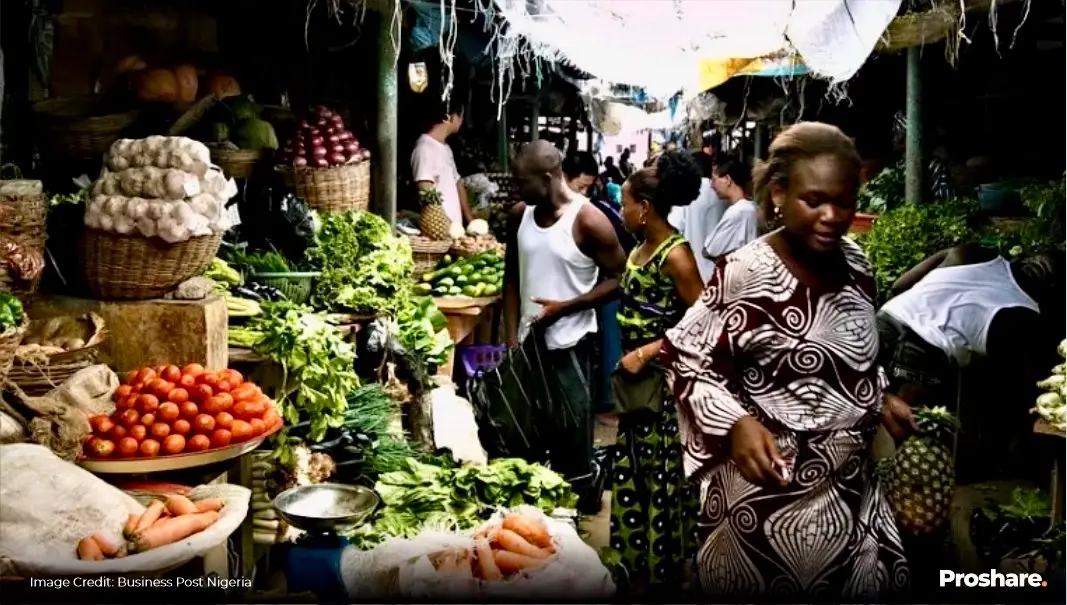
With more money allocated to keeping pace with rising prices – especially for food – there is little left over for other essential services such as healthcare, education, and investments in the future.
A report by PiggyVest, an online savings platform, highlights this grim reality. It revealed that 83 per cent of Nigerian households are now prioritising food over education, healthcare, and savings.
This shift in spending priorities underscores the harsh choices many families face: secure a meal today or invest in a better tomorrow.
The situation is dire, as evidenced by a previous report from the Central Bank of Nigeria (CBN), which noted that households were spending an astonishing 55 per cent of their income on food alone.
Government Policies Under Scrutiny
The economic distress is not solely a product of global market dynamics but also a consequence of domestic policy decisions. The removal of fuel subsidies, intended as a revenue-raising measure, has instead plunged millions into a cost-of-living crisis.
The Governor of Bauchi State, Senator Bala Mohammed, lamented at the launch of the Nigeria Development Update by the World Bank that although states were receiving more funds, these amounts were barely sufficient to meet budgetary requirements due to skyrocketing prices.
Such policy missteps have contributed to a cycle where the government appears to generate more revenue while the average Nigerian struggles to secure even the basics.
The apparent paradox – rising disposable incomes on one hand and declining consumption on the other – is a stark indicator of the systemic issues at play.
Money in circulation is growing in nominal terms, yet rampant inflation and poor fiscal policies have rendered it virtually ineffective in improving the standard of living.
Food Insecurity: A Looming Crisis
The implications of reduced household consumption extend far beyond mere economic metrics. A deteriorating food security situation looms large on the horizon.
According to a report by Cadre Harmonisé – led by the Federal Government with support from international partners including the United Nations World Food Programme – an estimated 33.1 million Nigerians are projected to face severe food insecurity during the upcoming lean season (June–August 2025).
This alarming projection underscores the fragility of the nation’s food supply and the urgent need for strategic intervention.
For many families, the rising cost of essential food items means that a balanced diet is becoming a luxury rather than a norm. The reduction in consumption is not a matter of choice but of survival, with households forced to prioritise immediate sustenance over long-term nutritional health.
Expert Analysis and Recommendations
Experts across the economic spectrum are calling for urgent policy interventions to reverse the current trend. Professor Godwin Oyedokun, a respected authority in accounting and financial development, has emphasised that a stable and healthy economy typically sees consumption growth rates in the range of 2–4 per cent annually.
The stark deviation from these benchmarks is a clear sign that consumer confidence has plummeted.
Professor Oyedokun suggests that the Central Bank of Nigeria (CBN) could lower interest rates to stimulate borrowing and spending.
However, such monetary easing must be accompanied by robust fiscal measures to tackle the inflationary pressures that are draining the real value of disposable income.
Additionally, targeted social support programmes could help cushion the impact on the most vulnerable segments of the population.
Broader Implications for Nigeria’s Economic Future
The current scenario is a wake-up call for policymakers and economic stakeholders alike. Nigeria’s economic resilience is being tested as it grapples with the dual challenges of rising costs and declining consumption.
If left unchecked, this trend could trigger a prolonged economic slowdown, with long-term ramifications on growth, employment, and overall national prosperity.
Businesses are caught in a perilous cycle – reduced consumer spending leads to lower sales, which in turn forces companies to cut costs, including job cuts and reduced production.
This cycle not only stifles economic growth but also erodes the confidence of both domestic and international investors.
As the market contracts, opportunities for innovation and expansion dwindle, further exacerbating the downturn.
The Road Ahead: Urgent Measures Needed
Reversing this worrying trend will require a concerted effort from all sectors of society. The government must re-examine its fiscal policies, particularly those that have inadvertently contributed to inflation and reduced consumer spending power.
Monetary policies need to be recalibrated to ensure that increases in disposable income translate into tangible improvements in living standards.
Furthermore, there is a pressing need for structural reforms that can boost domestic production and reduce reliance on imports, which are often subject to volatile global price movements.
Strengthening local supply chains, investing in agricultural productivity, and enhancing industrial efficiency are all critical steps towards revitalising Nigeria’s economy.
In parallel, targeted social interventions—such as food subsidy programmes and direct cash transfers to the most vulnerable—could help mitigate the immediate hardships faced by millions of Nigerians.
Such measures would not only support household consumption but also lay the groundwork for a more resilient and inclusive economic recovery.
Conclusion
The paradox of rising disposable income amid falling household consumption is a sobering reflection of Nigeria’s current economic malaise.
While the government may boast of increased revenue and higher income figures, the reality on the ground is one of widespread hardship, diminished consumer confidence, and an ever-widening gap between nominal income and real purchasing power.
As Nigeria stands at a critical juncture, decisive policy interventions and structural reforms are urgently needed to steer the nation back onto a path of sustainable growth and improved living standards.
In this pivotal moment, the collective efforts of government, business, and society will determine whether Nigeria can overcome its economic challenges and secure a brighter future for its people.
Atlantic Post – Reporting with Experience, Insight, and Unyielding Commitment to the Truth.