Nigeria’s downstream oil sector faces turmoil as the naira-for-crude deal between NNPC and Dangote Refinery collapses, causing petrol prices to spike from ₦860 to over ₦930 per litre. Stakeholders demand urgent government action to prevent further destabilisation, highlighting the deal’s role in stabilising domestic fuel pricing and energy security.
Petrol Prices Soar as Naira-for-Crude Deal Falters: A Crisis in the Downstream Sector
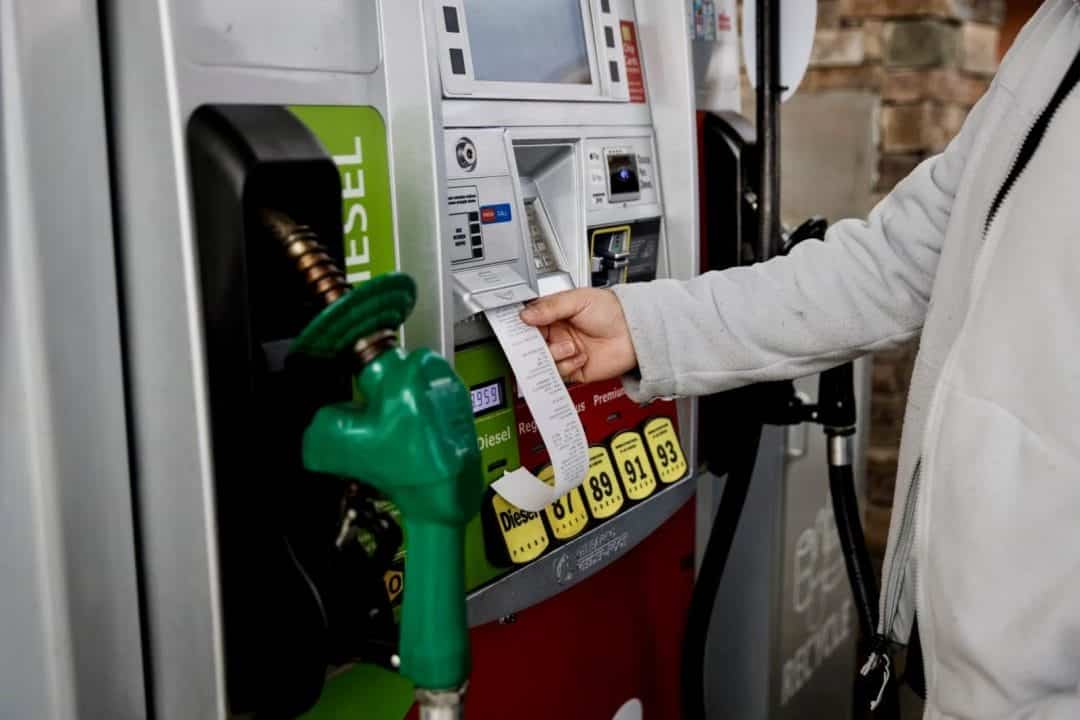
Nigeria’s downstream oil and gas market is once again under duress as uncertainty grips industry players over the highly anticipated naira-for-crude deal between the Nigerian National Petroleum Company Limited (NNPC) and the Dangote Petroleum Refinery. In a dramatic twist that threatens both the stability of domestic fuel prices and the country’s broader energy security, petrol prices have surged from approximately ₦860 per litre to over ₦930 per litre within a single week—a stark indicator that the stalemate over policy renewal is not merely bureaucratic indecision but a portent of deeper economic vulnerabilities.
A Ticking Time Bomb in the Energy Sector
For years, the naira-for-crude arrangement was hailed as a beacon of hope for the country’s energy sector. Launched on 1 October 2024, the six-month deal aimed to facilitate the sale of crude oil in naira to Dangote’s refinery, a move designed to stabilise the domestic supply chain, slash the nation’s import bill and, most crucially, check the relentless rise in pump prices.
However, as the clock struck midnight on 31 March 2024—the official termination point of the initial agreement—the much-needed extension or a replacement deal has yet to materialise.
Insiders reveal that the committee tasked with negotiating the deal has been deadlocked for days, leaving the market in limbo. With meetings deferred until after the holiday season, industry stakeholders now face the grim prospect of mounting operational costs and soaring pump prices if the status quo persists.
The Domino Effect: From Policy Paralysis to Pump Price Hikes
The immediate fallout of the policy uncertainty is unmistakable. Dealers, fuel marketers and retail stations alike have reacted with alarm as the price of petrol escalated sharply in direct response to the impasse. Prior to the suspension, the naira-for-crude deal had acted as a stabilising force, keeping the volatility of international crude prices and fluctuating exchange rates at bay.
Yet, as news of the stalemate emerged, the market was quick to adjust—pump prices in Lagos have already been recorded at ₦930 per litre, with projections hinting at an imminent rise to the dreaded ₦1,000 per litre if the deal remains unresolved.
The repercussions are not confined to Lagos alone. Nationwide, regions such as Abuja and the far north are witnessing even steeper price hikes. The divergent price points underscore a broader issue: in the absence of a cohesive government strategy to secure the naira-for-crude deal, the entire petroleum pricing mechanism stands on shaky ground.
With dealers pointing fingers squarely at government inaction, the discontent is palpable. Many are now urging the Federal Government to re-examine the deal’s framework, emphasising that failing to do so will further burden Nigerian citizens already reeling under economic pressures.
The Dangote Refinery: A Double-Edged Sword
Complicating matters further is the operational status of the Dangote Petroleum Refinery. Although heralded as a transformative project capable of processing 650,000 barrels per day, the refinery now faces its own set of challenges.
According to reports from Reuters, the facility is expected to shut down its petrol-producing unit for maintenance as soon as June—a 30-day hiatus that could further exacerbate supply constraints at a time when every barrel counts.
The refinery’s temporary suspension of naira-based sales, announced on 19 March, has added another layer of complexity. Citing a mismatch between its sales proceeds (denominated in naira) and its crude procurement obligations (priced in US dollars), the Dangote refinery has shifted gears to align its sales currency with its purchasing obligations.
While this move is ostensibly a prudent risk management strategy, it has triggered an immediate ripple effect: private depots in Lagos have reported a jump in loading prices to about ₦900 per litre. In a market already jittery from policy uncertainty, such price oscillations serve only to heighten fears of an impending crisis.
Behind the Scenes: Negotiations, Loans and Lost Opportunities
A closer look at the intricacies of the naira-for-crude deal reveals a tangled web of financial manoeuvres and strategic missteps. Insiders at the Finance Ministry have lamented the stagnation in negotiations, pointing to an inability of the parties to convene during a critical period.
A senior government official confessed, “Nothing new has happened. Probably after the holidays, the committee will sit and meet.”
This lack of progress has not only undermined confidence but has also allowed market forces to dictate prices, a scenario that many industry experts argue could have been mitigated with a more proactive government approach.
Moreover, some industry analysts contend that the root cause of the current predicament lies in the misallocation of crude oil resources by the national oil company. Reports suggest that large volumes of yet-to-be-produced crude oil were diverted to secure international loans, leaving a gap in domestic supply at a time when the market needed every drop.
This strategic error has, in effect, left both marketers and consumers bearing the brunt of a system under strain.
The Toll on Stakeholders: A Costly Battle Against Time
For those operating at the retail end of the spectrum, the financial implications of these price swings are nothing short of catastrophic. The National Publicity Secretary of the Independent Petroleum Marketers Association of Nigeria (IPMAN), Chinedu Ukadike, has been vociferous in his criticism.
He reveals that marketers have collectively lost over ₦200 billion in the past six months alone due to erratic price fluctuations. This loss, he warns, is not merely a line-item deficit but a direct threat to the viability of bulk trading and the broader financial stability of the downstream sector.
Ukadike’s frustration is shared by many who argue that the cascading effects of this uncertainty have already led to a noticeable reduction in bulk buyers—a trend that, if allowed to continue, could have long-lasting implications on fuel supply and distribution networks.
In a sector as vital as petroleum marketing, where margins are thin and competition is fierce, even minor disruptions can snowball into full-blown crises.
The National Debate: Policy, Patriotism and the Price of Progress
At the heart of this escalating crisis is a fierce debate over the merits and demerits of the naira-for-crude arrangement. Proponents of the deal argue that it is a patriotic initiative designed to insulate the Nigerian market from the vicissitudes of global oil prices and volatile exchange rates.
The logic is straightforward: by transacting in naira, the nation can avoid the deleterious effects of dollar fluctuations, thereby stabilising pump prices and safeguarding the interests of ordinary Nigerians.
Opponents, however, maintain that the deal has created unintended consequences. They point to the refinery’s decision to suspend naira-based sales as evidence that the arrangement, in its current form, is unsustainable.
According to industry veteran Hammed Fashola, the Vice President of IPMAN, the issue is not merely about profit margins—it is about a fundamental misalignment in the country’s energy strategy.
“There is no justification for the price hike by depot owners,” Fashola declares passionately. “The initial promise of the naira-for-crude deal was to stabilise prices, yet here we are, witnessing another surge in fuel costs that threaten to strangle the Nigerian economy.”
Fashola’s call for a re-evaluation of the deal is echoed by many across the industry. He contends that a renewed commitment to the original arrangement could have been a game changer.
“We need to plead with the government to look at the agreement again. If the naira-for-crude deal is revived, it will not only help drive the price down but also reaffirm our commitment to putting citizens before profit,” he insists.
Such arguments have sparked a wider national conversation, one that pits short-term economic gains against long-term energy security and consumer welfare.
The Wider Implications: Economic Ripples and Social Unrest
Beyond the immediate impact on pump prices, the fallout from this policy impasse is poised to reverberate across Nigeria’s broader economic landscape. Rising fuel prices invariably lead to increased transport fares, which in turn erode the purchasing power of the average Nigerian.
With inflation already a perennial concern, the prospect of further fuel price hikes has many fearing that the cost of living could spiral out of control.
This is not a mere academic concern. For a country where fuel is a critical input across virtually all sectors—from agriculture to manufacturing—the ripple effects of soaring petrol prices could be profound.
As market uncertainty mounts, there is a growing risk that consumer confidence will wane, investments in infrastructure will stall, and economic growth could be significantly hampered.
In this light, the current debate over the naira-for-crude deal transcends the boundaries of industry parlance; it is a litmus test for the government’s ability to manage one of the country’s most pressing economic challenges.
The Road Ahead: Urgent Calls for Action
As the deadline for the naira-for-crude deal’s renewal looms large, stakeholders from every corner of the energy sector are calling for swift, decisive action. The message from the ground is unambiguous: without a renewed commitment to the arrangement that has hitherto provided a measure of price stability, Nigerians will be left to grapple with fuel prices that could well breach the ₦1,000 per litre mark.
Industry leaders have already scheduled an urgent stakeholders’ meeting, with representatives from the IPMAN National Working Committee and the Petroleum Products Retail Outlets Owners Association of Nigeria slated to discuss viable solutions.
There is a growing consensus that the Federal Government must come to the table with a revised proposal—one that accounts for the current market dynamics and realigns the interests of both the state and private sector players. Such a move, many argue, is not merely a policy adjustment but a necessity to prevent further economic destabilisation.
Concluding Reflections: Balancing National Interest and Market Realities
In the final analysis, the current impasse over the naira-for-crude deal is symptomatic of a broader challenge facing Nigeria: the delicate balancing act between national interest and market realities.
On one hand, the deal was conceived as a bold, patriotic initiative—a mechanism to insulate the local market from external shocks and to assert a measure of economic sovereignty.
On the other, its current deterioration has laid bare the vulnerabilities inherent in any system that relies on precise synchronisation between multiple, often conflicting, economic imperatives.
As petrol prices continue to creep upward and as the spectre of a supply crunch looms, the call for a swift resolution grows ever more urgent. The government, industry stakeholders and citizens alike must recognise that the stakes are too high for complacency.
In a nation as dynamic and resource-rich as Nigeria, where energy security is both a strategic asset and a daily necessity, the path forward must be paved with pragmatism, patriotism and, above all, a steadfast commitment to the welfare of the people.
For now, as debates rage and discussions stall, Nigerians stand on the precipice of an economic turning point. The coming days will not only determine the fate of the naira-for-crude deal but will also shape the future of Nigeria’s energy policy and, by extension, the everyday lives of its citizens.
The message from the industry is clear: restore the balance, renew the commitment, and let national interest triumph over fleeting profit.
In this turbulent period of policy paralysis and market uncertainty, it is imperative that all stakeholders—government officials, industry leaders and the citizenry—work collaboratively to secure a sustainable solution. Only by doing so can Nigeria hope to stabilise its fuel prices, safeguard its energy future and, ultimately, protect the economic well-being of millions.