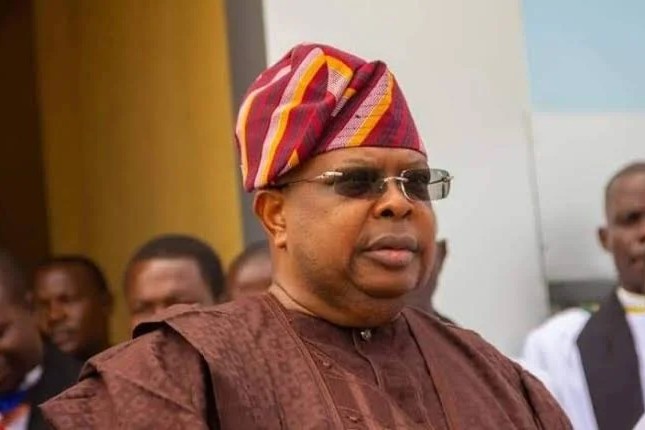
A viral clip showing a mass burial in Heipang, near Jos, has placed Evangelist Ezekiel Dachomo at the centre of a new national flashpoint. In an interview with The Punch published on 25 October 2025, Dachomo described how he filmed the graves and coffins at a burial for victims of an attack in which 11 people were killed, and said he did so to create an indelible record that would testify to what he calls “the genocide of Christians” in parts of Plateau State.
He now says his life is in “grave danger” after social-media threats and, he claims, hostile official comment from some security actors.
This report examines the interview and the video in context. It places the recent Heipang killings within two decades of cyclical violence in Plateau State. The report analyzes official responses, including a military rebuttal to Dachomo’s claims. It also explores why a viral video can document atrocity and inflame an already combustible environment.
What Dachomo filmed and why it matters
Dachomo told Punch he filmed the burials to preserve evidence and strengthen the faith of future generations who, he said, must know what “we were terrorised and persecuted” for.
He framed the clip as both documentary and witness: a record that Christians, he insists, are being systematically targeted in the north. The interview contains graphic descriptions — children “butchered without conscience”, abducted wives and attacks on hospitals — and an appeal for international attention.
Independent reporting confirms that a series of attacks in mid-October and into this month left at least a dozen people dead in Barkin Ladi and neighbouring local government areas, including villages in the Heipang district. Local authorities and press outlets recorded separate incidents and subsequent mass burials in mid-October. (Vanguard News)
That combination of fresh local fatalities and Dachomo’s public, visual record explains why the clip spread. In societies where formal investigations are weak and official transparency limited, videos taken at scenes of violence often become core evidence — and, at the same time, accelerants of communal emotion.
Military Response and the Risks of Narrative
The Nigerian Army publicly challenged Dachomo’s narrative within days of the video circulating, accusing him of spreading inflammatory and unverified claims that risk fuelling communal tensions. The military’s media arm described the clip as propaganda and warned against incitement. Local coverage of the army’s statement was reported widely by national outlets and on social media.
That contradiction — a cleric who says the video proves a targeted campaign against Christians, and an army that calls the same footage dangerous and unverified — is central to the story.
It raises immediate operational questions: who arrested or interviewed suspects, what forensic or victim-identification work was undertaken, were graves exhumed for independent verification, and why, in Dachomo’s view, have arrests allegedly proved ineffective when they are made?
For families on the ground, such procedural clarifications matter more than national spin. Dachomo says suspects are arrested and released; survivors say they live in daily fear.
The military insists that unverified claims can worsen an already fraught security environment — a plausible concern where rumours have sparked reprisals in the past.
A Two-Decade Arc: How Plateau Became a Recurrent Flashpoint
To understand whether the Heipang killings are isolated or symptomatic of a longer pattern, it is necessary to place them in the Plateau historical record. Plateau State, and Jos in particular, has experienced recurrent episodes of communal and ethno-religious violence since the early 2000s.
Scholars and policy institutes document major outbreaks in 2001, 2008 and 2010 — episodes that together cost hundreds and, by some counts, thousands of lives and displaced tens of thousands more.
The International Crisis Group and academic studies describe a complex mix of indigene-settler politics, competition over land and resources, and periodic political manipulation.
International reporting and rights organisations note that the shape of violence has changed since 2001. Where earlier crises erupted around municipal politics, the last decade has seen more rural, spontaneous and sometimes criminalised violence involving armed pastoralist groups, criminal gangs, and sporadic mercenary elements crossing borders.
Amnesty and Human Rights Watch reports have repeatedly documented non-state armed groups committing serious abuses, including mass killings, village burnings and forced displacement across the central and southern states of Nigeria.
Recent years have seen deadly attacks attributed to armed pastoralist militias in Plateau and elsewhere. Independent international outlets recorded incidents in January 2024 and in subsequent years that left dozens dead and thousands displaced in Plateau communities. These episodes underscore a structural security failure in which state protection does not reach some rural enclaves, and perpetrators often act with impunity or reappear after brief arrests. (Al Jazeera)
Historical Precedents of Violence at Burials
One of Dachomo’s most chilling references was to the killing of political and community figures at burials — a pattern that has painful precedents in Plateau. In July 2012, Senator Gyang Dantong was shot dead while attending a mass burial for dozens of villagers killed in earlier attacks. Reuters and domestic reporting from the time recorded both the senator’s death and the wider pattern of violence that made funerals target sites for revenge attacks. That history helps explain why Dachomo says he fears attending or conducting burials at all.
Numbers, Displacement and the Human Cost
Quantifying the human toll is difficult. Official tallies of fatalities differ between agencies and field reports; yet the long arc is demonstrable.
The 2008 and 2010 crises produced hundreds if not thousands of deaths and large displacement flows, while episodic attacks since then have continued to cause dozens of deaths at a time and periodic waves of displacement.
Human Rights Watch’s recent country reporting highlights how insecurity and state weakness have continued into 2024 and 2025, worsening the humanitarian picture for many communities.
For the immediate incidents described by Dachomo — the Heipang attack in which Punch reported 11 deaths and related strikes in Barkin Ladi and neighbouring wards that local outlets counted as 13 at times — the human impact is concrete. Families are left without breadwinners. Abductions leave wives or mothers missing. Hospitals are under pressure treating the wounded.
Local clergy and civic groups say many victims are buried in communal graves. Sometimes, these burials occur in mass ceremonies. Families can’t afford individual funerals. In some cases, they fear returning to attack sites.
The Language of “Genocide” and the Politics of Evidence
Dachomo uses the term “genocide” to describe what, in his words, is a targeted campaign against Christians. That is a grave allegation with legal and political weight. International law defines genocide narrowly, requiring proof of intent to destroy, in whole or in part, a protected group.
Clerical testimony, video footage of burials, and local eyewitness accounts are critical evidence. Nonetheless, legal classification requires a robust investigation. It also needs a chain-of-custody for forensic samples. Additionally, arrest and indictment of named perpetrators are necessary. There must be credible documentation that proves intent rather than opportunistic communal killing.
The contrast between Dachomo’s claim and the Army’s rebuttal illustrates a wider truth about violent environments. Competing narratives can harden into political positions.
Where one actor frames violence as religious persecution, another will warn against sectarian framing that may fuel reprisals. The absence of transparent, independent investigations complicates the quick adjudication of those claims. That vacuum is precisely where mistrust grows.
What Investigations and Protections Are Needed
A responsible response requires three elements:
Immediate, impartial forensic work. Graves and bodies must be properly documented by independent forensic teams where possible. Medical records, hospital admissions and morgue registers should be made available to authorised investigators.
Transparent criminal investigations. When suspects are arrested, courts and prosecuting agencies should publish charges and legal outcomes. Claims by locals that suspects are released without charge must be scrutinised.
Protection and humanitarian assistance. Displaced families, wounded survivors and relatives of the dead need protection and relief. Where communities fear return, swift and sustained protective deployments should be considered alongside civilian policing efforts.
International partners and rights organisations can play a role. They can offer technical assistance for forensic work and documentation. They can also provide capacity support for prosecutions. Some small donations have reportedly reached victims’ families to cover medical bills. However, Dachomo told Punch there has been no major international intervention to date.
The Political Dimension: A Call to the Presidency
Dachomo’s final appeal in the interview was directly to President Bola Ahmed Tinubu: “Nigeria belongs to both Christians and Muslims. President Bola Tinubu must take action.”
The presidency faces a live policy debate. It must decide whether to meet that appeal with a heavy military response. Another option is a law-and-order crackdown. Alternatively, they could adopt a combined approach of policing and community reconciliation.
Past heavy-handed security operations in Plateau have sometimes stabilised cities temporarily but failed to resolve root causes. Conversely, a purely development-oriented response without immediate protection risks more deaths.
The policy choice must balance rapid protection for vulnerable communities with long-term measures that address land disputes, youth unemployment, political manipulation and impunity.
Human rights organisations have repeatedly urged the government to investigate alleged human rights abuses by both state and non-state actors.
Conclusion: Evidence, Accountability and the Danger of Silence
Evangelist Ezekiel Dachomo’s video and interview are more than the latest items in a cycle of online outrage. They are a test of Nigeria’s institutions, and of the country’s ability to investigate, to protect, and to hold perpetrators to account without allowing the public square to become a theatre of inflammatory claims that produce more violence.
Two urgent facts are clear. First, communities in Plateau are suffering renewed waves of attacks that cause real deaths, abductions and displacement; local reporting and hospital records corroborate recent fatalities. Second, the absence of rapid, transparent investigations, and the presence of conflicting narratives between clerical leaders and security agencies, intensifies fear, suspicion and the risk of reprisal.
For Nigerians who want peace, the way forward must combine immediate protective measures, independent forensic and judicial investigations, and a political strategy that rebuilds trust across communities.
For the international community and rights groups, there is a clear need to support credible documentation and to press for prosecutions where evidence exists.
For Evangelist Dachomo and those who share his fear, public testimony must be matched by legal and civic channels that translate complaint into accountable action — otherwise the cycle of mass burials and grieving will continue to define the lives of Plateau’s rural communities.
Follow us on our broadcast channels today!
- WhatsApp: https://whatsapp.com/channel/0029VawZ8TbDDmFT1a1Syg46
- Telegram: https://t.me/atlanticpostchannel
- Facebook: https://www.messenger.com/channel/atlanticpostng