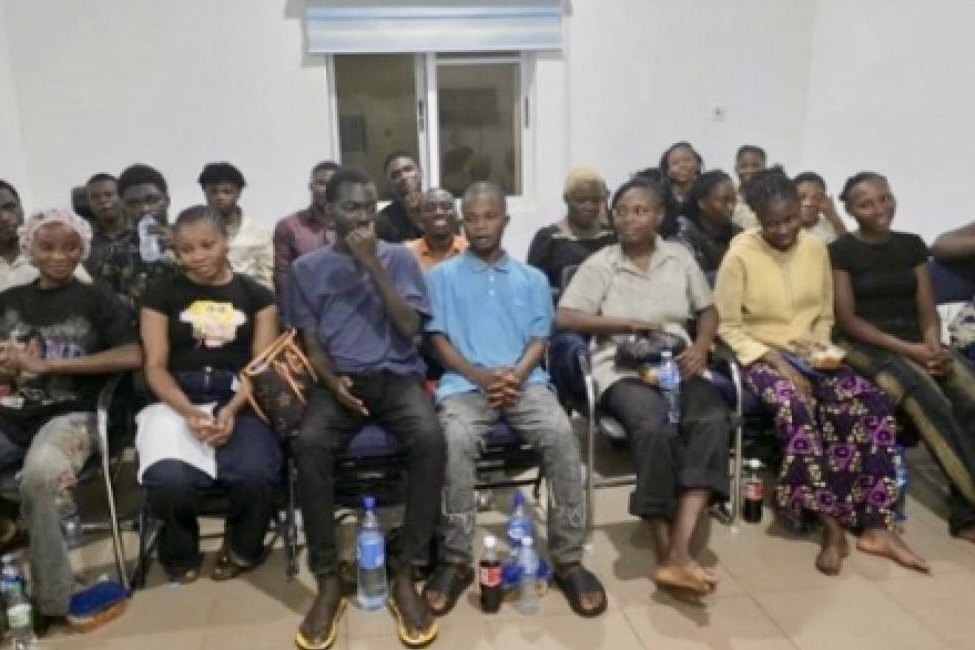
Inside the WASSCE Leak that Plunged Nigerian Candidates into Darkness
For millions of Nigerian senior-secondary students, the West African Senior School Certificate Examination (WASSCE) is the gateway to tertiary institutions and gainful employment. Yet in late May 2025, this pivotal rite of passage descended into chaos: the English Language question paper was illicitly circulated four days before the scheduled exam, compelling thousands of candidates in states such as Lagos, Ogun, Taraba and Osun to sit their papers in the dead of night without electricity—relying instead on torchlight and lanterns.
In a dramatic turn that smacks of negligence and corruption, WAEC (West African Examinations Council) officials are now under scrutiny, and the Nigerian police have launched a probe into the leak.
The Stakes: WASSCE’s Pivotal Role for Nigerian Students
Every April to June, WAEC administers the WASSCE for School Candidates across five Anglophone West African nations, including Nigeria. For the 2025 cycle alone, no fewer than 1,973,253 candidates registered from 23,554 schools nationwide—an increase of 158,627 from 2024, with a near 50:50 gender split (979,228 males and 994,025 females).
This mammoth cohort sat 196 papers in 74 subjects over eight weeks. In a bid to curb malpractice, WAEC introduced its maiden Computer-Based WASSCE (CB-WASSCE) for certain codes, ensuring no two candidates receive identical question sets on some high-risk subjects. Yet, as last week’s leak reveals, even cutting-edge innovations struggle against deeply entrenched illicit networks.
How the Leak Came to Light
According to Sunday PUNCH reports, a tip-off from a concerned Nigerian alerted WAEC that the English Language paper had already been printed and circulated to unscrupulous “exam run” syndicates.
The paper eventually appeared on WhatsApp and Telegram groups four days before the exam, with messages demanding between ₦1,000 and ₦1,500 per candidate for access to the full essay and objective questions.
One such platform, boasting over 80,000 subscribers, was charging ₦1,000 for just the English paper.
Upon verifying the leak, WAEC was forced into emergency reprints—an operation that upended logistics, stretched human resources to the limit, and plunged examination centres into chaos.
Accounts from insiders describe frantic late-night printing in Ikorodu, where staff worked “48 hours nonstop” to pack and code new question sets.
Midnight Exams: A Travesty of Equity and Fairness
On Wednesday, 28 May 2025, candidates in Lagos, Ogun, Taraba and Osun sat their English Language paper late into the night—some as late as 12 a.m., huddled under torchlight due to widespread power outages.
Videos and photos that circulated online revealed rows of exhausted students scribbling answers by the dim glow of lanterns.
What should have started at 2 p.m. dragged on until 7 p.m. or later in several centres, violating WAEC’s own timetable and inflicting untold mental and physical strain on young minds.
For a student whose “brain was cool” at 2 p.m., being forced to write at midnight is calamitous: far from conducive to critical thinking, such conditions invite fatigue, stress and subpar performance.
Many parents, aghast at the “inhumane” conduct, warned of “mass failure,” arguing that no reasonable result can emerge from an exam conducted under torchlight.
Allegations of High-Level Complicity
Stark allegations now surround the leak. Our correspondents learned from reliable sources within WAEC that senior officials may have been involved, motivated by greed.
A syndicate of “exam run” operators is believed to have pocketed tens of millions of naira: one insider estimates that if just 50,000 candidates paid ₦1,000 each, the operators grossed at least ₦50 million from the English Language leak alone.
Telegram channels such as Free WAEC Exam Infos, King of Exams Runs, and WAEC GCE NECO Expo openly marketed leaked papers for between ₦1,500 and ₦5,000, targeting subjects from Geography to Literature-in-English.
Cover pages of the English Language Paper Two posted on 27 May, a full day before the exam, tempting candidates to pay to “buy” the questions was even sighted, according to a Sunday PUNCH correspondent.
In response, WAEC’s Acting Head of Public Affairs, Moyosola Adesina, issued an apology on behalf of the Council.
She admitted that “measures taken to prevent paper leakage inadvertently impacted the timeliness and seamless conduct of the examination,” citing “logistical challenges, security concerns, and sociocultural issues” as contributing factors.
Criminal Investigations and Institutional Response
Faced with outrage from parents, students and civil society, WAEC has launched an internal inquiry and formally invited the Nigerian Police Force and other security agencies to investigate culpable officials and syndicate members.
Law enforcement sources confirm that tracing payments made to rogue WhatsApp and Telegram platforms is now a key line of inquiry.
Yet, as of this writing, no arrests have been publicly announced—fuelling scepticism and prompting calls for transparency.
Meanwhile, the National Parents Teachers Association of Nigeria (NAPTAN) has demanded outright cancellation of the English Language paper and a full rescheduling of the exam.
Their National Publicity Secretary, Ademola Ekundayo, insists that “no reasonable results can come out of an examination conducted under such conditions,” warning that the integrity of the entire 2025 WASSCE hangs in the balance.
Erosion of Confidence, Mental Toll and the CBT Debate
Amid the fallout from the 2025 WASSCE leak, public trust in WAEC has been shattered. In communities from Lagos to Taraba, parents and students now question whether any exam paper can be considered secure.
Social-media chatter is rife with distrust, as online forums bristle with accusatory posts alleging that WAEC has become “an accessory to examrun syndicates”.
Polls conducted by several private educators show satisfaction ratings for WAEC plummeting to single digits, compared with 42 percent a year earlier.
This crisis compounds a string of high-profile malpractices. In 2017, a Physics paper was leaked in Akwa Ibom State, prompting an emergency reprint and widespread condemnation; again in 2019, Chemistry questions surfaced on WhatsApp just 48 hours before the exam.
Despite WAEC’s repeated pledges to tighten security, the Council’s zero-tolerance mandates—introduced in April 2025—have so far proven toothless.
Those measures included colour-coded envelopes, GPS-tracked vans and enhanced security at printing presses, yet the English Language paper still made its way online four days early.
Mental-Health Fallout: The Invisible Crisis
The physical exhaustion of writing exams at midnight is visible in the dim torchlit photographs splashed across social media, but the mental-health impact is far more insidious.
Psychologists warn that high-stakes tests conducted outside normal hours trigger acute stress responses.
Dr Halimat Sani of Ahmadu Bello University notes that “prolonged wakefulness during critical assessments impairs memory consolidation and elevates anxiety hormones, risking long-term psychological scars.”
Students interviewed by Sunday PUNCH echoed these concerns: one Lagos candidate described his hands trembling uncontrollably as he tried to answer comprehension questions under a weak lantern.
The disorientation of sitting an exam at midnight also clashes with cultural norms. In many regions, families expect students home before sundown; a parent in Osun State lamented that his daughter returned from the exam well past 10 p.m., only to collapse into bed, “unable to focus on forthcoming papers.”
Educators worry that this disruption of circadian rhythms could predispose vulnerable teens to depression.
Data from a March 2025 study by the Nigerian Psychological Association found that 22 percent of WASSCE candidates already exhibited moderate to severe exam-related anxiety; experts predict those figures will surge post-leak.
The CBT Crusade: Digital Salvation or Ill-Conceived Fantasy?
In the wake of this debacle, every major stakeholder has clamoured for a shift to Computer-Based Testing (CBT).
The All Nigeria Confederation of Principals of Secondary Schools (ANCOPSS) contends that CBT would “obliterate examrun rackets at a stroke,” since randomised question banks and encrypted digital delivery leave little room for illicit duplication.
Indeed, JAMB’s CBT model—praised for resilience during the 2025 UTME glitch—serves as a blueprint. By deploying solar-powered computer labs and offline testing modules, JAMB ensured that, once initial errors were patched, no exam questions could be leaked online.
Yet critics warn that Nigeria’s erratic power grid and infrastructural disparities render a wholesale CBT rollout quixotic.
Rural districts in Plateau and Zamfara lack stable electricity, let alone high-speed internet; forcing CBT on these areas risks disenfranchising thousands.
“We cannot digitalise an exam when half our centres still depend on diesel generators,” argues Yomi Otubela, National President of the National Association of Proprietors of Private Schools.
Otubela proposes a phased pilot in Lagos, Abuja and Port Harcourt by mid-2026, followed by rigorous evaluative metrics before scaling up to less-connected states.
Comparative Scandals: Lessons Unheeded
A retrospective look reveals that WAEC’s repeated failures follow a predictable script: leaks, hurried reprints, last-minute apologies, and superficial security tweaks.
In 2014, a Geography paper was compromised in Oyo State, and although WAEC imposed “enhanced courier protocols” thereafter, the same vulnerability resurfaced in 2020 when Mathematics questions marred the exam in Edo State.
Despite each scandal triggering media fanfare, no independent, third-party audit has ever been conducted; instead, WAEC relies on in-house reviews that rarely yield tangible repercussions for errant officials.
Contrast this with Ghana’s Ghanaian National Examination Council (GNECO), which contracts external security firms to oversee printing and seals each envelope with uniquely numbered tamper-evident tags.
Ghana also mandates a rotating roster of anonymised invigilators flown in from different regions, effectively severing local collusion networks.
Sierra Leone takes extra steps: all question-sets are stored on encrypted USB drives, unlocked only at the exact moment an exam begins, with biometric verification required of every invigilator.
These models illustrate that technology alone cannot combat malpractice—rigorous, enforceable protocols and robust oversight are equally vital.
Economic Exploitation: The Examrun Underworld
Rogue websites and social-media channels have become major profit engines. After the long-anticipated English paper leaked, one syndicate boasting over 80,000 subscribers reported revenues exceeding ₦50 million within days.
Platforms such as Free WAEC Exam Infos and King of Exams Runs advertised entire subject bundles for ₦5,000 per candidate, with bank transfers made through untraceable e-wallets.
Although WAEC claims to be “tracing payments”, the anonymous, encrypted nature of these transactions means that digital footprints often vanish.
This lucrative underground economy has institutionalised a pay-to-pass mindset, subverting meritocracy and penalising honest students.
Recommendations Before the Final Countdown
Immediate Independent Audit:
WAEC must engage an autonomous forensic auditor to review all printing contracts, courier logs and financial transactions related to 2025 WASSCE. Without transparency, suspicion—already pervasive—will calcify into outright disdain.
Expand Televised CCTV Monitoring:
Install live-streamed CCTV cameras in all major printing and storage facilities. Real-time surveillance, accessible by anti-graft agencies, would deter inside jobs and reassure stakeholders that security is serious, not symbolic.
National Whistleblower Hotline and Rewards:
Establish a 24/7 toll-free hotline and an online portal where anonymous tip-offs on leaks are financially incentivised. Historical data shows that insiders hold the key to preempting leaks; offering bounties for actionable information could disrupt syndicate hierarchies.
Mental-Health First Responders:
Until CBT becomes viable nationwide, deploy trained counsellors at all major exam centres. Quick-response mental-health teams can debrief students, mitigate trauma from late-night sittings, and collect data on psychological impact to inform future reforms.
Targeted CBT Pilots in Urban Hubs:
Launch computer-based WASSCE in Lagos, Abuja and Port Harcourt for the 2026 cycle, using solar-backup power and offline testing software. Track performance differentials, incident rates and logistical costs to build an evidence base for nationwide adoption.
Legislative and Policy Implications: House Probes and Calls for Reform
Barely a day after images of exhausted students scribbling under torchlight went viral, the House of Representatives resolved to summon WAEC leadership to explain how “exams began at 12:00 a.m. in some areas”—an indignity lawmakers labelled “unacceptable” and “disgraceful.”
In Abuja on 31 May 2025, the House Committee on Basic Examination Bodies, chaired by Hon. Oboku Oforji, angrily demanded answers as parents and residents recounted how pupils sat in total darkness, their safety compromised by malfunctioning power infrastructure and chaotic scheduling.
Hon. Awaji-Inombek Abiante lamented reports of “exam papers left in a passenger tricycle”—a damning indictment of WAEC’s logistics.
The Committee unanimously adjoined until WAEC’s head could appear in person on 2 June 2025, underscoring the urgency of legislative oversight.
Within hours, WAEC’s Senior Assistant Registrar, Ambrose Okelezo, admitted the Council’s leadership had been absent due to an “emergency meeting,” prompting lawmakers to insist that “no one can dictate terms” when students’ welfare hangs in the balance.
Many legislators warned that failure to appear would be seen as contempt, reflecting the depth of outrage at the Council’s “dereliction of duty.”
The Erosion of Public Confidence: A System Under Siege
This latest crisis compounds a string of recent catastrophes in Nigeria’s exam administration.
Just one month earlier, the Joint Admissions and Matriculation Board (JAMB) suffered a nationwide technical meltdown during the 2025/2026 Unified Tertiary Matriculation Examination (UTME), stranding thousands and prompting questions about the viability of large-scale computer-based testing at the tertiary-entry level.
The juxtaposition of a major UTME technical failure with a catastrophic WASSCE leak has intensified widespread cynicism: can any Nigerian exam body be trusted to safeguard the future of youth?
Students and parents now see each test as a potential gauntlet of stress, disruptions and financial exploitation by “examrun” syndicates that thrive in the shadows.
A senior lecturer in Educational Management at the University of Lagos, Dr Olusola Thomas, warns that “so long as we lack reliable oversight, stakeholders will lose faith in our examination system”—a grim prognosis given that WASSCE results determine university admissions, scholarships and overseas opportunities.
Mental Health Fallout: Young Minds Caught in the Crossfire
Psychologists and educators are sounding alarms about the long-term mental-health repercussions. The trauma of sitting an exam at midnight—when circadian rhythms should signal rest—cannot be overstated.
“Extended wakefulness during high-stakes assessment impairs cognitive processing, heightens anxiety and risks burnout,” notes child-psychology specialist Dr Halimat Sani from Ahmadu Bello University.
Countless students reported elevated heart rates, headaches and insomnia, symptoms that may persist well beyond result release.
An Osogbo parent, Ajayi Ademola, recounted how his daughter returned home at 11 p.m., “unable to revise because she was mentally drained”—a pattern echoed nationwide.
Calls for Computer-Based Testing (CBT): Panacea or Pipe Dream?
In the wake of the scandal, all major stakeholders have renewed calls for the wholesale adoption of CBT at the senior-secondary level.
The All Nigeria Confederation of Principals of Secondary Schools (ANCOPSS) president, Mallam Musa Ibrahim, insists that “just like JAMB’s CBT, WAEC must go paperless to shatter the racket of miracle centres and examrun syndicates.”
He argues that encrypted digital delivery, randomised question banks and real-time biometric verification would thwart malpractice at its inception.
However, critics caution that Nigeria’s erratic power supply and patchy internet connectivity render CBT an aspirational, not immediate, solution.
Private schools in urban centres may adapt swiftly, but rural districts—where infrastructure remains dilapidated—would be further marginalised.
National President of the National Association of Proprietors of Private Schools (NAPPS), Yomi Otubela, advocates a phased approach:
“Before deploying CBT universally, WAEC must pilot in Lagos, Abuja and major state capitals; only then can we assess scalability.”
Recommendations: From Whistleblower Incentives to Stricter Penalties
To restore credibility, experts propose a multi-pronged strategy:
Strengthen Whistleblower Protections:
Offer financial rewards and anonymity guarantees to insiders who expose planned or ongoing leaks. Establish a secure digital reporting portal linked to anti-graft agencies.
Enforce Tamper-Proof Logistics:
Mandate GPS-tracked courier services for all question-paper shipments. Seal printed materials with tamper-evident packaging featuring QR-code authentication. Engage third-party security auditors with no prior ties to WAEC.
Impose Harsher Penalties:
Legislate a minimum of five years’ imprisonment for any official found complicit in exam leaks, with forfeiture of assets. Clamp down ruthlessly on syndicate operators, including bank-account seizures for illicit proceeds.
Pilot CBT in Strategic Locations:
Launch a CBT pilot in Lagos, Abuja and Port Harcourt by mid-2026. Leverage solar-powered computer labs and offline testing modules to mitigate internet and electricity challenges. Evaluate performance metrics before nationwide rollout.
Enhance Psychological Support:
Deploy trained counsellors to exam venues, ensuring students can debrief immediately after late-night sittings. Incorporate mental-health assessments into post-exam reviews to gauge long-term impact.
Conclusion: A Defining Moment for Nigeria’s Examination System
The 2025 WASSCE leak and ensuing midnight exams represent more than an operational fiasco—they signal a crisis of confidence in Nigeria’s institutions.
Students, who should be celebrated for academic diligence, have been turned into collateral damage, victims of a profit-driven underworld and bureaucratic inertia.
As WAEC personnel scramble to reprint question sets at ungodly hours, and lawmakers demand accountability, the Nigerian public watches with furious scrutiny.
Will WAEC emerge from this scandal reformed, with bulletproof security and an unassailable commitment to fairness?
Or will this episode join a growing ledger of institutional failures, reinforcing a narrative that Nigeria’s examination bodies are broken?
As stakeholders—from parents and educators to lawmakers and anti-graft agencies—rally for radical reform, one thing is clear: the future of WASSCE, and the dreams of nearly two million candidates, hang in the balance.
Additional reporting from Peter Jene & Omongho Macaulay