By Editor
Introduction: A City Under Pressure and the Crackdown on Illegal Encampments
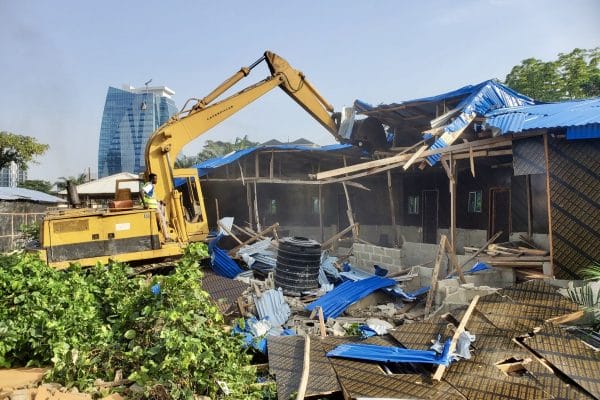
In a bold and controversial sweep, the Lagos State Government (LASG) took a decisive step towards reasserting control over public spaces by demolishing 138 shanties along the Ajao Estate Canal bank. The move, carried out under the Lagos Environmental Sanitation Corps (KAI) and endorsed by the state’s Corps Marshal, Maj. Olaniyi Olatunbosun Cole (Rtd), left 169 illegal residents dislodged, adding fuel to an ongoing debate about the governance of Lagos’ overburdened metropolitan landscape. For a city grappling with relentless urban expansion, mounting social issues, and rising housing scarcity, the LASG’s stance has sparked intense discussions around the ethics, politics, and strategies behind the demolition drive.

Cole’s statement, made at KAI’s command headquarters in Bolade-Oshodi, revealed the troubling reality of these makeshift communities, where residents reportedly paid between ₦60,000 to ₦100,000 annually to syndicates for these illegal accommodations. Highlighting “humongous infractions,” the agency cited public health risks and public safety concerns, ranging from the spread of infectious diseases to the alleged harbouring of criminal elements within these areas. For proponents, the crackdown symbolises much-needed urban order; for critics, it represents yet another instance of Lagos’ aggressive urban policies that fail to address deeper, systemic problems contributing to these proliferating shantytowns.
Ajao Estate Canal Bank: A Microcosm of Lagos’ Unrelenting Urban Challenges
To truly understand the stakes of LASG’s demolition drive, one must look beyond the shanties to the broader pressures facing Lagos—an ever-growing city with over 20 million residents, where poverty, housing shortages, and inequality converge to create one of the most challenging urban landscapes in Africa. With the population projected to nearly double in the coming decades, the government is up against what seems like an impossible task: balancing development and infrastructure with the needs of a swelling underclass.
Located on the peripheries of Lagos’ sprawling urban sprawl, places like Ajao Estate Canal bank have become home to a diverse, often desperate population. Many of those displaced in this latest demolition are migrant workers, labourers, and low-income families unable to afford even the lower-end accommodations in the Lagos property market. The prevalence of these illegal settlements highlights a housing crisis that city authorities have, at best, struggled to address, and at worst, exacerbated through policies that critics argue favor the affluent and leave Lagos’ underprivileged with no viable alternatives.
A Broader Housing Crisis: Real Estate Realities for the Working Class
The demolitions at Ajao Estate Canal are symptomatic of a much larger problem: the housing policies of Lagos State have, in the view of some experts, consistently marginalised the economically vulnerable. With legitimate housing options often prohibitively expensive, low-income Lagosians have been left with no choice but to seek shelter wherever available. As a result, syndicates have sprung up, capitalising on this desperation by charging for spaces in shanties, shacks, or makeshift accommodations like those at Ajao Estate.
This isn’t an isolated occurrence; similar arrangements were uncovered under the Dolphin Estate Bridge, where rooms as small as 10×10 and 12×10 square feet were being rented out at a rate of ₦250,000 per year. These “under-bridge apartments,” far from unique to Ikoyi, signal a disturbing trend in Lagos’ urban housing market, where the poor are increasingly left to fend for themselves in unsafe, unregulated spaces.
The Role of the Lagos Environmental Sanitation Corps: A Necessary Force or a Tool for Displacement?
The Lagos Environmental Sanitation Corps, or KAI, is the state’s enforcement arm in this ongoing battle against illegal occupancy and urban disorder. Major Cole, in defending the agency’s actions, stressed KAI’s commitment to the THEMES+ agenda championed by Governor Babajide Sanwo-Olu. This agenda, which seeks to make Lagos cleaner, safer, and more conducive for business, aims to create a more habitable urban environment—a goal that critics argue may come at the expense of Lagos’ most vulnerable populations.
For KAI, enforcing this agenda means addressing the health and safety hazards that reportedly plague these informal settlements. By focusing on the public health and security threats allegedly posed by these illegal encampments, KAI justifies its demolition efforts. Major Cole’s portrayal of Ajao Estate Canal’s shanties as breeding grounds for infectious diseases, sexual violence, and other social vices reinforces the notion that these settlements, left unchecked, could undermine the well-being of the wider community.
Yet, questions remain about the fairness, transparency, and true motives behind KAI’s actions. Is the agency’s crackdown genuinely aimed at protecting public health, or is it a thinly veiled move to drive out the poor and repurpose valuable land? For many observers, the timing and scale of these demolitions have raised eyebrows, especially as Lagos prepares for upcoming infrastructure projects and further real estate developments.
A War on Poverty or a War on the Poor? The Political Ramifications of LASG’s Actions
The LASG’s actions present a significant question to Lagosians and Nigerian society as a whole: Is this demolition drive a necessary step to reclaim public spaces and restore order, or does it mark yet another chapter in an ongoing war on the city’s underprivileged? Critics of the demolitions point to a troubling pattern in which the most vulnerable citizens—those unable to afford standard housing—are systematically stripped of their right to shelter. These demolitions disrupt lives, displace families, and often leave those affected with few, if any, viable alternatives.
With a growing housing deficit and rampant inflation exacerbating the cost of living, many view the government’s stance as excessively punitive. Human rights organisations, civic activists, and some opposition politicians argue that instead of addressing the root causes of these illegal encampments, the LASG has opted for a “quick fix” approach that prioritises optics over genuine solutions.
The Aftermath for Displaced Residents: Human Toll of the Demolitions
For the 169 residents evicted from the Ajao Estate Canal bank, the government’s demolition initiative represents not just a loss of shelter but a significant disruption to their lives, their livelihoods, and their sense of security. Many of these individuals are workers earning meagre wages in the informal economy or low-income households that have, over time, carved out a place in the city’s ecosystem despite financial constraints. For them, the shanties on Ajao Estate Canal bank offered the only viable housing option, albeit an illegal one.
Following the demolitions, numerous residents found themselves without any clear options. Reports indicate that several were left scrambling to find alternative accommodations, while others faced the grim reality of homelessness. With the cost of rent in Lagos skyrocketing, relocating to even modest, legal housing remains beyond reach for many. The city’s skyrocketing rent-to-income ratio means that an increasing number of residents are forced into these informal arrangements, where unscrupulous operators seize the opportunity to exploit vulnerable populations.
For these displaced individuals, the impact is not only financial but deeply personal. Forced evictions disrupt communities, sever social networks, and displace families from the limited support structures they may have established in these areas. Activists and community leaders have voiced concerns that these demolitions are being conducted without due regard for the welfare and basic human rights of the affected people. Many argue that alternative housing or relocation programs should be in place before dislodging residents from their homes.
Unpacking the Alleged Syndicates: Who is Profiting from Lagos’ Housing Crisis?
One of the more sensational aspects of this case involves the alleged syndicates profiting from these illegal rentals. According to Corps Marshal Maj. Olaniyi Olatunbosun Cole, syndicates have been collecting as much as ₦60,000 to ₦100,000 annually from tenants, pocketing substantial amounts while exploiting the desperation of those priced out of Lagos’ official housing market. But questions remain: who are these syndicates, and how have they managed to operate so freely within the city?
Observers argue that these operators could not have gained control of such spaces without some level of protection or complicity within the city’s complex bureaucratic framework. Given that these makeshift communities have existed for years, many are skeptical that local authorities and law enforcement were entirely oblivious to the syndicates’ operations. This points to a potential breakdown in governance and raises suspicions of corruption and kickbacks, which may explain why these illegal settlements are allowed to proliferate until public pressure forces action.
While the LASG has promised to take decisive action against these criminal networks, critics claim that demolishing the shanties without addressing the root of the problem will only allow syndicates to regroup elsewhere. This enforcement-only approach, they argue, does nothing to dismantle the illicit networks that continue to profit from Lagos’ housing crisis. Unless the LASG initiates a transparent investigation into the individuals and agencies benefiting from these illegal rentals, these demolitions may only serve as a temporary—and deeply disruptive—solution.
A Housing Crisis Out of Control: Expert Opinions on the Systemic Challenges
To gain a comprehensive understanding of why so many Lagosians are forced into these illegal arrangements, one must consider the city’s glaring housing deficit, which some experts estimate at over 2 million units. While the government has made some efforts to address this shortfall through public housing projects, the output is far from sufficient to meet the demand, especially among low-income earners.
Real estate professionals and urban planners contend that LASG’s existing housing policies primarily benefit the middle and upper classes, with luxury apartments and high-end residential areas taking precedence over affordable housing initiatives. Some experts argue that LASG’s urban development plans heavily favor high-profile projects that attract investment rather than addressing the housing needs of Lagos’ lower-income populations.
Professor Adeola Adeyemi, a prominent urban planning expert at the University of Lagos, emphasises the need for a drastic shift in policy priorities. “The government needs to recalibrate its approach to development. As long as luxury apartments remain the focus, the housing crisis will deepen, and more people will be forced into substandard, unsafe living conditions. It’s a systemic problem rooted in inequality, and unless the state confronts this head-on, we will see more Ajao Estate situations play out across the city.”
Dr. Ifeoma Okonkwo, a researcher on African urbanisation, echoes this sentiment, stating that while demolitions can be part of a broader strategy, they must be accompanied by affordable housing programs. “Lagos needs to address both supply and demand. These demolitions are like cutting off the branches without tackling the roots of the problem. If the government is serious about urban planning, they need to ensure that there are viable, safe housing options for the city’s poor.”
Public Health and Safety Concerns: Justification for the LASG’s Actions?
Despite the criticism, the LASG maintains that the demolition of shanties along Ajao Estate Canal is a justified measure aimed at protecting public health and ensuring safety. In his statement, Corps Marshal Cole pointed to the unsanitary conditions, cramped spaces, and potential for disease outbreaks as major motivations for the demolitions. According to KAI, these shanty settlements not only contribute to environmental degradation but also attract criminal activities and foster social problems, such as drug use and sexual violence.
Public health experts, however, argue that this approach risks further marginalising residents without actually addressing the underlying health risks. They point out that the LASG’s rationale, while valid, does not address the fact that these residents are displaced into environments that may be equally or even more hazardous. Furthermore, simply removing these structures without a coordinated follow-up effort to assist those affected may push residents to even more insecure and unregulated spaces.
To many, the LASG’s actions appear focused on visible outcomes rather than on meaningful, long-term solutions. Dr. Musa Ibrahim, a public health consultant, notes, “If we’re really concerned about public health, we should be investing in sanitation, access to healthcare, and proper infrastructure for these vulnerable populations. Demolitions without adequate support mechanisms are only a Band-Aid solution to a much larger problem.”
The Role of Governor Sanwo-Olu’s THEMES+ Agenda: A Double-Edged Sword?
Central to LASG’s justification is Governor Sanwo-Olu’s THEMES+ agenda, which aims to transform Lagos into a cleaner, more habitable, and investor-friendly city. Under the pillars of this agenda—Transportation, Health, Environment, and Education—the LASG seeks to foster an environment conducive to business while ensuring public welfare. However, critics contend that while this agenda emphasises public order and infrastructure, it has yet to incorporate policies that address the plight of low-income residents effectively.
For instance, while the agenda touts environmental cleanup and sanitation as priorities, there appears to be an absence of social programs that would assist displaced residents or provide affordable housing alternatives. To some observers, the LASG’s focus on enforcing the THEMES+ agenda in marginalised areas risks creating a version of Lagos that benefits only a select few while disregarding the basic needs of its less privileged residents.
With major international events and potential investments on the horizon, Lagos’ authorities are under pressure to present an image of a clean, orderly city. Yet, the tactics employed to achieve this—including forceful demolitions—raise questions about the true beneficiaries of the THEMES+ initiative. Are these policies intended to uplift the whole city, or are they aimed at creating an urban landscape that serves the interests of investors, tourists, and the affluent at the expense of the poor?
Political Ramifications: Public Perception and Criticism of LASG’s Actions
The LASG’s decision to demolish shanties along the Ajao Estate Canal bank has sparked a wave of public discourse, with reactions ranging from support for the cleanup efforts to harsh criticism over the perceived disregard for human rights and social welfare. The LASG, under Governor Babajide Sanwo-Olu, has invested heavily in public relations campaigns to promote its THEMES+ agenda, and this demolition is one of the latest efforts to present Lagos as a clean, organised, and modern city. However, the demolition has ignited a contentious debate on the direction of urban policies in Lagos, with significant political implications.
On one hand, some Lagosians support the LASG’s efforts to rid the city of illegal encampments, citing improvements in public health, reduced crime rates, and environmental benefits as key outcomes. For these individuals, the demolitions signal a government that is serious about enforcing order and elevating the city’s standards. However, public support remains divided, and a growing segment of the population questions the ethical and human dimensions of the LASG’s actions. Critics argue that demolitions, carried out without adequate relocation plans, are a failure of governance, highlighting the administration’s lack of empathy for the city’s most vulnerable residents.
This issue also holds political weight as Governor Sanwo-Olu’s administration gears up for future elections. The Lagos State government’s reputation among low-income residents, who make up a substantial voter base, may be affected by the perception that the administration prioritises elite interests over those of the common people. Activist groups and opposition parties have seized the opportunity to critique the administration, calling for more inclusive policies and condemning the LASG’s approach to urban development as “inhumane” and “short-sighted.”
Long-Term Implications for Urban Policy and Development
The demolitions at Ajao Estate Canal represent a microcosm of the larger urban policy challenges Lagos faces as it grows at an unprecedented rate. As Africa’s largest city by population, Lagos faces a balancing act between promoting economic growth, accommodating its growing population, and maintaining a liveable environment. The recent demolitions highlight several critical issues in the city’s approach to urban development:
- Emphasis on Aesthetic Improvements Over Structural Reforms: The LASG has often focused on beautification projects, but these initiatives frequently come at the expense of substantive reforms in affordable housing and infrastructure for low-income populations. While the THEMES+ agenda is designed to make Lagos attractive to investors and tourists, this focus on appearances overlooks the deeper housing crisis plaguing the city.
- Inadequate Housing Supply for Low-Income Earners: As housing costs rise, the city has failed to provide affordable alternatives that can keep pace with demand. Without sustainable, government-backed housing solutions, low-income residents will continue to be pushed to the fringes, perpetuating the cycle of informal settlements and evictions.
- Absence of Comprehensive Relocation Programmes: The LASG’s current approach lacks mechanisms to support displaced residents. Comprehensive relocation programs with housing options, job training, and social services could mitigate the negative impact of demolitions on affected communities and create a pathway for these individuals to integrate into the formal city structure.
Urban planners and policy experts argue that the LASG’s policy direction should shift towards inclusive urban planning that recognises the role of informal settlements in accommodating a significant portion of Lagos’ population. Such a shift would involve a commitment to developing affordable housing at scale, alongside community-driven programs that allow low-income residents to participate in shaping their living environments.
Exploring Alternatives to Demolitions: Towards a More Inclusive Urban Strategy
As Lagos strives to address its housing crisis, urban experts propose several alternative strategies to the demolition-heavy approach that the LASG currently employs. Here are a few recommendations that could promote a more inclusive urban environment:
- Expand Affordable Housing Initiatives: To meet the needs of its rapidly growing population, Lagos must drastically increase its affordable housing stock. This could be achieved by partnering with private developers to build cost-effective housing units, establishing rent-control measures, or introducing subsidies for low-income households. Additionally, housing cooperatives and non-profit housing organisations could help develop affordable housing without prioritising profit over accessibility.
- Implement Zoning and Upgrading Programs for Informal Settlements: Instead of demolishing shanty settlements, the LASG could introduce zoning policies that formally recognise and upgrade these areas. This approach would involve providing basic infrastructure—such as water, sanitation, and electricity—while allowing residents to remain in their communities. Such policies have seen success in cities like Rio de Janeiro, Brazil, where favelas were transformed into legalised neighbourhoods with formal access to public services.
- Introduce Participatory Urban Planning Programs: Including residents in urban planning discussions would lead to solutions that address the actual needs of low-income communities. Participatory planning, which involves consulting with residents, non-profits, and local businesses, could help identify viable housing solutions that respect residents’ needs and preserve social cohesion.
- Provide Social Services to Support the Transition of Low-Income Residents: For demolitions to be genuinely transformative, the LASG should ensure that social services, including employment support, healthcare, and financial assistance, are accessible to those affected by displacement. Establishing transition centres with resources and support for displaced individuals could reduce the long-term impacts of evictions on vulnerable communities.
- Crack Down on Housing Syndicates Exploiting Vulnerable Residents: To address the issue of illegal rentals, the LASG should establish a dedicated task force to investigate, identify, and dismantle syndicates that exploit low-income residents. Enforcing legal accountability for those profiting from illegal settlements would send a strong message to others engaging in similar activities.
Final Thoughts: Striking a Balance Between Urban Order and Human Welfare
As Lagos grapples with the complexities of rapid urbanisation, the LASG faces an imperative to adopt a more balanced approach to urban planning. The demolitions at Ajao Estate Canal serve as a stark reminder of the clash between the government’s vision for a world-class city and the harsh realities of its residents’ daily lives. Achieving sustainable urban growth will require a departure from policies that prioritise short-term visual gains over long-term social stability.
For Lagos to genuinely become a city of inclusivity, the government must redefine its approach, shifting from reactive demolitions to proactive, people-centred urban planning. In doing so, the LASG could create a framework that supports both economic growth and social welfare, transforming Lagos into a model of sustainable development for other African megacities to follow.
Additional report by Peter Jene, Atlantic Post Senior National Correspondent.